7 Best Spots to Pet a Cat to Make It Fall Asleep
Many cat owners know the struggle of helping their feline friends settle down and get a good night’s sleep. If you’ve ever felt frustrated trying to calm a restless cat, you’re definitely not alone.
The good news is, with a little patience and some gentle techniques, you can make your kitty feel safe and sleepy.
To help your cat relax and fall asleep, focus on gentle petting in these seven areas: along the back, under the chin, at the base of the ears, behind the neck, behind the whiskers, and at the base of the tail.
Use slow, soothing strokes and watch for calming signals.
Respect boundaries, especially around the belly, and adjust your touch as needed.
Keep going, and you’ll uncover more ways to make your feline friend feel safe and sleepy.
Key Takeaways
- Pet along the back with gentle, rhythmic strokes to mimic grooming and promote relaxation.
- Focus on the chin and cheeks, triggering contentment and calming signals like slow blinking.
- Gently rub the base of the tail to soothe nerves and help the cat unwind.
- Massage the area under the chin to ease tension and encourage a peaceful state.
- Carefully pet the base of the ears, as this calms and reduces stress in cats.
Why Petting Your Cat in Certain Spots Helps Them Sleep
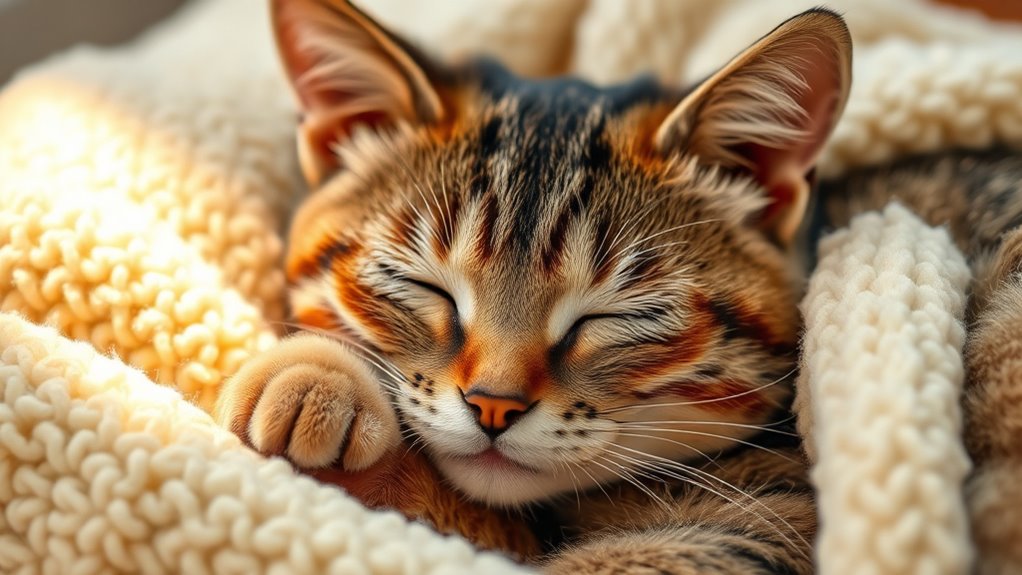
Petting your cat in specific spots can really help them relax and get ready to sleep. When you gently stroke areas like their head, chin, or back, you trigger their purring sounds, which show they’re happy.
These soothing vibrations calm your cat and help reduce stress, making it easier for them to unwind. Cats have sensitive nerve endings in certain areas, so targeted petting can trigger a relaxation response.
This not only eases any tension or anxiety they might feel but also encourages sleep. The calming sound of purring creates a peaceful environment, helping your cat feel safe and secure.
Focusing on these key spots helps your feline friend move from being alert to feeling sleepy more quickly and comfortably. Over time, your cat will associate these spots with comfort, strengthening your bond and improving their sleep habits.
The Best Spots to Pet Your Cat for Relaxation
Finding the right spots to pet your cat can make a big difference in helping them relax. When you choose areas that promote purring benefits, you create an ideal environment for calmness. Cats often enjoy being stroked in spots that feel natural and soothing, encouraging relaxation and sleep.
Petting your cat in soothing spots promotes relaxation and helps them feel safe and calm.
Here are the top four spots to consider:
- Along the back, from head to tail. Gentle strokes here mimic grooming and promote purring benefits.
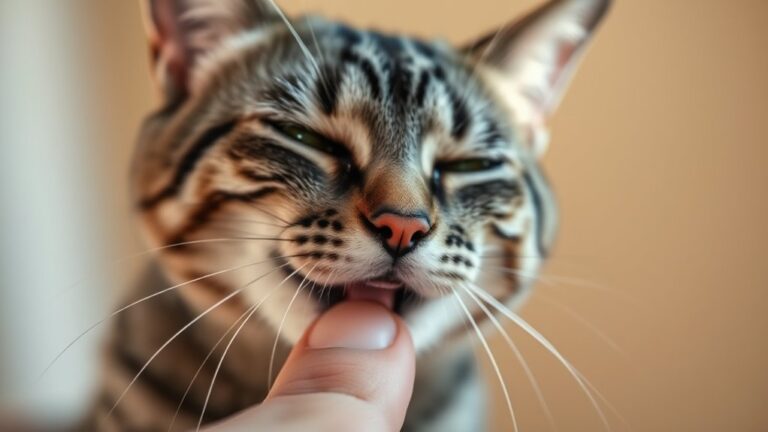
- The chin and cheeks. These areas are sensitive and often trigger contentment.
- Under the chin. A soft touch here can ease tension and foster relaxation.
- The base of the tail. A gentle rub can soothe nerves and help your cat unwind.
Focusing on these spots helps your cat feel safe and comfortable, encouraging relaxation and making it easier for them to fall asleep in a peaceful environment.
How Petting the Base of the Ears Can Calm Your Cat
Gently massaging the base of your cat’s ears can be surprisingly calming for them. This area is sensitive and connected to your cat’s preference for gentle touch.
An ear massage here can help reduce stress and promote relaxation, especially if your cat enjoys being touched in that spot. Many cats find this soothing because it mimics grooming behaviors.
To do it, softly stroke or gently circularly rub the base of each ear, but avoid the inner ear to prevent discomfort. Pay attention to your cat’s reactions to make sure they’re comfortable.
| Feline Preferences | Tips for Ear Massage |
|---|---|
| Gentle touch feels good | Use light, slow motions |
| Likes pressure variation | Watch for signs of relaxation |
| Sensitive to loud sounds | Keep your voice calm |
Petting Under the Chin to Promote Relaxation
When you’re petting your cat under the chin, it’s best to use a gentle touch. You want to be careful not to startle them, so go slowly and softly.
While you’re doing that, try pairing your strokes with some gentle, calming sounds or words. It could be a soft “purr” or a soothing voice.
All of this helps your kitty feel safe and relaxed. Plus, it encourages them to stay calm and happy during your cuddle time.
Gentle Touch Technique
Petting under the chin is a simple yet effective way to help your cat relax and feel safe. Use gentle touch techniques, focusing on soft strokes with rhythmic movements to soothe your feline friend.
This method encourages trust and comfort, making it easier for your cat to unwind. To improve this technique, use your finger or palm to apply light pressure.
Maintain gentle, consistent strokes and keep movements slow and rhythmic. Watch your cat’s response and adjust the pressure as needed.
Calming Vocalizations
Using calming vocalizations while petting under the chin can really boost your cat’s sense of security. Soft, soothing sounds combined with gentle vocal modulation help your cat feel safe and relaxed.
When you speak softly or hum, it mimics the sounds they find comforting, encouraging them to unwind. By aligning your voice with your gentle touch, you create a peaceful environment where your cat can fully relax and drift into sleep.
To evoke emotion, consider this table:
| Tone of Voice | Sound Example | Effect |
|---|---|---|
| Soft and gentle | “Shh” softly | Instills calmness |
| Warm and reassuring | “It’s okay, sweetie” | Builds trust and security |
| Melodic and rhythmic | Gentle humming | Promotes relaxation |
| Quiet and steady | Low, steady hum | Encourages deep sleep |
Gently Petting the Back of the Neck for Comfort
Gently petting the back of your cat’s neck can be a really calming gesture. It’s a soft touch that helps reassure them and makes them feel safe. Just be sure to steer clear of any sensitive spots, and keep an eye on how they respond.
Gentle Touch Encourages Relaxation
When you softly stroke the back of a cat’s neck, it can have a calming effect that helps them feel safe and relaxed. Gentle touches promote the purring benefits, which further encourage relaxation and stress reduction. Your calm, steady motion can soothe your cat, making them more comfortable and receptive to sleep.
Here are some ways gentle petting helps:
- Strengthens the bond and trust between you and your cat
- Triggers calming purring, boosting stress reduction
- Eases tension and helps them feel secure
- Promotes relaxation and encourages sleepiness
Avoid Sensitive Areas
While a soft stroke on the back of a cat’s neck can be soothing, it’s important to steer clear of sensitive areas that might cause discomfort or stress. Cats have certain spots—like the belly, paws, and tail—that can trigger defensive behavior if touched.
Avoid petting these zones, especially if your cat isn’t familiar or comfortable. Instead, focus on areas they enjoy, such as the back of the neck or chin. Recognizing your cat’s cues is key; if they tense or move away, it’s a sign you’re touching a sensitive spot.
Respect their boundaries to foster trust and relaxation. By steering clear of sensitive areas, you help your cat feel safe and secure. This makes it easier for them to unwind and fall asleep.
Observe Cat’s Response
Pay close attention to your cat’s body language as you pet the back of their neck, since their response reveals how comfortable they are. Watch for signs like relaxed muscles, slow blinking, or gentle purring—these indicate contentment and the purring benefits for relaxation.
If your cat tenses up, flattens their ears, or pulls away, stop immediately. Here are some cues to observe:
- Soft, slow blinking shows trust and comfort
- Purring indicates they’re enjoying the touch and feeling safe
- Ears pointing forward or relaxed body language signal relaxation
- Any sudden stiffening or attempt to escape suggests discomfort
Monitoring these responses helps guarantee your pet remains calm and receptive, making neck petting a soothing experience for both of you.
Behind the Whiskers: Tactile Stimulation to Soothe
Behind a cat’s whiskers lies a sensitive area that responds enthusiastically to gentle tactile stimulation, providing comfort and reassurance. When you softly stroke around the whisker area, you engage delicate nerve endings that connect to essential pressure points.
These points influence your cat’s relaxation, helping it feel safe and calm. Pay attention to the fur texture—smooth, soft fur feels most soothing, encouraging your cat to settle down. Use gentle, consistent pressure to avoid overstimulation.
Light, rhythmic strokes around the cheeks and above the whiskers can release tension and promote sleep. Remember, every cat is different; some may enjoy firmer pressure, while others prefer a more delicate touch.
As you gently massage these areas, you stimulate nerve endings that send calming signals to your cat’s brain. This makes it more likely to relax and drift into sleep.
When and How to Pet Your Cat’s Belly Safely
Approaching your cat’s belly takes patience and good timing since this area is very sensitive and not always welcoming. To create safe zones for belly rubs, wait until your cat shows signs of trust, like relaxed body language or purring.
Here are four tips for belly petting:
- Observe your cat’s mood — only try if they seem comfortable and inviting contact.
- Start with gentle strokes around the sides or chest to build trust before reaching the belly.
- Use slow, soft movements to avoid startling them or causing a defensive reaction.
- Watch for warning signs like twitching tail or flattened ears, and stop if your cat becomes tense or tries to move away.
Frequently Asked Questions
How Does a Cat’s Personality Influence Its Preferred Petting Spots?
Your cat’s personality greatly influences its preferred petting spots because their individual behaviors determine comfort zones.
Some cats enjoy gentle strokes along their back or head, while others prefer subtle touches on their cheeks or chin.
If your cat is shy, they might need gradual introductions to new spots. Paying attention to their reactions helps you find the areas where they feel safest and most relaxed.
This can really boost their overall comfort and trust with you.
Can Petting in Certain Areas Cause Overstimulation or Discomfort?
Think of petting as a gentle dance. Certain moves can cause signs of overstimulation or make your cat uncomfortable.
If you notice your cat’s tail flicking, ears flattening, or a sudden twitch, you’re probably hitting a sensitive spot.
Avoid areas like the belly or tail if they show signs of discomfort. Respect their boundaries, and you’ll keep the experience positive.
This helps build trust and prevents overstimulation. Petting then becomes a soothing, bonding activity instead of a stressful one.
Are There Specific Signs That Indicate a Cat Is Ready to Sleep?
Yes, there are signs your cat is ready to sleep. You’ll notice sleepy behaviors like slow blinking, stretching, or curling up comfortably.
Purring is also a key sign of relaxation, showing they feel safe and content. When your cat starts to settle down with relaxed muscles and gentle purring, it’s a clear sign they’re ready to drift off.
Pay attention to these signs to help them transition smoothly into sleep.
How Often Should I Pet My Cat to Help It Fall Asleep?
Imagine gentle waves of affection, softly lapping against your cat’s peaceful sleep patterns. You should pet your cat for about 10-15 minutes during your calming petting routines, spreading gentle strokes that mirror a lullaby.
This consistent routine helps relax your feline, encouraging sleep. Avoid overdoing it, as too much petting can become overstimulating.
Keep it soothing, gentle, and rhythmic to help your cat drift into a restful slumber.
Can Petting Spots Vary Between Different Cat Breeds?
Yes, petting spots can vary between different cat breeds because of breed preferences, individual quirks, energy levels, and sensitivity zones.
Some breeds might prefer gentle strokes along their back, while others enjoy chin or ear rubs.
Your cat’s unique personality influences its favorite spots, so observe its reactions.
Adjust your petting routine based on these cues, making sure to respect sensitive zones and cater to its comfort and relaxation needs.
Conclusion
Think of petting your cat as tuning a gentle instrument—each spot is a string that, when played just right, creates a soothing melody.
By focusing on these seven cozy spots, you’ll help your feline friend drift into peaceful slumber.
With a little patience and the right touch, you’ll turn your cuddles into a lullaby that makes your cat’s dreams as sweet as a quiet night under a starry sky.
Remember, the best way to make your cat fall asleep is through gentle, thoughtful petting of these key spots.