Why Does My Cat Nip Me When I Pet Her?
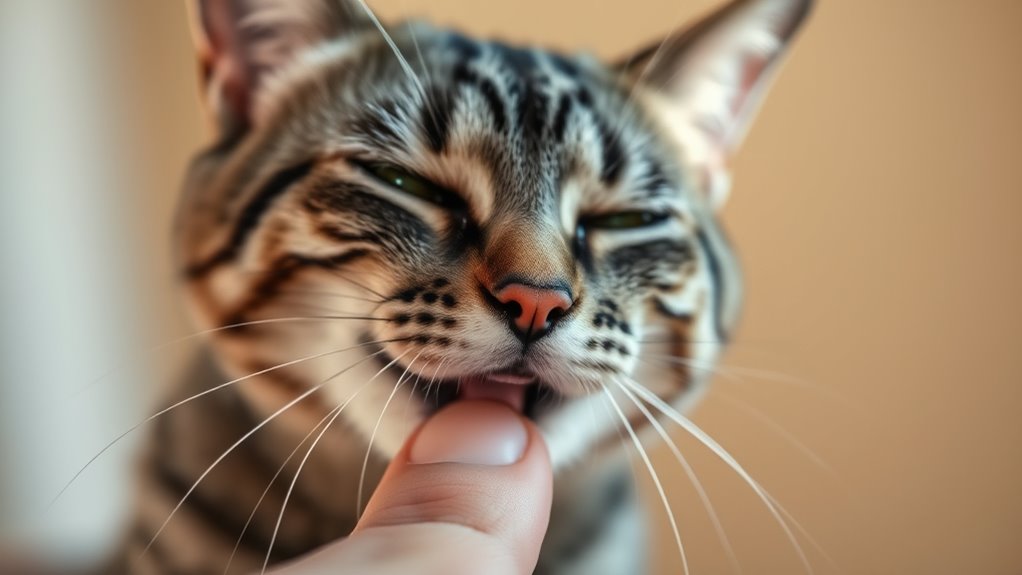
Many cat owners struggle with their feline friends nipping during cuddles, leaving them confused or even a bit hurt. If you’ve ever wondered why your kitty bites you when you pet her, you’re not alone. Understanding her signals can make all the difference.
Your cat nips when you pet her because she’s trying to set boundaries, show overstimulation, or express discomfort. Sometimes, gentle strokes become too much, or certain areas bother her.
She might also nip to signal she needs a break or is feeling unwell.
Paying attention to her body language helps you understand her limits. If you stay aware of her signals, you’ll identify ways to make petting more enjoyable.
There’s more to uncover about keeping her happy and comfortable.
Key Takeaways
- Your cat might get overstimulated or bored, which is a way of telling you to take a break from petting.
- Nipping can also mean she’s setting some personal boundaries or feeling uncomfortable.
- Sometimes, certain sensitive spots or long petting sessions can make her react by biting.
- If she’s in pain or has dental issues, she might get irritated and nip as a response.
- She could also be redirecting her energy or frustration during playtime or petting.
Why Do Cats Nip When You Pet Them?
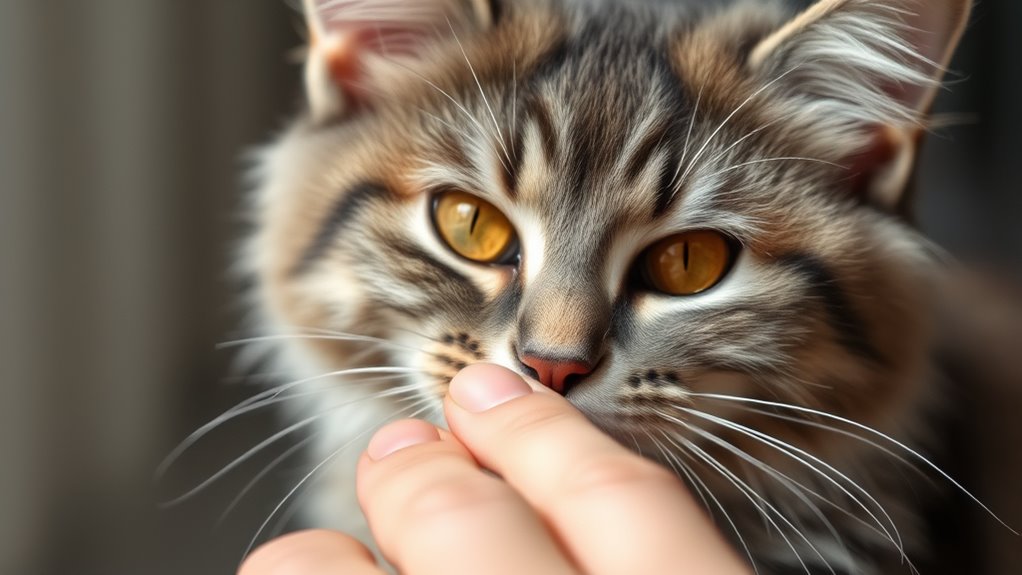
Cats nip when you pet them for a variety of reasons, often related to their comfort level and personal boundaries. Understanding cat behavior helps you see that nipping isn’t always aggressive but can be a way for cats to communicate.
Nipping can happen when your cat is overstimulated, bored, or has specific petting preferences. Some cats enjoy gentle strokes but get irritated if touched in certain spots or for too long.
Cats may nip when overstimulated or bored, especially if touched in sensitive spots or for too long.
Others nip to signal they want a break or to stop the interaction altogether. Recognizing these signals helps you respect their limits and adjust how you pet them.
Keep in mind that nipping can also be a sign your cat feels overwhelmed or uncomfortable. Paying attention to her body language helps you understand her needs.
This way, your petting sessions stay positive and enjoyable for both of you.
How to Tell When Your Cat Has Had Enough of Petting
You’ll start to see some little signs that your cat has had enough of the petting. For example, their ears might tilt back, or their tail could flick. Sometimes, they’ll shift away from your hand or even give a gentle bite — kind of like letting you know it’s time to stop.
It’s also good to watch out for signs of overstimulation, like when they suddenly stop purring or seem to tense up. Picking up on these cues helps you know when to give them a break before they get overwhelmed. Just a bit of attention to their body language can go a long way!
Recognizing Body Language Signals
Noticing when your feline friend has had enough of petting is key to maintaining a positive relationship. Pay attention to their body language signals so you can tell when they’re ready to stop.
A calming purring response often shows contentment, but it can also mean your cat is overstimulated. Watch their tail—if it’s relaxed, flicking gently, or held upright, they’re usually comfortable.
If the tail starts lashing or puffing up, that’s a clear sign your cat is annoyed or overstimulated. Other clues include flattened ears, dilated pupils, or a tense body.
Look at your cat’s overall posture and how they respond to your touch. Recognizing these signals helps you know when to pause or stop petting, making sure your cat feels safe and respected.
Signs of Petting Overstimulation
Even when your cat seems to enjoy being petted, it’s important to recognize the subtle signs that indicate they’ve had enough. Overstimulation can happen quickly if you ignore their petting preferences and feline boundaries. Watch for these cues:
- Tense or twitching tail
- Flattened ears or quick ear flicks
- Sudden swatting or gentle bites
- Moving away or trying to escape
- Dilated pupils or a tense body posture
These signs show your cat is signaling they’ve reached their limit. Respect their feline boundaries to prevent nip episodes and maintain a positive bond. Learning to read these signals helps you adjust your petting style and keep interactions enjoyable for both of you.
Common Signs Your Cat Is Overstimulated
How can you tell if your cat has had enough of the play or petting session? Watch for overstimulation signs, which are clear indicators of feline behavior changing. Your cat might suddenly twitch her tail, flatten her ears, or flick her whiskers.
She could also stiffen her body or start to groom herself excessively. When overstimulated, she might give you a warning nip or scratch. Some cats become more alert or fixate intensely, showing signs of irritation.
You may notice her dilated pupils or a sudden tense posture. These signals mean she’s reaching her limit and needs a break. Recognizing these overstimulation signs helps you prevent unwanted nips or scratches, keeping your interactions positive.
Health Issues That Might Cause Nipping
Health issues can sometimes cause your cat to nip as a way of communicating discomfort or pain. If your cat nips during petting, it might be a sign of underlying problems like feline anxiety or medical conditions.
Dental discomfort can make her irritable, leading to nips to protect herself. Medical issues such as arthritis or skin infections can also cause pain responses.
Environmental stressors, behavioral triggers, or territorial instincts might increase her fear reactions, resulting in nipping. It’s important to observe her behavior closely and look for signs of distress.
Nipping could be her way of saying she’s overwhelmed or uncomfortable. If you notice she’s frequently nipping, it’s a good idea to check with your vet to rule out health issues.
Addressing these health concerns can help reduce her pain response and make petting a more positive experience for both of you.
- Dental problems causing pain or discomfort
- Arthritis or joint issues
- Skin infections or irritations
- Feline anxiety or stress from environment
- Medical conditions affecting behavior
Understanding Why Cats Nip: Natural Instincts Explained
Cats nip as part of their natural instincts to communicate and set boundaries. Nipping is a way for them to express themselves without using words. It can signal that they’re uncomfortable, overstimulated, or want you to stop.
Understanding feline communication is key to interpreting these signals. When your cat nips, she’s not necessarily angry; she might just be letting you know she’s reached her limit. Nipping can also be a sign of playfulness or curiosity, especially in young cats.
It’s important to recognize that this behavior comes from their instincts, not necessarily aggression. By understanding that cats nip naturally to communicate, you can respond in a better way. Respecting these signals helps build trust and avoids misunderstandings.
This makes your bond with your cat stronger and more harmonious. Knowing why cats nip helps you respond appropriately and keeps your relationship positive.
Tips for Petting Your Cat Without Causing Nips
To pet your cat without causing nips, it’s important to pay attention to her body language and responses. Cats often nip when they’re overwhelmed or uncomfortable, so using gentle techniques helps create a positive experience.
Keep your touch soft and slow, avoiding rapid or rough strokes. Watch for signs of relaxation like purring or kneading, and stop if she shows signs of agitation.
Incorporate positive reinforcement by offering treats or praise when she remains calm during petting sessions. Here are some tips to help:
- Start with gentle strokes on her head and chin.
- Avoid touching sensitive areas like paws or belly unless she invites it.
- Keep petting sessions short and gradually increase their duration.
- Pay attention to her tail and ear movements for cues.
- Use calm, soothing voices to reinforce positive interactions.
Reading Your Cat’s Body Language During Playtime
Paying close attention to your cat’s body language during playtime helps you understand her mood and prevents overstimulation or aggression. Cats communicate a lot through their playful behavior, which is key to understanding how she’s feeling.
Watch for relaxed body posture, flicking tail, and soft eyes—these signals show she’s engaged and happy. If she starts to pounce aggressively, with ears back or a twitching tail, it might mean she’s overstimulated or frustrated.
Flattened ears, arched back, or hissing indicate she’s feeling threatened or annoyed. Recognizing these cues lets you adjust your play style, helping you avoid nips or bites.
Feline communication during play helps build trust and keeps both of you safe. By observing her body language, you can encourage positive interactions and make sure your play sessions stay fun and comfortable for your cat.
What Should You Do When Your Cat Nips?
When your cat nips, it’s a good idea to pay attention to whether they’re showing signs of play aggression. Sometimes, cats nip because they’re overstimulated or excited during play. Recognizing these signs can help you respond in a way that keeps things safe and fun.
You can try gentle redirection techniques, like offering a toy or a scratching post to divert their attention. And it’s always important to respect their personal space—they might need a break if they seem overwhelmed. By doing this, you’ll make sure playtime stays enjoyable for both of you without any unwanted nips.
Recognize Play Aggression Signs
Recognizing the signs of play aggression in your cat can help you respond appropriately before it escalates. Playful behavior in cats often includes flicking tails, dilated pupils, and crouching with ears back—clear signals in feline communication.
When your cat starts nipping, look for these cues: puffed-up fur or an arched back, stiff body posture, and rapid tail flicks. Also watch for dilated pupils and flattened ears, which can indicate overstimulation.
Other signs include an overly focused stare or stalking movements, as well as sudden, frantic biting or scratching. These signals show your cat may be overstimulated or engaging in rough play.
Understanding these signals helps you distinguish between playful aggression and actual hostility. This way, you can respond calmly and avoid encouraging rough behavior.
Recognizing play aggression signs is key to maintaining a safe, positive relationship with your cat.
Use Gentle Redirection Techniques
If your cat nips during play or interaction, gentle redirection can help teach her what’s okay. When she nips, calmly stop petting and redirect her attention to a toy or scratching post.
This technique, called gentle redirection, shifts her focus away from nipping and toward acceptable outlets. Be consistent—each time she nips, redirect her behavior immediately.
Use positive reinforcement by softly praising her or offering treats when she responds correctly, like playing with toys instead of nipping. Avoid punishment, which can cause fear or aggression.
Over time, your cat will learn that gentle play and positive interactions lead to rewards, reducing nipping. Gentle redirection not only discourages unwanted behavior but also encourages trust and a stronger bond between you.
Respect Personal Space Boundaries
Understanding your cat’s personal space is key when she nips. Respecting her boundaries helps prevent her from feeling threatened or overstimulated.
When you notice signs of discomfort, adjust your behavior to match her cat cues. This can help you avoid triggering nipping episodes.
Watch her body language, like tail flicks or flattened ears. If she looks tense or overstimulated, give her some space.
Avoid sudden movements or loud sounds around her. Instead, use soft voices and gentle gestures to reassure her.
Provide quiet, cozy spots where she can retreat and relax whenever she needs a break.
When to Seek Vet Advice for Persistent Nipping
Persistent nipping that doesn’t get better over time or happens suddenly can signal underlying issues that need professional attention. If your cat’s nipping behavior becomes more frequent, intense, or unpredictable, it’s a good idea to see a vet.
Sudden changes in behavior might mean your cat is in pain, sick, or stressed, which could be causing the nipping. If she nips during or after petting, it could be a sign of discomfort or overstimulation.
Ignoring these signs can lead to more aggression or injuries. Visiting a vet helps rule out medical issues and gives you guidance on how to manage the behavior.
A vet can also check if your cat’s nipping is linked to anxiety or frustration. Don’t wait if the behavior persists or gets worse. Getting professional advice keeps both you and your cat safe and comfortable.
Addressing these issues early can improve your relationship and prevent future problems.
Building a Better Bond Through Gentle Petting
Building a stronger bond with your cat often starts with gentle petting, which can foster trust and comfort between you both. To improve your connection, focus on bonding techniques that emphasize a calm and consistent petting rhythm. Pay attention to your cat’s responses—if she leans into your touch, she’s enjoying it; if she pulls away, respect her boundaries.
Gentle, consistent petting builds trust; watch your cat’s cues to ensure she feels safe and loved.
Use smooth, slow strokes along her back or head, avoiding sensitive areas. Incorporate the right petting rhythm to signal relaxation and safety. Soft strokes along her cheeks or chin can feel especially soothing.
Maintain a steady, gentle petting rhythm and watch for signs of enjoyment or discomfort. Using treats can reinforce positive experiences and help your cat associate petting with good feelings.
Gradually increase the length of petting sessions over time to build trust. Remember, patience and consistency are key to making your cat feel safe and loved.
Frequently Asked Questions
Can Cat Nip Cause My Cat to Nip During Petting?
Yes, catnip can cause your cat to nip during petting. Catnip triggers a reaction in some cats, leading to excitement or overstimulation.
This increased arousal can make your cat more likely to nip as part of her behavior. Nipping triggers vary but often happen around certain petting spots or from too much stimulation from catnip.
To prevent this, watch for signs of overstimulation and give your cat breaks during play.
Does Age Affect How Often Cats Nip When Petted?
Age definitely influences how often cats nip during petting. Kittens may nip as part of their playful behavior while exploring boundaries. Senior cats, on the other hand, might nip due to discomfort or changes in habits.
As cats age, their tolerance levels and sensitivities can shift, leading to more or less nipping. Understanding these age-related differences can help you respond appropriately.
This way, you ensure your cat feels comfortable and safe during petting sessions.
Are Certain Breeds More Prone to Nipping While Being Petted?
Certain breeds are more prone to nipping while being petted because of their breed traits and nipping tendencies. For example, breeds like Siamese or Bengal cats tend to have high energy levels or sensitivities.
They might nip if they become overstimulated or overwhelmed. Knowing your cat’s breed traits can help you spot their nipping tendencies early.
This way, you can adjust your petting style to make sure both you and your cat stay comfortable and avoid unwanted nips.
Can Emotional Stress Lead to Increased Nipping?
Yes, emotional stress can lead to increased nipping in cats. Stress often triggers behaviors like nipping as a way for your cat to communicate discomfort or overstimulation.
When your cat feels anxious or overwhelmed, she might nip to signal that she needs a break. Recognizing these stress triggers helps you adjust your interactions.
Creating a calmer environment can reduce the chances of nipping during petting sessions and help your cat feel more secure.
How Do I Differentiate Between Playful and Aggressive Nipping?
You can tell if your cat’s nipping is playful or aggressive by watching her body language.
Playful nipping usually comes with a relaxed posture, a flicking tail, and gentle bites, often triggered by fun interactions.
Aggressive nipping, on the other hand, involves flattened ears, an arched back, and snarling. It’s often triggered by overstimulation or fear.
Recognize these nipping triggers and respond accordingly—either by stopping play or giving her space.
Conclusion
Understanding why your cat nips helps you build a stronger bond. Pay close attention to her body language and respect her signals. Think of it as mastering the art of feline diplomacy.
When she nips, it’s often a sign she’s reached her limit, much like a noble in a Shakespearean play saying “enough.” It’s her way of telling you she needs a break or is feeling overwhelmed.
With patience and gentle care, you’ll foster trust and turn those tiny nips into purrs of affection. Remember, understanding her cues is key to a happy, harmonious relationship.