Why Does My Cat Chirp When I Pet Her?
Many cat owners find themselves curious or even puzzled when their feline friends suddenly chirp during petting sessions. You’re not alone—understanding what your cat is trying to tell you can be confusing at first.
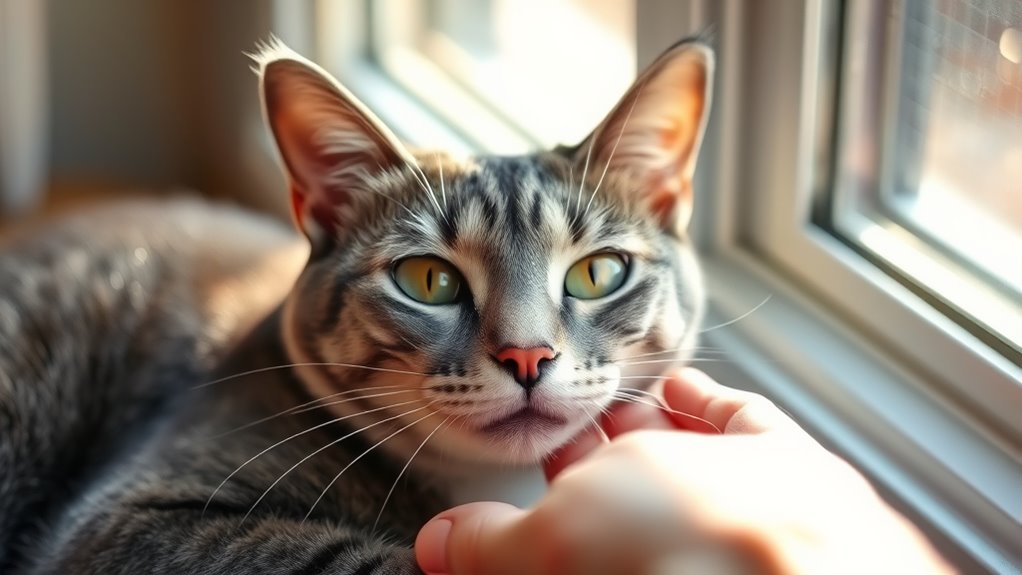
When your cat chirps during petting, it’s a sign she’s happy, relaxed, and enjoying your affection. This vocalization often indicates positive emotions and helps strengthen your bond.
Her chirping may vary with her mood, breed, or environment, with more frequent chirps showing excitement or curiosity. Pay attention to her overall behavior to interpret her feelings.
Keep exploring to understand her better and guarantee she’s comfortable during your interactions.
Key Takeaways
- Chirping during petting shows your cat is happy and content. It means she’s really enjoying the interaction.
- It can also be a way she’s communicating positively with you, strengthening your bond.
- Sometimes, when she’s excited or curious while being petted, she might chirp as a joyful reaction.
- Playful or social cats tend to chirp more when they’re getting affection.
- If she starts chirping more than usual, it could also mean she’s overstimulated or needs a break.
Why Does My Cat Chirp When I Pet Her?
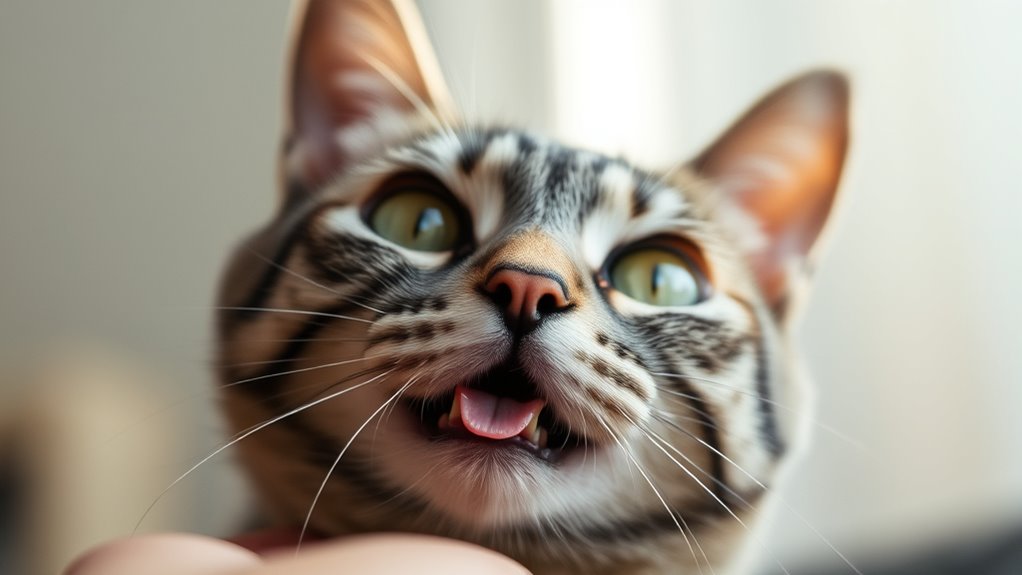
When you pet your cat and she chirps, she’s probably showing how happy and content she feels. This chirping is a way she communicates her positive emotions during petting.
When your cat chirps during petting, she’s expressing happiness and contentment in her own joyful way.
Unlike meowing, which often signals needs or warnings, chirping is a gentle, joyful sound. It shows she’s relaxed and enjoying your attention.
Cats use a variety of sounds to communicate, and chirping is one of the more playful ones. You might notice her eyes softening, her body relaxing, or her tail flicking gently as she chirps.
It’s her way of telling you she feels safe and loved. This behavior is common and usually a sign of bonding.
Understanding this part of feline communication can help strengthen your connection. So next time she chirps during petting, know she’s sharing her happiness in her own special way.
What Different Sounds Do Cats Make During Petting?
As you’re petting your cat, you might notice a bunch of different sounds she makes—each one giving you a little clue about how she’s feeling. For example, you might hear her chirping or trilling, which usually means she’s excited or curious about what’s going on. And of course, her purring is a classic sign that she’s feeling happy and content.
But watch out for other sounds too. If she starts hissing or makes warning noises, that’s a sign she’s feeling uncomfortable or stressed. It’s her way of telling you she’s not really into the petting right now. So, paying attention to those sounds can really help you understand your furry friend better!
Chirping and Trilling Sounds
Cats often respond to gentle petting with a series of chirps and trills that can sound almost musical. This chirping behavior is a charming way they communicate, showing happiness and contentment.
When your cat makes these sounds, she’s probably signaling that she feels safe and loved. She’s using her voice to connect with you in a positive way.
Unlike meows or purrs, chirps and trills are often high-pitched and melodic. They serve as a pleasant reinforcement during petting sessions.
These sounds can also mean your cat is curious or excited about your touch or something nearby. Recognizing this helps deepen your bond and shows she appreciates your gentle affection.
It’s her way of saying I like this in a musical, expressive manner.
Purring and Contentment
Purring is the most common sound cats make during petting, and it’s a clear sign of their contentment. When you use gentle petting techniques, your cat’s purrs often increase, signaling she feels safe and relaxed.
Pay attention to her feline body language—relaxed muscles, half-closed eyes, and a soft gaze all indicate she’s enjoying the interaction. If she leans into your touch or nudges you, it’s a sign she’s happy.
Purring isn’t just a sign of pleasure; it can also show comfort and trust. As you observe her body language, you’ll learn what types of petting she prefers.
When she’s content, she’ll often purr softly, showing she feels safe and loved during your gentle touch.
Hissing and Warning Noises
While purring shows your cat is happy, some sounds mean she’s uncomfortable or annoyed during petting. Hissing is one of those warning signs that she’s overwhelmed or upset.
When she hisses, she’s trying to set boundaries and tell you to stop. Other warning noises include growling or stiffening her body, which also shows she’s reached her limit.
Recognizing these signals helps you respond the right way—giving her space and avoiding any escalation. If you hear hissing, it’s best to pause and check how she’s feeling.
Pushing through her discomfort can lead to scratches or bites. Respecting her signals keeps your bond strong and helps lower her stress levels.
How Your Cat’s Mood Affects Its Chirping
When your cat is feeling relaxed and at ease, you’ll probably notice it chirping a lot less. But if it’s feeling anxious or a bit stressed, you’ll see those chirps come more often. It’s like they’re trying to communicate how they’re feeling.
On the other hand, when your kitty is in a playful mood, those chirps tend to be more excited and lively. They might chirp happily as they zoom around chasing toys or when they’re engaging with you. Paying attention to these little sounds can really help you understand what your cat’s feeling at any given moment.
Calm Cats Chirp Less
A calm and relaxed cat tends to chirp less because her mood directly affects her vocalizations. When she feels secure and comfortable, she’s less likely to produce frequent or high-pitched chirps.
Creating a calm environment helps promote this tranquility. Providing a quiet space, consistent routines, and gentle handling can reduce her stress and make her feel safe.
When she’s at ease, her vocalizations become more measured and less frequent. A stress-free atmosphere encourages her to communicate through body language rather than constant chirping.
Anxious Cats Chirp More
Some common chirping triggers include:
- Sudden loud noises or unfamiliar sounds
- Changes in routine or environment
- Presence of unfamiliar people or animals
Understanding how your cat’s mood influences her chirping helps you respond calmly. This can reduce her anxiety and make her feel more secure.
Playful Cats Chirp Frequently
Playfulness often makes your cat chirp more often as she gets excited and curious. During playtime, she uses her voice to show she’s happy and wants to engage.
Her chirping is her way of saying she’s ready to play or share her joy. When she’s feeling playful, her chirps get livelier and happen more often, showing her positive mood.
This vocal habit helps strengthen your bond and lets you know she’s in a good mood. You might notice her chirping at toys, during chase games, or when exploring new objects.
Why Cats Chirp in Excitement and Playful Moments
Cats often chirp during moments of excitement or play because they’re eager to communicate their enthusiasm. When your cat’s energy spikes during playtime, that chirp shows she’s happy and engaged. It’s her way of telling you she’s thrilled and wants to connect.
You’ll usually hear this chirp when she spots a toy, notices prey-like movement, or expects some fun. It’s her way of expressing anticipation and excitement without needing a full meow.
Some common reasons for this include sharing her excitement about a toy or playmate, signaling she’s ready to pounce or chase, or just showing happiness during interactive play.
This chirping helps make playtime more lively and fun. Recognizing it as a positive sign helps you understand her feelings and encourages more enjoyable, bonding moments together.
Does Your Cat’s Breed or Personality Make It Chirp More?
Hey, did you know that some cat breeds are just naturally more vocal and tend to chirp more? It’s pretty interesting because not all cats are the same when it comes to making noise. Some breeds love to chat and share their thoughts with you, while others are much quieter and reserved.
Your cat’s personality plays a big role too. If your kitty is super playful and curious, you might notice it chirping more often. On the flip side, shy or more laid-back cats might chirp less or only when they’re really excited or trying to get your attention.
And don’t forget about the environment! Things like extra stimulation or feeling stressed can make your cat communicate through chirping more. So, it’s a mix of breed, personality, and surroundings that influences how often your feline friend chirps.
Breed-Specific Vocal Traits
Certain breeds are naturally more vocal than others, and this trait can influence how much your cat chirps. For example, Siamese cats are known for their frequent Siamese chirping, often expressing themselves through lively sounds. Maine Coons also have distinct vocalizations, including gentle trills and chirps, especially when interacting with you.
These breeds tend to communicate more openly, making chirping a common part of their repertoire. Breed-specific vocal traits include:
- Siamese cats’ tendency for frequent, expressive chirping
- Maine Coon vocalizations that include trills and soft meows
- Other vocal breeds that use chirps to communicate interest or affection
Knowing your cat’s breed can help you understand whether their chirping is typical or something to watch for.
Personality and Chirping
Your cat’s personality plays a big role in how much it chirps. More outgoing and social cats tend to communicate more openly. A playful, curious feline will likely chirp often during petting or play, using vocalizations to talk.
Some cats are naturally more expressive, while others are more reserved. This difference affects how often they chirp. Think about these personality traits:
| Trait | Chirping Behavior | Explanation |
|---|---|---|
| Social | High | Seeks interaction, vocalizes more |
| Curious | Moderate to high | Shows excitement or interest |
| Reserved | Low | Less vocal, prefers minimal interaction |
Personality really influences how your cat communicates, making chirping a reflection of its unique character.
Environmental Influences
Breed characteristics and environmental factors both influence how much a cat chirps. Your cat’s surroundings and sensory stimuli can make these vocalizations louder or softer.
For example, a lively, stimulating environment with lots of sights and sounds may encourage more chirping. On the other hand, a quiet, predictable space might lead to fewer vocal cues.
Some breeds are naturally more responsive to environmental stimuli, so they tend to chirp more when engaged or curious. You might notice that:
- Cats exposed to constant noise or movement chirp more often
- Boredom or lack of mental stimulation increases vocalizations
- Cats with active, social personalities tend to respond more to sensory stimuli
Understanding how your cat’s environment influences her chirping can help you interpret her signals better and build a stronger bond.
How Can I Tell If My Cat Is Asking for More Attention?
Wondering if your cat is signaling for more attention? Pay close attention to her cues and body language. If she nudges you with her head or paw, it’s a clear sign she wants interaction.
Purring loudly or rubbing against you also shows she’s seeking comfort and closeness. Watch for her to sit nearby, stare intently, or follow you from room to room—these are subtle signals she craves your company.
Purring or rubbing against you signals she seeks comfort and closeness.
If she meows persistently or places her paw on you, she’s trying to communicate her need for petting or play. Notice her tail; a gently swaying or upright tail often means she’s happy and wants your focus.
In the same way, dilated pupils or an alert stance can suggest she’s keen for attention. By observing her body language and cues, you’ll better understand when she’s asking for more interaction and can respond accordingly.
Why Do Cats Chirp? The Evolution of Feline Communication
Have you ever noticed your cat making a chirping sound, especially when she’s watching birds or small animals? This behavior comes from her feline ancestors and shows how her communication has evolved over time. Chirping is a way cats show excitement, curiosity, or anticipation, usually when they spot prey or something interesting.
This vocalization mimics bird calls, which helps cats communicate with prey or other cats. It also signals that they’re alert or excited without being aggressive. Plus, it’s a social cue that shows interest or enthusiasm in a friendly, non-threatening way.
The way cats chirp is part of their natural communication style, shaped by their evolutionary past. It helps them connect with their environment and other animals, giving us a glimpse into their instincts. Chirping is a fascinating window into how cats communicate and interact with the world around them.
How to Interpret Your Cat’s Chirping During Petting Sessions
When your cat starts chirping during a petting session, it often means more than just excitement; it’s her way of communicating how she feels at that moment. Recognizing what triggers her chirping can help you understand her mood and comfort level.
Cat chirping during petting reveals her feelings; understanding triggers enhances comfort and bond.
For example, gentle, repetitive chirping usually shows she’s happy and engaged, really enjoying your touch. On the other hand, if her chirping becomes more urgent or is mixed with purring or biting, it might mean she’s overstimulated or needs a break.
Pay close attention to her body language—like tail flicks, ear positions, or if she’s relaxed. These cues add important context to her chirping and help you interpret her feelings.
Her chirping is her way of telling you whether she’s content, curious, or seeking reassurance. By observing these signs, you can adjust your petting approach to keep her comfortable.
This helps ensure her experience stays positive and can strengthen the bond between you two. Understanding her signals makes petting sessions more enjoyable for both of you.
When Is Excessive or Unusual Chirping a Sign of a Problem?
Excessive or unusual chirping from your cat can be a sign that something isn’t quite right, especially if it’s a sudden change from her normal behavior. Pay attention to any shifts in how often she chirps or strange patterns, as these could mean stress, pain, or health issues.
If your cat suddenly starts chirping more than usual, she might be uncomfortable or in need of attention. Odd, persistent chirping at unusual times could also point to underlying problems. Keep an eye out for:
- Increased chirping that lasts for days
- Persistent, uncharacteristic chirping, especially during quiet moments
- Chirping along with other signs of distress, like hiding or lethargy
If you notice any of these signs, it’s best to check with your veterinarian. Early recognition can help address health concerns before they get worse and ensure your cat stays happy and healthy.
Responding to Your Cat’s Chirps to Strengthen Your Bond
Responding thoughtfully to your cat’s chirps can strengthen your bond and help her feel understood. When she vocalizes, pay attention to her cues and respond calmly and positively.
Engage in bonding activities like gentle petting or play when she chirps to reinforce her comfort and trust. Recognize that her vocal cues often show her mood or needs, like excitement or wanting attention.
By acknowledging these cues with your reactions—whether it’s talking softly, offering a treat, or just maintaining eye contact—you show her you understand her. This validation encourages her to communicate more openly.
Consistent, attentive responses help her feel heard and appreciated, building her trust over time. Your active engagement makes her feel secure and loved.
This back-and-forth interaction fosters a deeper understanding and a stronger emotional bond between you and your feline friend.
Frequently Asked Questions
Can Chirping Indicate Medical Issues in Cats?
Chirping behavior in cats usually isn’t a sign of medical issues, but it’s good to stay alert.
If your cat’s chirping is sudden, persistent, or accompanied by other signs like lethargy, loss of appetite, or abnormal grooming, it could mean something’s wrong.
Always keep an eye on her overall behavior. If you notice anything unusual, it’s best to consult your vet to rule out health problems and ensure she stays healthy.
Do Kittens Chirp More Than Adult Cats?
Yes, kittens tend to chirp more than adult cats because their communication is still developing. They use chirping to get attention or show curiosity.
Their vocalizations include higher-pitched sounds and more frequent chirping, which helps them communicate with their mother and littermates. As they grow, their way of communicating changes.
Adult cats rely less on chirping and use other vocalizations instead. Their sounds become more varied as they develop.
Is Chirping a Sign of Stress or Anxiety?
Chirping isn’t necessarily a sign of stress or anxiety; it’s often a melody in your cat’s feline communication symphony.
While stress triggers can cause anxiety signs, a chirp usually reflects excitement or curiosity, like a bird’s song.
Your cat might be sharing her feelings from her comfort zone, expressing joy or anticipation.
Pay attention to her body language to distinguish between a happy chirp and one that hints at distress.
How Does Environment Influence a Cat’s Chirping?
Environmental factors and chirping triggers greatly influence your cat’s chirping. If her surroundings are noisy, chaotic, or unpredictable, she might chirp more to communicate or seek reassurance.
Changes in her environment, like new furniture or unfamiliar visitors, can also spark more chirping. Creating a calm, stable space helps reduce these triggers.
Can I Train My Cat to Stop Chirping?
Yes, you can train your cat to stop chirping by using consistent training techniques. Focus on understanding your cat’s behavior, then gently redirect her when she chirps. Reward quiet moments with treats or affection.
Patience and positive reinforcement are key. With regular practice, she’ll learn new, calmer ways to communicate. This can make your bond stronger and help reduce unwanted chirping.
Effective training turns good intentions into lasting change. Just keep at it, and you’ll see progress over time.
Conclusion
Your cat’s chirping is her sweet way of showing affection, a little melody that strengthens your bond. It’s her way of saying, “I love you” through sounds and sensations.
When you listen closely, her chirps become a gentle dance of communication, revealing her mood and personality. Each chirp is like a tiny message just for you.
Cherish these musical moments—they turn everyday petting into a tender, melodic serenade. That’s why your cat chirps when you pet her, sharing her love in her special language.