
Does Flea Medicine Kill Worms in Cats?
Many cat owners worry about keeping their furry friends safe from parasites but feel overwhelmed by all the different products out there. You’re not alone—navigating the world of flea medicines and dewormers can be confusing.
Flea medicines mainly target external parasites and usually don’t kill internal worms in cats. Many products are specific to fleas and their larvae, so relying on them alone won’t protect your cat from worm infestations.
If you want thorough parasite control, you’ll need to use a separate dewormer, as advised by your vet.
To learn about the best approach for your cat’s health, investigate further for detailed tips and guidance.
Key Takeaways
- Most flea medications target fleas but don’t kill intestinal worms in cats.
- Some combined products may include deworming ingredients, so check labels carefully.
- Regular deworming is essential because flea meds alone don’t treat worms.
- Veterinarian-recommended treatments ensure effective control of both fleas and worms.
- An integrated approach with flea prevention and deworming is best for your cat’s health.
Do Flea Medications Also Treat Worms in Cats?
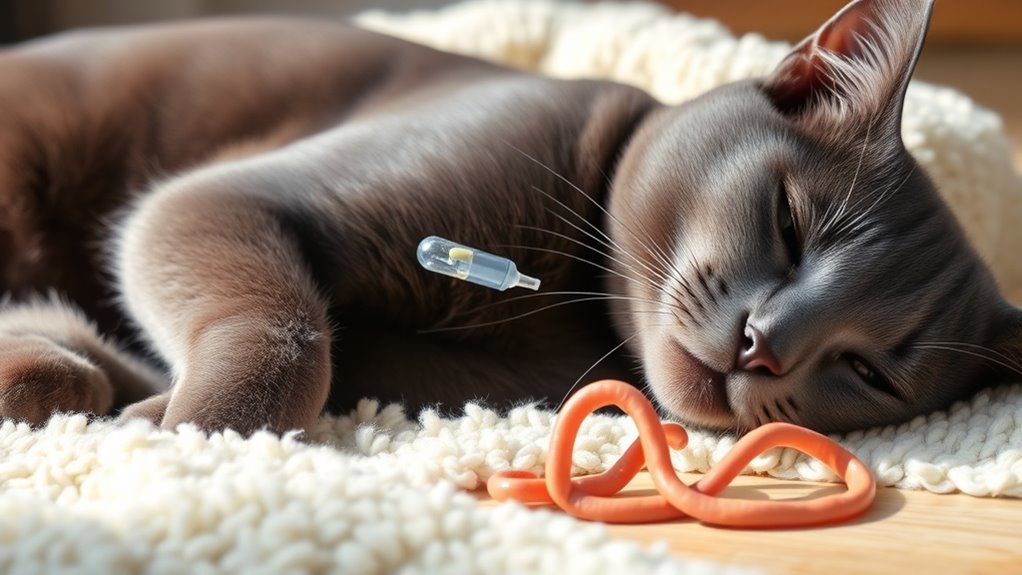
Many cat owners wonder if their flea medications also handle worms. The truth is, flea treatment efficacy varies by product, and most flea treatments don’t automatically prevent or treat worms.
While some combined medications include deworming components, many are designed solely to kill fleas and ticks. If you want reliable worm prevention methods, you should consider separate dewormers specifically formulated for that purpose.
Relying solely on flea medication won’t protect your cat from worm infestations. It’s crucial to have a plan that includes regular deworming schedules recommended by your veterinarian.
Proper worm prevention involves more than just flea control. It requires targeted medication and good hygiene practices. Always check the label and consult your vet to ensure your cat gets the right combination of flea treatment and worm prevention.
This approach keeps your feline healthy and free from parasites.
How Do Flea Treatments and Dewormers Differ?
Flea treatments and dewormers serve different purposes and work in different ways to protect your cat’s health. Flea treatments target the flea life cycle by killing adult fleas, eggs, and larvae on your cat or in its environment. They help prevent infestations and reduce itching.
Dewormers, on the other hand, come in various types that target specific worms like roundworms or tapeworms. They kill or expel these worms from your cat’s system. Dewormers don’t affect fleas or their eggs directly; they focus only on worms.
While some flea medications may include ingredients that kill certain worms, they aren’t a substitute for dewormers. Understanding these differences helps you choose the right products for your cat’s needs and ensures protection against both fleas and worms.
What Types of Worms Affect Cats?
Several types of worms can infect your cat, each posing different health risks. The most common intestinal parasites include roundworms, tapeworms, hookworms, and whipworms.
Roundworms are often transmitted through contaminated soil or infected prey, leading to symptoms like a bloated abdomen, diarrhea, and weight loss.
Tapeworms usually come from fleas or eating infected rodents, causing segments in your cat’s stool or around the anus.
Hookworms can cause anemia and weakness, often entering through the skin or ingestion, with signs like pale gums and diarrhea.
Whipworms are less common but can lead to chronic diarrhea and discomfort.
Recognizing symptoms like vomiting, diarrhea, weight loss, or a dull coat can help you spot an infection early.
Since these parasites affect your cat differently, it’s best to consult your veterinarian for proper diagnosis and treatment options.
Can Flea Medications Kill Worms in Cats?
Flea medications might not completely get rid of worms in your cat, since their effectiveness against worms really depends on the specific product. Some treatments are made to target worms directly, but others are mainly focused on knocking out fleas.
Effectiveness Against Worms
While many flea medications are mainly designed to kill external parasites, some also include ingredients that target intestinal worms. These medications can break the worm lifecycle and help prevent parasites beyond just fleas.
Not all flea treatments are effective against worms, so it’s important to check the product labels. The table below shows common medications and whether they control worms:
| Medication Type | Worm Control |
|---|---|
| Broad-spectrum meds | Yes, targets multiple worm types |
| Flea-only treatments | No, focus on external parasites |
| Combination products | Yes, includes worm ingredients |
Using the right medication helps stop the worm lifecycle and boosts parasite prevention. But always talk to your vet for the best worm control strategies.
Compatibility With Treatments
Many flea medications are made mainly to target external parasites, but they don’t all kill intestinal worms in cats. When you’re looking at flea treatments, it’s important to check if they work with other medications to avoid problems.
Some products are designed to treat both fleas and worms, but many aren’t. To stay safe, ask your vet if the flea medication also covers worms, if it might interact with other treatments, and if it’s suitable for your cat’s health issues.
Not all flea treatments can be used with dewormers, so understanding these points helps prevent harmful interactions. Always confirm if your chosen product tackles both pests and worms, and check with your vet to avoid unwanted side effects.
When Should You Use a Dewormer for Your Cat?
You might want to give your cat a dewormer if you see signs that could indicate worms, like vomiting or a dull coat. It’s a good idea to keep an eye on your furry friend and watch for these symptoms.
Regular deworming is usually recommended, but how often you should do it really depends on your cat’s lifestyle and whether they’re at higher risk of getting worms. Knowing when and how often to treat can make a big difference in keeping your cat healthy and parasite-free.
Signs of Worm Infestation
How can you tell if your cat has worms? Recognizing worm symptoms and infestation signs is key. Common indicators include:
- Visible worms or eggs in the stool or around the anus.
- Vomiting, sometimes with worms present.
- A distended or bloated belly, especially in kittens.
You might also notice weight loss, diarrhea, or a dull coat. Sometimes, worms cause no obvious signs, so regular checks are really important. If you see any of these symptoms, it could mean your cat has an infestation. Acting quickly helps prevent it from getting worse and keeps your cat healthy.
Keep an eye out for these signs, and don’t hesitate to talk to your vet if you think your cat has worms. Early detection makes treatment more effective.
Recommended Deworming Schedule
Regular deworming is a key part of keeping your cat healthy, especially if you’ve noticed signs of worms or live in an area where infestations are common.
Kittens usually need deworming every 2-3 weeks until they’re 12 weeks old, then once a month until they reach 6 months. Adult cats generally benefit from deworming every 3-6 months, depending on their lifestyle and risk factors.
To help you plan, here’s a quick overview:
| Life Stage | Deworming Frequency |
|---|---|
| Kitten deworming | Every 2-3 weeks until 12 weeks, then monthly |
| Adult cat deworming | Every 3-6 months |
| High-risk cats | More frequent deworming as advised |
| Indoor cats | Less frequent, based on your vet’s advice |
| Outdoor cats | Regular deworming due to higher exposure |
This schedule can vary based on your cat’s environment and health, so always check with your vet for personalized advice.
Signs Your Cat Might Have Worms
Worms in cats often go unnoticed until they cause noticeable symptoms. Recognizing these signs early can help you take action with effective worm prevention tips. Here are three common signs to watch for:
Visible worms or eggs might be seen in your cat’s stool or around the anus. Keep an eye out for these, especially after grooming or cleaning.
If your cat seems less active or is losing weight despite eating normally, worms could be the cause. Lethargy and weight loss are common signs to note.
Sometimes, worms or segments appear in your cat’s vomit, which signals an infestation. Don’t ignore this — it’s a clear sign you need to see the vet.
Other signs include a dull coat or diarrhea. Regular vet check-ups and understanding these symptoms can help catch problems early.
If you notice any of these signs, contact your vet promptly. Early intervention can prevent serious health issues and keep your cat happy and healthy.
Should You Use Flea Medications and Dewormers Together?
Deciding whether to use flea medications and dewormers together depends on your cat’s specific health needs and risk factors. It’s important to evaluate flea safety and potential medication interactions.
Some flea treatments contain ingredients that may interact with dewormers, possibly reducing their effectiveness or causing side effects. Always check with your veterinarian before combining these medications to ensure they’re safe for your cat.
Your vet can recommend the best timing and product choices, especially if your cat has underlying health issues. If your cat is at high risk for fleas and worms, your vet might suggest a coordinated treatment plan.
Avoid giving multiple products without professional guidance, as this can increase the chance of adverse reactions. Properly timed and selected medications help protect your cat from both parasites while minimizing risks.
Prioritizing flea safety and consulting your vet guarantees your cat stays healthy and comfortable.
How to Deworm Your Cat Step-by-Step
Deworming your cat is pretty straightforward, but it’s important to follow each step carefully to make sure the parasites are fully eliminated. Doing it right helps keep your cat healthy and prevents future infestations.
Start by consulting your vet to figure out what type of worms your cat has and to get the correct medication. This step is key to making sure you’re using the right treatment.
Next, give the medication as directed. You can mix it with your cat’s food or give it directly, depending on the instructions. Always follow the label carefully.
After administering the medication, keep an eye on your cat for any side effects. It’s a good idea to schedule follow-up tests if needed to ensure the worms are gone.
Remember to read the medication instructions thoroughly before giving it. Make sure your cat is in a calm environment during treatment to reduce stress.
Regular deworming, along with flea medicine, is essential for your cat’s overall health. Consistent parasite prevention helps keep your feline friend happy and healthy.
Why Relying Only on Flea Meds Isn’t Enough
While flea medications are effective at controlling fleas, relying solely on them doesn’t address the full range of parasites that can affect your cat. Flea resistance is increasing, making some treatments less effective over time.
Plus, fleas are just one part of the puzzle; worms and other parasites can still lurk unnoticed. Relying only on flea meds can give a false sense of security and leave gaps in your cat’s health.
To truly protect your feline friend, you need a holistic prevention approach that combines regular deworming, environmental control, and proper nutrition.
This thorough strategy helps reduce the risk of parasites developing resistance and guarantees that your cat stays healthier overall.
Consult Your Vet for the Best Parasite Control Plan
Consulting your veterinarian is essential because they can recommend the most effective and safe parasite control plan tailored to your cat’s specific needs. They can assess factors like age, health, environment, and risk factors to develop a thorough approach.
Consult your vet for personalized, safe parasite control strategies tailored to your cat’s unique needs.
When discussing flea prevention strategies and worm control, your vet provides recommendations based on current research and proven treatments.
Here are three key steps your vet might suggest:
- Regularly administering prescribed flea preventatives to disrupt the life cycle.
- Scheduling routine fecal exams to detect worms early.
- Implementing environmental control measures to reduce exposure risks.
Frequently Asked Questions
Are There Natural Remedies to Treat Worms in Cats?
Yes, there are natural remedies you can try for worms in cats. Homeopathic treatments may help, but always check with your vet before starting any.
Dietary changes, like adding pumpkin seeds or garlic, can support your cat’s health and might help reduce worm infestations. Keep in mind, natural remedies might not work as well as medications prescribed by your vet.
How Often Should I Administer Dewormers to My Cat?
Think of your cat’s health as a delicate garden needing regular tending. Deworming frequency depends on your vet’s treatment guidelines, usually every 1-3 months for kittens and every 3-6 months for adults.
Following these guidelines helps keep worms at bay and your feline friend healthy. Regular deworming becomes like watering your garden—preventing infestations before they take hold and cause problems.
Can Fleas and Worms Be Transmitted to Humans?
Yes, fleas and worms can be transmitted to humans. Flea bites can cause itching and allergic reactions, and fleas can carry tapeworm larvae, which may infect people.
Worms like roundworms and hookworms can also spread through contaminated soil or contact with infected pets.
To keep yourself safe, regularly treat your cats for fleas and worms, and practice good hygiene.
Are There Any Side Effects of Deworming Medications?
You might notice side effects like mild vomiting or lethargy after deworming medication. For example, a cat in a case study experienced slight diarrhea, but it resolved quickly.
Following proper dosing guidelines guarantees treatment effectiveness and minimizes risks. Always consult your vet before administering dewormers, especially if your cat has underlying health issues.
While side effects are possible, they’re usually minor compared to the benefits of removing worms.
Is It Safe to Use Multiple Parasite Treatments Simultaneously?
Using multiple parasite treatments at once can be safe if done correctly, but you should always check with your veterinarian first.
Combining treatments might increase the chance of parasite interactions or side effects. Getting professional advice helps ensure your cat’s safety and effectiveness of the medications.
Your vet can suggest the best timing and specific drugs to prevent any adverse reactions. This way, your cat gets thorough protection against fleas, worms, and other parasites.
Conclusion
While flea medicines target pesky external parasites, they don’t usually kill worms. Coincidentally, dewormers are your go-to for internal invaders.
It’s easy to overlook the connection, but using both treatments together guarantees your cat’s complete protection. Remember, your vet’s advice is key—what works for fleas might not handle worms.
So, stay vigilant, keep a routine, and trust the timing—because a healthy cat is a happy cat. Flea medicine alone doesn’t kill worms, so make sure to include dewormers in your pet care plan.