Why Do Cats Raise Their Butts When You Pet Them?
Are you puzzled when your cat suddenly lifts its butt while you’re petting it? You’re not alone—many cat owners find this behavior confusing or amusing. Understanding what your feline friend is trying to tell you can make your bond even stronger.
When your cat lifts its butt during petting, it’s a sign of comfort, trust, and relaxed engagement. Cats often do this to mark their territory with scent or to show they’re happy and content.
It’s also a way they communicate positive feelings and confidence. However, if the behavior persists or seems unusual, it could signal discomfort.
To understand more about your cat’s body language and what it’s trying to tell you, keep exploring!
Key Takeaways
- Cats lift their hindquarters as a sign of trust and comfort while you’re petting them. It’s like they’re saying, “I feel safe with you.”
- Raising their butt also helps spread their scent and mark territory, which can strengthen social bonds.
- When they do this, it usually means they’re relaxed and really enjoying the interaction.
- Playful cats might lift their hindquarters to invite you to keep playing or petting.
- But if they lift their tail suddenly or persistently, it could mean they’re feeling overstimulated or a bit uncomfortable.
Why Does My Cat Lift Its Hindquarters When I Pet It?
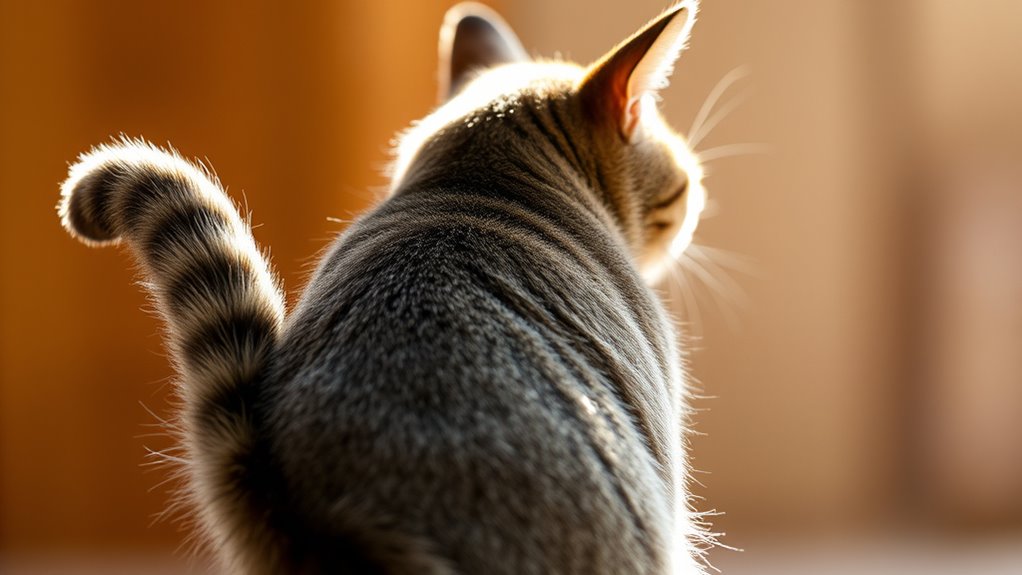
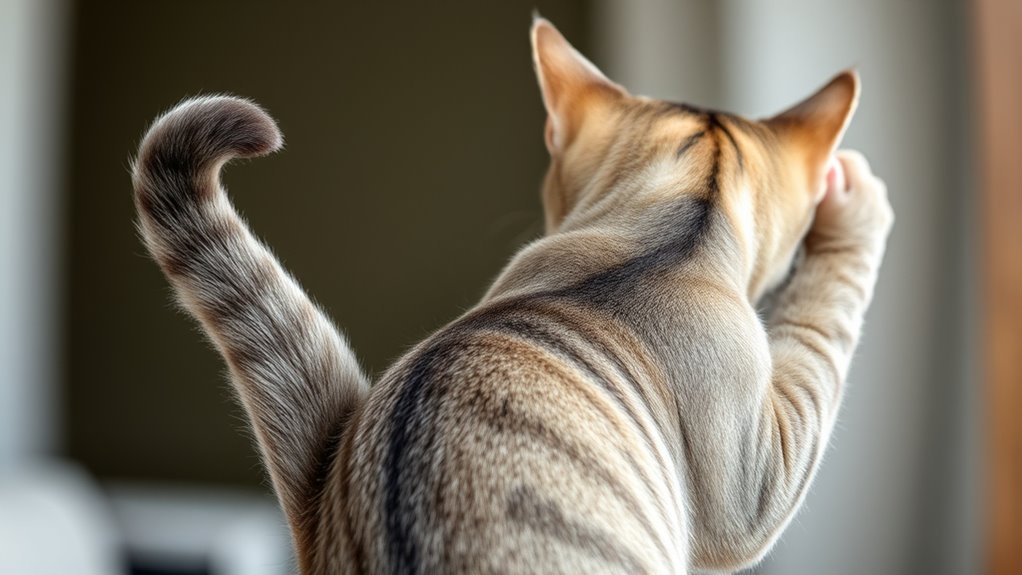
Have you ever noticed your cat raising its hindquarters when you pet its back or sides? This is a common feline behavior related to social interactions and communication.
When your cat lifts its rear, it’s often a way of showing trust and comfort. Cats have scent glands around their tail base, so raising their hindquarters helps spread their scent, marking you as part of their social group.
Lifting their rear helps cats spread scent, showing trust and marking you as part of their social group.
This behavior can also mean they’re relaxed and enjoying your company. It’s a positive sign that your cat feels safe and secure with you.
In social interactions, cats use body language like this to share their feelings without making a sound. So, when your cat raises its hindquarters during petting, it’s a good thing—an expression of trust, contentment, and a way to strengthen your bond.
Common Reasons Cats Raise Their Butts During Petting
When your cat lifts its hindquarters during petting, it usually means something specific is going on. This behavior is a common way cats communicate and often shows they’re feeling comfortable or trusting you.
Sometimes, your cat might do this to invite you to keep petting that area because they’re enjoying the interaction. It can also be a way for them to mark territory or strengthen social bonds, especially if they feel safe.
Other times, it may be a reflex to touch or a way for your cat to stretch their muscles. Understanding these reasons can help you better interpret what your cat is trying to tell you.
How to Read Your Cat’s Body Language and Mood
Understanding your cat’s body language is key to knowing how they’re feeling and what they need. Cats communicate a lot through signals, especially their tail language, which can reveal their mood. Watching your cat’s tail can help you tell if they’re relaxed, anxious, or annoyed.
To read their mood well, keep an eye on these cues:
- Tail position: An upright tail with a slight curve shows friendliness, while a puffed-up tail signals fear or aggression.
- Tail movement: Slow, gentle swaying means they’re content, but quick flicks or lashing indicate irritation.
- Overall posture: A relaxed, loose body suggests comfort, while a tense or crouched stance shows stress or alertness.
Pay attention to these signals to better understand your cat’s feelings. This helps make your interactions more positive and respectful of their emotions.
Is Lifting the Butt a Sign of Playfulness or Aggression?
Lifting the butt in cats can be confusing because it’s sometimes a sign of playful behavior and other times a warning of aggression. When your cat lifts its rear during play, it often signals excitement and readiness to engage, showing a friendly, inviting posture. This playful stance invites you to interact, but it’s important to watch for other signals like tail flicking or ears back, which might mean overstimulation.
On the other hand, if your cat lifts its butt while arching its back or hissing, it could be an aggressive signal warning you to back off. In this case, the posture is a defensive move meant to make the cat look larger and more intimidating. Recognizing these subtle differences helps you understand whether your cat is inviting play or signaling discomfort.
Always consider the context and other body language cues to interpret whether the butt lift shows playfulness or aggression. Paying attention to these details will help you respond appropriately and keep your cat comfortable.
What Your Cat’s Posture Tells You About Its Feelings
Your cat’s posture is like a window into its feelings at any moment. Watching how your feline moves and sits helps you understand what it’s experiencing—whether relaxed, scared, or curious.
Here are three main postures to keep an eye on:
- Relaxed and stretched out – Your cat feels safe and comfy. It might be purring or kneading, showing contentment.
- Arched back and puffed fur – This means your cat is scared or defensive. It’s trying to look bigger to protect itself.
- Lying on its side with belly exposed – Usually a sign of trust and that your cat feels safe. It might invite petting, but some cats don’t want belly rubs.
Understanding these signals helps you respond the right way. It builds trust and makes your bond with your cat stronger. Recognizing your cat’s posture is key to good communication.
Situations That Trigger Butt-Raising Behavior and What They Mean
Cats often lift their butts in response to certain situations that show how they’re feeling or what they want. These triggers are a way for cats to communicate, whether they’re feeling comfortable, curious, or playful.
For example, when a cat sees a familiar person or another cat, they might lift their tail as a friendly hello. This can also happen during playtime, showing that they’re engaged and ready to interact.
Some cats raise their butts when they’re relaxed or content, especially if they’re being gently petted in a way that feels good. But if your cat suddenly lifts its rear or seems tense, it might be a sign of discomfort or overstimulation.
Knowing these cues helps you understand what your cat is trying to tell you. This way, you can respond in a way that makes your interactions more meaningful and keeps your cat comfortable.
How to Respond When Your Cat Raises Its Butt
When your cat lifts its butt, it’s often a sign that something’s going on, and it’s good to pay attention to their body language. They might be feeling playful, curious, or even a little bit defensive, so watching how they act before and after can give you clues about what they’re trying to tell you.
If your cat seems relaxed and is holding their tail high or purring, that’s usually a good sign—they might just be inviting some gentle petting or play. But if they’re tense or twitching their tail, it’s best to give them some space and let them come to you when they’re ready. Recognizing these little cues helps you respond in a way that makes your cat feel safe and respected, which in turn strengthens your bond.
Recognizing Cat Body Language
Recognizing when a cat raises its butt can give you valuable insight into how it’s feeling and what it’s thinking. In cat communication, body language is the key to understanding your feline friend. When your cat lifts its tail or raises its butt, it’s usually a sign of comfort, trust, or a desire to connect socially.
To interpret this gesture correctly, look for other clues like a relaxed posture or slow blinking. Here are three tips to help you understand what your cat is trying to tell you:
- Check the tail position. If it’s high and relaxed, your cat feels secure and happy.
- Pay attention to ear and eye movements. Calm, forward-facing ears usually mean friendliness.
- Observe the overall body language. Loose muscles and a relaxed stance show positive feelings.
Understanding these signs helps you respond better and build a stronger bond with your cat.
Appropriate Response Techniques
If your cat raises its butt, it’s often a friendly gesture that shows trust and comfort. Responding appropriately can help strengthen your bond.
When you see this behavior during petting, respect your cat’s cues. Instead of forcing more petting, gently pause and see if they lean into your touch or start to relax.
Use soft petting techniques, focusing on areas they enjoy like behind the ears or under the chin. Avoid overstimulating their sensitive spots.
If your cat keeps lifting its butt, it’s a sign they feel safe but might need reassurance. Keep your petting calm and gentle, and avoid sudden movements.
Recognizing these signals helps you respond with the right petting techniques, building trust and comfort in your relationship.
Tips to Strengthen Your Bond Through Body Language Cues
Understanding your cat’s body language can really improve your bond because it helps you see how they’re feeling and what they need. By paying attention to small cues, you can do activities that build trust and affection.
Understanding your cat’s body language strengthens your bond and helps you meet their needs with gentle, trusting interactions.
Here are some tips to help you connect more deeply:
Learn Their Signals: Watch for signs like purring, slow blinking, or a relaxed posture to know when your cat feels happy and safe.
Respect Boundaries: Notice when they lift their tail or arch their back, which often shows trust. Respond gently to build positive interactions.
Engage Playfully: Use toys and interactive fun to let your cat express themselves physically, making your bond stronger through shared play.
When Should You Be Concerned About Unusual Butt-Raising?
Have you noticed your cat raising its butt unexpectedly or more often than usual? While butt raising can be normal during affectionate interactions, persistent or unusual behavior might signal health concerns.
If your cat consistently lifts its tail without an obvious reason, it could be a sign of discomfort or pain. This is especially true if you see other signs like grooming, licking, or scratching the area.
Sudden or prolonged episodes of butt-raising might point to issues such as anal gland problems, infections, or gastrointestinal discomfort. Also, watch for signs of distress like vocalizing or avoiding contact.
It’s important to monitor how often and in what situations your cat displays this behavior. When in doubt, consult your veterinarian to rule out any health concerns.
Addressing underlying issues early can prevent complications and help keep your cat happy and comfortable.
The Science of Cats’ Body Language: What It Reveals About Communication
Cats communicate a lot through their body language, often showing how they feel and what they want without making a sound. Learning to read their signals can help you understand them better.
Cats use body language to express their feelings and needs silently. Understanding their signals improves your bond.
Pay attention to their posture, tail movements, and ear positions to get clues about their mood.
Here are three main signs to look for:
- Relaxed posture – A cat with a loose body, slow blinking, or gentle purring usually feels safe and happy.
- Ears and tail position – Ears facing forward and a tail held high suggest curiosity or happiness. Flattened ears or a puffed tail mean they’re annoyed or scared.
- Body orientation – When a cat approaches or nudges you, it’s showing trust. An arched back or hissing indicates discomfort or fear.
Frequently Asked Questions
Do All Cats Raise Their Butts When Petted?
Not all cats raise their butts when you pet them. This behavior is part of feline communication, showing they feel comfortable and trust you.
Butt raising often happens when cats are relaxed and happy, inviting gentle petting. Still, some cats might not do it because of their personality or mood.
Paying attention to these signs helps you understand how your cat is feeling. It can strengthen your bond and make your interactions more enjoyable and respectful.
Can Butt-Raising Indicate Health Issues in Cats?
Think of your cat’s butt-raising signals as a secret handshake in feline communication. While it often means your cat’s happy and relaxed, it can also indicate health issues if it’s sudden or accompanied by other symptoms.
Watch for signs like discomfort, swelling, or changes in behavior. If you notice these, it’s a good idea to check with your vet.
Butt-raising in cats can be a friendly gesture or a sign something’s wrong, so stay attentive.
Is This Behavior More Common in Certain Cat Breeds?
You’ll notice that some cat breeds, especially those with outgoing and social behavior, are more prone to raising their butts when you pet them. Breed tendencies influence this behavior, with breeds like Siamese and Bengal being more expressive and interactive.
This action signals comfort and trust, but it’s also linked to their natural social behavior. If your cat’s breed tends to be friendly, you can expect this playful, affectionate gesture more often.
How Does Age Affect a Cat’s Butt-Raising Behavior?
As cats get older, their butt-raising behavior can change because of how their behavior and age factors evolve.
Younger cats tend to do it more often, usually as a sign of affection or playfulness.
Older cats might do it less, or sometimes more if they’re looking for attention or feeling relaxed.
Age affects their comfort and social cues, so you might see differences in how often or how strongly they lift their butts when you pet them.
Can Training Change a Cat’s Tendency to Lift Its Hindquarters?
Research shows that about 70% of cat owners notice behavioral changes with training. You can actually influence your cat’s tendency to lift its hindquarters through positive reinforcement and behavior modification.
When your cat responds well to gentle praise or treats, it learns to connect the behavior with rewards. Consistent, patient training can gradually help reduce or encourage the behavior, shaping your cat’s actions over time.
Conclusion
Understanding why your cat lifts its butt helps you interpret its feelings accurately.
For example, if your feline friend raises its hindquarters during petting, it might be signaling comfort or playfulness. Just like Luna, who happily wags her tail and lifts her hips when she’s content.
By paying attention to these cues, you strengthen your bond and ensure you’re respectful of her boundaries.
Remember, body language is your best guide to a happier, healthier relationship with your cat.
So, when your cat raises its butt, it’s often a sign of trust and pleasure, showing she’s comfortable around you.