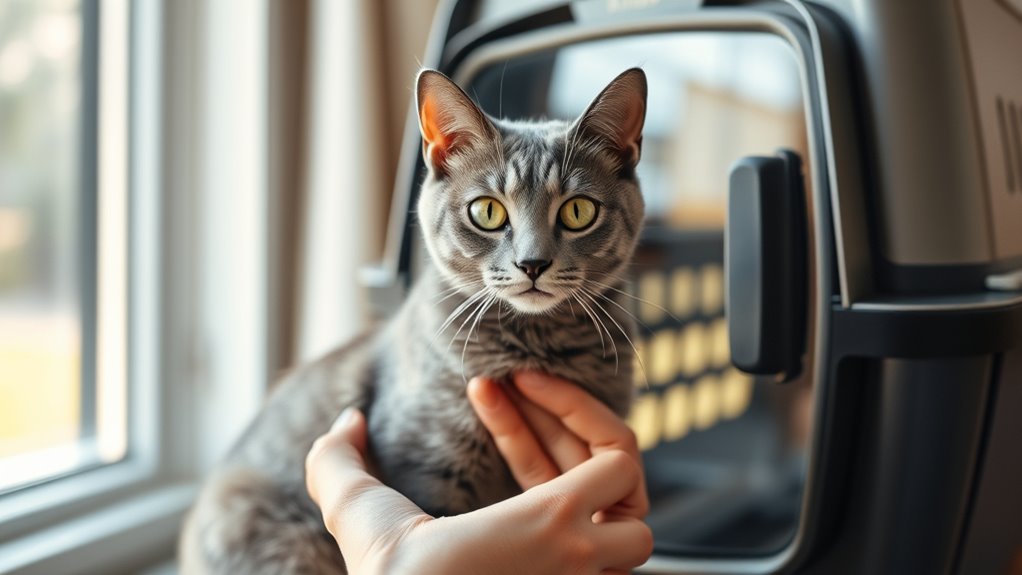
Easily Get Your Cat Into a Pet Carrier
Getting your cat into a pet carrier can feel like a real challenge, and you’re not alone in this struggle. Many pet owners find it stressful and frustrating, especially when their feline friend isn’t keen on the idea.
To easily get your cat into a pet carrier, create a calm, inviting environment with soft bedding, familiar scents, and favorite toys.
Introduce the carrier gradually using treats and positive reinforcement, rewarding curiosity without forcing. Keep the carrier in a quiet area and use gentle, slow movements to reduce stress.
Stay patient and calm throughout, as this helps build trust. If you stick with these tips, you’ll find it gets much easier to encourage your cat into the carrier.
Key Takeaways
- Gradually introduce the carrier with treats, familiar items, and positive reinforcement to build trust.
- Use calming scents and soft bedding to make the carrier inviting and help reduce stress.
- Keep the carrier in a common area with the door open, so your cat can explore at its own pace.
- Approach your cat calmly, avoid forcing, and reward gentle behavior to encourage entry.
- Place treats near the entrance, then inside, to motivate your cat to walk in voluntarily.
Why Cats Resist Carriers and How to Overcome It
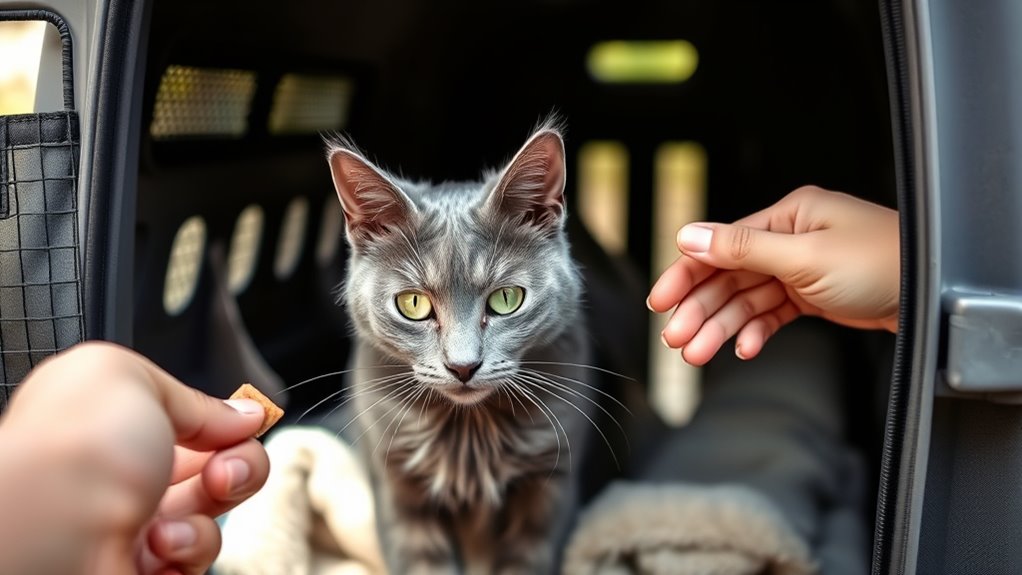
Cats often resist carriers because they find them unfamiliar and stressful, especially if they haven’t been introduced to the carrier early on. This reaction is rooted in typical cat behavior, which favors routine and predictability.
When faced with an unfamiliar object like a carrier, your cat may develop carrier anxiety, leading to resistance or even fear. This anxiety triggers defensive behaviors such as hiding, scratching, or refusing to enter the carrier.
Understanding that this resistance isn’t personal helps you approach the situation calmly. Your cat’s discomfort comes from fear of confinement or the unknown.
To overcome this, avoid forcing your cat into the carrier, as it can make things worse. Instead, recognize signs of stress and work gradually to create positive associations.
Patience and gentle encouragement are key to easing your cat’s carrier anxiety. This way, future trips will be less stressful for both of you.
How to Prepare Your Cat Before Carrier Time
Preparing your cat ahead of carrier time helps make the experience much easier. Start by slowly introducing your cat to the carrier with positive reinforcement.
Leave the carrier out in a common area with the door open, and put familiar items like a blanket or favorite toy inside. Let your cat explore it at their own pace, rewarding curiosity with treats and praise.
This builds positive associations and helps reduce fear. Incorporate carrier training into your daily routine by tossing treats near or inside the carrier so your cat starts to see it as a safe space.
Be consistent, and avoid forcing your cat into the carrier, as this can cause anxiety. Instead, make the experience enjoyable and rewarding to help your cat feel more comfortable when it’s time to go.
Proper preparation can lower stress and set a positive tone for future trips.
Creating a Calm Environment to Reduce Stress
Creating a calm environment really helps reduce your cat’s stress when it’s time to use the carrier. You might want to add some soft bedding inside the carrier and keep the area quiet—this can make your cat feel a lot safer and more comfortable.
If you’re looking for extra ways to soothe your kitty, trying out calming scents could be helpful too. Just a gentle touch of something like pheromone sprays or calming diffusers might make a big difference in helping your cat stay relaxed.
Soft, Comfortable Surroundings
A soft, cozy environment can make a big difference in helping your cat feel less anxious around the carrier. Start by placing soft bedding or cozy blankets inside it to create a familiar, inviting space.
The gentle textures help your cat feel secure and lower stress levels. Use fabrics or items your cat already loves, like a favorite blanket or towel, to boost comfort.
Keep the area around the carrier quiet and avoid sudden movements. This helps reinforce a calm environment for your cat.
By providing a warm, inviting space, your cat is more likely to see the carrier as a safe retreat instead of a threat. This comforting setup encourages your cat to explore and enter the carrier willingly.
It makes the whole process smoother and less stressful for both of you.
Minimize Loud Noises
Once your cat feels comfortable inside the cozy carrier, the next step is to keep loud noises from disrupting its calm. Sudden sounds can quickly stress your cat out, so it’s best to keep the area quiet and peaceful.
You can try sound desensitization by playing soft, calming noises at a low volume beforehand. Gradually introduce louder sounds over time to help your cat get used to different noises, reducing their impact during travel.
Avoid loud TV, vacuum cleaners, or any disruptive sounds near the carrier. Creating a peaceful environment helps your cat stay relaxed, making it easier and less stressful for both of you to get into the carrier.
Use Calming Scents
Using calming scents can really help reduce your cat’s stress during travel preparations. Calming pheromones mimic natural signals that soothe cats, making the environment feel more relaxed.
You can diffuse pheromone sprays or place scent toys near the carrier to help ease your cat’s anxiety. These scents help your cat feel safe and secure, encouraging cooperation.
Keep in mind that consistency is key. Use the scents well before the trip so your cat becomes familiar with them. This builds a sense of calm and trust.
Here’s a quick table to highlight their benefits:
| Method | Description | Effect |
|---|---|---|
| Pheromone sprays | Apply inside or near the carrier | Reduces anxiety |
| Scent toys | Place in the carrier | Promotes calmness |
| Diffusers | Use in the room | Creates a soothing environment |
| Reassurance | Combine with gentle petting | Builds trust |
This approach helps your cat relax, making transport smoother and less stressful for both of you.
Choosing the Best Pet Carrier for Your Cat
Choosing the right pet carrier is key to making your cat’s travel safe and stress-free. Think about carrier types—hard-sided, soft-sided, or backpack styles—based on your cat’s comfort and your needs.
Selecting the right carrier ensures safe, stress-free travel for your cat.
Hard-sided carriers are durable and offer better protection, making them great for car trips. Soft-sided options are lightweight and easy to carry, perfect for short trips or vet visits. Backpack carriers let you go hands-free and can help your cat feel secure.
Size is just as important. Your carrier should be big enough for your cat to stand, turn around, and lie down comfortably. Avoid carriers that are too cramped as they can cause stress. Measure your cat’s length and height, and pick a carrier with a little extra room.
Choosing the right type and size ensures your pet’s safety and makes traveling less intimidating for both of you.
How to Use Treats to Encourage Your Cat Into the Carrier
Encouraging your cat to enter the carrier can be easier with treats. Use treats your cat loves, like small pieces of cooked chicken or special cat treats, to motivate them.
Timing is key when offering treats—immediately reward your cat when they show interest or step toward the carrier, so they link the behavior with a positive outcome.
Start by placing a treat near the carrier entrance, then slowly move it inside as your cat gets more comfortable. Once they step inside, give a treat right away to reinforce the behavior.
Be patient and consistent, always rewarding your cat promptly for positive actions. Over time, they’ll associate the carrier with treats and good experiences.
This makes future attempts less stressful. Using the right treats and timing helps your cat build positive associations with the carrier, making the process much easier.
Gentle Techniques to Guide Your Cat Into the Carrier
One effective way to guide your cat into the carrier is by using gentle, steady movements that make the process feel safe and non-threatening. Use slow, calm gestures to encourage your cat to approach the carrier voluntarily.
Carrier conditioning is really important here—consistently associating the carrier with positive experiences helps your cat feel comfortable. As your cat gets closer, offer gentle praise or treats to reinforce their calm behavior.
When your cat enters the carrier, immediately reward them with treats or soothing words to create a positive association. Avoid forcing or rushing your cat, as this can make them more anxious and resistant.
Be patient and consistent, letting your cat investigate and enter the carrier at their own pace. Over time, these gentle techniques combined with positive reinforcement will help your cat see the carrier as a safe, familiar space.
Making the Carrier a Cozy, Inviting Space
If you want your cat to feel more at ease with the carrier, try adding some soft bedding and familiar blankets inside. Stuff that smells like home can really help your kitty feel safer and less stressed. When your cat recognizes the items inside, it’s like they’re being comforted by a little piece of their world.
Also, placing the carrier in a common area where your cat spends a lot of time can make it feel more like a normal part of the environment. The more familiar and less intimidating it seems, the easier it will be for your feline friend to settle in comfortably.
Soft Bedding and Blankets
Adding soft bedding and blankets transforms the carrier into a cozy, inviting space your cat will feel comfortable and secure in. Choose bedding materials like plush mats or fleece liners that provide warmth and softness.
Blanket types such as lightweight fleece or snugly fleece blankets work well to create a familiar, calming environment. Make sure the bedding is clean and free of loose threads to prevent discomfort or accidental ingestion.
Placing a familiar blanket inside, especially one with your scent, can help your cat feel more at ease. Avoid rough or noisy fabrics that might startle your feline.
The goal is to make the carrier feel like a safe retreat, helping your cat relax and reducing stress during travel.
Familiar Items Inside Carrier
Placing familiar items inside the carrier helps create a cozy, inviting space that comforts your cat and eases travel stress. Incorporate familiar scents, like a cloth or blanket with your cat’s smell, to make the carrier feel safe and familiar.
Adding your cat’s favorite toys provides a sense of security and distracts them during the journey. These items signal that the carrier is a safe space, reducing anxiety.
Keep the familiar scents subtle but noticeable so your cat can easily recognize them. Avoid overstuffing, which can make the carrier uncomfortable.
Instead, aim for a balance where your cat’s favorite items improve comfort without crowding the space. This simple step can make a big difference in helping your cat feel more at ease.
Keep Carrier in Common Area
Keeping the carrier in a common area where your cat spends a lot of time helps it become a familiar and non-threatening part of their environment.
By placing it in a visible, accessible spot, you improve carrier accessibility and encourage your cat to see it as a safe space.
Regular daily exposure is key; let your cat investigate around the carrier, sniff it, and even rest nearby.
Avoid hiding it in closets or out-of-the-way corners. Instead, keep it in a cozy, inviting location that becomes part of their routine.
When the carrier is a natural, non-intimidating feature of your home, your cat will be more comfortable approaching it, making future trips less stressful and easier for both of you.
Common Mistakes That Make Getting Your Cat Into the Carrier Harder
One common mistake that makes getting your cat into the carrier harder is approaching the task with too much force or impatience. Cats are sensitive to your energy, and rushing can increase their travel anxiety.
Also, ignoring the carrier design can backfire; a poorly designed carrier might be uncomfortable or difficult to access, making your cat resist. Forcing them in or using loud sounds can heighten their fear, making future attempts more challenging.
Instead, choose a carrier that’s well-ventilated, easy to open, and comfortable for your cat. Allow your cat to investigate the carrier on their own terms before attempting to place them inside.
Choose a comfortable, well-ventilated carrier and let your cat explore it at their own pace.
This reduces their stress and builds familiarity. Remember, patience and understanding are key. Rushing or using aggressive methods only prolongs the process and increases your cat’s discomfort, making it harder to get them into the carrier in the future.
Tips for Handling Frightened or Aggressive Cats
When handling frightened or aggressive cats, it’s important to stay calm and move slowly to avoid making them more stressed. Recognize signs of fear like hissing, flattened ears, or a puffed-up tail, and respect their body language.
Use gentle handling techniques and calming tools like a soft towel or calming spray to help your cat feel safe. Gradually introducing handling and the carrier helps build trust over time, making future interactions less stressful.
Positive reinforcement, such as treats or praise, encourages your cat to cooperate and helps them see you as non-threatening. Avoid sudden movements or forcing them, as that can escalate their aggression.
Instead, focus on patience, consistent cues, and understanding your cat’s signals. Approaching with care and empathy will help your cat feel more comfortable and less fearful during handling.
How to Keep Your Cat Calm During Transit and Troubleshoot Resistance
Once your cat is safely inside the carrier, the next challenge is keeping them calm during the trip. Remember, travel anxiety often makes cats restless, vocal, or try to escape.
To troubleshoot resistance, speak softly and stay calm yourself—your mood influences your cat’s behavior. Covering the carrier with a light cloth can help reduce visual stimuli and soothe your cat, easing travel stress.
Putting familiar blankets or toys inside the carrier can provide comfort. Keep the carrier steady and avoid sudden movements during transport. If your cat starts to panic, gently talk to them or offer treats if possible.
Patience is key; some cats need time to get used to traveling. Recognizing signs of stress early helps you respond better, making the journey less stressful for both of you.
Frequently Asked Questions
How Long Should I Spend Training My Cat to Enter the Carrier?
You should spend a few minutes daily over a week or two training your cat to enter the carrier. Focus on making the carrier a familiar and positive place for your cat.
Use treats and calm praise as positive reinforcement. Keep the sessions short and consistent to avoid stressing your cat.
Gradually increase the time your cat spends inside the carrier. Patience is key—if your cat feels comfortable, they’ll be more willing to enter willingly.
This makes future trips less stressful for both of you. Remember, every cat is different, so go at your cat’s pace.
What Are Signs My Cat Is Too Stressed or Scared?
You can tell your cat is stressed or scared by watching how it moves and reacts. Keep an eye out for signs like flattened ears, wide eyes, a puffed-up tail, or tense muscles.
If your cat tries to hide, hisses, or avoids eye contact, these are also clues it’s feeling overwhelmed. Spotting these signals early can help you soothe their anxiety quickly.
This makes the whole process less stressful for both of you and helps your cat feel more secure.
Can Different Carrier Types Affect How Easily a Cat Enters?
Yes, different carrier types can really affect how easily your cat enters. The design, entrance style, and safety features all matter, influencing how comfortable your cat feels and whether they’re willing to go in.
For frequent travel, pick a carrier that matches your cat’s personality, uses good training techniques, and includes positive reinforcement. A good choice can make trips less stressful for both of you.
Pay attention to how your cat reacts to different designs so you can find the best fit. This way, getting your cat in the carrier becomes a smoother, easier process.
How Often Should I Practice Carrier Training With My Cat?
You should practice carrier training with your cat daily or at least several times a week to help them get comfortable with the carrier.
Keep sessions short and positive, using treats and praise to make it a good experience. Gradually increase the time your cat spends in the carrier, making sure each visit is stress-free.
Consistent practice helps your cat feel more at ease and reduces anxiety during trips, making future travels easier for both of you.
Are There Specific Scents or Sounds That Calm Cats During Carrier Time?
Think of your cat’s senses as a gentle breeze guiding them to calmness. You can use specific scents like lavender or chamomile, which often match their scent preferences and soothe nerves.
Pair these with calming music—soft melodies that mimic a peaceful lullaby. Together, these sensory signals create a tranquil atmosphere, making carrier time less stressful.
Your calm presence and these calming cues help your cat feel safe and secure.
Conclusion
Getting your cat into a carrier doesn’t have to be stressful. Understanding their resistance, preparing them properly, creating a calm environment, and using positive reinforcement can make the process so much easier.
Choose the right carrier, make it inviting, and handle your cat gently. This helps them feel safe and reduces their anxiety during the process. Stay patient and avoid rushing—cats pick up on your mood.
Avoid common mistakes like forcing them or using the carrier as a punishment. Instead, reward your cat with treats and praise for going into the carrier willingly. Keep the environment calm and quiet during the process.
With these tips, you turn a challenging task into a smooth experience. Properly handling your cat makes travel safer, easier, and more comfortable for both of you, especially when it comes to getting your cat into a pet carrier.