7 Signs to Tell If Your Cat Aspirated Medicine
Many cat owners know the anxiety of giving medication and hoping your feline friend will take it without any issues. It’s a common worry that your cat might accidentally aspirate the medicine, leading to serious health concerns.
You’re not alone—many people struggle with recognizing the signs of aspiration quickly enough.
If your cat has aspirated medicine, you might notice sudden coughing, gagging, or wheezing shortly after swallowing.
Watch for labored or open-mouth breathing, unusual vocalizations, or persistent hacking. Drooling excessively, hesitating before eating, or showing signs of lethargy could also be signs.
Behavioral changes, like hiding or confusion, are important too. Knowing these signs can help you respond quickly—keep going to learn more about ensuring your cat’s safety.
Key Takeaways
- Sudden coughing or gagging during or after giving your cat medication.
- Gasping or labored breathing can be a sign that their airway is obstructed.
- Excessive drooling or trouble swallowing after medication is common if they’ve aspirated.
- Listen for unusual sounds like high-pitched meows or distress calls.
- If your cat is lethargic, less active, or refuses to eat after medication, check for aspiration.
How to Recognize If Your Cat Has Aspirated Medicine
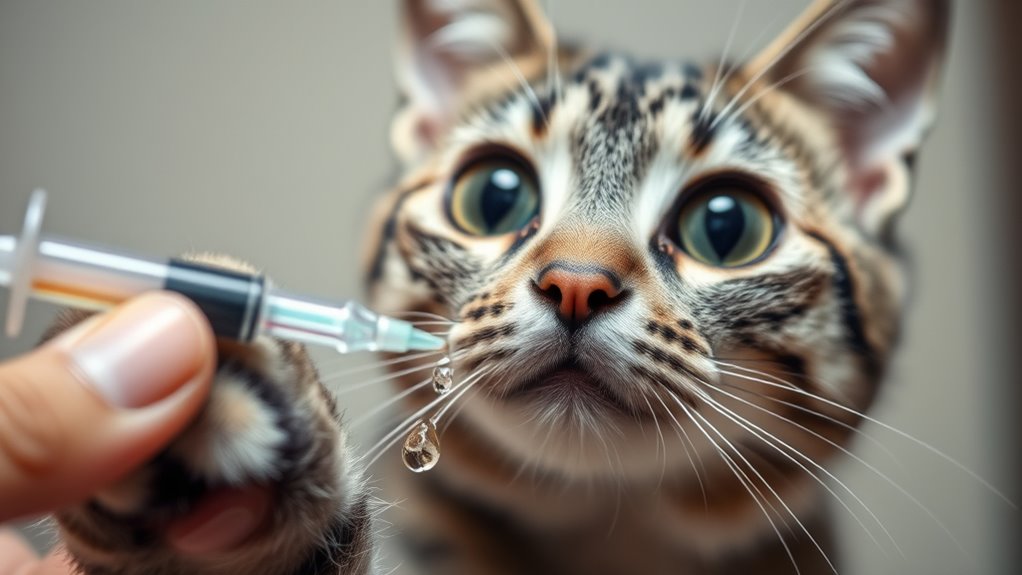
Wondering how to tell if your cat has aspirated medicine? Recognizing early signs is key to preventing serious issues and keeping your kitty safe.
If your cat suddenly coughs during or right after medication, that could be a sign they’ve aspirated. Keep an eye out for unusual mouth or throat movements, gagging, or wheezing.
Watch for rapid, shallow breathing or if your cat seems distressed or uncomfortable. Drooling excessively or trying to clear their throat might also be signs something’s wrong.
Watch for rapid, shallow breathing, drooling, or throat clearing—signs your cat may be in distress after medication.
Cats often hide their discomfort, so observe their behavior closely. You might notice a decreased appetite or lethargy if aspiration has caused irritation or infection.
Paying attention to these signs helps you act quickly and prevent complications. Properly giving medication is important, but knowing what to look for if something goes wrong is just as vital.
If you suspect your cat has aspirated medicine, always consult your vet right away. Prompt action can prevent further health problems and ensure your kitty gets the care they need.
Signs of Respiratory Distress in Cats
If your cat is having trouble breathing, you’ll probably notice that it’s struggling with its breathing. It might look like it’s working harder than usual, with labored or irregular breathing patterns. Sometimes, they even seem to be in distress just trying to get air in.
You might also hear some strange noises when your cat breathes, like wheezing or crackling sounds. These sounds can be a sign that something’s not right. If you notice any of these signs, it’s really important to get your cat to a vet right away. They need prompt care to help them breathe easier and stay safe.
Labored Breathing Patterns
Labored breathing in cats often shows as noticeable effort or difficulty when they breathe. You might see them using extra muscles, like their chest or abdomen, or notice their nostrils flaring. These are clear signs of stress and respiratory distress.
Watch for rapid, shallow breaths or a hunched posture, which can also indicate trouble. Here’s a quick guide to common signs:
| Symptom | Description | Urgency |
|---|---|---|
| Increased effort | Struggling to breathe, visible effort | Immediate |
| Open-mouth breathing | Breathing with mouth wide open | Urgent |
| Nostrils flaring | Enlarged nostrils during breathing | Critical |
If you notice these signs, seek veterinary care quickly.
Audible Respiratory Noises
When a cat is experiencing respiratory distress, you might notice unusual sounds during their breathing. Audible respiratory noises like wheezing, coughing, or stridor can indicate trouble.
These sounds may be louder or more frequent than normal, suggesting your cat’s airway is compromised. Pay close attention to any persistent or changing noises, as they could mean inflammation, mucus buildup, or obstruction.
These are common signs of aspiration and are important clues in evaluating your cat’s health. Recognizing these cues early helps determine if immediate veterinary care is needed.
If you hear abnormal breathing sounds, don’t wait to seek professional advice. Early detection of respiratory issues can prevent further complications and ensure your cat gets prompt treatment.
Unusual Vocalizations and Gasping After Swallowing
After your cat swallows medication, unusual vocalizations or gasping can be signs that something’s wrong. If you notice your cat making strange sounds like high-pitched meows, wheezing, or sudden gasps, it could mean there’s a problem with swallowing or the airway.
These sounds often happen when the medication gets stuck or accidentally enters the windpipe, causing irritation or partial blockage. Gasping or frantic breathing after swallowing might be your cat trying to clear an obstruction or breathe more easily.
Pay close attention if your cat seems distressed, makes more noise than usual, or acts anxious right after taking medicine. These signs could mean your cat has aspirated the medication, which can lead to respiratory issues if not treated quickly.
Recognizing these unusual sounds and gasping early helps you get veterinary care fast. It can prevent more serious health problems from developing.
Drooling, Difficulty Swallowing, or Hesitation
If your cat starts drooling excessively, has trouble swallowing, or hesitates before eating or drinking, these can be signs that something’s wrong after giving medication. Different types like pills, liquids, or injections can pose aspiration risks if not given carefully.
When your cat struggles to swallow or drools more than usual, it might mean the medication entered the airway instead of the esophagus. This can cause discomfort and suggests that the medication was aspirated.
If your cat struggles to swallow or drools excessively, medication may have been aspirated into the airway.
Watch for signs like gurgling sounds or reluctance to eat or drink, which indicate your cat is having trouble swallowing. If you notice these symptoms, it’s important to act quickly.
Prompt intervention can prevent further complications. Always keep a close eye on your cat after giving medication, especially if it’s harder to swallow or has a higher aspiration risk.
Coughing Fits and Persistent Hacking
You might notice your cat coughing suddenly or hacking repeatedly without pause, especially after giving medication. Certain triggers, like strong-smelling or thick liquids, increase the risk of aspiration.
Different types of medication, such as liquid syrups or powders, can be more likely to cause coughing fits if not given carefully. If your cat starts hacking or coughing persistently after medication, it may mean the substance entered the lungs instead of the stomach.
These episodes are often sharp and sudden, not like typical sneezing. Recognizing these signs early is important so you can seek veterinary care quickly and prevent further complications from aspiration.
Behavior Changes and Lethargy After Ingestion
When your cat ingests medication that irritates or affects their respiratory or nervous system, you might notice noticeable changes in their behavior. Behavioral changes can include hiding more than usual, acting confused, or showing signs of distress.
Lethargy causes your cat to become unusually sluggish, spend more time sleeping, or avoid movement altogether. These signs often mean the medication has impacted their system, making them feel unwell or overwhelmed.
Lethargy in cats signals they may be unwell from medication or toxicity, requiring close monitoring.
Lethargy can also result from the drug’s toxic effects or irritation in the respiratory or nervous pathways. You might see decreased appetite or reluctance to play, which signals your cat isn’t feeling right.
Recognizing these behavioral changes and lethargy is important because they often point to underlying issues caused by the medication. Monitoring your cat closely after ingestion helps you spot when their condition is worsening and may need urgent attention.
When to See the Vet Immediately
If you see your cat having trouble breathing, coughing all the time, or suddenly drooling more than usual, you should act quickly. These signs could be serious and might need urgent veterinary care.
Don’t wait around—reach out to your vet right away to make sure your cat gets the help she needs. It’s always better to be safe and get her checked out as soon as possible.
Difficulty Breathing Noticed
Difficulty breathing after your cat aspirates medicine is a serious emergency that needs immediate veterinary attention. If your cat shows signs of labored or rapid breathing, don’t wait—seek help right away.
Difficulty breathing can mean a blocked airway or lung aspiration, which can become life-threatening quickly. To prevent this, practice aspiration prevention and ensure medication safety by giving pills carefully or using suitable alternatives.
Keep a close eye on your cat after giving medication. Watch for labored or noisy breathing, wheezing, or open-mouth panting. If you notice any of these symptoms, act fast and get your cat to the vet immediately.
Prompt treatment can make a big difference in your cat’s recovery.
Persistent Coughing Occurs
Persistent coughing after your cat aspirates medicine can quickly signal a serious problem that needs immediate veterinary attention. Causes like irritation or infection can get worse if not treated promptly.
If your cat keeps coughing, it’s important to act quickly. This ongoing cough might be a sign of aspiration pneumonia or airway irritation that requires urgent care. Treatment options include antibiotics, anti-inflammatory meds, or oxygen therapy, depending on how severe it is.
Recognizing these signs early can help prevent more serious complications. Keep an eye on your cat and consult your vet if the cough persists or worsens.
| Coughing Causes | Treatment Options | When to See the Vet |
|---|---|---|
| Irritation from aspirated material | Antibiotics or anti-inflammatory meds | Persistent, worsening cough |
| Infection or pneumonia | Oxygen therapy, hospitalization | Cough lasting over 24 hours |
| Airway inflammation | Supportive care | Difficulty breathing |
Sudden Drooling Surfaces
Sudden drooling in your cat can be alarming and may mean a serious problem that needs immediate vet care. If your cat shows signs like sudden nausea and lots of salivation, it could be a warning that they’ve aspirated medicine. Watch for these urgent signals:
- Rapid increase in drooling or thick saliva
- Unexplained gagging or choking
- Signs of breathing difficulty
- Lethargy or weakness
- Sudden changes in behavior or alertness
These symptoms suggest the medicine may be irritating the airway or causing choking. Don’t wait—seek veterinary care right away to prevent further complications. Taking quick action can make a big difference in your cat’s recovery and ensure they get the help they need.
Frequently Asked Questions
Can a Cat Cough Without Having Aspirated Medicine?
Yes, your cat can cough without having aspirated medicine. Coughing can be caused by many things, like allergies, infections, or asthma.
If your cat coughs often, it’s probably due to these underlying health issues rather than aspiration. Watch for other signs like sneezing, wheezing, or trouble breathing.
It’s a good idea to check with your vet. They can figure out what’s causing the cough and make sure your cat stays healthy.
How Long After Ingestion Do Symptoms Typically Appear?
Symptoms of aspiration usually show up within a few hours after ingestion, but it can vary depending on how much medicine was inhaled and your cat’s health.
Keep an eye out for signs like coughing, difficulty breathing, or wheezing. These can develop quickly or gradually, so stay alert.
If you notice any of these symptoms, contact your veterinarian right away. Prompt action is crucial for your cat’s well-being.
Are Certain Medications More Likely to Cause Aspiration?
Yes, certain medication types are more likely to cause aspiration in cats, especially liquid forms or those with thick, sticky textures. Medications with higher dosage risks can also increase the chance of aspiration if not given carefully.
Always use proper techniques when giving meds, and don’t hesitate to ask your vet if you’re unsure. Being cautious helps prevent accidental inhalation, which can lead to respiratory issues or other complications.
Can Aspiration Lead to Long-Term Lung Damage in Cats?
Aspiration can cause long-term lung damage in cats, much like a wildfire scars a forest. When your cat aspirates, it risks developing aspiration pneumonia, which can lead to ongoing respiratory issues.
If left untreated, inflammation and infection may cause permanent damage to lung tissue. This can affect your cat’s breathing and overall quality of life.
Getting your cat to the vet quickly is crucial to prevent or reduce lasting harm from aspiration. Prompt care can make a big difference in their long-term health.
What Home Remedies Can Help if My Cat Aspirates Medicine?
If your cat aspirates medicine, avoid home remedies and seek veterinary care immediately.
But for symptom management, you can try natural remedies like humidifying the air or offering small amounts of water to help soothe their throat.
Keep your cat calm and monitor for difficulty breathing or coughing.
Conclusion
If you notice any of these signs after your cat takes medicine, act quickly. Aspiration can be serious, so don’t wait to get help.
Studies show that up to 10% of cats experience complications from inhaled foreign objects, including medication. Catching symptoms early can prevent severe respiratory issues and save your pet’s life.
Stay vigilant and monitor your cat closely. If you suspect aspiration, don’t hesitate to seek veterinary care. Your quick response can make all the difference.
Remember, being alert to the signs of aspiration is key to protecting your cat’s health and well-being.