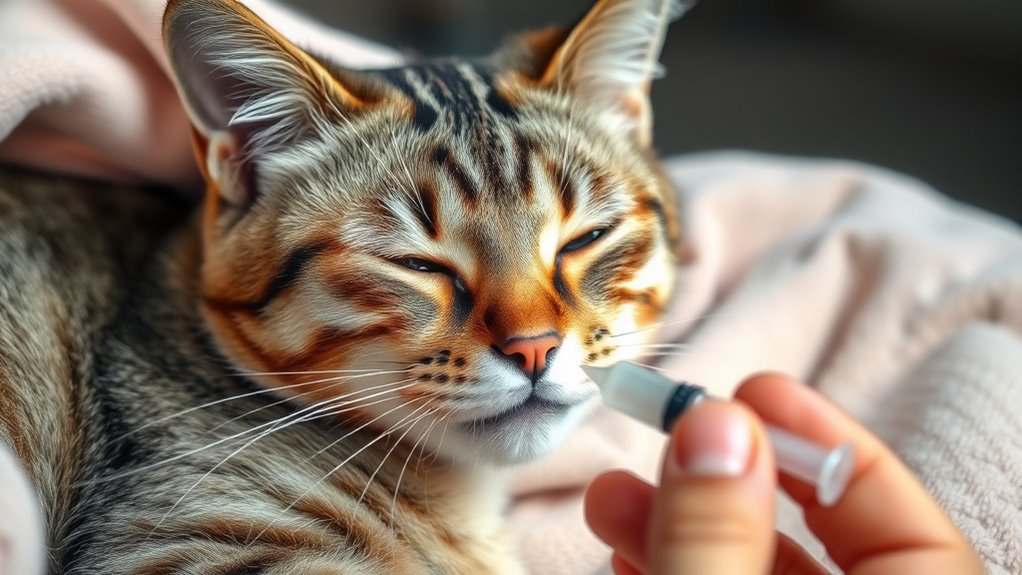
7 Tips to Give Cat Medicine Without Fighting
Giving your cat medicine can feel like a major showdown, and you’re not alone in struggling with it. Many pet owners find it stressful and frustrating to get their furry friends to take their medication without a fight.
Luckily, there are simple tricks to make the process smoother and less stressful for both of you.
To give your cat medicine without fighting, start by creating a calm, familiar environment and use positive reinforcement like treats and praise for cooperation.
Gently handle your cat and use techniques such as syringe-administered liquids or pill pockets to make the process easier.
Keep treats ready for after medication to reinforce good behavior, and consider using calming music or a quiet space.
If resistance continues, there are alternative approaches your vet can suggest—discover how to make it smoother.
Key Takeaways
- Establish a calm routine and use positive reinforcement, like treats, immediately after medication to create a positive association. This helps your cat feel more comfortable with the process.
- Use a syringe or pill pocket to make giving liquids or tablets easier and less stressful for both of you.
- Handle your cat gently and speak softly to reduce anxiety during medication time. A calm voice can make a big difference.
- Gradually get your cat used to the process with short, consistent sessions to build trust over time.
- If needed, ask your vet about alternative options like flavored, compounded, or transdermal medications to make administration easier.
What Are the Common Challenges When Giving Your Cat Medicine?
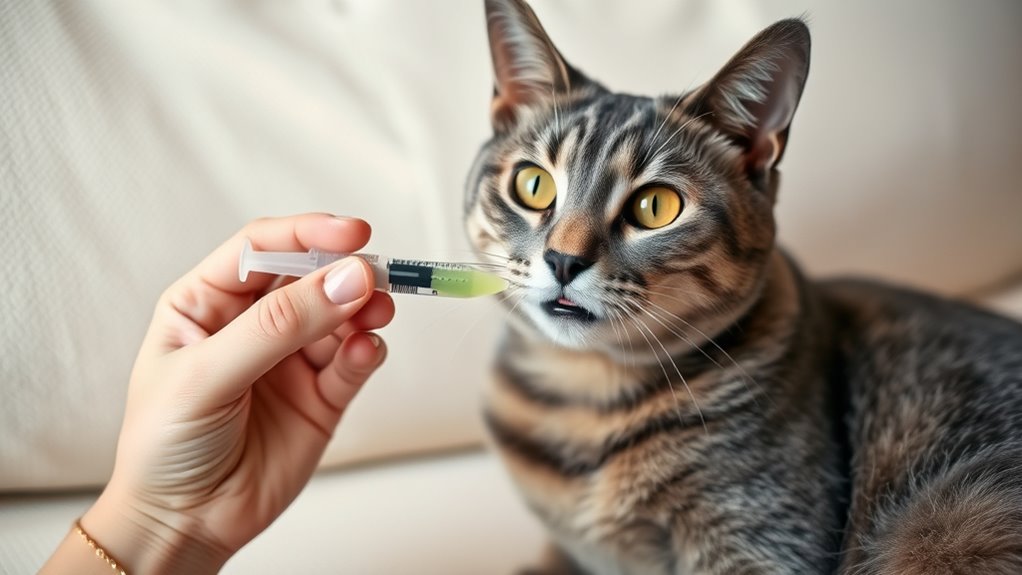
Giving your cat medicine can be tricky because cats are often uncooperative and suspicious of anything unfamiliar. They may resist medication timing, making it hard to give doses on schedule.
One common challenge is that cats quickly sense when something’s different, especially if the medicine has a strong smell or unusual texture. This suspicion often leads to scratching, biting, or hiding, which makes it even harder.
Cats can sense unfamiliar smells or textures, leading to scratching, biting, or hiding during medication time.
Some cats refuse to swallow pills, forcing you to find alternatives like flavored treats or compounded liquids. The size or taste of the medication can also cause more resistance.
Cats are experts at avoiding medicine, and their sharp reflexes make it tough to hold them still. These challenges need patience, creativity, and understanding of your cat’s behavior.
Overcoming these obstacles involves finding effective ways to deliver medication on time and exploring options that make the process easier for both of you.
How Can You Prepare Your Cat for Medication Time?
Preparing your cat for medication time can make the process smoother and less stressful for both of you. Establishing a calm, consistent routine helps your cat feel more comfortable and reduces anxiety.
Start by gently associating medication time with positive experiences, like offering a tasty treat before or after. Keep a calm demeanor to set a reassuring tone.
Gradually introduce your cat to taking medication—perhaps by practicing with empty capsules or using a syringe with water. Consistency is key; try to give medication at the same time each day so your cat knows what to expect.
Create a quiet, familiar environment free of distractions. Over time, these steps help your cat develop positive associations with medication time, making it easier to administer medicine without stress or resistance.
Building this routine fosters cooperation and makes future medication easier.
What’s the Best Method to Administer Medicine to Your Cat?
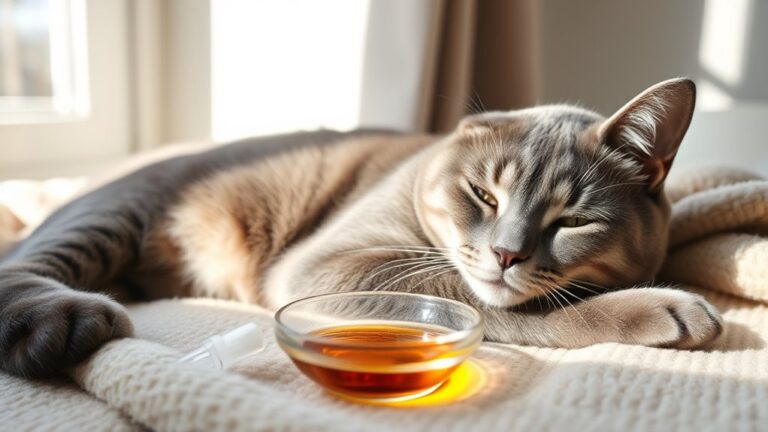
If your cat resists pills, consider liquid alternatives. Many medications come in liquid form or can be compounded by your vet. These are easier to give with a syringe or dropper, which allows for precise dosing and quick delivery.
To improve success, try gently holding your cat’s head and speaking in a calm voice. Using pill pockets to hide tablets makes them more appealing. Alternatively, ask your vet about liquid options or compounded medications.
Employ a syringe or dropper for accurate doses when giving liquid medication. Choosing the right method helps reduce fighting and makes sure your cat gets the treatment they need quickly and comfortably.
How Do You Keep Your Cat Calm and Comfortable During Medication?
So, when you’re giving your cat medication, it’s really helpful to create a calm and cozy environment. Keep everything quiet and familiar, so your kitty doesn’t get overwhelmed or stressed out.
Try handling your cat gently and softly—being gentle can make a big difference in helping them feel safe and comfortable. And afterward, offering a treat or some praise can help your cat associate the experience with something positive, making future medication times a little easier.
Create a Calm Environment
Creating a calm environment is essential for helping your cat stay relaxed during medication. A peaceful setting reduces stress and makes the process smoother.
You can achieve this by playing calming music, which helps mask unfamiliar sounds and eases anxiety. Make sure your cat has a safe space nearby, like a cozy corner or a familiar room, where they feel secure.
Keep the area quiet and avoid sudden movements that might startle your cat. Consider using a soft blanket or familiar bedding to add comfort.
These small adjustments create a soothing atmosphere, making your cat more receptive to medication and less likely to resist. Maintaining this calm environment supports a more peaceful and stress-free experience for both of you.
Use Gentle Handling Techniques
Using gentle handling techniques can make a big difference in keeping your cat calm and comfortable during medication. You want to approach your cat with a gentle touch, avoiding sudden movements that can cause stress. Use positive reinforcement, like treats or soothing words, to create a sense of trust.
Hold your cat securely but gently, supporting their body without squeezing. This calm, confident approach helps reduce anxiety for both of you.
| Calm Environment | Gentle Touch |
|---|---|
| Reduces Stress | Builds Trust |
| Promotes Cooperation | Guarantees Comfort |
Practicing patience and using positive reinforcement will help your cat associate handling with good experiences, making future medication easier.
Offer Comfort and Rewards
Offering comfort and rewards during medication helps keep your cat calm and cooperative. Providing feline comfort reduces stress and makes the process less intimidating.
Positive reinforcement is key. Reward your cat with treats or gentle praise afterward to encourage calm behavior during future medication sessions. Creating a soothing environment can also help, like speaking softly or offering a cozy hiding spot.
Use treats your cat loves as a reward immediately after giving medication. Speaking in a calm, reassuring voice can ease any anxiety. Incorporate a favorite blanket or bed to promote relaxation and a sense of security.
How Can Rewards and Treats Encourage Cooperation?
Have you ever wondered how rewards and treats can make giving your cat medicine easier? Using treat motivation and positive reinforcement encourages your cat to cooperate.
When you reward your cat immediately after a successful medication session, it creates a positive association with the process. This helps your cat expect good things instead of fearing the experience.
Small, tasty treats work best because they motivate your cat to stay calm and patient. Over time, your cat begins to see medication time as a rewarding event rather than a stressful one.
Consistent praise and treats also reinforce good behavior, making future medication sessions smoother. Remember to give treats right after administering the medicine so your cat links the positive reward with the behavior.
This approach builds trust and reduces stress, making it easier for both of you to get through medication time without fighting.
What Should You Do When Giving Medicine Gets Difficult?
When giving your cat medicine becomes challenging, staying calm and patient is key. Cats are sensitive to your emotions, and their anxiety can make medication harder.
If your cat resists, try medication alternatives like flavored liquids or pill pockets to make things easier. You might also break the medication into smaller doses if your vet approves, which can help.
Using gentle, reassuring techniques can help reduce stress for both of you.
Try wrapping your cat loosely in a towel to prevent scratching and keep them calm.
You can also use distraction techniques, like offering a favorite treat after giving the medication.
And don’t hesitate to ask your veterinarian about safe medication options that might be easier to administer.
When Should You Seek Help From Your Veterinarian?
If giving your cat medication becomes increasingly difficult or stressful, it’s important to recognize when you need professional help. Watch for signs of distress or adverse reactions like vomiting, lethargy, or behavioral changes.
Being aware of these symptoms is key to keeping your cat safe and healthy. If your cat consistently resists medication or shows signs of pain or discomfort, it’s time to see your veterinarian.
Your vet can help determine alternative methods or formulations that make giving medicine easier. Don’t force the issue if it causes your cat excessive stress or if you’re unsure how to proceed safely.
Veterinary guidance can include demonstrating proper techniques or suggesting other treatment options. Asking for help isn’t a sign of failure; it’s a responsible step to ensure your cat gets the medication they need without suffering.
Always prioritize your cat’s safety and comfort, especially when medication becomes a challenge.
Frequently Asked Questions
How Can I Hide Medicine in My Cat’s Food Effectively?
To hide medicine in your cat’s food effectively, try mixing it with foods your cat loves, like wet food or a treat with a strong aroma.
Experiment with different textures to match your cat’s preferences—some cats like creamy, while others prefer chunky. Make sure the medicine is thoroughly blended so your cat can’t detect it.
Serve in small portions so your cat finishes the entire meal without suspicion. This makes the process smoother and less stressful for both of you.
Are There Specific Flavors or Types of Treats That Work Best?
You’ll be surprised how much flavor preferences matter when choosing treat types for medicine. Opt for irresistibly fragrant options like tuna or chicken, which often mask medication better.
Cats can be surprisingly picky, so trying a variety of flavors helps you find what they love. Ironically, the most enticing treats are usually the ones they can’t resist, making administering medicine a breeze.
Just remember, the right flavor and treat type can turn a battle into a quick, easy fix.
What Are Signs My Cat Is Stressed During Medication?
Your cat’s stress indicators during medication include flattened ears, dilated pupils, tail flicking, or trying to hide. You might notice excessive vocalization or trembling as well.
To help ease their anxiety, try calming techniques like speaking softly, offering treats, or providing a cozy hiding spot beforehand. Watching for these signs helps you adjust your approach.
This way, medication time becomes less stressful for your feline friend.
Can I Use Alternative Medicine Methods for My Cat?
Yes, you can look into alternative medicine methods for your cat, like herbal remedies and acupuncture. These natural options can work alongside traditional treatments and help reduce stress or discomfort.
Just make sure to check with your veterinarian before trying any of these methods. They can confirm if they’re safe and appropriate for your cat’s specific health needs.
Adding herbal remedies or acupuncture might improve your cat’s well-being and could mean fewer medication struggles. Always prioritize your vet’s advice to keep your feline friend safe.
How Often Should I Try Different Medication Techniques?
You should try different medication techniques regularly, maybe every few days, to prevent your cat from becoming resistant or anxious.
Balance consistency with variety. Sticking to a fixed schedule helps, but switching up your technique can create new opportunities for success.
Watch how your cat reacts. If one method works well, use it more often.
Adjust your approach based on how things go, making sure you’re not overusing or underusing any one technique.
Conclusion
Remember, giving your cat medicine is like gently guiding a wild river—patience and the right approach make all the difference. I once watched a friend tame her skittish cat with soothing words and treats, turning chaos into calm.
With a bit of preparation, staying calm, and positive reinforcement, you can make medication time go smoothly. It’s all about creating a peaceful environment and making your cat feel safe.
And don’t forget, if giving your cat medicine becomes too challenging, your veterinarian is just a call away. They can help you find the best way to give medication without the fight, making the process easier for both of you.