Why Does My Cat Meow When I Pet Her?
Many cat owners notice their feline friends meowing when they’re being petted and wonder what it means. You’re not alone—this is a common question among pet lovers trying to understand their cats better.
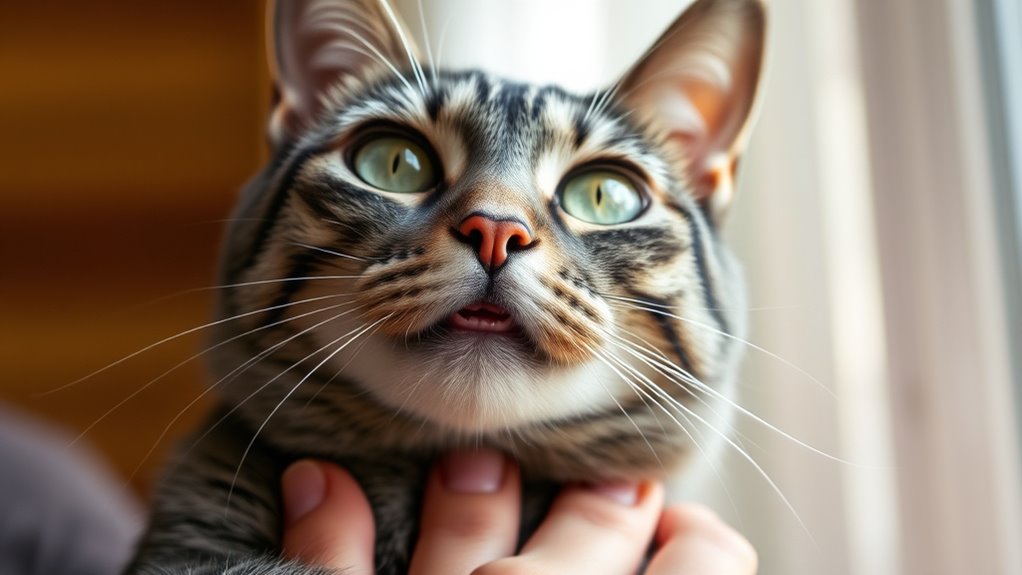
When you pet your cat, her meowing often shows she’s comfortable, happy, or seeking more attention. Soft meows may mean she’s relaxed and enjoying the interaction, while loud calls could signal overstimulation or a need.
She might also be trying to communicate her mood or even request something, like food or a break. Understanding her body language can give you clues about her feelings.
Keep exploring these cues to better connect with her and strengthen your bond.
Key Takeaways
- Cats meow during petting to show they’re enjoying it, feeling comfortable, or to ask for more attention and reassurance.
- Sometimes, meowing means they’re overstimulated and need a break, so it’s good to watch for signals to pause or stop.
- The tone of their meow can tell you if they’re happy, content, or just a little annoyed.
- Pay attention to their body language, like flicking tails or ear positions, to see if they’re comfortable or getting overstimulated.
- If your cat suddenly or constantly meows, she might be uncomfortable, feeling unwell, or just wanting more interaction.
Why Do Cats Meow When You Pet Them?
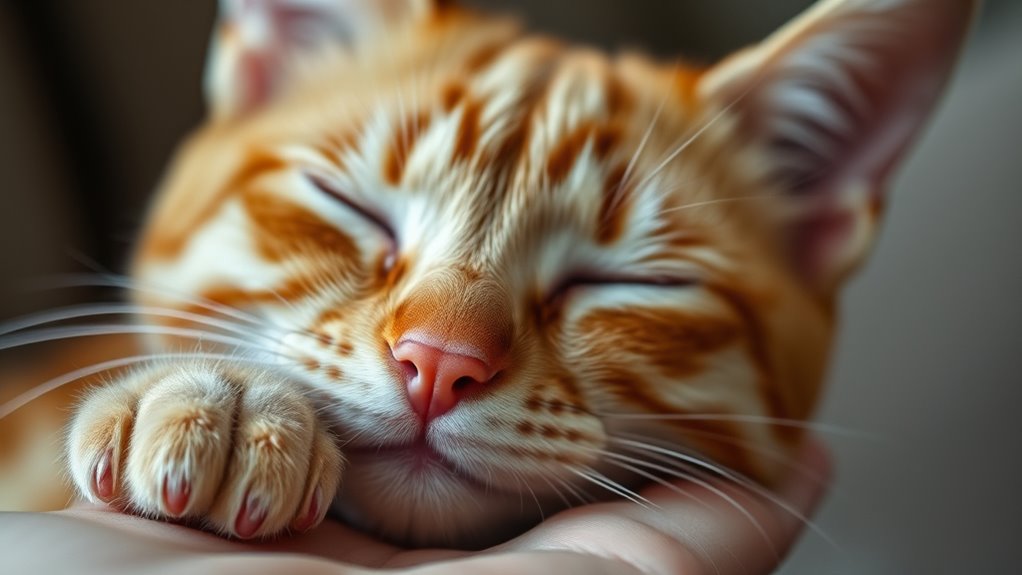
Have you ever wondered why your cat sometimes meows when you pet them? It’s often a way they communicate vocally, sharing how they feel.
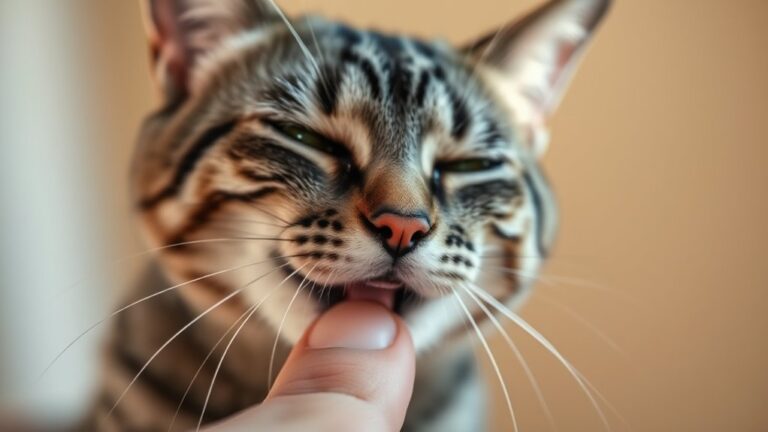
Cats meow during petting to show their emotional needs—whether they’re happy, want attention, or need reassurance. When they meow, they might be telling you they enjoy the interaction or want more contact.
Some cats use meowing to express comfort, while others might do it if they’re overstimulated or need a break. It’s important to pay attention to their tone and body language to understand what they’re conveying.
Petting can make them feel good, and their meow helps bridge the gap between how they feel and your awareness. Recognizing this vocal cue lets you respond in a way that makes your cat feel safe, loved, and understood.
Recognizing Different Types of Meows During Petting
As you’re petting your cat, you’ll start to notice all sorts of different meows, and each one kind of tells you how they’re feeling. For example, soft, gentle meows usually mean they’re feeling happy and relaxed, like they’re just enjoying the moment.
On the other hand, if your cat is making loud, persistent calls, it might be trying to tell you something specific — maybe it wants more attention or has a need that isn’t being met. You might also hear purring and chirping, which are other sounds that show your kitty is feeling excited or really happy during your time together.
Soft, Gentle Meows
Her gentle vocalizations are a quiet way of expressing happiness without being overstimulating. When your cat meows softly, she’s likely signaling trust and a sense of security in your presence.
These meows may also be her way of telling you she’s pleased but not demanding attention. Recognizing these subtle sounds helps you understand her mood and bond more deeply.
Loud, Persistent Calls
She might be overstimulated, in pain, or just craving more interaction. Recognizing these loud meows helps you understand what she needs better.
Unlike gentle purring, these intense calls are her way of trying to communicate distress or that she wants the current activity to stop. Pay attention to her body language too—tensing, swatting, or trying to move away.
Respond promptly to prevent her frustration from escalating. In this case, her loud, persistent calls are her signals that she wants different handling or a break from petting.
Purring and Chirping
While loud, persistent meows often signal discomfort or frustration, softer sounds like purring and chirping usually mean something different during petting.
Purring patterns can vary, with gentle, steady vibrations showing your cat is content and relaxed. You might notice her purrs become more rhythmic or louder as she enjoys your touch.
Chirping sounds often mix a trill and a chirp, signaling excitement or happiness. Cats may chirp when they’re feeling playful or eager for your attention.
Recognizing these subtle sounds helps you understand when your cat truly enjoys the interaction. These gentle vocalizations show her comfort and affection.
They make petting a positive experience for both of you.
How Cats Use Meowing to Show Comfort and Pleasure
When your cat meows softly while you’re petting them, it’s usually their way of showing that they’re feeling comfortable and happy. You might also notice their body language—like relaxed muscles and gentle purring—which just confirms they’re enjoying the moment. These little vocal cues and physical signals go hand in hand to let you know your cat feels safe and content in your company.
Vocal Expressions of Contentment
Cats often meow softly and rhythmically when they’re feeling relaxed and happy. They use their voices as a gentle sign of comfort. This kind of vocal communication clearly shows they’re content and enjoying your attention.
These gentle meows are a way for cats to express trust and satisfaction. They feel safe and at ease around you. You might notice their meow becomes more melodic or softer as they relax under your touch.
These sounds aren’t demanding; they’re a subtle way for your cat to show her pleasure. Recognizing this helps strengthen your bond and confirms she’s comfortable and happy with you.
It’s a beautiful, natural way for your cat to show her contentment.
Purring and Meowing Connection
Purring and meowing often work together as signals of comfort and pleasure in cats. When your cat purrs, it’s a sign she feels safe and relaxed.
Meowing, on the other hand, is a way for her to communicate her feelings to you. When she purrs while meowing during petting, she’s showing she’s happy and enjoying it.
These sounds work together to reinforce her positive experience, making her feel secure and appreciated.
Your cat has learned that these vocalizations get your attention and affection. This helps strengthen your bond.
Basically, her purring and meowing during petting are her way of saying, “I’m happy and comfortable with you.”
Together, they create a mutual sense of trust and connection.
Body Language Signals
As your cat meows during petting, her body language shows how comfortable and pleased she feels. You might notice her relaxed posture, slow blinking, or gentle kneading—these signals mean she’s content.
Her purring patterns often go along with her meowing, indicating pleasure and trust. When she softly meows with a slightly arched back or relaxed tail, she’s expressing positive emotions.
Understanding what her meows mean helps you get a better sense of her mood. For example, a high-pitched meow paired with gentle headbutts shows happiness, while a soft purr with slow blinking confirms she’s comfortable.
Pay attention to her body language along with her meowing to accurately read her feelings. This non-verbal communication deepens your bond and helps you respond appropriately to her signals.
Signs That Your Cat Is Overstimulated or Uncomfortable
Recognizing when your cat is overstimulated or uncomfortable is key to keeping a good bond. Watch for signs like tail flicks, quick tail twitching, or ears flattened against her head. These often show she’s feeling overwhelmed.
You might notice her pulling away or trying to escape, which means she’s had enough. Sometimes her pupils dilate, or she might give a sudden swat or nip as a warning. These are clear signs she’s no longer enjoying the interaction.
Also, look for stiff body language or a tense posture, which can signal discomfort. If you see these signs, it’s best to stop petting right away and give her some space. Respecting her boundaries helps prevent negative feelings and keeps her feeling safe.
Recognizing these cues lets you adjust how you interact, making sure your feline friend stays comfortable during your time together.
Deciphering Your Cat’s Body Language While She Meows
When your cat meows, it’s helpful to watch her tail and ears — they give you clues about how she’s feeling. For example, if her tail is flicking back and forth, she might be feeling a bit agitated. On the other hand, if her tail is relaxed and standing upright, that’s a sign she’s happy and comfortable.
And don’t forget about her ears! When they’re facing forward, she’s probably interested or curious about something. But if her ears are flattened against her head, that could mean she’s annoyed or uncomfortable. Paying attention to these little signals can help you understand what your kitty is trying to tell you.
Tail Movements Reveal Feelings
A cat’s tail is a powerful indicator of her emotional state, subtly communicating her feelings while she meows. By observing her tail language, you can better understand her emotional signals during petting.
A gently swaying tail suggests curiosity or contentment, showing she’s comfortable. A puffed-up tail indicates fear or aggression, meaning she’s feeling threatened.
A twitching or lashing tail often points to irritation or impatience, so she might want a break. These tail movements help you interpret her feelings beyond just her meow.
Recognizing these signals allows you to respond appropriately, making sure your cat feels safe and loved during your interactions. Paying attention to her tail language is essential for understanding her true mood.
Ear Positions Indicate Mood
Cats communicate a lot through their ears, and their ear positions can reveal their true mood while they meow. Ear signals are a key part of feline communication, offering clues beyond the sound of their meow.
When your cat’s ears are upright and facing forward, she’s usually alert, curious, or happy. If her ears are pulled back or flattened against her head, she might be annoyed, scared, or irritated.
Twitching or flicking ears can indicate agitation or attention. Pay attention to these ear signals while she meows—she’s expressing her feelings nonverbally.
Understanding her ear positions helps you respond appropriately, whether giving her space or offering affection. Recognizing her body language guarantees you’re tuned into her emotional state during those meowing moments.
Is Your Cat Meowing for Attention or Something Else?
Have you ever wondered whether your feline’s meows are just a call for attention or if there’s something else going on? Cats often meow to communicate their meowing motivation, but it’s important to tell if they’re seeking attention or expressing other needs. If your cat’s meowing during petting sessions, it could be attention seeking, wanting more affection or reassurance. Alternatively, she might be trying to tell you something else, like discomfort, hunger, or a medical issue. Recognizing the difference can help you respond appropriately.
Consider these signs:
- Persistent meowing even after petting, indicating a desire for more attention
- Sudden increase in vocalization, possibly signaling discomfort or health concerns
- Meowing in specific contexts, such as near food bowls or doorways, suggesting needs beyond attention seeking
Understanding your cat’s cues helps you address her true needs beyond just rewarding her for attention seeking.
How to Calm a Vocal Cat During Play and Petting
When your feline becomes vocal during play or petting, it’s often a sign she’s feeling overwhelmed or overstimulated. To calm her, try gentle handling and creating a soothing environment with quiet spaces.
Incorporate playtime routines with interactive toys to help her burn off excess energy and reduce stress. Keep play sessions short and positive, ending with praise or treats as rewards.
During petting, watch for signs of overstimulation and give her time to relax by offering a cozy spot. You can also try soft music or dim lighting to help her stay calm.
Remember, patience is key. If she becomes too vocal, pause and let her settle. This helps her associate play and petting with comfort, making future interactions more peaceful.
Over time, these calming techniques build trust and reduce vocalization during affectionate moments.
What to Do When Your Cat Meows Excessively During Petting
If your cat starts meowing excessively during petting, pay attention to her signals and adjust your approach. Too much vocalization can mean she’s uncomfortable, overstimulated, or has specific petting preferences. Recognizing these cues helps prevent stress and strengthens your bond.
Try shortening your petting sessions so she doesn’t get overwhelmed. Focus on areas she prefers, like her head or chin, and avoid spots that cause overreaction. Watching for signs like tail flicks or flattened ears can help you stop before she vocalizes too much.
When to Talk to the Vet About Excessive or Unusual Meowing
Noticing your cat meowing excessively or in an unusual way can be concerning, but knowing when it’s time to see a vet is important. If your cat’s behavior suddenly changes, especially if she’s meowing loudly or persistently, it might be a sign something’s wrong.
You should also consider a vet visit if the meowing comes with other issues like lethargy, loss of appetite, or trouble moving. Unusual vocalizations can point to health problems such as pain, illness, or cognitive issues.
If your cat’s meowing seems out of character or gets worse over time, don’t wait—getting her checked out quickly is really important. Also, if the noise happens during specific times, like at night or when she’s alone, and you’ve tried changing her environment without success, it’s a good idea to see a vet.
Early recognition of these signs helps ensure your cat gets the care she needs and can prevent underlying problems from getting worse.
Building a Stronger Bond by Understanding Your Cat’s Meowing Cues
Understanding what your cat’s meows mean can deepen your connection and improve communication between you. By practicing meowing interpretation, you can recognize whether your cat is seeking attention, expressing comfort, or signaling a need. This insight allows you to respond appropriately, strengthening your bond through effective bonding techniques. Pay attention to the tone, pitch, and context of her meows—these clues reveal her mood and intentions.
To expand your understanding, consider these tips: observe patterns in her meowing and associate them with specific situations. Respond with gentle voice cues or petting to reinforce positive interactions. Use consistent responses to different meowing cues, creating a reliable communication system.
Mastering meowing interpretation helps you better meet her needs, creating a trusting, affectionate relationship. Over time, your ability to read her cues fosters a deeper, more meaningful connection with your feline friend.
Frequently Asked Questions
Can Cats Meow to Communicate With Other Cats During Petting?
Cats typically don’t meow to communicate with other cats during petting, as meowing is mainly a way they talk to humans. Instead, they use body language and other sounds to communicate with each other.
During petting, your cat might meow to show she’s happy, wants attention, or feels a bit uncomfortable. Understanding her body language helps you figure out her mood, but her meows during petting are mostly directed at you, not other cats.
Do Different Breeds Have Unique Meowing Patterns When Petted?
Different breeds do have unique meowing patterns when petted, influenced by their breed characteristics and vocalization differences.
For example, Siamese cats are known for their loud, expressive meows, while British Shorthairs tend to be quieter. About 40% of breeds display distinctive vocal habits during petting, making each interaction special.
You’ll notice these differences as you get to know your cat’s breed-specific vocal cues, which can really help strengthen your bond.
How Does Age Affect a Cat’s Meowing During Affection?
As your cat ages, her meowing during affection can change because of kitten behavior or senior vocalization. Kittens tend to meow more when they’re young and looking for attention. Older cats might vocalize more due to discomfort or loneliness.
You’ll notice her meowing patterns evolving—sometimes they become more frequent or softer. Understanding her age helps you better interpret her meows. This way, you can make sure she feels loved and comfortable at every stage of life.
Are Certain Times of Day More Likely to Trigger Meowing?
Ever wonder why your cat meows more at certain times? You might notice she’s more vocal during morning routines or evening playtime. These are natural moments when she seeks attention or expresses excitement.
Cats are crepuscular, so dawn and dusk are their most active times. During these periods, she may meow to communicate her needs or to engage with you.
These moments are prime for her vocalizations because she’s feeling alert and eager to connect. Understanding her patterns can help you respond better and make her feel more understood.
Can Meowing Indicate Health Issues in Cats?
Meowing can sometimes be a sign of health issues or anxiety in your cat. If she meows a lot or in unusual ways, it could mean she’s in pain, uncomfortable, or sick.
Pay close attention to her overall behavior, eating habits, and how active she is.
If her meowing keeps up or suddenly changes, it’s a good idea to check with a veterinarian. This helps rule out health problems and makes sure she’s happy and healthy.
Conclusion
Understanding why your cat meows when you pet her helps strengthen your bond. Cats use different meow sounds to communicate, and recognizing these can tell you a lot about how she’s feeling.
Did you know that cats typically have around 16 different meow variations? Paying attention to these cues allows you to respond in ways that make her feel safe and loved.
By observing her body language and meowing patterns, you can create a more trusting, enjoyable relationship. Remember, a well-understood cat is a happier, healthier companion.
Knowing why your cat meows when you pet her helps build that special connection.