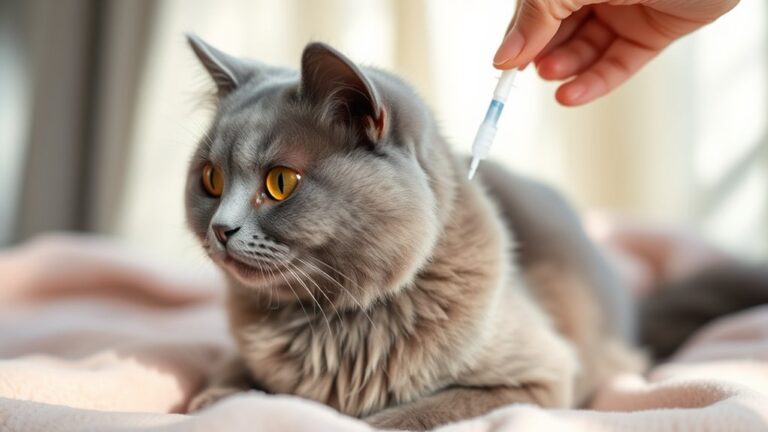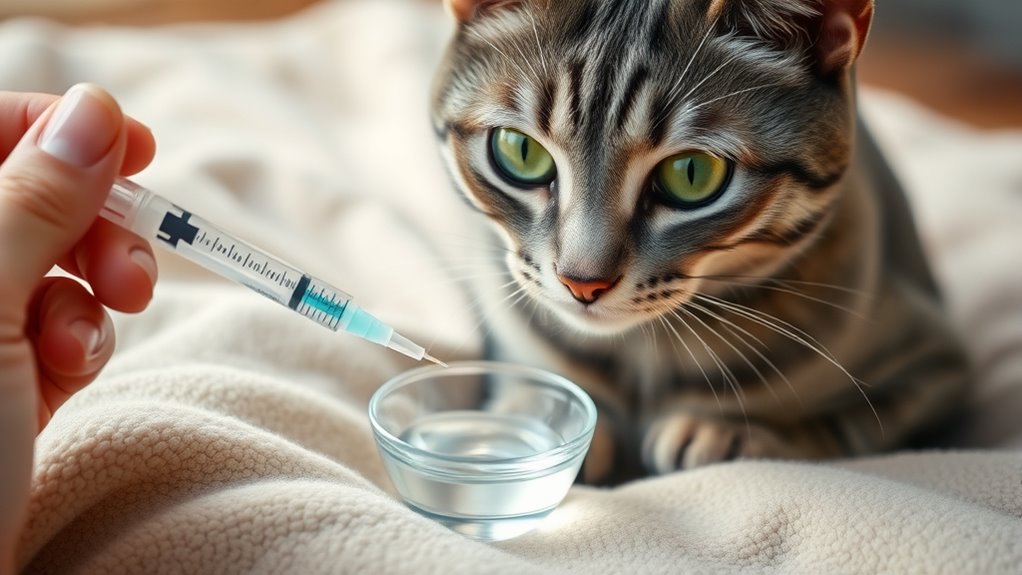
How to Determine if Cats Can Take Cold Medicine Safely
Many cat owners worry when their feline friend isn’t feeling well, especially if you’re unsure about giving them medication. You’re not alone—navigating what’s safe and what’s risky can be confusing and stressful.
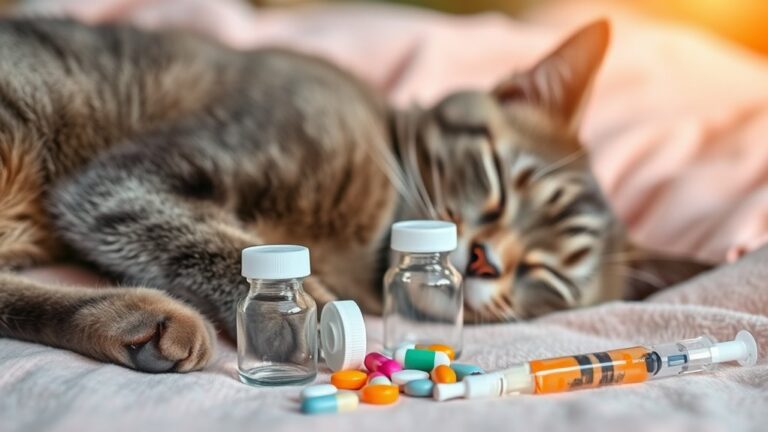
You should never give your cat human cold medicine without consulting a vet, as many ingredients like acetaminophen or ibuprofen are toxic to cats and can cause serious health issues.
Cats process medications differently, with a slower and less efficient system, so what’s safe for humans isn’t for them.
To know if a treatment is safe, always seek veterinary advice.
Keep exploring to learn safe ways to care for your sick cat and prevent future illnesses.
Key Takeaways
- Never give human cold medicine to cats without checking with your vet first. Many contain toxic ingredients like acetaminophen and ibuprofen.
- Talk to your veterinarian to see if any medication is safe and suitable for your cat’s specific symptoms.
- Keep in mind that cats process drugs differently, so many human medicines can be harmful or just not work for them.
- Stick to vet-approved remedies or safe home care methods, like using a humidifier or offering gentle broths, but always follow professional advice.
- Watch your cat closely for any bad reactions or if symptoms get worse, and seek veterinary help immediately if needed.
Can I Give My Cat Cold Medicine?
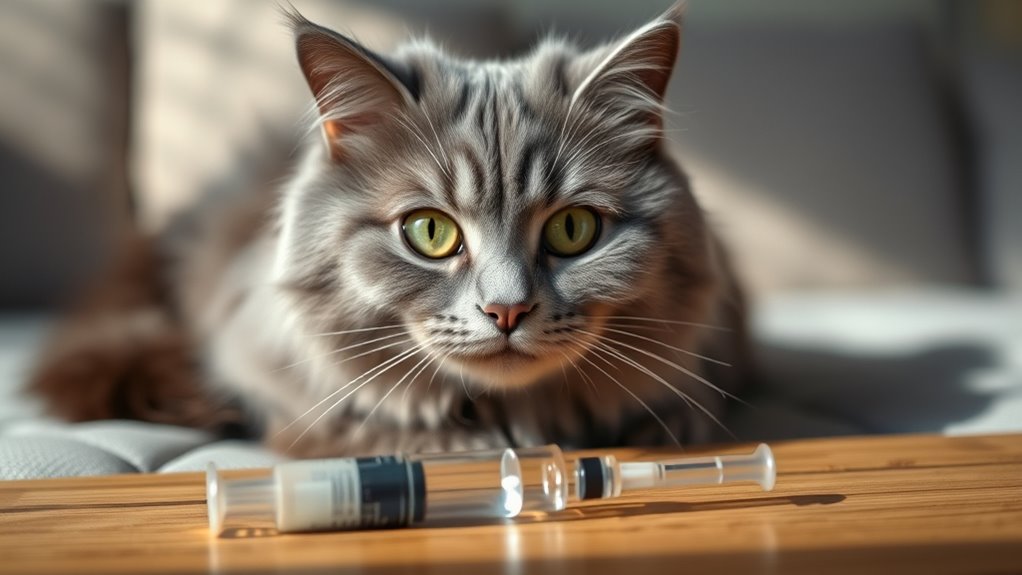
Many pet owners wonder if they can give their cats cold medicine when they’re feeling under the weather. The truth is, you should never give your cat human cold medicine without consulting a veterinarian.
Cold medicine interactions can be dangerous for felines, as many ingredients safe for humans are toxic to cats. Administering the wrong medication can lead to serious health risks, including organ damage or poisoning.
Many common cold medications contain ingredients toxic to cats, risking organ damage or poisoning. Always consult a vet.
Even over-the-counter remedies might contain substances like acetaminophen or ibuprofen, which are highly harmful to cats. If your cat shows signs of a cold or respiratory issues, the best step is to speak with your vet.
They can recommend safe, species-specific treatments and help ensure your feline friend recovers without risking their health. Never try to self-medicate your cat, as the potential for adverse reactions outweighs any benefits of human cold medicines.
How Do Cats Process Medications Differently From Humans?
Understanding how cats process medications differently from humans is key to keeping them safe. Cats have different metabolism rates that affect how they break down drugs, often making the process slower or less efficient.
Their liver enzymes, especially in the cytochrome P450 system, are less active than in humans. This can cause drugs to stay in their system longer or even become toxic.
Plus, drug absorption varies because of differences in their gastrointestinal tract. Cats’ stomach pH is more acidic, which influences how medications dissolve and get absorbed.
They also have a different gut flora that impacts how medications are broken down. Because of all these factors, a drug safe for humans might not be safe for cats, even in small doses.
Understanding these differences highlights why veterinary guidance is so important before giving any medication, especially cold medicine, to your feline friend. Never assume human medications will process safely in cats without professional advice.
Why Are Many Human Cold Medications Unsafe for Cats?
Because of their unique metabolism and sensitive liver enzymes, human cold medications often contain ingredients that can be toxic to cats. Unlike humans, cats have a limited ability to process certain chemicals, making them more vulnerable to adverse effects.
Many common ingredients, such as acetaminophen, can cause severe toxicity in cats, leading to liver damage or even death. Their feline metabolism can’t efficiently break down these substances, causing harmful buildup in their system.
Medications like decongestants or antihistamines, which are safe for humans, can cause dangerous side effects in cats, including rapid heart rate or seizures. This difference highlights why many human cold medicines are unsafe for cats, even if they seem similar to human formulations.
Always remember that what’s safe for you isn’t necessarily safe for your feline friend. To protect your cat’s health, never give them over-the-counter human medications without veterinary guidance.
What Are the Symptoms of a Cold in My Cat?
When your cat has a cold, you might notice several signs that they’re not feeling well. Common symptoms include sneezing, nasal discharge, and watery eyes.
Feline sneezing is often frequent and can come with a runny nose. You might also see coughing or wheezing, which suggest respiratory discomfort.
Lethargy and a decreased appetite are typical, as your cat may seem less active and less interested in food. Some cats develop a mild fever, making them feel warmer to the touch.
You might also notice their eyes become cloudy or crusted over, and they may paw at their nose or face because of irritation. These signs together point to a cold or upper respiratory infection.
Recognizing these signs early helps you keep an eye on your cat’s condition and decide if veterinary care is needed, especially if symptoms stick around or get worse.
When Should I Take My Cat to the Vet for a Cold?
If your cat’s cold symptoms stick around for more than a few days or seem to get worse, it’s a good idea to take them to the vet. Keep an eye out for things like trouble breathing, a persistent fever, or if your cat just seems really sluggish or not themselves—that’s when you should definitely get them checked out.
And if your cat starts showing serious signs like difficulty breathing or a high fever that doesn’t go down, don’t wait—seek urgent veterinary care right away. Better safe than sorry when it comes to their health!
Recognizing Worsening Symptoms
Noticing when your cat’s cold symptoms get worse is really important for their health. If symptoms stick around for more than a few days or you notice changes in their behavior, it’s time to take action.
Watch for signs like your cat being more lethargic, losing their appetite, or having trouble breathing. These are clear signals that they might need to see a vet right away.
| Symptom Duration | Behavior Changes |
|---|---|
| Lasts more than 3 days | Less playful, hiding more than usual |
| Worsens over time | Increased vocalization or discomfort |
| No improvement | Aggression or unusual agitation |
| Sudden worsening | Rapid breathing, drooling, or persistent cough |
| Persistent symptoms | Refusal to eat or drink |
Trust your instincts. Getting your cat checked out early can help prevent more serious problems.
When to Seek Immediate Care
While keeping an eye on your cat’s symptoms is important, some signs demand immediate veterinary attention. If you notice sudden changes in behavior, severe difficulty breathing, or persistent vomiting, these emergency signs mean your cat needs urgent care.
Symptom severity like extreme lethargy or unresponsiveness also requires quick action. Watch for signs of dehydration such as sunken eyes or dry gums, which can get worse fast.
If your cat shows any indication of choking, bleeding, or severe nasal discharge, don’t wait—call your vet right away. Prompt attention is key when symptoms become serious or life-threatening.
Ignoring these emergency signs can lead to serious complications. Trust your instincts and seek veterinary help without delay.
How Do Veterinarians Diagnose Respiratory Illnesses?
Veterinarians use a combination of careful physical exams and diagnostic tests to identify respiratory illnesses in cats. During the exam, they look for signs like nasal discharge, coughing, labored breathing, or abnormal lung sounds, which offer clues about your cat’s respiratory health.
To confirm what’s going on, vets might use X-rays to see the lungs and airways or blood tests to find infections or inflammation. Sometimes, they take nasal swabs or fluid samples to identify specific pathogens.
These tests help differentiate between infectious and non-infectious respiratory issues. An accurate diagnosis is key to choosing the right treatment plan. By combining thorough exams with targeted tests, vets can find out what’s causing your cat’s respiratory problems and ensure they get proper care.
This approach reduces unnecessary treatments and helps your cat recover faster.
Are There Safe Ways to Relieve My Cat’s Cold Symptoms?
Want to help your cat feel better without putting them at risk? It’s really important to know which medications are safe and what home remedies you can try. Sometimes, a bit of gentle care at home can make a big difference in easing your cat’s cold symptoms. But, of course, knowing when to call the vet is just as important.
Let’s look into the safest ways to help your kitty feel better and figure out when professional help is needed.
Safe Medication Options
Finding safe options to relieve your cat’s cold symptoms can be challenging because many human medications are harmful to pets. While there are no specific cold medicines approved for cats, some herbal remedies and over-the-counter options may help.
Always consult your veterinarian before trying anything, as some herbal supplements like echinacea or vitamin C could be safe in small doses. Avoid giving human cold medicines, especially those containing acetaminophen, ibuprofen, or decongestants, which are toxic to cats.
Instead, focus on supportive care recommended by your vet, such as ensuring your cat stays hydrated and comfortable. Remember, what might seem like a safe remedy for humans isn’t necessarily safe for cats, so professional guidance is essential.
Home Remedies and Care
When your cat has a cold, providing supportive home care can help ease their discomfort and promote recovery. You might consider safe homemade remedies or herbal treatments to soothe symptoms. For example, humidifying the air or offering warm, brothy foods can help ease congestion.
Remember, always avoid human medications unless approved by your vet. Here’s a simple guide:
| Safe Practices | Things to Avoid |
|---|---|
| Use a humidifier | Human cold medicines |
| Offer warm, gentle broths | Essential oils or strong herbs |
| Keep your cat comfortable | Over-the-counter remedies without vet approval |
This approach supports recovery naturally, but always check with your vet before trying any home remedies to ensure they’re safe for your cat.
When to Visit Veterinarian
Recognizing when your cat needs veterinary care is important, especially if symptoms get worse or stick around for a few days.
If your cat has trouble breathing, keeps sneezing, or loses interest in food, it’s time to see the vet. Respiratory issues can get worse quickly, so don’t wait.
Keep an eye out for lethargy, wheezing, or nasal discharge that doesn’t get better. A vet can diagnose the problem and suggest safe, effective treatments.
Some symptoms might look like serious conditions, so professional advice is crucial. Visiting the vet ensures your cat gets the proper care and can prevent complications.
Trust your instincts—timely vet visits are key to keeping your cat healthy and happy.
How Do You Properly Administer Medication to Your Cat?
Administering medication to your cat takes patience and a gentle touch to make it go smoothly. First, check what types of medication your vet recommends—liquids, pills, or topical treatments—since each needs a different approach.
For liquids, use a syringe or dropper to carefully squirt the medication into the side of your cat’s mouth, avoiding the throat to prevent choking. Pills can be tricky, but hiding them in tasty food or using a pill gun can help.
When giving topical treatments, make sure to follow the instructions exactly and keep the medication in place. Stay calm and speak softly to reassure your cat throughout the process.
Keep yourself calm too, and don’t rush. Patience makes everything easier. If your cat resists, take a break and try again later. Proper technique is key to giving medication safely and effectively.
What Common Mistakes Should I Avoid When Caring for a Sick Cat?
Caring for a sick cat can be tough, but avoiding common mistakes can make things easier and safer for your pet. One mistake is not keeping a close eye on symptoms, which can delay getting your cat the help it needs.
Monitoring your sick cat’s symptoms closely ensures timely help and safer recovery.
Another mistake is giving over-the-counter meds without checking with your vet first. This can cause harmful reactions. Keep a detailed record of your cat’s symptoms and any medications you give.
Be sure to watch for changes in behavior and note them. This helps your vet understand what’s going on. Also, make sure your cat drinks enough water to stay hydrated.
Always follow your vet’s instructions for doses. Giving the wrong amount can be dangerous. And don’t delay taking your cat to the vet if symptoms worsen.
Stay alert, follow your vet’s advice, and avoid these common pitfalls. Doing so will help your cat recover safely.
How Can I Prevent Future Respiratory Illnesses in My Cat?
Preventing future respiratory illnesses in your cat starts with understanding how to reduce their risk factors. You can support their immune system and minimize environmental triggers by making simple changes.
Make sure your cat’s living space is clean and well-ventilated to cut down on airborne irritants and allergens. Providing a balanced diet rich in nutrients helps boost their immune system, helping them fight off infections.
Keep your cat away from sick animals to prevent transmission. Regularly cleaning bedding, toys, and litter boxes also reduces exposure to germs.
Avoid sudden temperature changes, which can stress your cat and weaken their immune system. By maintaining a healthy environment and supporting their immune health, you lower the chances of future respiratory issues.
Frequently Asked Questions
Are There Any Natural Remedies Safe for Cats With Colds?
Yes, some natural remedies like herbal treatments and steam therapy can help soothe your cat during a cold.
You can try gentle herbal infusions such as chamomile or thyme, but only in small amounts and after talking to your vet.
Steam therapy, where you create a humid environment, can also help ease congestion.
Always check with your veterinarian before trying any remedies to ensure they are safe for your feline friend.
Can a Cold Lead to More Serious Health Issues in Cats?
Think of your cat’s cold like a small spark that could ignite a bigger fire if ignored.
A cold can lead to serious health issues, like pneumonia, if symptoms aren’t recognized early.
Always reach out to a veterinarian if you notice signs of illness, such as sneezing or lethargy.
Getting prompt veterinary care helps catch potential problems early, preventing a minor cold from becoming more serious.
How Long Does a Typical Feline Cold Last?
A typical feline cold lasts about 7 to 10 days, depending on your cat’s age and immune system.
You’ll notice symptoms may vary, with sneezing, nasal discharge, and coughing gradually getting better.
To help your cat recover, keep them warm, make sure they stay hydrated, and give them a cozy environment.
If symptoms last beyond two weeks or seem to get worse, it’s best to check in with your vet for proper advice and treatment.
What Over-The-Counter Products Are Sometimes Used for Cats’ Colds?
You might think some over-the-counter products could help your cat with cold symptoms, but be cautious.
Many safe options exist, like saline nasal sprays or vet-approved supplements, that can ease discomfort without risking harm.
However, never give human cold medicine to your cat without talking to your vet first.
Your best move is to consult your vet to find the safest way to help your cat feel better and stay healthy.
Should I Give My Cat Vitamins to Boost Immunity?
You shouldn’t give your cat vitamins to boost immunity without talking to a vet. Not all immune boosters are safe for cats, and some supplements can do more harm than good.
Vitamin safety varies, and certain supplements might cause problems or interact with medications your cat is on. Instead, focus on providing a balanced diet and regular vet checkups.
If you’re worried about your cat’s immune health, ask your vet for safe and effective options that are specifically designed for cats.
Conclusion
Remember, giving your cat cold medicine is like walking a tightrope—you need to be cautious and informed. Always check with your vet before trying any remedies, and keep an eye out for signs that your feline friend needs professional care.
By staying vigilant and gentle, you’ll help your kitty weather the storm and come out purring on the other side. Knowing how to determine if cats can take cold medicine safely is key to keeping them healthy.
Your care is the anchor that keeps their health afloat through any sniffle or sneeze. When in doubt, always consult your vet—your cat’s safety depends on it.