5 Tips to Get Your Cat to Take Medicine Easily
Many cat owners know how challenging it can be to get your feline friend to take medicine. You’re not alone—this is a common struggle, and it can feel frustrating trying to find a way that works.
Thankfully, there are simple tricks to make the process easier for both of you.
To get your cat to take medicine easily, create a calm, familiar environment and handle your cat gently. Use appealing tricks, like hiding pills in tasty treats or flavor-enhanced liquids, to make medication more palatable.
Secure your cat softly with a towel if needed, and keep the process quick to reduce stress. Employ positive reinforcement and stick to a routine.
For more helpful tips, continue your journey to smoother medication days.
Key Takeaways
- Create a calm, familiar environment and establish a routine to help your cat feel less stressed during medication time.
- Use tasty treats, pill pockets, or flavor enhancers to make the medicine more appealing.
- Gently secure your cat with a towel and keep a calm, positive attitude throughout the process.
- Consider using liquid medicines with a syringe or dropper, especially if your cat is resistant.
- Break the process into small steps and use positive reinforcement to encourage cooperation.
How to Prepare Your Cat for Giving Medication
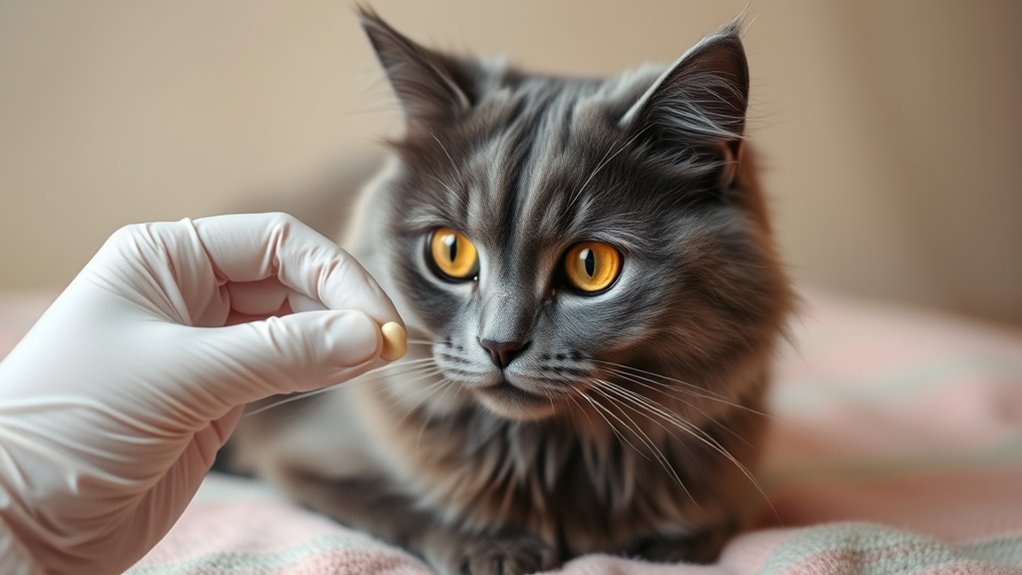
Before giving your cat medication, create a calm environment to help reduce stress for both of you. A familiar space makes your cat feel safe and secure, making the process easier.
Use positive reinforcement like treats or gentle praise to encourage cooperation. Spend some quiet time petting and comforting your cat in their usual spot before administering the medication.
Keep things consistent and avoid sudden movements or loud noises that might startle them. If your cat associates their surroundings with positive experiences, they’ll be more receptive when it’s time for medication.
Establishing a routine can also help your cat anticipate and accept this process more easily. Remember, patience is key.
Choosing the Best Method to Administer Medicine to Your Cat
Selecting the most effective method to give your cat medication depends on your cat’s temperament, the type of medicine, and the situation.
Choosing the best way to medicate your cat depends on their personality, the medicine, and the circumstances.
If your cat is pill-resistant, using pill pockets can make administration easier and less stressful for both of you. Pill pockets are soft treats designed to hide pills, making swallowing more natural.
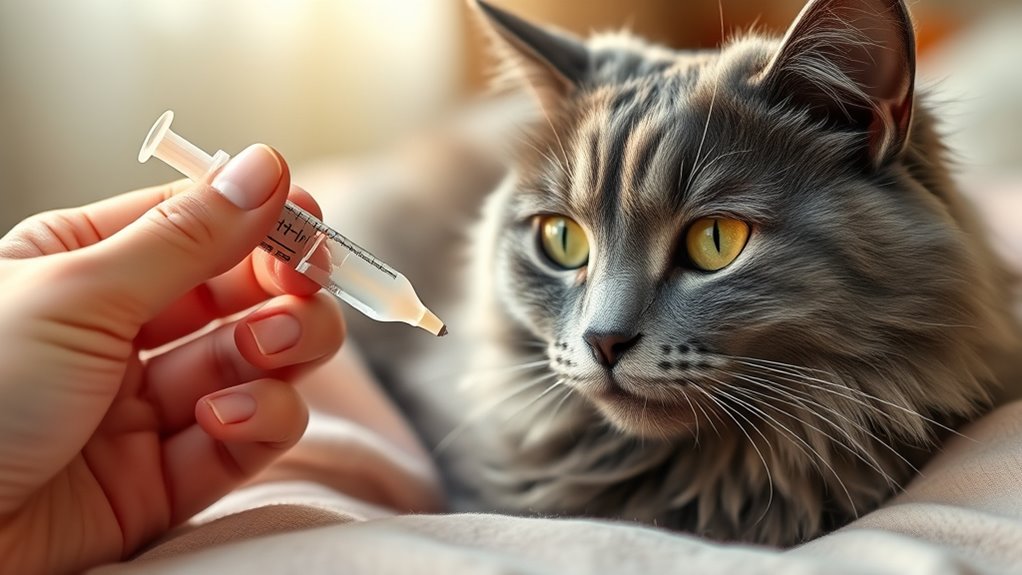
For cats who refuse pills altogether, liquid alternatives might be a better option. Liquid medicines can be given with a syringe or dropper, which helps you control the dosage and reduces the risk of choking.
Think about your cat’s preferences and behavior—some cats tolerate liquids better, while others prefer treats. You might need to combine methods or ask your vet for guidance.
The goal is to pick a method that minimizes stress and makes giving medication easier for you and your feline friend.
Tips to Make Medicine More Tasty and Easier to Swallow
Making medicine more appealing to your cat can really improve the chances of successful administration. Start by using flavor enhancements like flavored liquids or treats to mask the medicine’s taste.
Pill pockets are a great option—they’re designed to hide pills completely and make swallowing easier. For liquid medicines, try warming them slightly to release more aroma and make them more enticing.
You can also blend the medicine into a small amount of tasty food or a favorite treat to disguise the flavor and encourage swallowing. Just make sure to choose foods your cat loves and that won’t interfere with the medication’s effectiveness.
These simple tricks help reduce stress for both you and your cat, making the process quicker and more comfortable. When medicine tastes better, your cat is more likely to accept it willingly, ensuring they get the treatment they need without a fight.
How to Handle Your Cat So Giving Medicine Isn’t a Fight
Handling your cat calmly and confidently can prevent a tense struggle when giving medicine. Your attitude influences how your cat feels, so stay relaxed and gentle.
Stay calm and gentle to make giving medicine easier and reduce stress for your cat.
Use calming techniques like a soft voice, slow movements, and a quiet environment to help reduce stress. To make things easier, try these steps:
- Gently but firmly secure your cat, wrapping them in a towel if needed. This helps them feel safe and stops scratching.
- Use positive reinforcement such as treats or praise after each step to encourage cooperation.
- Keep the environment calm by reducing noise and distractions. This helps your cat stay relaxed during the process.
Troubleshooting Common Challenges When Giving Medication to Cats
Even with calm handling, giving medication to cats can still present unexpected challenges. You might notice changes in your cat’s behavior, like hiding or resisting, especially if they associate medication time with discomfort.
If your cat refuses to swallow pills or liquid, try disguising the medication in tasty treats or food. Sometimes, cats become more resistant if medication timing isn’t consistent, so stick to a regular schedule to reduce stress and confusion.
If your cat is particularly anxious or aggressive, break the process into smaller steps, and reward calm behavior afterward. Remember, patience is key—rushing or forcing can make resistance worse.
If your cat continues to struggle, consult your vet for alternative methods like compounded medications or different delivery options. Recognizing these common challenges and adjusting based on your cat’s behavior can make giving medicine smoother and less stressful for both of you.
Frequently Asked Questions
How Often Should I Give Medication to My Cat?
You should give your cat medication according to the schedule and dosage your vet recommends. Usually, this means giving it at the same times each day to keep the levels steady in their system.
Never change the dose or how often you give it without talking to your vet first. Keep track of each dose and follow your vet’s instructions carefully.
This way, your cat’s health can improve, and they stay safe.
Are There Natural Alternatives to Medication for Cats?
Yes, there are natural alternatives like herbal remedies and homeopathic treatments you might consider for your cat. These options can sometimes help with minor ailments or just boost overall health.
But always check with your veterinarian before trying any natural remedies. They can guide you on safe and effective options based on your cat’s specific needs.
Can I Crush Pills and Mix Them With Food?
Yes, you can crush pills and mix them with your cat’s food, but be cautious. Some pills, like sustained-release or coated medications, shouldn’t be crushed because it can change how they work.
Knowing your cat’s food preferences helps too. Mix the crushed pill thoroughly to mask the taste so your cat is more likely to eat it.
Always check with your vet first. They can confirm whether crushing the medication is safe and won’t interfere with its purpose.
What Should I Do if My Cat Refuses Medication Repeatedly?
If your cat keeps refusing medication, it’s a good idea to talk to your veterinarian. They can help identify if there’s something causing your cat’s anxiety or behavioral changes.
Your vet might recommend alternative options, like mixing the medication into a tasty treat or trying a different form. Stay calm and patient—cats can sense your stress, which can make things harder.
Work gradually to create positive associations with medication time. This can help reduce your cat’s anxiety and make it easier to get them to take their medicine.
Is It Safe to Give Human Medicine to Cats?
Giving human medicine to cats is like walking a tightrope—you risk falling into danger. Human medication risks can be severe for cats, including toxicity or adverse reactions.
Always follow feline medication guidelines and never give human drugs unless your vet explicitly approves. Your vet understands the precise dosages and safe options tailored for cats, so be sure to ask before giving any medication.
Never assume human medicine is safe for your feline friend.
Conclusion
Giving your cat medicine might feel like trying to tame a wild tiger, but with patience and the right approach, you can turn the ordeal into a manageable dance. Remember, each small victory builds trust and confidence—like tiny stepping stones across a stream. Keep calm, stay gentle, and celebrate progress.
Eventually, you’ll find your rhythm together, transforming a challenging task into a moment of connection and care that strengthens your bond. Mastering how to give your cat medicine easily makes both your lives calmer and happier.