Why Does My Cat’s Back Twitch When I Pet Her?
Are you puzzled when your cat’s back twitches while you pet her? You’re not alone—many cat owners struggle to understand what their feline friends are trying to tell them.
That twitch can be a sign of pleasure, overstimulation, or sometimes an underlying health issue. Her nerves react to your touch, and subtle body cues can tell if she’s comfortable or overwhelmed.
Over time, you’ll learn to spot the difference between happy twitching and signs of discomfort.
Keep examining her responses, and you’ll uncover more about what her twitching means and how to make petting more enjoyable.
Key Takeaways
- Twitching might mean your cat is feeling pleasure, curious, or having a reflex response to sensitive nerve endings while you’re petting her.
- If she shows signs of discomfort like tension, stiffness, or tries to move away, the twitching might not be a good thing.
- Sometimes, overstimulation or sensory overload can cause involuntary muscle movements or spasms in your cat.
- If the twitching keeps happening or you notice other signs of pain, it could be a health issue and you should check with a vet.
- Gently and slowly petting her while watching her reactions can help reduce twitching and keep her comfortable.
Why Does My Cat’s Back Twitch When I Pet Her?
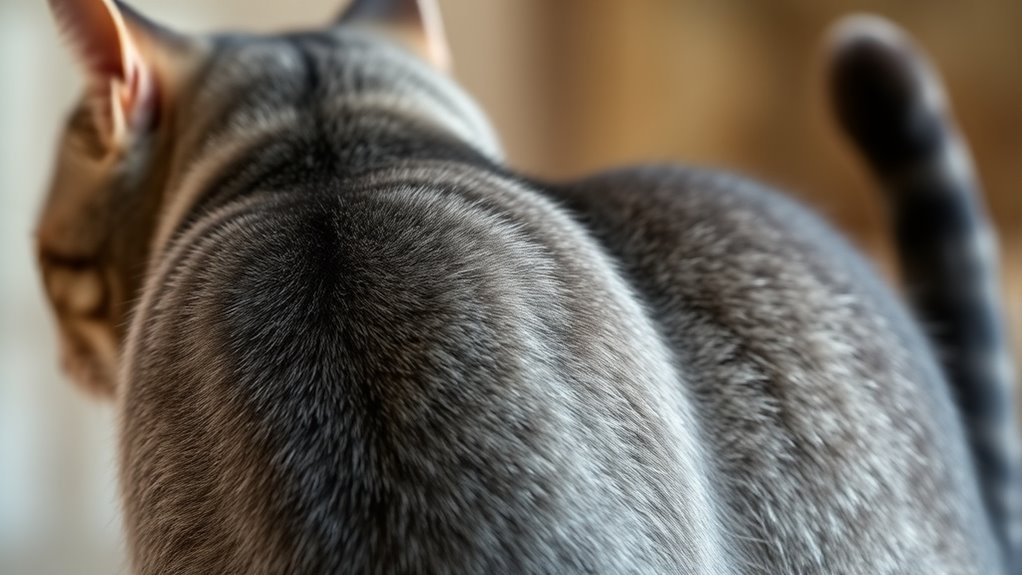
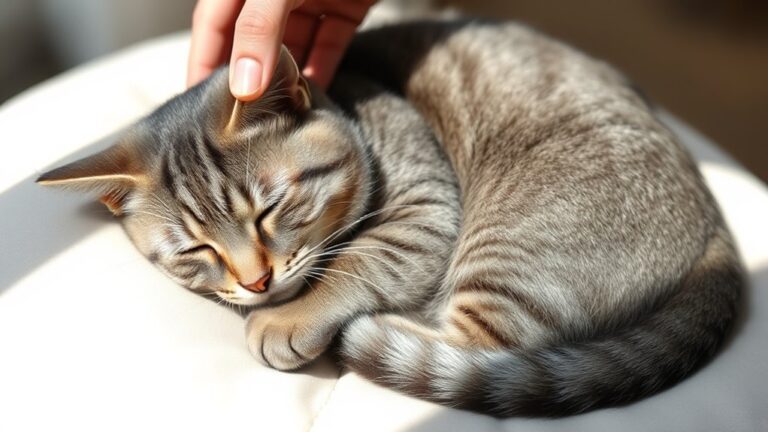
Have you ever noticed your cat’s back twitching whenever you pet her? This is a common behavior that often confuses owners. The twitching usually happens because your cat is experiencing a mix of sensations—pleasure, curiosity, or even slight discomfort.
It’s her way of reacting to your petting techniques. Cats have sensitive nerve endings, so if you pet her too roughly or in a spot she doesn’t like, her back might twitch as a reflex. Alternatively, the twitch could mean she’s relaxed and trying to communicate her comfort.
Paying attention to her overall body language helps you understand whether she’s enjoying the petting or signaling she’s uncomfortable. Adjust your petting techniques accordingly—gentler strokes, softer touch, or avoiding certain areas—and watch how she responds.
This approach can improve your bond and ensure your cat feels safe and appreciated.
Is Back Twitching a Sign That My Cat Is Happy or Uncomfortable?
Back twitching can be a little confusing because it might mean different things depending on the situation. Sometimes, your cat’s back twitching is a sign that she’s feeling happy and relaxed. You might notice her muscles are relaxed, she’s purring, and she seems content overall. That’s usually a good sign she’s enjoying herself.
But on the other hand, if your cat is tense, avoiding eye contact, or her body looks stiff, that twitching could mean she’s uncomfortable or stressed. It’s important to look at the bigger picture—how she’s acting overall—to really understand what her twitching is telling you. Paying attention to her behavior can help you figure out if she’s just feeling good or if she needs some space.
Signs of Contentment
Is your cat’s back twitching while they seem relaxed? If so, it’s often a sign of contentment. You might notice your cat purring, which is a strong indicator they feel safe and happy.
Along with purring, check their tail position—relaxed, gently swaying, or lying still. These usually signal comfort. The back twitching can be a gentle, subconscious muscle response as they enjoy your petting.
When your cat shows these signs, it means she’s comfortable and trusts you. Her relaxed posture, combined with soft purring and a calm tail, confirms she’s feeling happy.
Indicators of Discomfort
While a twitching back can sometimes mean your cat is relaxed, it can also be a sign she’s uncomfortable or in pain. Pay attention to what triggers the twitching, like certain types of petting or touch areas she might dislike.
If your cat twitches or pulls away, it’s a clear sign she’s not enjoying what’s happening. Changes in her petting preferences, like avoiding being petted or flinching during contact, could mean she’s feeling uncomfortable.
Also, watch for other signs like flattened ears, tail flicking, or growling. These behaviors suggest she’s stressed or irritated. Recognizing these cues helps you respect her boundaries and prevent causing her pain or anxiety.
This way, you can make sure your cat feels safe and understood during your time together.
What Causes a Cat’s Back to Twitch During Petting?
Sure! Here’s a more conversational version of the text:
Your cat’s back might twitch while you’re petting them because of how sensitive they are to touch or certain nerve responses. Sometimes, their muscles can spasms or tense up, especially if they’re feeling a bit tense or overstimulated.
It’s also worth considering that things like stress or sudden noises in the environment can cause their muscles to react unexpectedly. So, that twitch might just be their way of responding to what’s happening around them or how they’re feeling in the moment.
Sensory Sensitivity and Nerve Responses
When you pet your cat, tiny nerve endings in its skin send signals to the brain. The brain then interprets these sensations as pleasurable or sometimes overstimulating.
If your cat’s back twitches, it might be experiencing sensory overload, where the nerve endings send too many signals too quickly.
This overload can trigger nerve reflexes that cause involuntary muscle movements like twitching or jerking.
Cats have highly sensitive skin, and their nervous system reacts to even gentle touches. Sometimes, this is a normal part of how they process sensory input.
If your cat gets easily overstimulated or anxious, these responses are often just part of their natural behavior.
Understanding that these twitching episodes are nerve responses helps you see that your cat’s reactions are normal, not signs of discomfort or pain.
Muscle Spasms or Tension
Have you noticed your cat’s back twitching suddenly during petting sessions? This twitching can happen because of muscle spasms or tension, often related to how your cat’s muscles react to stimulation.
In feline anatomy, muscles are meant to move smoothly, but stress or overstimulation can cause involuntary contractions. Sometimes, these twitching episodes are temporary and linked to muscle tension.
Gentle muscle relaxation techniques might help ease these episodes. If your cat’s muscles stay tense or spasms happen often, it could mean she’s uncomfortable or there’s an underlying issue.
Understanding your cat’s muscular responses helps you know when to give her a break or see a vet. Keeping her calm and using gentle petting can reduce muscle tension and prevent twitching episodes.
Emotional or Environmental Factors
Muscle tension from physical causes isn’t the only reason your cat’s back might twitch during petting; emotional triggers and environmental stressors can also play a role. If your cat feels anxious, overstimulated, or uncomfortable, she might twitch to show she’s distressed or to set boundaries.
Loud noises, unfamiliar visitors, or changes in her environment can increase her stress levels, making her more sensitive to petting. If she’s feeling insecure or scared, her nervous system may respond with involuntary twitching.
Recognizing these emotional and environmental cues is really important. Respect her signals, create a calm atmosphere, and avoid overstimulating her so she feels safe and relaxed during petting sessions.
How Can I Tell If My Cat Is Overstimulated While Being Petted?
You might wonder if your cat is becoming overstimulated during a petting session, as their body language cues can change quickly. Signs of overstimulation include tensing up, flicking or flickering tail movements, and ears flattening against their head.
You may notice your cat suddenly pulling away or trying to escape, indicating they’ve reached their petting limit. Pay attention to subtle signals like dilated pupils or a sudden stiffening of their body.
Your cat’s petting preferences may also shift; what once felt soothing might become annoying or uncomfortable. If you see these cues, it’s a sign to stop or give your cat a break.
Recognizing these signs helps prevent overstimulation and keeps your interactions positive. Respect your cat’s boundaries, and watch for these body language cues to gauge when they’ve had enough.
This awareness guarantees petting remains a pleasant experience for both of you.
Could Back Twitching Be a Sign of Health Problems or Injuries?
If you notice your cat’s back twitching happening regularly or if it’s happening along with other signs that your cat is in pain, it might be a sign that something’s not quite right health-wise. Sometimes, neurological issues or injuries can cause those involuntary muscle movements, so it’s definitely worth paying attention to.
The earlier you catch these signs, the better. If you see your cat twitching more often or if they seem uncomfortable, it’s a good idea to take them to the vet. Getting a professional opinion can help identify any underlying health problems early on and ensure your furry friend gets the care they need.
Signs of Pain or Discomfort
Back twitching in cats can sometimes signal underlying pain or discomfort, so it’s important to watch their behavior closely. If your cat jerks or twitches when you pet her, it might be a sign she’s uncomfortable or in pain.
Look for other signs like vocalizing, hiding, or avoiding touch, which show she’s not feeling well. She may also lick or bite at her back or have tense muscles. These behaviors suggest she’s experiencing discomfort, maybe from an injury, skin irritation, or internal issues.
Recognizing these signs early helps you figure out if her back twitching is linked to pain. If her reactions are intense or don’t go away, it’s best to see a vet quickly to find out what’s going on and get her the help she needs.
Possible Neurological Issues
When your cat’s back twitches unexpectedly, it might not just be a sign of discomfort but also an indication of neurological issues. Twitching causes could stem from nerve problems or neurological conditions that need further investigation. Consider a thorough neurological assessment if the twitching persists or gets worse.
Some potential causes include nerve damage or irritation that affects muscle control. Neurological disorders like seizures or nerve degeneration could also be at play. Additionally, spinal cord issues might disrupt normal nerve signals.
These conditions can be serious and may require prompt veterinary attention. Recognizing the signs early helps determine if neurological tests are necessary to uncover underlying health problems. Always consult a vet if your cat’s back twitching continues or if there are other unusual behaviors.
Indicators of Injury or Illness
Twitching in your cat’s back can often signal underlying injury or illness, serving as an important warning sign of health problems. It’s crucial to perform an injury assessment and watch for other illness indicators.
If your cat shows persistent twitching, limping, swelling, or sensitivity, she might be experiencing pain or discomfort. These signs could point to injuries, infections, or neurological issues needing veterinary attention.
Recognizing these symptoms early can prevent worsening conditions and ensure she gets the proper treatment. Stay alert to her behavior and seek help if you notice any of these worrying signs.
| Injury/Illness Indicators | Emotional Impact |
|---|---|
| Persistent back twitching | Worry about her pain and well-being |
| Limping or swelling | Fear of serious injury or discomfort |
| Sensitivity to touch | Anxiety over her distress |
| Loss of appetite or lethargy | Concern for her overall health |
How Do Nerves and Muscles Influence Back Twitching in Cats?
Nerves and muscles work together to control your cat’s movements, and any disruption in this system can cause back twitching. When you pet your cat, nerve pathways send signals from the brain to muscles, triggering muscle contractions. If nerves misfire or become irritated, these contractions can happen involuntarily, leading to twitching.
Here are three key factors that influence this process:
- Nerve irritation or damage can cause erratic signals, leading to twitching.
- Muscle fatigue or spasms may result from overstimulation or strain.
- Neurological conditions such as nerve inflammation or disorders affecting nerve-muscle communication.
Understanding how nerve pathways and muscle contractions work helps explain why your cat’s back twitches. Disruptions in these systems might be signs of underlying issues, so keep an eye on your cat’s behavior and consult a vet if needed.
What Petting Techniques Can Reduce Unwanted Twitching?
To help reduce unwanted twitching during petting, use gentle, slow strokes instead of rapid or forceful movements. Cats are sensitive to pressure and speed, so slow movements can help them relax.
Start by softly stroking your cat’s back with gentle strokes and pay attention to her reactions. If she seems comfortable, gradually increase the length of your strokes, but keep the pace calm and steady.
Avoid sudden movements or loud noises that could startle her. Focus on areas she enjoys, like behind the ears or under the chin, where gentle strokes are usually appreciated.
Consistently using gentle strokes and slow movements helps build trust and comfort, reducing twitching caused by overstimulation. Remember, patience is key—observe her responses and adjust your technique as needed to create a soothing petting experience.
When Should I See a Vet About My Cat’s Back Twitching?
While gentle petting can help reduce twitching caused by overstimulation, persistent or sudden back twitching might be a sign of a problem. If the twitching worries you or lasts longer than normal, it’s a good idea to see a vet.
Keep an eye out for these signs:
Watch for persistent twitching, pain, swelling, or behavioral changes in your cat.
- Your cat’s back twitching happens often or gets worse over time.
- The twitching comes with pain, swelling, or your cat seems sensitive to touch.
- Your cat is acting strangely, like being lethargic, not eating, or hiding.
These could be signs of issues like nerve problems, skin infections, or injuries. Ignoring ongoing twitching could make things worse. If you notice any of these, it’s best to talk to your vet quickly.
A vet can help find out what’s causing the twitching and ensure your cat gets the right treatment. This way, she can feel comfortable and stay healthy again.
How Can I Make Petting Sessions More Comfortable for My Cat?
Have you ever noticed your cat pulling away or twitching during petting sessions? To make her more comfortable, create a calm, cozy environment free from loud noises or sudden movements. Use gentle techniques, like softly stroking her in familiar areas such as her head or back. Avoid sensitive spots like her belly or paws unless she’s already comfortable there.
Pay attention to her body language. If she leans into your touch, she’s enjoying it. If she tenses or flinches, stop and give her a break. Keep petting sessions short at first and gradually increase as she shows more trust. Use a relaxed voice and gentle motions to reassure her.
Providing cozy resting spots and sticking to a consistent routine can also help her feel secure. Remember, patience and respecting her boundaries will turn petting into a positive experience for both of you.
Are Certain Breeds or Ages More Prone to Back Twitching?
Certain breeds and age groups seem more likely to experience back twitching, often due to underlying health or behavioral tendencies. Understanding breed tendencies and age factors can help you figure out why your cat reacts this way.
Here are three key points to consider:
- Breed tendencies: Some breeds, like Siamese or Sphynx cats, are more sensitive and may twitch more during petting because of their hyper-awareness or skin sensitivity.
- Age factors: Older cats often develop muscle or neurological issues, making back twitching more common as they age.
- Health predispositions: Breeds prone to allergies or skin conditions may experience discomfort, which can lead to twitching when touched.
Being aware of your cat’s breed and age can help you tell if the twitching is normal or a sign of discomfort, guiding you to provide better care.
Frequently Asked Questions
Does a Twitching Back Indicate Stress or Relaxation in Cats?
A twitching back in your cat can signal either stress or relaxation, depending on what’s going on around her. It’s an instinctive behavior rooted in neurological responses that helps cats communicate how they’re feeling.
If she’s relaxed, that twitch might be a gentle, involuntary response showing she’s comfortable. But if she shows other signs of stress—like flattened ears or tense purring—it could mean she’s feeling anxious.
Can Medication Cause or Stop Back Twitching in Cats?
Medication can both cause or stop back twitching in cats, depending on the types used.
Certain medications like sedatives or pain relievers might help reduce twitching caused by stress or discomfort.
On the other hand, some drugs can cause side effects like muscle twitches or spasms.
If your cat’s back twitching changes after starting medication, talk to your vet.
They can help figure out if it’s a side effect or an underlying issue and adjust the treatment if needed.
Is Back Twitching Linked to Specific Times of Day or Activity?
Back twitching in your cat often correlates with specific times of day or activity levels. You might notice it during periods of heightened activity or when she’s relaxed, especially after play or during rest.
These time patterns can trigger involuntary muscle movements. Keep track of her daily routine, as understanding her activity levels helps determine whether the twitching is normal or needs veterinary attention.
How Does a Cat’s Environment Affect Its Back Twitching?
Your cat’s environment creates a sensory world that can make her back twitch.
Loud noises, unfamiliar scents, or sudden movements can disturb her comfort zone and trigger her instincts.
A cozy, predictable space helps her feel safe and relaxed.
When her surroundings are calm and harmonious, her back stays steady.
But chaos and stress can cause tiny tremors in her muscles, showing how sensitive she is.
She needs a peaceful haven to feel secure and at ease.
Are Male and Female Cats Equally Likely to Experience Back Twitching?
Male and female cats are similarly likely to experience back twitching, as it’s often triggered by factors like petting, allergies, or skin sensitivities. Hormonal influences can slightly affect behavior, but twitching isn’t strictly linked to gender.
Instead, it’s more about individual sensitivity and triggers. Your cat’s unique response depends on her environment, health, and how she reacts to touch, regardless of whether she’s male or female.
Conclusion
In the end, paying close attention to your cat’s signals can make all the difference. If her back twitching becomes frequent or seems linked to discomfort, don’t ignore it — better safe than sorry.
Remember, cats can be delicate, and a little patience goes a long way. Keep an eye on her reactions, and you’ll soon learn what makes her feel safe and loved.
After all, it’s true what they say — a happy cat is a well-loved cat. If your cat’s back twitching when you pet her, understanding why can help ensure she stays comfortable and content.