What Does a Cat Feel Like Being Petted?
If you’re a cat lover, you’ve probably wondered what your feline friend really feels when you pet them. Many people struggle with understanding their cat’s signals, unsure if they’re making them happy or accidentally causing discomfort.
Knowing how to read your cat’s reactions can deepen your bond and make petting sessions more enjoyable for both of you.
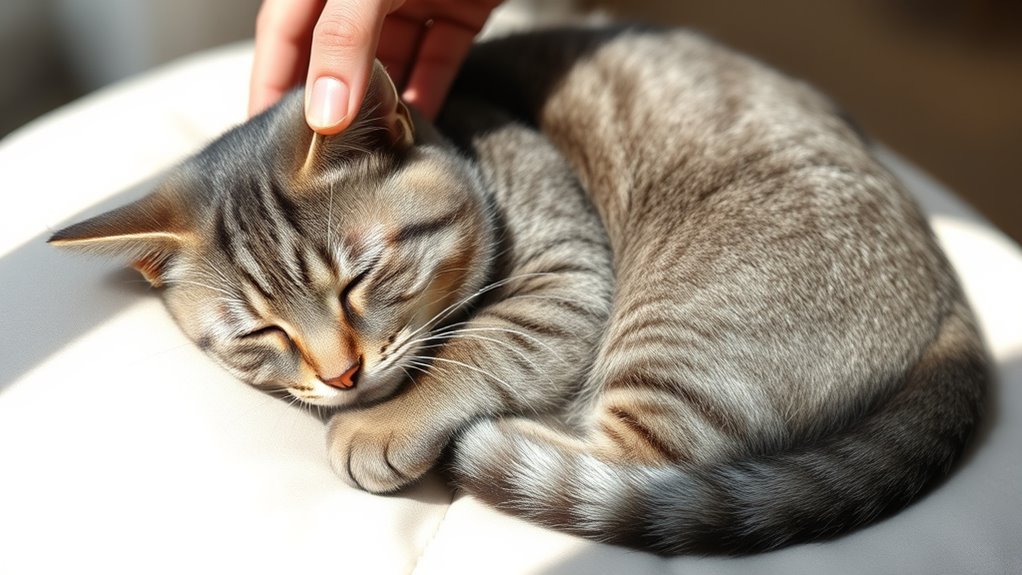
When you pet a cat, you create gentle touches that can make them feel relaxed, happy, or even content, especially if you focus on their favorite spots like the head or back. They communicate their feelings through soft purring, leaning in, or slow blinking, which show trust and enjoyment.
However, every cat is different—some may become overstimulated or uncomfortable. If you want to understand these signals better, there’s much more to investigate.
Key Takeaways
- Cats often feel relaxed and enjoy gentle touches, which they show by purring and leaning into your hand.
- Sensitive spots like the head and back can feel especially pleasurable and build trust.
- But watch out—overstimulation can bother them, making them flick their tail or try to move away.
- When they’re really into it, they might slow blink, knead, or stretch out comfortably.
- Every cat’s personality plays a role—some love being petted, while others are shy or reserved.
How Do Cats Feel When You Pet Them?
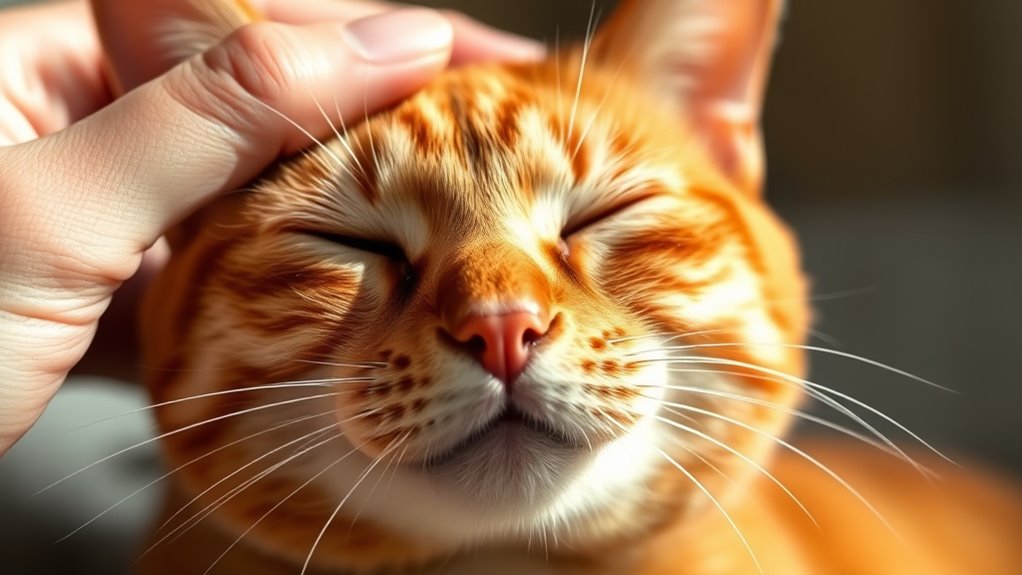
Ever wonder what cats actually feel when you pet them? When you touch your cat, their emotions come into play. Some cats feel relaxed and happy, signaling their comfort through purring or leaning into your hand.
Others might feel overstimulated or unsure, especially if you pet them in the wrong spots or for too long. It’s important to recognize their petting preferences—many cats prefer gentle strokes along their back or head, while rough or unexpected touches can cause discomfort.
You’ll notice signs like flicking tails or flattened ears if they’re not enjoying it. Different cats have unique reactions based on their personality and mood. When you understand their cat emotions and respect their boundaries, petting becomes a positive experience for both of you.
What Signs Show Your Cat Enjoys Being Petted?
When your cat enjoys being petted, you’ll notice some clear, positive signals that show they’re happy. They often purr gently, which is a sign of contentment and relaxation.
You might see them knead, pressing their paws rhythmically into your lap or hand. This is a sign of comfort and affection.
Your cat may also lean into your touch, give a slow blink, or nuzzle your hand. These actions show they feel safe and enjoy your company.
Here’s a quick overview of these signs:
| Sign | What It Means |
|---|---|
| Purring sounds | Contentment and relaxation |
| Kneading behavior | Comfort and affection |
| Leaning or nuzzling | Trust and attachment |
Recognizing these signs helps you understand your cat’s happiness and encourages more bonding moments.
How Cats Use Tail and Ear Movements to Communicate?
Cats communicate a lot through their tails and ears, giving subtle clues about how they’re feeling. Their tail and ear signals reveal their mood and comfort level.
Cats reveal their feelings through subtle tail and ear signals, showing their mood and comfort levels.
A gently swaying tail usually means they’re content, while a puffed-up tail shows they’re scared or alert. When their ears face forward, they’re curious or happy; if they turn back or flatten, they’re annoyed or scared.
Here are some common signals to watch for:
- Tail held high and still means they’re confident and relaxed.
- Tail flicking or lashing shows irritation or agitation.
- A puffed-up tail indicates they’re scared or defensive.
- Ears forward suggest interest or happiness.
- Ears flattened back mean they’re angry or frightened.
The Sensory Nerves That Help Cats Feel Touch
The sensory nerves in a cat’s skin and fur are responsible for transmitting touch sensations directly to their brain. These nerves have specialized sensory receptors that detect things like pressure, vibration, and temperature.
When you pet your cat, these receptors pick up the subtle textures and movements, helping your cat perceive touch accurately. The nerve signals travel through nerve fibers to the spinal cord and then to the brain, where they are processed for touch perception.
This system helps cats tell the difference between gentle strokes and firmer pressure, which influences their comfort and reactions. The density and distribution of these sensory receptors vary across different parts of a cat’s body, making some areas more sensitive than others.
Understanding how these sensory nerves work shows why certain petting styles feel soothing to cats, while others might be uncomfortable. Your cat’s ability to feel touch is a finely tuned process that’s essential for their interaction with the world around them.
How Different Petting Styles Affect Your Cat’s Feelings?
Your gentle strokes can really help your cat feel safe and relaxed. When you pet them softly, it encourages positive feelings and makes your kitty enjoy the moment.
But if you’re a bit too firm or rough, it might stress them out or make them uncomfortable. Every cat is different, so it’s important to pay attention to their reactions. That way, you can figure out the best petting style that keeps your cat happy and at ease.
Gentle Strokes Promote Comfort
Gentle strokes can instantly soothe and comfort a feline, making them feel safe and relaxed. Use soothing techniques with gentle, slow movements that avoid overstimulation.
Focus on proper petting zones like the head, cheeks, and under the chin to help your cat feel secure. Keep your touch light and consistent, avoiding pressure that might cause discomfort.
Watch your cat’s reactions—if they lean in or purr, you’re doing it right. Cats respond best to calm, deliberate strokes that show trust.
Incorporating these gentle techniques fosters a sense of safety and helps strengthen your bond. Your careful approach keeps your cat relaxed and happy during petting sessions.
Firm Touches May Cause Stress
While firm touches might seem confident, they can actually cause stress in cats by overwhelming their sensitive nerves. Cats communicate discomfort through stress signals like tail flicks, flattened ears, or sudden withdrawal.
If you notice these signs, your cat’s petting preferences may lean toward softer, gentler strokes. Firm touches can feel intimidating or invasive, especially if your cat prefers light, gentle petting.
Over time, this stress can lead to mistrust or even aggressive behaviors. To keep your cat comfortable, pay attention to their reactions and adjust your touch accordingly.
Respecting their boundaries helps build a positive bond. Remember, what feels firm to you may be overwhelming for your feline friend, so always observe their stress signals and adapt your petting style.
Recognizing When Your Cat Is Overstimulated or Uncomfortable?
Want to know if your cat’s feeling overwhelmed or uncomfortable? Keep an eye out for little signs like flicking tail tips or quick ear movements—that usually mean your kitty’s getting a bit overstimulated. You might also notice tense muscles or ears pressed flat against their head, which are clear clues they’re not feeling quite right.
When you see these signs, it’s a good idea to gently help your cat relax. Maybe give them some space or offer a cozy spot where they can calm down. The goal is to make sure your feline friend feels safe and comfortable again.
Signs of Overstimulation
Recognizing when your cat is overstimulated is key to ensuring a positive interaction. Signs include subtle cues like changes in behavior or vocalizations.
You might notice your cat’s purring sounds becoming more rapid or tense, signaling discomfort. Tail twitching is another clear sign—they may flick or lash their tail sharply.
Watch for ears flattening or a sudden shift in body posture. Your cat may also give quick, sharp bites or head butts as a warning.
Increased alertness or trying to move away are signs they’ve had enough. Pay attention to these indicators to avoid overstimulating your cat, which can lead to stress or aggression.
Being mindful helps you create a comfortable, enjoyable experience for both of you.
Body Language Cues
Body language is a really important way to tell if your cat is overstimulated or uncomfortable. Keep an eye on her preferences and watch for small cues.
If her ears flatten, her tail flicks, or she keeps licking her lips, she might be signaling she’s not happy. A tense body or dilated pupils can also mean she’s feeling overstimulated.
When petting, pay attention to how she responds. If she leans into your touch, she’s probably enjoying it. But if she pulls away or swats, it’s time to stop.
Recognizing these signals helps you respect her boundaries and makes petting a better experience. By observing her cues, you can adjust your approach and create more enjoyable moments for both of you.
Transition to Comfort
When your cat shows signs of discomfort or overstimulation, it’s important to respond quickly to help her relax. Recognize her petting preferences and respect her comfort zones to avoid causing stress.
Signs like twitching tail, flattened ears, or sudden withdrawal mean it’s time to stop or pause. To help her feel better, try gentle steps:
- Stop petting immediately
- Offer a quiet space or hiding spot
- Use soft, calming voice tones
- Gradually reintroduce gentle touch if she’s receptive
- Watch her body language for cues
Knowing when to back off and give her space helps rebuild trust. This makes petting a positive experience and helps her feel safe and relaxed during future interactions.
Does Your Cat’s Personality Change How They Respond to Petting?
Have you ever noticed that some cats enthusiastically nuzzle into your touch, while others shy away or become agitated? Your cat’s personality definitely influences how they respond to petting.
Playful cats might seek out more interaction and enjoy lively, varied touches. Reserved or anxious cats may prefer minimal contact. Feline preferences vary widely; some love having their chin or behind the ears stroked, while others dislike certain spots entirely.
You’ll find that your cat’s individual temperament shapes their reactions. More social cats tend to seek out petting, whereas shy ones might need gentle encouragement. Understanding your cat’s personality helps you tailor your approach.
This way, each interaction feels safe and enjoyable. Recognizing these differences is key to respecting their boundaries. It also helps foster a positive relationship based on mutual comfort and trust.
Building a Strong Bond Through Gentle Petting?
Gentle petting is a powerful way to nurture trust and deepen your bond with your cat. Using effective bonding techniques starts with understanding your cat’s signals and adjusting your approach accordingly.
Keep petting sessions short at first, focusing on quality over how long you pet. This helps prevent overstimulation and keeps your cat comfortable. Consistency is key—your cat will start to associate petting with positive experiences.
Start with brief petting sessions to build comfort and positive associations for your cat.
Pay attention to your cat’s body language. Relaxed muscles and slow blinking are signs they’re comfortable. Try varying your petting spots to see what your cat prefers.
Include gentle strokes around the head and neck, but avoid sensitive areas. Remember, longer petting sessions aren’t always better. Respect your cat’s cues to pause or stop whenever needed.
Building trust takes patience, gentle touch, and attentiveness. Over time, these bonding techniques create a safe space where your cat feels loved and secure, strengthening your relationship with each affectionate touch.
Tips to Make Petting Comfortable and Enjoyable for Your Cat?
Want to make petting a really enjoyable experience for your cat? The key is to respect their boundaries and pay attention to their signals. If they seem relaxed and happy, that’s a good sign you’re on the right track. But if they start to pull away or show signs of discomfort, it’s best to give them some space.
When you do pet them, go for gentle touches—nothing too rough or sudden. Cats can be pretty sensitive, so soft strokes and calm movements help them feel safe. Keep an eye on their reactions too; if they seem hesitant or uncomfortable, it’s a good idea to pause or try a different spot. Making sure they’re comfortable will help create a positive petting experience for both of you!
Respect Feline Boundaries
Understanding your cat’s boundaries is key to making petting a positive experience. Respecting their personal space helps build trust and makes them feel safe.
Pay attention to signs your cat might be uncomfortable, like twitching tails or moving away. Never force petting if your cat isn’t interested. Instead, watch their reactions and adjust your approach.
To build trust and comfort, let your cat approach you first. Avoid touching sensitive areas like paws or belly unless they invite you. Keep an eye out for subtle cues of discomfort.
Start with gentle, brief petting sessions. Respect when they want to stop and give them space. This helps your cat feel secure and understood.
Use Gentle Touches
Using soft, slow strokes can make petting more comfortable and enjoyable for your cat. Gentle caresses and soothing strokes help your feline feel safe and relaxed.
Instead of grabbing or petting too firmly, focus on light touches that follow the natural flow of your cat’s fur. Use your fingertips or the side of your hand to deliver gentle caresses, especially in sensitive areas.
Pay attention to your cat’s body language. If they lean in or purr, you’re on the right track. Avoid quick or harsh movements, which can startle or irritate your cat.
Consistently applying gentle touches shows you respect their comfort level, encouraging more positive interactions. Over time, your cat will associate your touch with calmness and trust.
Observe Cat Reactions
How can you tell if your cat is enjoying your touch? Observing your cat’s reactions is key to understanding their comfort level. Look for positive signs like purring, relaxed body language, or leaning into your hand.
Conversely, if your cat stiffens, flicks their tail, or tries to escape, they might be overstimulated or uncomfortable. Adjust your petting techniques accordingly.
Here are some tips to interpret cat behavior during petting:
- Purring indicates contentment
- Slow blinking shows trust
- Head or chin nudges signal affection
- Fluffed tail suggests irritation
- Moving away is a sign to stop
What to Do if Your Cat Doesn’t Want to Be Petted?
When your cat clearly isn’t interested in being petted, it’s important to respect their boundaries and give them space. Understanding cat behavior helps you recognize signs that they prefer to be left alone, which is essential for their well-being.
If your cat shows signs of discomfort or pulls away, avoid forcing petting, as this can damage trust. Instead, observe their petting preferences and adjust your approach accordingly.
Focus on creating a sense of feline comfort through gentle, non-invasive interactions. Using bonding techniques like offering treats or engaging in play can strengthen your relationship without overwhelming them.
Frequently Asked Questions
Why Do Cats Sometimes Bite or Scratch During Petting?
You might notice your cat biting or scratching during petting because petting triggers their feline communication signals. Sometimes, they’ve had enough or are overstimulated, and these actions are ways to tell you to stop.
Cats also use biting or scratching to establish boundaries or express discomfort. Paying attention to their body language helps you understand when they enjoy petting and when to give them space.
This way, you can make sure the experience stays positive for both of you.
How Does a Cat’s Breed Influence Its Petting Preferences?
You notice that some cats, with their silky fur and gentle purrs, enjoy your touch more than others. Breed characteristics shape their petting preferences. For example, Siamese cats crave attention, while Maine Coons prefer gentle strokes.
But remember, individual temperament plays a key role too. Some cats are more tolerant and seek affection, while others are more reserved.
Understanding these differences can help you tailor your petting style. This way, your bond becomes even more special and enjoyable for both of you.
Can Petting Habits Affect a Cat’s Overall Health?
Petting habits definitely influence your cat’s overall health. If you’re mindful of how long you pet and respect their touch sensitivity, you can reduce stress and prevent discomfort.
Gentle, appropriate petting encourages bonding and releases calming hormones, which can boost their immune system. On the other hand, overstimulating or rough handling can cause anxiety or skin issues.
Do Cats Remember Positive or Negative Petting Experiences?
Cats do remember both positive and negative petting experiences because they have a strong memory. This affects how they feel about being touched.
If you pet your cat gently and consistently, they’re likely to associate those touches with comfort and trust. On the other hand, rough or unwanted petting can create negative feelings, making your cat wary or anxious.
Sticking to a gentle, steady approach helps build positive memories. Over time, your cat may start to enjoy being petted more and feel more relaxed around you.
How Does Age Impact a Cat’s Sensitivity to Touch?
Like a vintage clock, a cat’s age influences how sensitive they are to touch and their tactile responses. Younger cats are usually more receptive and tend to be playful or relaxed.
Older cats might be more reserved or sensitive, especially if they’ve had discomfort in the past. As they age, their nerve endings change, which can make them more or less responsive to petting.
Pay attention to their cues and adjust your touch accordingly. This helps keep them comfortable and happy during interactions.
Conclusion
Petting your cat is more than just a touch; it’s a way to strengthen your bond and understand their feelings. Most cats enjoy gentle contact, with about 70% showing signs of pleasure through purring or relaxed body language.
Remember, every cat is unique. Paying attention to their signals helps ensure petting stays a positive experience. If they lean into your hand or nuzzle you, they’re feeling happy and comfortable.
By tuning into their responses, you create a trusting, loving relationship that benefits both of you. Understanding what a cat feels like being petted helps deepen your connection and makes petting more enjoyable for everyone.