Do Cats Like Their Tails Petted?
Many cat owners wonder if their feline friends actually enjoy having their tails petted. You’re not alone—many people struggle with understanding what their cats like and what might make them uncomfortable. Figuring out if cats like their tails petted can be tricky, but it’s worth the effort for that special bond.
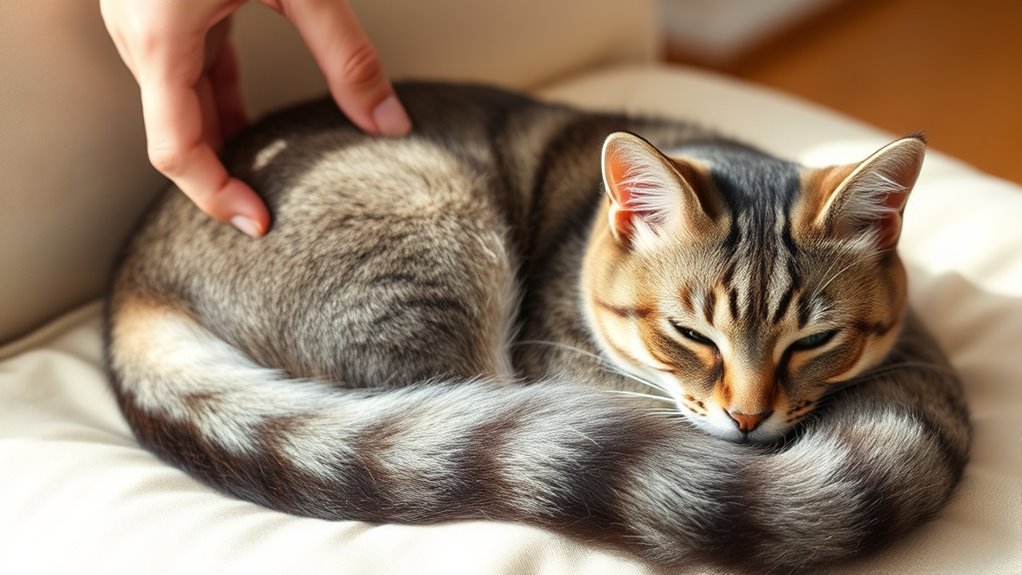
Many cats enjoy having their tails petted, but their reactions vary based on personality, breed, and mood. You’ll notice signs of enjoyment like relaxed body language, purring, or leaning into your touch.
However, some cats may twitch or flick their tail or pull away if they’re uncomfortable.
To keep things positive, observe their cues carefully and respect their boundaries. Want to learn how to tell if your cat truly enjoys tail petting? Keep exploring for more tips.
Key Takeaways
- Cats’ enjoyment of tail petting varies from one cat to another. Some really love it, while others might not be fans, depending on their personality and past experiences.
- When they’re comfortable, you’ll see relaxed tail positions, slow blinking, purring, and maybe even leaning into your touch.
- If they’re uncomfortable, their tail might flick or lash, their ears could flatten, or they might pull away from your hand.
- Breed tendencies can also play a role. For example, breeds like Sphynx and Ragdoll are usually more tolerant of tail petting.
- The key is to be gentle and watch their body language closely. That way, you can make sure the experience stays positive for your cat.
Do Cats Usually Like Having Their Tails Petted?
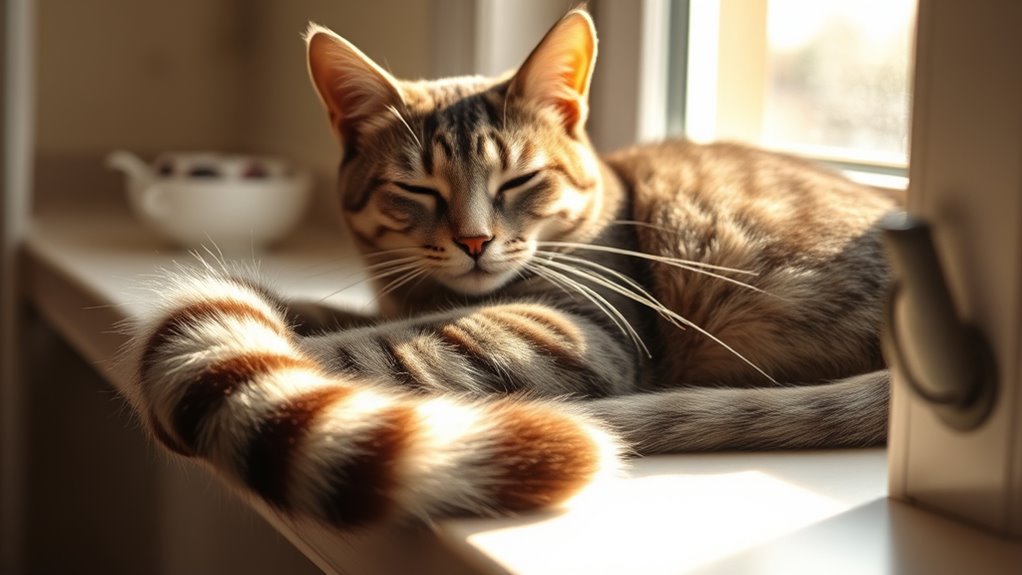
Many cats enjoy having their tails petted, but it’s not a universal preference. Some cats find tail grooming soothing and may seek out gentle strokes, while others see it as intrusive or uncomfortable.
Your feline’s preferences depend on their individual personality and past experiences. If your cat shows relaxed body language—purring, slow blinking, or leaning into your touch—they probably enjoy tail pets.
But if they twitch their tail, flatten their ears, or try to move away, they probably dislike it. It’s important to pay attention to these signals.
Not all cats like their tails touched, and forcing it can lead to mistrust. Tail grooming is a sensitive area for many felines.
Respect your cat’s boundaries and watch their reactions to keep interactions positive. Understanding your cat’s preferences helps you decide when and how to gently pet their tail.
How Do Cats React When You Pet Their Tails?
When you pet a cat’s tail, their reactions can vary a lot depending on how comfortable they feel and their personality. Some cats might respond positively, while others could react defensively.
Cats use their tails to communicate their feelings, based on their instincts. You might see a gentle twitch if they’re curious or content, or a puffed-up tail that signals discomfort or annoyance.
| Reaction Type | What It Means |
|---|---|
| Calm, relaxed tail | They trust you and enjoy your petting |
| Rapid twitching | Mild irritation or overstimulation |
| Fluffed-up tail | Defense, fear, or aggression |
Understanding these reactions helps you read their mood better. If their tail stiffens or flicks sharply, it’s best to stop petting. Respect their signals to build a stronger bond through tail communication and feline instincts.
Signs Your Cat Enjoys Tail Petting
A cat that enjoys tail petting often shows subtle but clear signs of contentment. You might notice their tail flicking gently or the tail tip twitching softly, showing they’re comfortable.
When your cat reaches a relaxed posture with their tail in a natural position, it indicates they trust you and enjoy the interaction. Signs of tail comfort include purring, slow blinking, or leaning into your touch.
A relaxed tail posture shows your cat trusts and enjoys your gentle touch.
To make sure your cat enjoys it, use gentle petting techniques. Avoid heavy or sudden strokes that could cause discomfort. Pay attention to their body language; if they relax and keep their tail still or gently sway it, they’re likely enjoying the experience.
Some cats even nuzzle or rub their face against your hand while you pet their tail, signaling happiness. Recognizing these signs helps you know that your pet appreciates this kind of affection.
This awareness allows you to deepen your bond through respectful, attentive petting, making tail playtime a positive experience for both of you.
What Body Language Shows Your Cat Dislikes Tail Touching?
Even if your cat seems okay with tail petting at first, they might start showing signs they don’t like it. Look for body signals like flicking or lashing their tail, which can mean irritation or discomfort.
Flattened ears or a tense body are clear clues that your cat isn’t happy. If they pull away or try to escape, that’s a strong sign they dislike having their tail touched.
Some cats might avoid eye contact or give a quick blink, showing they’re uncomfortable. Paying attention to these signals helps you understand what your cat is okay with and respect their boundaries.
Displeasure often shows through these body signals before your cat becomes aggressive. Ignoring these cues can cause stress or mistrust.
Always watch how your cat responds during tail touching. Adjust your approach based on their comfort levels to keep them happy and relaxed.
Why Are Some Cats Sensitive About Their Tails?
Some cats can be pretty sensitive about their tails, and it’s often because of their individual personalities or past experiences. You know, if a cat has been handled roughly or had something stressful happen to them before, they might be more cautious about their tails being touched.
It’s really important to pay attention to their reactions. If a cat seems uncomfortable or pulls away when you try to touch their tail, it’s best to respect their boundaries. Understanding what makes each cat feel safe helps keep them happy and stress-free.
Tail Sensitivity Variations
Cats can be surprisingly sensitive about their tails, and this varies widely from one feline to another. This sensitivity often depends on their unique tail anatomy and the distribution of sensory nerves.
Some cats have highly sensitive tails because of dense nerve endings, making even gentle touches uncomfortable. Others may have fewer nerve endings, so they tolerate or even enjoy petting.
Factors like past experiences or individual temperament also influence sensitivity. Watch for signs of discomfort, such as flicking or twitching.
To better understand your cat’s preferences, consider these points:
- Variations in tail nerve density
- Differences in tail muscle structure
- Past tail injuries or sensitivities
- Individual personality traits
Past Traumas Influence Reactions
Past injuries or negative experiences can really shape how a cat reacts to having their tail touched. Tail trauma from accidents or rough handling leaves a lasting impact, making them wary of any contact.
Behavioral triggers linked to these past experiences can cause heightened stress or anxiety when their tail is approached. Environmental factors like a tense or unpredictable setting might make them even more sensitive.
Socialization also plays a role—cats with limited positive interactions tend to react more defensively. Understanding that these reactions come from past traumas helps you approach your cat with patience.
Respecting their boundaries and noticing signs of discomfort can help avoid triggering painful memories. This way, you can create a safer space that promotes trust and comfort.
Grooming and Handling Boundaries
Many cats become sensitive about their tails because grooming and handling often cross their personal boundaries, especially if they’ve had negative experiences in the past. Cats are very aware of their limits, and rough handling or improper grooming can make them wary. To respect these boundaries, watch their reactions and avoid sudden movements.
You can help set better boundaries by gently approaching before touching their tail. Pay attention to signs of discomfort or agitation. Use slow, controlled movements during grooming and respect their signals to stop or back off.
Understanding these cues helps prevent discomfort and builds trust. Recognizing that some cats are more sensitive about their tails encourages you to handle them with care, making grooming a more positive experience.
Do Breed or Personality Traits Affect Tail-Petting Preferences?
Sure! Here’s a more conversational version of the text:
—
You know, different cat breeds can really vary when it comes to how comfortable they are with having their tails petted. Some cats actually enjoy it, while others might prefer to keep their tails to themselves. It’s not just about the breed, though — your cat’s personality plays a huge role too. Some cats are naturally more tolerant and affectionate, making tail petting a pleasant experience for them.
Getting to know these differences is so helpful. It helps you understand what your cat prefers and how to approach tail petting without upsetting them. After all, paying attention to their reactions is the best way to keep things safe and enjoyable for both of you.
Breed Differences Influence Comfort
Breed and personality traits play a big role in how cats respond to tail-petting. Some breeds naturally react differently to tail touches, influencing their comfort level.
For example, Sphynx cats often enjoy attention and may tolerate tail petting more easily. Maine Coons tend to be gentle and might appreciate gentle tail touches.
Bengals can be more sensitive, making tail-petting less comfortable for them. Ragdolls usually enjoy handling, including contact with their tails.
Understanding these breed tendencies helps you gauge your cat’s comfort. While some breeds are more receptive, others may be more reserved or sensitive.
Recognizing these differences ensures you approach tail petting in a way that respects your cat’s preferences, helping avoid discomfort or stress.
Personality Shapes Tolerance
While breed traits influence a cat’s general tendencies, its individual personality plays a key role in how comfortable it is with tail-petting. Some cats are naturally more tolerant, while others are more sensitive, based on who they are.
You’ll notice that tail communication is a big part of feline instincts—cats use their tails to show emotions and signals. If your cat is curious or confident, it might tolerate gentle tail touches more easily.
On the other hand, shy or easily startled cats may see tail-petting as a threat, which can lead to defensive behavior. Understanding your cat’s personality helps you interpret its reactions more accurately.
Respecting these individual differences keeps your interactions positive and helps build trust, no matter the breed.
Where and When Is the Best Time to Pet Your Cat’s Tail?
Wondering when and where it’s safe to pet your cat’s tail? The best way is to pay attention to your cat’s mood and body language. Look for signs like purring or gentle kneading that show your cat is relaxed.
The ideal spots are usually the base or middle of the tail. Avoid the tip unless your cat shows positive signs, as it can be more sensitive there. Timing is also important—pet during calm moments, not when your cat is overstimulated or upset.
Here are some tips for tail petting: pet when your cat seems relaxed and receptive. Focus on the base or middle of the tail for a gentle touch. Avoid tail petting during high-energy or stressful times.
Keep an eye out for discomfort signs like twitching or pulling away. If your cat shows any of these, it’s best to stop and give them space.
How Can You Pet Your Cat’s Tail Safely and Respectfully?
If you want to pet your cat’s tail safely, it’s good to remember that not all cats feel the same about their tails. Some might love a gentle touch, while others could be more sensitive or even dislike it. So, it’s important to be extra careful and observe how your cat reacts.
When you do decide to pet the tail, start off very gently. Pay close attention to your cat’s body language—are they relaxed, purring, or leaning into your touch? Or do they seem tense, twitch or flick their tail, or move away? These cues can tell you if they’re comfortable or if they want you to stop. Respect their signals, and always go slow to keep things positive and enjoyable for both of you.
Recognize Tail Sensitivity
Your cat’s tail is a sensitive area that needs to be handled gently. Knowing about tail anatomy helps you see when your cat is comfortable or upset.
Tail movements are a big part of how cats communicate their mood and intentions. To be respectful of their sensitivity:
- Watch for twitching or lashing, which shows irritation or overstimulation.
- Notice when your cat’s tail is puffed up — that’s a sign of fear or aggression.
- Relaxed, gently swaying tails mean your cat is content.
Avoid grabbing or squeezing the tail because it’s a delicate structure full of nerve endings.
Approach Gently First
Since a cat’s tail is a sensitive area, approaching it with gentle movements is essential to avoid startling or upsetting your feline friend. Start by observing your cat’s body language and make sure they’re relaxed before trying to make contact.
Use a slow, calm hand to gently reach toward the tail, putting their comfort first. A gentle approach helps build trust and makes your cat feel safe. Avoid sudden movements or grabbing the tail abruptly, as this can cause discomfort or fear.
Instead, softly stroke nearby areas like the base or sides first to see how they respond. If your cat seems relaxed, you can slowly extend your touch to the tail, always respecting their boundaries and comfort. Patience is key to a positive, respectful interaction.
Watch for Body Cues
Pay close attention to your cat’s body language, as it gives important clues about whether they’re comfortable with tail petting. Cats communicate their feelings through tail signals and other body cues rooted in their instincts.
If your cat’s tail is relaxed or gently swaying, they’re probably okay with being petted. But keep an eye out for signs of discomfort, like a fluffed-up tail, lashing or rapid flicking, ears pinned back, or a stiff body.
These cues mean it’s time to stop right away. Respect your cat’s signals to help prevent stress or discomfort. Understanding their body language helps build trust and makes tail petting a positive experience for both of you. Always prioritize your cat’s comfort and boundaries.
What Should You Do If Your Cat Dislikes Tail Petting?
If your cat clearly dislikes having its tail petted, it’s important to respect their boundaries and avoid forcing the issue. Instead, try offering tail alternatives, like gentle chin or cheek rubs, which many cats enjoy.
Respecting their preferences helps build trust and prevents stress. If you want to encourage more positive behavior around tail contact, consider behavior modification techniques.
Gradually introduce touch near the tail area in short, positive sessions. Reward your cat with treats or praise for tolerating it. Over time, this can help your cat become more comfortable with gentle tail contact.
But never push too hard or rush the process. Remember, patience is key. If your cat shows signs of discomfort, back off immediately and try again later.
Respecting your cat’s limits creates a safer environment and helps foster a stronger bond. Always prioritize your cat’s comfort and signals over your curiosity or desire to pet their tail.
How to Tell If Tail Petting Is a Positive or Negative Experience
Recognizing whether your cat enjoys tail petting or finds it upsetting is key to building a trusting relationship. Cats communicate a lot through tail signals, so understanding their behavior helps you see how they’re feeling.
Watch for signs like relaxed body language, purring, or gentle head-butts. These all indicate your cat is happy with the attention. On the other hand, if your cat swats, twitches their tail, or tries to move away, they probably don’t enjoy it.
To tell if tail petting is positive or negative, observe their tail’s position. A held-high tail or gentle flicks usually mean they’re content. But quick tail flicks or lashing can show irritation or discomfort.
Also, pay attention to their muscles. Relaxed muscles and slow blinking are signs of comfort, while tense, stiff posture suggests they’re unhappy. This way, you can tell when your cat is enjoying your touch or if it’s time to stop.
Frequently Asked Questions
Can Tail Petting Cause Long-Term Stress in Cats?
Yes, tail petting can cause long-term stress in cats if they are sensitive about their tails. If your cat shows signs of discomfort, it’s best to avoid touching the tail.
Watch for signals like tail flicking, twitching, or puffing. These are signs your cat doesn’t want their tail touched.
Repeatedly handling the tail when your cat is stressed can increase their overall stress levels. This may harm your bond over time.
Always pay attention to your cat’s reactions and respect their boundaries. Making sure they feel safe and comfortable during interactions is key.
Are There Specific Times When Cats Prefer Tail Petting?
Cats usually prefer tail petting when they’re relaxed and comfortable, often during cuddle sessions or when they initiate contact. Pay attention to tail communication and feline body language—if their tail is relaxed, puffed, or flicking, it signals their mood.
Avoid tail petting during stressful moments or if they show signs of irritation. Respect their cues, and you’ll strengthen your bond while making sure they enjoy the interaction.
How Does Age Influence a Cat’s Tolerance for Tail Touching?
Like a wise old owl, your cat’s tolerance for tail touching varies with age. Kittens often investigate with curiosity, showing more acceptance.
Meanwhile, senior cats become more sensitive, much like a delicate vintage. Your young feline might enjoy gentle tail strokes, but as they age, their behavior shifts.
They may prefer less contact as they grow older. Always watch their reactions and respect their changing comfort levels throughout their life.
Do Cats Remember Positive or Negative Tail Petting Experiences?
Yes, cats remember positive or negative tail petting experiences. They interpret tail communication cues based on tail sensitivity factors, which influence their reactions.
If you pet your cat’s tail gently and positively, they’ll likely associate it with good feelings and recall that experience. Conversely, if they’re handled roughly or negatively, they may avoid tail contact in the future.
Your consistent, gentle approach helps your cat form positive memories about tail interaction.
Can Tail Petting Help Improve My Bond With My Cat?
Yes, tail petting can help improve your bond with your cat. By understanding tail communication and feline behavior, you’ll learn when your cat is open to affection or overstimulated.
Gentle tail petting can strengthen trust and show you care, especially when your cat responds positively. Just keep an eye out for signals like tail flicks or bristling, which mean your cat might be uncomfortable.
Respecting these cues helps build a deeper, more trusting relationship. It’s all about paying attention and being gentle.
Conclusion
Think of petting your cat’s tail as delicate dance steps—you need to read their signals and move with their comfort in mind. When you respect their boundaries, tail petting can become a harmonious part of your bond.
But if your cat pulls away or shows signs of discomfort, it’s like stepping on toes. It’s time to pause and try again later. Patience and care are key.
With time, your feline friend will gladly share their tail’s tale of trust. Do cats like their tails petted? Many do, but only if they feel safe and relaxed.