7 Steps to Put Cat Flea Medicine Properly
Many cat owners know the struggle of keeping fleas at bay. It’s frustrating to see your furry friend scratching and uncomfortable, and figuring out the best way to apply flea medicine can feel overwhelming. You’re not alone—many people struggle with making this process smooth and effective.
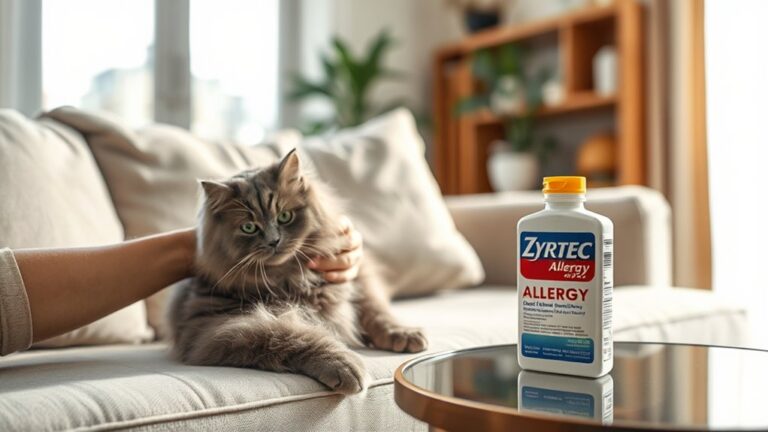
To properly apply flea medicine to your cat, start by choosing the right treatment based on your cat’s age, weight, and health, preferably with vet advice.
Prepare your cat in a calm environment, handle gently, and reinforce with treats.
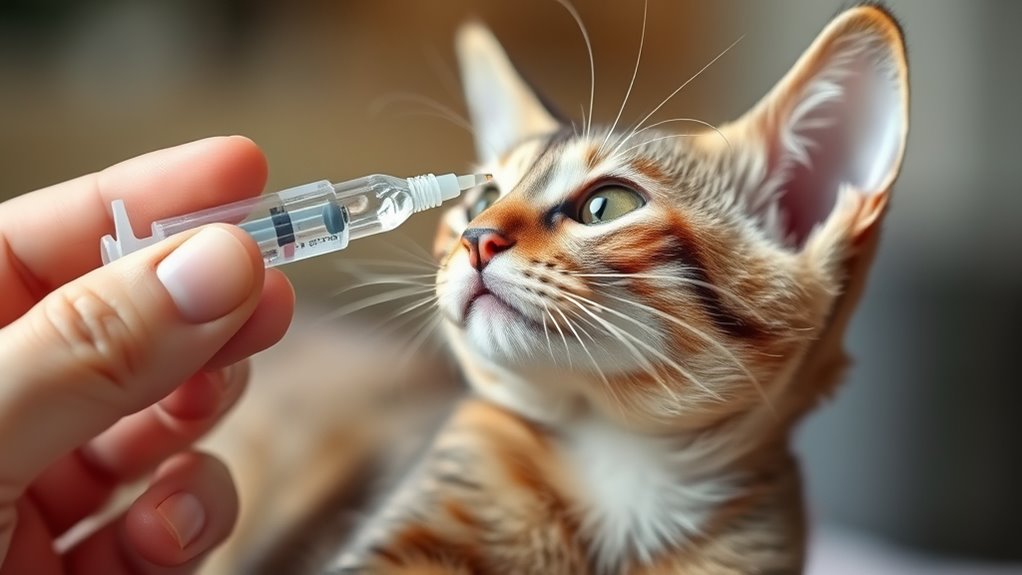
Follow the instructions carefully, applying medication directly onto the skin at the neck area. Keep your cat calm during the process and watch for reactions.
If you want to learn more about making this process smoother and more effective, keep exploring the steps.
Key Takeaways
- Read and follow the product instructions carefully before applying it.
- Find a calm, quiet spot to help your cat stay relaxed during the treatment.
- Part the fur at the usual spot, usually the neck, so you can reach the skin directly.
- Apply the medication straight onto the skin, avoiding just the fur or superficial areas.
- Keep your cat from grooming itself for a few hours after application, and watch for any side effects.
Choose the Best Flea Treatment for Your Cat
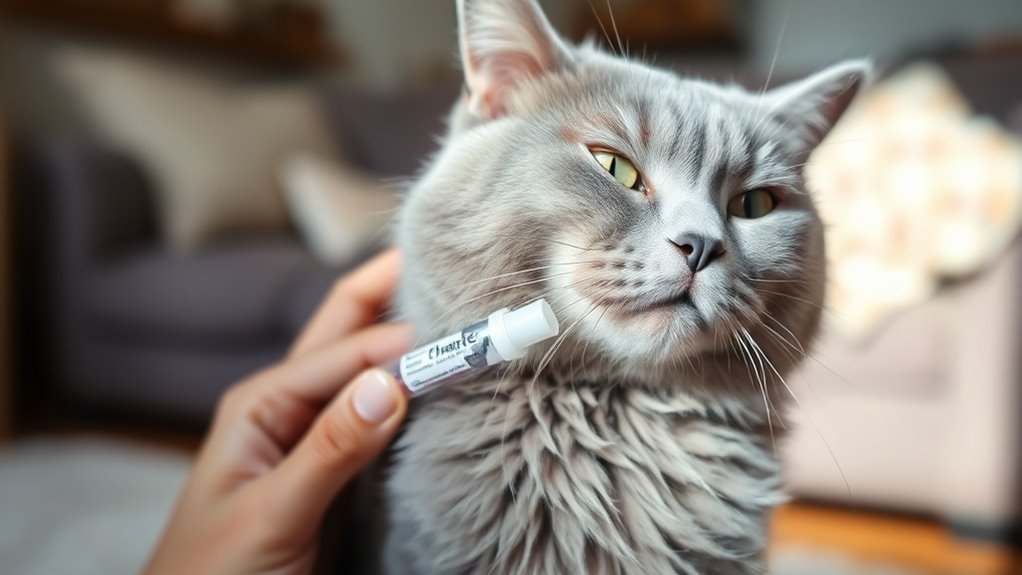
When choosing a flea treatment for your cat, consider their age, weight, and overall health. This helps ensure you pick an option that’s both effective and safe.
It’s really important to talk to your vet before making a decision. They can recommend the best product based on your cat’s specific needs and health.
If you’re interested in natural remedies, discuss these with your vet too. Some pet owners like herbal sprays or diatomaceous earth, but not all are proven safe or effective for every cat.
Commercial treatments like topical spot-ons, oral medications, or flea collars are often recommended for quick, reliable results.
Always follow your vet’s guidance, especially when considering natural remedies or over-the-counter products. Properly choosing the right flea treatment helps keep your cat healthy and comfortable without unnecessary risks.
Prepare Your Cat for Flea Medication
When it’s time to give your cat flea medication, try to create a calm and quiet environment. This can really help your kitty feel more at ease and less stressed. Handle her gently and speak softly—that way, she’ll feel safe and comforted during the process.
It’s also a good idea to use some positive reinforcement. Giving her a treat or praising her afterward can help her associate the medication time with something good. Over time, this can make the experience easier for both of you.
Choose Calm Environment
Have you ever noticed how a calm environment can make a big difference when giving your cat medication? Creating indoor tranquility helps reduce stress and makes the process smoother.
To set the stage, consider these distraction techniques:
- Play soft music or white noise to keep your cat relaxed.
- Use calming scents like lavender in the room to promote tranquility.
- Make sure the space is quiet and free from sudden movements or loud noises.
Handle Gently and Calmly
Handling your cat gently and calmly is key to making the medication process easier for both of you. Use gentle handling to avoid stressing your cat and keep a calm demeanor throughout.
Speak softly and move slowly so your cat feels secure. If your cat resists, pause and reassure them with gentle strokes. Keep your movements smooth and steady, avoiding sudden jerks or loud sounds.
Your calm attitude helps your cat stay relaxed, making it easier to give the flea medicine. Remember, patience is really important. By approaching your cat with kindness and a gentle touch, you reduce their anxiety and create a positive environment.
This careful handling sets the stage for a smoother, less stressful experience for both of you.
Use Positive Reinforcement
Using positive reinforcement can make your cat more comfortable with the medication process. You can create reward systems that connect handling and medication with good experiences.
To do this effectively, offer treats immediately after touching or gently handling your cat’s collar or paws. Use praise and petting to reinforce calm behavior during practice sessions.
Gradually introduce the medication routine, pairing it with a favorite toy or reward. This helps your cat associate the process with positive things, reducing stress and resistance.
Consistency is key. Repeat these steps regularly, and your cat will become more cooperative over time. Positive reinforcement makes giving flea medication easier for both of you.
Step-by-Step Guide to Applying Flea Medicine Safely
Applying flea medicine safely requires careful preparation and attention to detail. First, gather all necessary supplies, including the medication, gloves, and a towel. Read the product instructions thoroughly to understand the correct dosage and application method.
Before applying, make sure your cat is calm and comfortable. You might use positive reinforcement to help them stay relaxed. Part the fur at the neck, just behind the ears, where the skin is thin and less likely to be licked.
Apply the medication directly onto the skin, not on the fur, to prevent ingestion and ensure it works effectively. While flea prevention strategies often include medicated treatments, some owners explore natural remedies as extra measures.
Always follow the recommended schedule and avoid over-application. After applying, watch your cat for any adverse reactions, and keep them from grooming for a few hours.
Proper and careful application guarantees your cat’s safety and the treatment’s effectiveness.
Tips to Make Flea Treatment Less Stressful
One of the best ways to make flea treatment less stressful for your cat is to create a calm, familiar environment during application. Reducing flea anxiety helps your cat feel safe, making the process smoother. Here are three tips to ease stress:
Creating a calm, familiar environment during flea treatment reduces stress and helps your cat feel safe and relaxed.
- Choose a quiet, familiar space where your cat feels secure. Avoid loud noises or disruptions.
- Use gentle handling techniques. Speak softly and reward with treats afterward to create positive associations.
- Have everything ready beforehand—flea medicine, towels, and treats—so you can focus on calming your cat without rushing.
These steps help your cat stay relaxed, minimizing stress, and ensuring the flea treatment is effective. Remember, a calm approach not only eases flea anxiety but also strengthens your bond, making future treatments easier. Keeping the environment soothing is key to a less stressful flea medication experience.
Common Mistakes When Applying Flea Medicine
One mistake many people make is using the wrong dosage. If you don’t give the right amount, it might not work as well, or worse, it could be harmful to your pet. So, it’s really important to follow the instructions carefully.
Another common issue is applying the medicine to the wrong areas or missing spots altogether. If you don’t cover all the right places, the flea medicine won’t be as effective as it should be. Just take your time and make sure you’re thorough. Following the instructions closely can help you avoid these simple but costly mistakes.
Using Incorrect Dosage
Misjudging the correct dosage of flea medicine is a common mistake that can compromise your cat’s safety and the treatment’s effectiveness. An incorrect measurement can lead to underdosing, which won’t eliminate fleas, or overdosing, which may cause serious side effects.
To avoid this, always follow the label instructions carefully and use the correct measurement for your cat’s weight. Never guess or estimate the dosage—use a precise measuring device to ensure accuracy.
Watch for signs of side effects, such as vomiting or lethargy, which can indicate an overdose. Using incorrect measurement can reduce the medicine’s effectiveness and put your cat at risk. Proper dosage is essential for safe and successful flea prevention.
Applying to Wrong Area
Applying flea medicine to the wrong area is a common mistake that can reduce its effectiveness and even harm your cat. Using incorrect applying techniques often leads you to miss the spot or apply the medicine to the wrong part of your cat’s body.
Make sure to focus on the skin, usually at the back of the neck or between the shoulder blades, where your cat can’t lick it off. Avoid applying directly onto fur clumps, as this can prevent proper absorption and decrease efficacy.
Be precise and gentle, ensuring the medication reaches the skin. If you apply it to fur, the medicine won’t be effective, and your cat may ingest it during grooming.
Properly targeting the right area guarantees the flea medicine works as intended and keeps your cat safe.
Not Following Instructions
Failing to follow the instructions provided with your cat’s flea medication can greatly reduce its effectiveness and even pose health risks. Common mistakes include falling for flea medicine myths, which can lead to improper application.
To avoid dosage confusion, keep these tips in mind:
- Read the label carefully—don’t rely on myths or assumptions about how much your cat needs.
- Use the correct application method—whether spot-on or oral, follow instructions precisely.
- Adhere to the recommended frequency—over- or under-application can be harmful or ineffective.
Misunderstanding dosage or skipping steps can compromise your cat’s protection. Always consult your vet if you’re unsure, and avoid assumptions based on flea medicine myths. Proper adherence guarantees your cat stays flea-free and safe.
How to Check If Flea Treatment Worked
Wondering if the flea treatment has actually worked? To see if it’s effective, keep a close eye on your cat over the next few weeks.
Flea life cycle stages—eggs, larvae, pupae, and adult fleas—must be broken to fully eliminate pests. After treatment, you shouldn’t spot any fleas on your cat or around your home.
Check your cat’s fur daily for fleas or flea dirt, which looks like tiny black specks. If you notice fewer fleas or none at all, chances are the treatment is working.
Also, watch your cat’s skin for less itching or irritated spots. This signals progress. Remember, some fleas may temporarily jump or hide, but consistent absence is a good sign.
Be patient because complete eradication can take time, especially if there was a heavy infestation. Regular checks will help you see if the treatment is holding up or if you need to take additional steps.
When to See a Vet About Flea Control
You should see a vet about flea control if your cat keeps scratching, biting, or shows signs of irritation even after treatment. Recognizing flea symptoms is key to knowing if you need professional help.
See a vet if your cat continues to scratch or show irritation after flea treatment.
Consider talking to your vet if symptoms get worse or don’t improve with your current approach. Also, watch for skin infections, sores, or hair loss caused by scratching.
If your cat shows signs of allergic reactions or behaves oddly, it’s a good idea to get professional advice. Your vet can recommend stronger medications or check for underlying issues like allergies or infections.
Persistent flea symptoms mean your current method isn’t enough. Don’t wait too long—untreated fleas can cause other health problems. Regular vet visits help keep your cat comfortable and flea-free, with personalized plans that work.
Frequently Asked Questions
Can Flea Medicine Be Used on Kittens or Senior Cats?
Flea medicine shouldn’t be used on kittens or senior cats without talking to your veterinarian first.
It’s important to keep kittens safe, as some treatments might be too strong for young or elderly cats.
For senior cats, certain medicines might not be suitable because of existing health issues.
Always check the label and ask your vet to make sure the product is safe for your cat’s age and health.
Never guess when it comes to flea medicine. If you’re unsure, just ask your vet for guidance.
How Often Should I Reapply Flea Medication?
Flea medication frequency depends on your cat’s needs, but generally, you should reapply every 30 days.
If you’re using seasonal flea treatment, adjust the interval based on local flea activity.
Think of it like watering a plant—regular care keeps it healthy.
Always follow your vet’s advice and product instructions, especially during peak flea seasons, to keep your cat flea-free year-round.
Are There Natural Alternatives to Chemical Flea Treatments?
Yes, there are natural alternatives to chemical flea treatments. You can try herbal remedies like lavender, neem, or eucalyptus, which are known for repelling fleas.
Essential oils such as cedarwood or tea tree oil can also help, but make sure to dilute them properly to avoid skin irritation. Always check with your vet before using these options, since some oils can be harmful to cats.
What Should I Do if My Cat Has a Skin Reaction?
Oh, perfect—your cat’s skin reaction is just what you needed! First, remove the flea medicine immediately.
Then, you can try skin irritation remedies like a soothing oatmeal bath or antihistamines, but always check with your vet for allergy management.
Keep an eye out for swelling or difficulty breathing. If symptoms get worse, seek emergency care.
Can Fleas Develop Resistance to Certain Medications?
Yes, fleas can develop resistance to certain medications over time, which can make treatments less effective.
As you treat your cat, remember the flea life cycle. Some stages are harder to target, giving resistance a chance to build up.
To help prevent this, rotate medications and take thorough approaches like controlling the environment.
Regular advice from your vet helps you pick the best treatment, reducing resistance and keeping your cat flea-free longer.
Conclusion
By following these steps, you’ll turn flea treatment into a gentle dance rather than a stressful waltz. Remember, patience and consistency are your best allies. Think of yourself as the steady captain steering through choppy waters.
Keep a close eye on your feline friend’s response, and don’t hesitate to consult your vet if needed. With a little effort, you’ll clear those pesky fleas and restore peace to your home, just like a calm sunrise after stormy skies.
Using proper cat flea medicine is key to making this process smooth and effective.