Why Do Cats Foam at the Mouth Given Medicine?
Many cat owners struggle with giving their feline friends medication, often wondering why their cats foam at the mouth during the process. You’re not alone—this can be a confusing and unsettling experience.
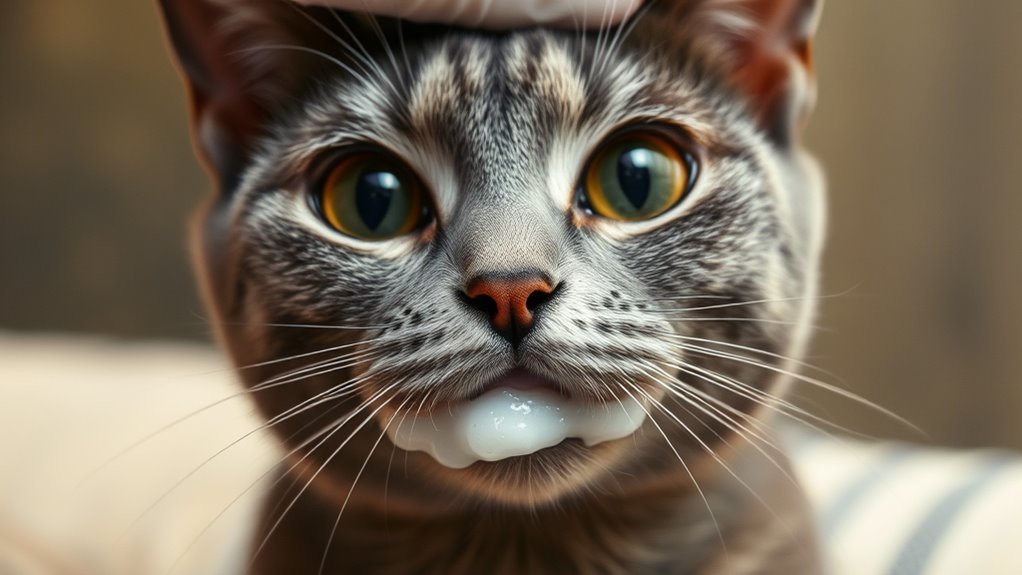
When you give your cat medicine, they might foam at the mouth because of taste, texture, or irritation. Bitter flavors, gritty or sticky textures, and discomfort can cause excessive salivation, gagging, or even choking.
Sometimes, stress or sensitivity to the medication prompts a natural protective response, leading to foaming.
If your cat continues to foam or shows other signs of distress, there are simple ways to help, along with important signs to watch for as you learn more.
Key Takeaways
- Cats may foam because they’re stressed or anxious when you give them medication.
- If the medicine tastes bitter or unpleasant, it can cause them to salivate excessively and foam at the mouth.
- Oral discomfort or gagging while swallowing might also lead to foaming.
- Gritty or sticky textures in medication can make cats reject it and cause foaming.
- If the foaming persists or gets worse, it could mean irritation or a reaction that needs your vet’s attention.
Why Do Cats Foam at the Mouth During Medication?
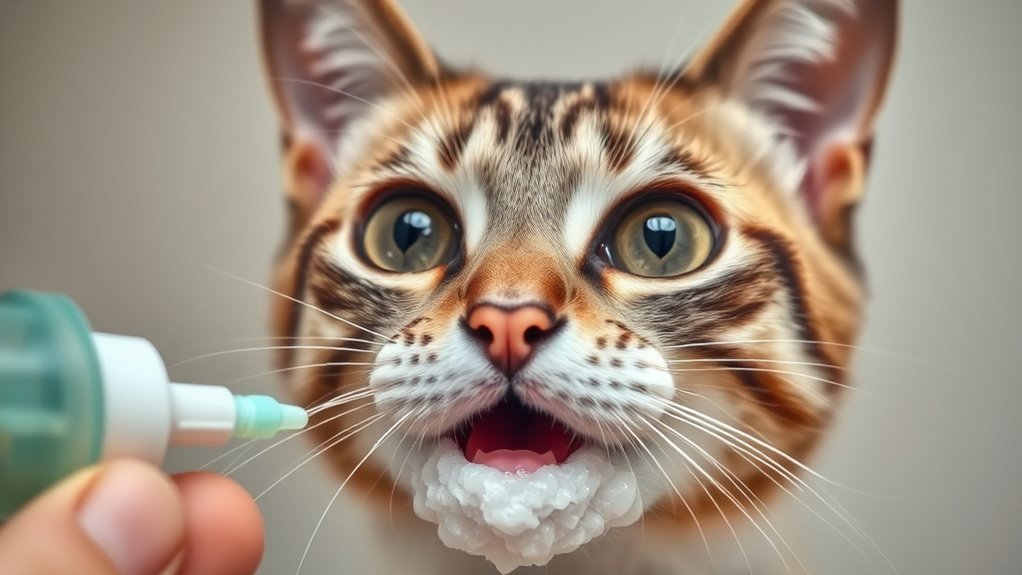
Have you ever wondered why some cats foam at the mouth when given medication? It often comes down to their medication anxiety and oral sensitivity.
Cats with medication anxiety may become overwhelmed or stressed, causing them to react instinctively. The act of trying to give medicine can make them feel trapped or uneasy, leading to drooling or foaming as a stress response.
Moreover, oral sensitivity plays a role; some cats have delicate mouths and may find the taste or texture of medication unpleasant. This discomfort prompts them to salivate excessively or foam at the mouth to try to get rid of the sensation.
Understanding these factors helps you realize that foaming isn’t always about the medicine’s ingredients. It’s often about your cat’s emotional and physical reactions.
Addressing their anxiety and oral sensitivity can make medication time less stressful for both of you.
How Taste and Texture of Medicine Cause Foaming in Cats
The taste and texture of medication can really influence whether your cat foams at the mouth. If a medicine tastes bitter or unpleasant, your cat may develop a taste aversion, which can cause excessive salivation and foaming.
Similarly, texture sensitivity plays a big role. Some cats dislike the feel of certain medicines, especially if they’re gritty, slimy, or sticky. When faced with an unpleasant taste or texture, your cat might try to spit it out or reject the medication.
Texture sensitivity can cause cats to spit out or reject medications, especially if they’re gritty, slimy, or sticky.
This reaction isn’t just about dislike. It’s a natural response to protect the mouth and throat from uncomfortable sensations. Understanding that taste aversion and texture sensitivity can cause foaming helps you see that it’s not just about the ingredients.
It’s also about how the medication feels and tastes. Adjusting the form or flavor of the medicine can help reduce this reaction and make giving medication easier.
Common Reasons Your Cat Foams When Given Medicine
Multiple factors can cause your cat to foam at the mouth when given medication. One common reason is medication anxiety, where your cat gets stressed or scared during treatment, leading to lots of salivation and foaming.
Another reason is taste aversion; if the medicine tastes bitter or unpleasant, your cat might react by foaming as a reflex. Some cats also foam because they’re gagging or choking if they’re having trouble swallowing the medicine properly.
Additionally, certain medications can irritate your cat’s mouth or throat, which causes more salivation and foaming. Recognizing these reasons can help you figure out why your cat foams and find ways to make giving medicine less stressful.
How to Minimize Foaming When Administering Medicine
To reduce foaming when giving medicine to your cat, it’s helpful to prepare carefully and use the right techniques. Start by choosing medication options like flavored liquids or pills hidden in treats to make the process easier.
If your cat gets anxious, calming techniques such as gentle petting or creating a quiet environment can help lower stress, which often causes more foaming. Using a syringe or dropper slowly and steadily gives you better control and prevents sudden squirts that cause foaming.
Position your cat’s head slightly raised and aim the medication toward the back of the mouth to reduce air intake and saliva production. Keep the sessions short and positive, offering praise or treats afterward.
These steps can help manage your cat’s anxiety, reducing the chances of foaming and making the experience less stressful for both of you.
Tips for Choosing Flavored or Alternative Medications
Choosing flavored or alternative medications can make giving your cat pills or liquids much easier. Cats often have specific flavor preferences, so picking medication options with appealing flavors can reduce stress and resistance.
Many pharmacies offer flavored options like tuna, chicken, or beef, which can mask the medication’s bitter taste. You can also ask your vet about compounded medications that can be customized to your cat’s favorite flavors.
Some medications come in different forms, such as chewables, liquids, or transdermal gels, making administration more tolerable. Opt for flavor-enhanced medication types to improve acceptance.
Try different flavors to see what your cat prefers. Using compounded medications allows for personalized flavor choices that your cat might enjoy more.
Additionally, consider alternative forms like liquids or gels, which can be easier to administer. Choosing the right flavor and medication type helps keep your cat calm and cooperative during treatment.
How to Properly Give Medicine to Prevent Foaming
When giving your cat medication, taking steps to prevent foaming can make the process smoother and less stressful for both of you. Using proper medication techniques helps reduce the chances of your cat reacting negatively, which can trigger foaming.
Start by calming your cat and choosing a quiet space. Hold your cat gently but securely, respecting their behavior to avoid stress. If administering pills, consider hiding it in a tasty treat or using a pill pocket.
For liquid medications, use a syringe or dropper and aim to place it at the back of the mouth, avoiding the tongue to prevent gagging and excessive salivation. Communicate softly and calmly throughout.
If you need to hold your cat’s mouth open, do so briefly, then gently release. By applying these techniques, you minimize stress and reduce the likelihood of foaming caused by anxiety or resistance.
Signs That Foaming Might Indicate a Medical Issue
Foaming at the mouth can sometimes signal a medical problem rather than a simple reaction to medication or stress. If your cat shows other signs alongside foaming, it’s important to pay attention, as these may indicate underlying health issues.
Look for symptoms like excessive drooling or difficulty swallowing, which could point to mouth issues or pain. Sudden changes in behavior or lethargy might suggest a serious health concern.
Watch for excessive drooling, difficulty swallowing, or sudden behavior changes indicating possible health issues.
Unusual vomiting or diarrhea could relate to medication reactions or systemic illness. Persistent or worsening foaming, especially if it’s accompanied by swelling or bleeding, needs prompt attention.
If you notice any of these signs, it’s crucial to see a vet quickly. Early intervention can make a big difference in your cat’s health and help address potential mouth problems or other medical conditions. Always consult a vet to ensure your cat’s well-being.
When Should You Worry About Your Cat Foaming?
If your cat is foaming at the mouth, you should start to worry if it’s happening a lot or if it seems sudden. It’s a good idea to watch how long the foaming lasts — if it sticks around for a while, that’s worth paying attention to.
Also, keep an eye on other changes in your cat’s behavior, like if they seem more tired than usual or if they’re acting aggressive. These signs can help you figure out if you need to get your cat to the vet right away.
Severity of Foaming
Determining whether your cat’s foaming warrants concern depends on the severity and accompanying symptoms. Mild foaming caused by a quick gag or minor irritation may not be urgent. However, if the foaming is intense, persistent, or paired with difficulty breathing or unresponsiveness, you should act immediately.
The severity of the foaming can indicate different causes, from simple nausea to serious health issues. Watch for signs like drooling, vomiting, or lethargy. It’s important to assess the overall situation, not just the foaming.
- Mild, brief foaming with no other symptoms
- Excessive, continuous foaming that worsens
- Foaming accompanied by difficulty breathing
- Sudden, severe foaming with lethargy or collapse
Duration of Symptoms
The length of time your cat experiences foaming can give important clues about what’s going on. Whether it lasts a few seconds or goes on for hours can help determine how serious the situation is.
A quick episode after medication might just be a temporary reaction. But if the foaming lasts more than a few minutes, it could be a medical emergency.
If your cat keeps foaming for a long time or if it happens repeatedly, you should see a vet right away. Keeping track of how long it lasts is key to knowing when to act.
Accompanying Behavior Changes
When your cat starts foaming at the mouth, paying attention to other behavioral changes can be key in figuring out how serious the situation is. Stress responses and behavioral cues often come along with this symptom and can show that your cat is in distress or facing health issues.
Keep an eye out for signs like hiding, increased vocalization, restlessness, or aggression. These behaviors might mean your cat is overwhelmed, anxious, or in pain. Changes in appetite or grooming habits can also be clues that something’s wrong.
Recognizing these accompanying behavior changes helps you decide if immediate veterinary attention is needed. If your cat shows multiple stress responses or behavioral cues along with foaming, don’t wait—seek professional help quickly.
Acting fast can be crucial for your cat’s health and well-being.
What to Do If Your Cat Continues Foaming or Seems Discomforted
If your cat keeps foaming at the mouth or seems uncomfortable, it’s important to stay calm and act quickly. Keep an eye on their breathing and watch for any other signs of distress so you can get a better idea of what’s going on.
Don’t wait too long—reach out to your veterinarian right away to make sure your kitty gets the help they need. It’s always better to be safe and get professional advice as soon as possible.
Monitor Breathing and Behavior
Continuing foaming or obvious discomfort in your cat requires immediate attention. So, closely watch their breathing and behavior. Pay attention to their breathing patterns—are they struggling, rapid, or irregular? Watch for behavioral changes like restlessness, hiding, or vocalization, as these can signal distress or worsening condition.
Note if your cat’s breathing feels labored or shallow. Keep an eye out for any sudden agitation or lethargy. Observe if they’re pawing at their mouth or showing signs of discomfort. Also, track how often they’re foaming or drooling.
Monitoring these signs helps you understand if your cat needs urgent veterinary care. Staying alert to their breathing patterns and behavioral changes is key to keeping them safe.
Consult Veterinarian Promptly
Persistent foaming or signs of discomfort in your cat need immediate veterinary attention. If your cat keeps foaming at the mouth after medication, don’t wait—consult a vet right away.
This could be a reaction or an underlying health issue that affects your cat’s safety and treatment. Never try to diagnose or treat the problem yourself; professional help is essential.
Delaying care might worsen your cat’s condition or cause serious complications. Keep track of other symptoms like lethargy or vomiting and share these details with your vet.
Acting quickly is crucial to protect your cat’s health and make sure medications are safe for future use. Your prompt response can make all the difference.
Consult Your Veterinarian for Persistent or Severe Reactions
When your cat shows signs of foaming at the mouth that don’t improve or get worse over time, it’s important to see your veterinarian quickly. Persistent or severe reactions could mean an adverse medication response or an underlying health issue.
Your vet can help figure out if the foaming is caused by an allergy, medication side effect, or something else. They might suggest alternative medications that are less likely to cause problems or recommend ways to reduce stress during treatment.
Be sure to watch for other symptoms like vomiting or difficulty breathing. Never give your cat any new medication without your vet’s approval.
Follow your vet’s advice on how to handle behavioral responses to medication. Acting quickly is key—persistent foaming needs professional attention to keep your cat safe and healthy.
Frequently Asked Questions
Can Certain Medications Cause More Foaming Than Others?
Yes, certain medication types can cause more foaming than others. Foaming depends on the medication’s ingredients, formulation, and how your cat reacts.
Some medicines, especially those with thick or foamy textures, are more likely to cause extra saliva and foaming. If you notice increased foaming with specific medications, talk to your vet.
They can suggest alternative treatments or ways to reduce the foaming and keep your cat comfortable.
Is Foaming at the Mouth Dangerous for My Cat?
Foaming at the mouth can be dangerous if it’s caused by severe distress, poisoning, or a medical issue.
It’s important to recognize causes of foaming and watch for signs of distress, like difficulty breathing or lethargy.
If your cat foams excessively or shows other concerning symptoms, seek veterinary care immediately.
Prompt action helps prevent further complications and ensures your cat gets the treatment needed.
How Long Does Foaming Typically Last After Medication?
You might worry about medication side effects causing foaming, but it usually lasts only a few minutes.
Typically, the foaming subsides within 10 to 15 minutes as your cat’s body processes the drug.
Keep an eye on your cat’s behavior afterward, and if the foaming persists or worsens, contact your vet.
Are There Specific Breeds More Prone to Foaming?
Some breeds are more prone to foaming due to their behavior and genetic makeup. Breeds like Siamese and Sphynx tend to be more sensitive, which can lead to increased foaming when given medicine.
This reaction might come from their unique physiology or higher stress levels. Knowing your cat’s breed and behavior can help you anticipate how they’ll react.
It’s a good idea to talk to your vet for personalized advice, making sure your feline feels safe and comfortable.
Can I Use Human Medication for My Cat?
You shouldn’t use human medication for your cat. Imagine giving your kitty aspirin meant for humans, which can cause serious health problems like toxicity or allergic reactions.
Human medication safety isn’t guaranteed for cats, and incorrect dosages can be dangerous. Always check with your veterinarian before giving any medicine.
They can prescribe safe, effective treatments specifically for your cat’s health, helping you avoid potential risks from improper medication use.
Conclusion
If your cat starts foaming at the mouth during medication, don’t panic. It’s often just a reaction to the taste or texture of the medicine.
For example, Luna, a cat, began foaming when given bitter pills. Switching to flavored options solved the problem.
Always watch your cat’s behavior closely. If foaming continues or if there are other symptoms, contact your vet.
Addressing the cause early is key. It helps keep your feline friend comfortable and healthy, especially if the foaming is due to medication.