Why Do Cats Nibble You When Petting Them?
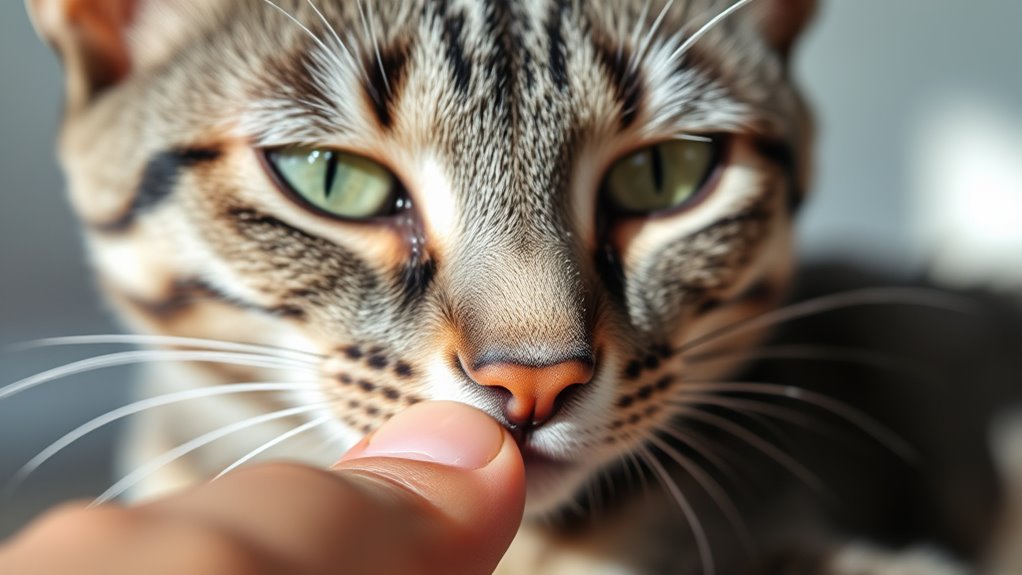
Many cat owners find themselves puzzled when their feline friends nibble during petting. It can be confusing and even a bit concerning, especially if you’re unsure what your cat is trying to say. You’re not alone—understanding why cats nibble while being petted is a common question among pet lovers.
When your cat nibbles while you pet them, it’s usually a way they communicate their feelings. Gentle nibbles often mean they’re showing affection, but stronger bites might signal overstimulation or discomfort.
Your cat might also be testing boundaries or reacting to your petting style.
Pay attention to their body language, like tail movements or ear position, to understand their mood.
Keep exploring to uncover more ways cats express themselves and improve your bond.
Key Takeaways
- Gentle nibbling often shows affection and helps build a bond during petting sessions.
- Sometimes, cats nibble because they’re feeling overstimulated or uncomfortable after too much petting.
- Curious kittens or those teething might nibble to explore or soothe teething pain.
- Rough or sudden bites usually mean the cat is annoyed or testing boundaries during petting.
- Paying attention to your cat’s body language can help you tell if the nibbling is playful or a sign of stress.
Why Do Cats Nibble When You Pet Them? Understanding Their Communication
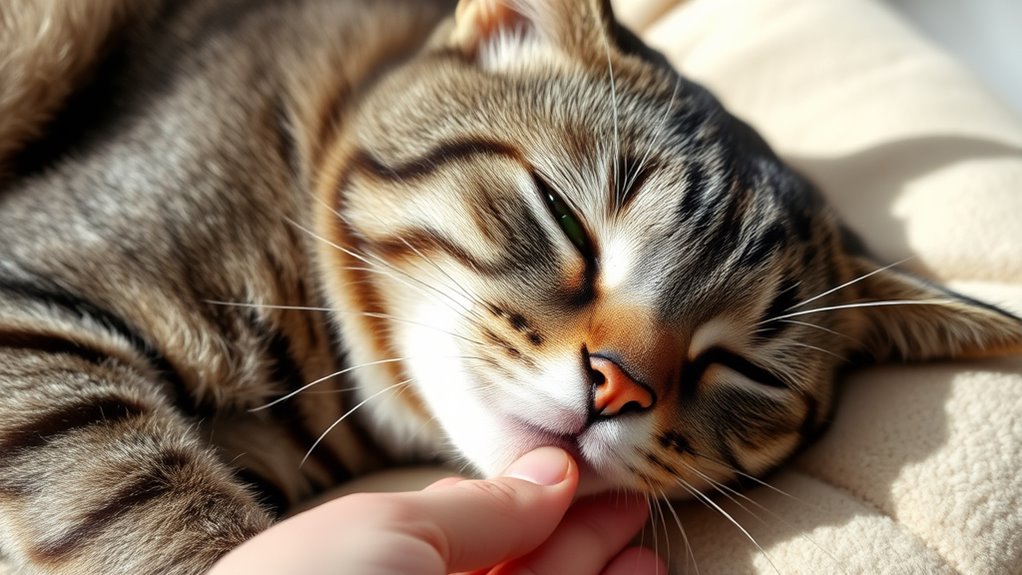
When your cat nibbles while you’re petting them, it’s usually a way they communicate rather than being aggressive. Cats use different signals to show how they’re feeling.
A gentle nibble can be their way of showing affection or trying to get your attention. Sometimes, it means they’re feeling overstimulated or want to take a break from petting.
Understanding these signals helps you respond better. For example, a soft, playful nibble usually means your cat is happy and engaged. But a stronger bite might mean they’re uncomfortable or annoyed.
Cats communicate through subtle cues, and nibbling is one of them. Paying attention to these signs helps you understand your cat’s mood more clearly and strengthens your bond.
Common Reasons Your Cat Nibbles During Petting
Cats often nibble during petting for several common reasons, each tied to their emotional state or communication style. One reason is that your cat may see nibbling as a way to communicate contentment or mild overstimulation. They might be trying to tell you they’ve had enough or that they enjoy the interaction.
Cats nibble during petting to show contentment or mild overstimulation.
Another reason relates to their natural cat behavior; some cats nibble as part of their grooming instincts or playfulness. If your petting technique is too rough or inconsistent, your cat could be nibbling to signal discomfort or annoyance.
Understanding these signals helps you adjust your petting techniques accordingly. It’s also possible they nibble out of curiosity or as a way to test boundaries. Recognizing the reasons behind your cat’s nibbling helps you respond appropriately.
This ensures a positive experience for both of you. Ultimately, observing your cat’s body language will give you clues about their comfort level during petting.
Is Your Cat Nibbling as a Sign of Affection?
You might wonder if your cat’s gentle nibbling during petting is a sign of affection. Often, cats use nibbling as a subtle way to show their fondness, blending it into their signals of love. When your cat nibbles, it could be a mix of playful behavior and trust, showing they feel safe with you.
Look for these signs to confirm it’s affection:
- Soft, gentle bites rather than aggressive nipping
- Purring while nibbling, which signals contentment
- Relaxed body language, like slow blinking or a loose tail
- Repeated nibbling as a way of engaging and bonding
This behavior is often their way of saying they enjoy your company and see you as part of their social circle. It’s a tender gesture, mixing playful actions with genuine signals of affection, showing your cat truly values your companionship.
Does Your Cat’s Age and Personality Affect Nibbling?
A cat’s age and personality can really influence how and why it nibbles during petting.
Age matters—a kitten might nibble out of curiosity or because of teething pain, while an older cat could do it as a quiet way to communicate or set boundaries.
Kittens nibble from curiosity or teething; older cats use nibbling to communicate or establish boundaries.
Personality is just as important—some cats are naturally more affectionate and might nibble during play, while others are more reserved and only nibble when overstimulated.
If your cat is energetic and social, they might nibble more often, seeing it as a way to engage.
On the other hand, shy or anxious cats may nibble as a stress response.
Understanding these factors can help you better interpret your cat’s nibbling habits.
Paying attention to your cat’s age and personality can guide you in responding appropriately.
This helps build a comfortable, trusting bond with your feline friend.
How to Tell if Your Cat’s Nibbling Is Playful or a Sign of Discomfort
Understanding whether your cat’s nibbling is playful or a sign of discomfort can help you respond appropriately and keep your bond strong. Playful bites are usually gentle and quick, and your cat might also purr or knead while doing it.
On the other hand, signs of discomfort include a tense posture, flattened ears, or suddenly stopping petting. Recognizing these cues helps prevent misunderstandings.
To tell the difference, keep an eye on a few things:
- How strong and how long the nibble lasts
- Your cat’s overall body language and tail position
- Whether your cat seems relaxed or tense
- Any changes in how they respond after nibbling
If your cat’s nibbling comes with relaxed body language and purring, it’s probably playful. But if they show flattened ears, twitching tail, or try to move away, it might be discomfort. Respond accordingly to keep your interactions safe and enjoyable.
Why Overstimulation Causes Nibbling and How to Prevent It
When your cat begins nibbling during petting, it could be a sign that they’ve become overstimulated. Sometimes, their tail might flick or their body might tense up — these are clues that they need a break. Paying attention to these signs can really help you understand when to stop before they get too overwhelmed.
To keep things enjoyable for both of you, try shorter petting sessions and keep an eye on their body language. If you notice any signs of overstimulation, it’s a good idea to pause and give them a little space. That way, your cuddle sessions stay fun and stress-free!
Recognizing Overstimulation Signs
Cats often show signs of overstimulation through subtle body language, and recognizing these cues can help prevent nibbling during petting sessions. As you pet, watch for warning signals that your cat is becoming overwhelmed.
These overstimulation triggers include tail flicking, ear flattening, tense muscles, or a sudden move away. By paying attention to these signs, you can pause or stop before your cat resorts to nibbling.
Using calming techniques like gentle strokes, limiting petting duration, and avoiding sensitive areas helps reduce overstimulation. Knowing these cues allows you to respond proactively, creating a more comfortable experience for your feline friend.
Recognizing overstimulation signs is essential for maintaining trust and preventing unwanted nibbling behaviors.
Strategies to Reduce Nibbling
Overstimulation often makes cats nibble to show they’ve had enough of petting. To help with this, try gentle distractions like offering a toy or moving to a different spot to redirect their attention before they get overstimulated.
Watch your cat’s body language closely, and stop petting if you notice signs of discomfort. Focus on positive interactions by rewarding calm behavior with treats or praise, so they learn that gentle petting is fun.
Keep sessions short and sweet, gradually increasing the time as your cat gets more comfortable. Being consistent helps your cat understand boundaries without feeling overwhelmed.
Creating a calm environment and emphasizing positive experiences can reduce nibbling caused by overstimulation. This approach helps your cat feel safe and relaxed during your time together.
What Does It Mean If Your Cat Nibbles Excessively?
Excessive nibbling during petting can be a sign that your cat is feeling overwhelmed or overstimulated. This behavior is a way for your cat to communicate, signaling discomfort or that they need a break.
If your cat nibbles excessively, it might mean they’re stressed, irritated, or have reached their tactile limit. Recognizing these signs helps you respond appropriately and maintain a good bond.
Think about factors like overstimulation from too much petting, recent changes or health issues making them sensitive, playful behavior that looks like aggression, or environmental stressors causing anxiety.
Understanding your cat’s cues lets you see their nibbling as communication rather than aggression. While it’s not always harmful, respecting your cat’s boundaries is key to a healthy, trusting relationship.
Tips to Reduce Unwanted Nibbling and Strengthen Your Bond
Recognizing those gentle nibbles as a sign of affection can really help you understand your cat better. It’s their way of showing love, and when you respond in the right way, it reinforces that bond.
If you react positively to these little nibbles—maybe with gentle words, petting, or treats—they’ll learn that calm, affectionate behavior gets rewarded. Over time, this encourages them to keep showing love in gentle ways, making your connection even stronger.
Recognize Gentle Nibbles
Sometimes, a gentle nibble from your cat isn’t meant to be aggressive but is instead a sign of affection or curiosity. Recognizing this playful gesture helps you respond appropriately and avoid unnecessary discomfort.
A gentle nibble usually feels soft and brief, and your cat may do it during relaxed moments or when seeking attention. To identify these, watch for signs like relaxed body language and slow blinking.
Keep in mind, a gentle nibble isn’t a warning but a way your cat communicates comfort and connection. You can notice if the nibble is light and brief, and observe your cat’s relaxed posture.
Look for slow blinking or purring, and recognize playful gestures that accompany the nibble. Understanding these cues helps you nurture trust and avoid misinterpreting your cat’s intentions.
Use Positive Reinforcement
Using positive reinforcement is one of the best ways to reduce unwanted nibbling and build a stronger bond with your cat. Focus on rewarding calm, gentle behavior with treats, praise, or affection.
Consistently using reward techniques encourages your cat to repeat good behaviors. For example, when your cat nibbles gently, give a treat or praise right away to reinforce that action.
Avoid punishing or scolding your cat, as this can create fear or stress. To clarify your approach, here’s a simple table:
| Behavior | Reward Technique | Next Step |
|---|---|---|
| Gentle Nibbling | Praise or treat | Reward calm behavior |
| Unwanted Nibbling | Ignore or redirect | Reward positive interaction |
| Calm Petting | Gentle praise or treats | Reinforce relaxation |
| Excessive Nibbling | Withdraw attention | Reinforce boundaries |
Consistent positive interactions help your cat learn acceptable behavior and strengthen your bond.
When to Talk to a Vet About Aggressive or Excessive Nibbling
If your cat’s nibbling becomes aggressive or seems excessive, it’s important to see a vet as soon as possible. Catching issues early helps identify any underlying problems and allows for a thorough behavioral check.
You should reach out to a professional if you notice a sudden increase in biting strength or frequency. Also, if nibbling happens alongside signs of fear or anxiety, it’s a good idea to get advice.
Other signs include nibbling that causes skin injuries or bleeding, or if your cat’s overall behavior or activity level changes suddenly. These can all be signs that something needs attention.
A vet can check for medical issues like pain or neurological problems that might be behind the behavior. They may also suggest behavioral strategies or training tips.
Addressing aggressive or excessive nibbling early can prevent the behavior from worsening and help build a better bond with your cat. Remember, professional guidance helps you understand what your cat needs and creates a safe, happy environment for both of you.
Reading Your Cat’s Body Language Alongside Nibbling Cues
When you’re petting your cat, it’s important to keep an eye on their body language to get a sense of how they’re feeling. If your cat is relaxed, purring softly, and has a calm stance, they’re probably feeling happy and comfortable. But if you notice tense muscles or their ears flattening against their head, it might mean they’re feeling a bit stressed or annoyed.
Recognizing Relaxed Postures
When your cat is truly relaxed, her body will show comfort and trust through subtle but clear signals. Recognizing her relaxed demeanor involves watching her body language, which often indicates ease.
Look for these signs: soft, half-closed eyes that show contentment; a loose, gently swaying tail instead of a tense or puffed one; ears facing forward or resting naturally; and calm breathing with no signs of agitation.
These cues tell you she feels safe and comfortable, making her more likely to engage in gentle nibbling. Her relaxed posture shows she’s at ease, and her body language reflects trust.
Paying attention to these signals helps you understand her mood and ensures petting stays a positive experience.
Identifying Agitated Signals
Sometimes, your cat’s body language can quickly shift from relaxed to agitated, especially during petting sessions. Recognizing the signs of agitation is key to understanding their nibbling behavior as part of feline communication.
Look for tense muscles, flattened ears, or a twitching tail—all signals your cat is becoming overstimulated or uncomfortable. Dilated pupils and rapid breathing can also indicate stress.
If your cat starts to nibble more aggressively or bites, it’s a clear sign they want the interaction to end. Paying close attention to these cues helps you read your cat’s mood and prevent escalation.
Frequently Asked Questions
Can Cats Nibble Out of Boredom or Stress?
Yes, cats can nibble out of boredom or stress. When they do, it often signals they need more stimulation, especially if they’re not getting enough playtime.
Nibbling can also be a way for cats to soothe themselves when they’re feeling anxious or overwhelmed. Pay attention to their behavior and environment to spot these signs.
Providing more toys or a quiet space can help reduce these nibbling tendencies and keep your cat calmer.
Do Certain Breeds Tend to Nibble More Than Others?
Some breeds are notorious for nibbling more than others, like the playful Siamese or the energetic Bengal. When you compare breeds, you’ll notice that certain cats have a nibbling behavior that seems almost supernatural—like they’re training to be tiny, furry dentists!
Breed comparison reveals that some cats use nibbling as a form of communication or affection. So, you can expect more of it if you’re cuddling a breed known for their lively, affectionate nature.
How Can I Train My Cat to Stop Nibbling?
To train your cat to stop nibbling, use positive reinforcement by rewarding gentle behavior with treats or praise. When your cat nibbles, gently distract them with a toy or redirect their attention to an appropriate activity.
Consistency is key. Every time they nibble, use distraction techniques and reward calm behavior. Over time, your cat will learn that gentle interactions bring positive outcomes.
This will help reduce their urge to nibble during petting and make your time together more enjoyable.
Is Nibbling a Sign of Health Problems in Cats?
Nibbling isn’t usually a sign of health problems; it’s often just part of normal feline behavior.
But you should stay alert because unusual nibbling might mean your cat is uncomfortable or stressed, which could be linked to health issues.
Keep an eye on their health signs—like appetite, activity level, and grooming habits.
If you notice persistent or aggressive nibbling, it’s a good idea to check with your vet to rule out any underlying problems.
Why Do Some Cats Nibble Only Certain People?
Some cats nibble only certain people because of their unique social interactions and comfort levels. You might notice your cat nibbles when they trust or feel especially affectionate toward you but not others.
This behavior comes from their individual preferences, past experiences, or even scent recognition. Cats use nibbling as a way to communicate and bond socially.
Conclusion
Think of your cat’s nibbling as a tiny, delicate brushstroke on a canvas—each nibble conveying a subtle message. When you understand their cues, you can turn these moments into a masterpiece of trust and connection.
Like a gentle breeze guiding a sailboat, tuning into your cat’s signals helps you navigate their world with care. With patience and observation, your bond will flourish, making every nibble a part of your unique story together.
If your cat nibbles while petting, it’s often a sign of affection or a way to explore. Sometimes, they’re just playing or testing boundaries.
Understanding why cats nibble when petting can help you respond appropriately. It’s their way of showing comfort, excitement, or even mild overstimulation.
By paying attention to their body language, you’ll learn when to give them space or continue cuddling. This makes your connection stronger and more enjoyable.
In the end, embracing these tiny signals keeps your relationship with your cat full of trust and love. After all, every nibble is just another chapter in your shared story.