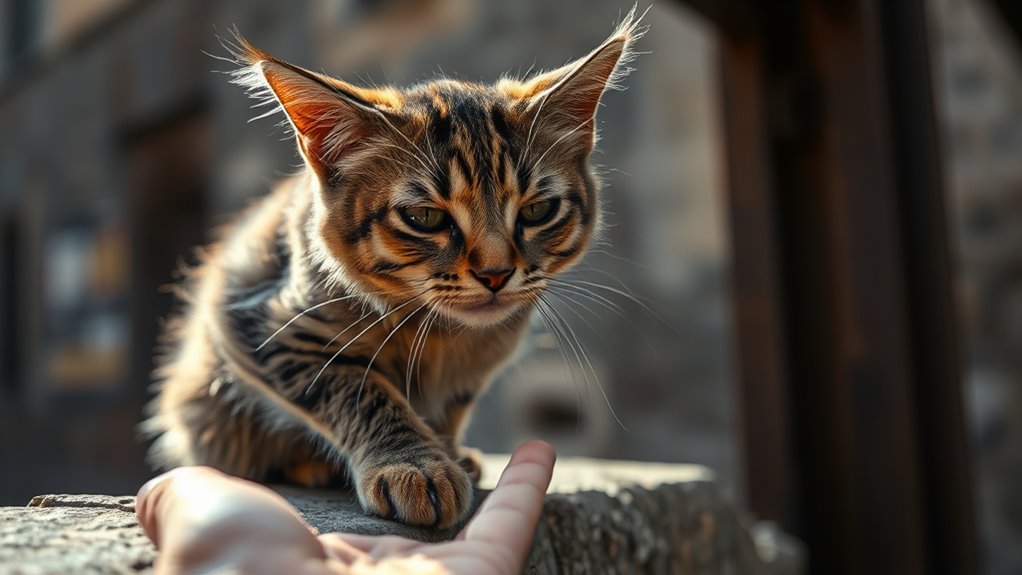
What Are the Risks of Safely Petting a Stray Cat?
Many people love the idea of helping stray cats, but they worry about safety risks. You’re not alone in feeling unsure about how to approach these animals without getting hurt or exposed to health dangers.
Petting a stray cat can expose you to risks like parasites, such as fleas, ticks, and worms, which can transfer to humans. Bites and scratches may introduce bacteria and viruses, including rabies, especially if the cat is aggressive or unvaccinated.
Stray cats might also be sick or injured, making them unpredictable.
Taking proper precautions, like observing body language and practicing wound care, helps protect you. If you’re interested, you’ll find useful tips to keep yourself safer.
Key Takeaways
- Stray cats may carry parasites like fleas, ticks, roundworms, or hookworms that can transfer to humans.
- Bites and scratches can introduce bacteria, viruses, or cause infections such as Pasteurella or Bartonella.
- Aggressive or fearful behavior might lead to sudden bites or scratches, increasing health risks.
- Stress or illness in stray cats can cause unpredictable responses, risking injury or disease transmission.
- Handling injuries or wounds from stray cats without proper precautions can lead to infections or complications.
How to Safely Interact With Stray Cats

To safely interact with stray cats, approach them calmly and slowly. Watch their behavior first because stray cats can be cautious or scared.
Pay attention to their body language—ears pinned back, tail flicking, or hissing mean they’re uncomfortable or frightened.
Watch their body language—ears back, tail flicking, or hissing indicates fear or discomfort.
If the cat looks relaxed—ears forward, slow blinking, and a loose posture—it’s more open to interaction. Always let the cat come to you instead of reaching out first.
Gently extend your hand, but don’t force contact if they pull away. Keep your movements smooth and non-threatening.
Avoid loud noises or sudden gestures that might startle them. Respect their space and signals.
Signs a Stray Cat Might Be Sick or Injured
Stray cats often hide their pain or illness, so it’s important to spot the signs early. Look for discharge from the eyes or nose, swelling, or visible wounds.
Pay attention to changes in behavior, like being unusually lethargic, aggressive, or withdrawing from people and other animals. If the cat’s eyes look cloudy or crusted, or if it’s sneezing a lot, these could be signs of illness.
Notice if the cat is limping, having trouble moving, or avoiding using a certain limb. Changes in appetite or excessive vocalization can also indicate health problems.
A sick or injured cat might stay hunched or hide in secluded spots. Be cautious if it seems overly fearful or aggressive, as pain can cause unpredictable behavior.
Recognizing these signs early helps prevent further harm to the cat and reduces your risk of catching contagious diseases.
How Parasites Spread From Cats to People
Even if a stray cat seems healthy and hides its symptoms well, it can still carry parasites that pose health risks to people. Parasite transmission happens when you come into contact with fleas, ticks, or other parasites on or around the cat.
These parasites can transfer easily through petting, touching, or handling the animal, especially if you don’t wash your hands afterward. Some parasites, like roundworms and hookworms, can cause illnesses that spread from animals to humans.
For example, larvae from certain parasites can penetrate your skin or contaminate your environment, leading to infections. Even brief contact with a stray cat’s fur or contaminated surfaces can be enough for parasites to spread.
Being aware of these risks helps you take precautions, like wearing gloves or washing your hands thoroughly, to reduce the chance of catching parasitic infections from stray cats.
Why Bites and Scratches From Stray Cats Are Dangerous
Bites and scratches from stray cats are dangerous because they can introduce bacteria and viruses directly into your body. These injuries can cause bacterial infections like Pasteurella or Bartonella, leading to pain, swelling, and sometimes more serious health problems.
Scratches and bites can also expose you to rabies, a deadly virus that needs immediate medical attention if you suspect exposure. Some people might also have allergic reactions, like swelling or itching around the wound.
Stray cats often display aggressive behavior, which increases the risk of bites. Even a small scratch can become infected or spread a virus if it’s not cleaned and treated properly.
It’s really important to treat any bite or scratch from a stray cat carefully and see a doctor quickly. Ignoring these injuries can lead to serious complications, so always be cautious when dealing with unfamiliar or aggressive cats.
Common Diseases You Can Catch From Stray Cats
Many diseases can be transmitted from stray cats, posing health risks to anyone who comes into contact with them. Cat-transmitted diseases, especially zoonotic infections, can cause serious health issues.
Feline leukemia spreads through contact with infected blood or saliva, while rabies is a major concern if a stray cat shows aggressive behavior or bites. Toxoplasmosis risks increase if you handle cat feces or contaminated soil, which can affect pregnant women and immunocompromised individuals.
Ringworm is common through skin contact with infected cats and can cause ring-shaped skin lesions. A cat scratch can transmit bacteria like Bartonella, leading to infections if not properly cleaned.
To protect yourself, always practice safety measures like wearing gloves, washing your hands thoroughly, and avoiding unnecessary contact with stray cats. Awareness and caution are key to minimizing the risk of catching these diseases.
How Stress and Fear Change a Stray Cat’s Behavior
Stray cats often carry hidden emotional scars from their tough experiences, which can really change how they behave. Stress and fear set off different reactions that make these cats unpredictable.
Stray cats’ tough pasts can deeply influence their unpredictable and cautious behavior.
You might notice signs of stress like dilated pupils, flattened ears, or tense body language. Fear responses can lead to sudden aggression or attempts to escape. These behaviors come from their survival instincts and the environment around them, like loud noises or unfamiliar places.
Understanding how they communicate helps you avoid making them feel more threatened. When a stray feels scared, it might show defensive aggression or hiss, hide away, or become more territorial.
Social interactions can become strained because fear takes over trust. Spotting these signs lets you approach gently and respect what they’re feeling. Remember, stress and fear have a big impact on what a stray cat does, so patience and awareness are key when you’re around them.
Protect Yourself Before Petting a Stray Cat
Before you try to pet a stray cat, it’s important to protect yourself by taking some simple precautions. Stray cat safety depends on understanding that these animals may be frightened or sick, so approach cautiously.
Always let the cat come to you first. Don’t rush or reach out suddenly. Use petting precautions like extending your hand slowly and avoiding direct eye contact at first.
Wearing gloves can add an extra layer of protection, especially if you’re unsure of the cat’s health. Keep your movements gentle and steady to avoid scaring the cat further.
Pay attention to the cat’s body language. If it hisses, swats, or backs away, respect its boundaries. Remember, your safety comes first.
Taking these steps helps prevent bites, scratches, and potential disease transmission. Prioritizing stray cat safety guarantees a better experience for both of you and reduces risks during petting.
Safe Ways to Pet and Play With Stray Cats
When you’re thinking about petting a stray cat, it’s best to approach slowly and calmly. Rushing up to it can scare the cat, so take your time and let it get comfortable with your presence. Speaking softly and moving smoothly can also help the cat feel safer around you.
As you get closer, keep an eye out for any warning signs. If the cat starts hissing, swatting, or trying to back away, it’s a good idea to give it some space. Respecting its boundaries is the safest way for both of you to have a positive experience.
Approach Calmly and Slowly
Approaching a stray cat takes patience and care. To do this safely, move slowly and avoid sudden movements.
Pay attention to the cat’s body language to see how comfortable it is. Relaxed ears and a gentle tail mean it’s more open, while flattened ears or an arched back show fear or aggression.
Always keep a safe distance until the cat shows signs of trust. Speak softly to reassure it and avoid startling it.
Extend your hand slowly so the cat can sniff and decide if it’s okay to come closer. Watch for signs of stress or discomfort and back off if needed.
Remaining calm and gentle helps the cat feel secure, which increases the chances of a positive interaction.
Use Gentle Voice and Moves
Ever wonder how to pet a stray cat safely? The key is to use a gentle approach and a soft tone. Speak quietly and calmly, avoiding loud or sudden noises that might startle the cat.
When you reach out, move slowly and smoothly, giving the cat time to feel comfortable. Keep your hand relaxed and let the cat decide if it wants to come closer.
Avoid rushing or making abrupt movements, as these can scare the cat away or provoke defensive behavior. Using gentle voice and moves shows you’re non-threatening, helping build trust.
Watch for Warning Signs
While it’s important to be gentle, you also need to watch for warning signs that a stray cat might feel threatened or become defensive. Pay close attention to the cat’s body language and feline behavior.
Signs of discomfort include flattened ears, a puffed-up tail, or dilated pupils. If the cat’s body is tense or it suddenly hisses or swats, it’s a clear signal to back off.
You should also notice if the cat tries to run away or avoids eye contact. Knowing these cues helps prevent bites or scratches.
When to Seek Medical Help After Interacting With a Cat
If you notice any signs of infection like redness, swelling, or pus around a wound, it’s a good idea to see a doctor sooner rather than later. Cleaning and disinfecting the area properly is important, but don’t wait too long if things seem to be getting worse.
Knowing when to seek medical help can really make a difference in preventing complications and ensuring you get the right treatment. So, if you’re ever in doubt, it’s always better to be safe and check in with a healthcare professional.
Signs of Infection
After interacting with a stray cat, it’s important to watch for signs of infection, since even small scratches or bites can cause health problems. Keep an eye out for redness, swelling, or pus around the wound.
You should also be alert for symptoms like fever, chills, or increased pain, which can indicate an infection.
To stay safe, make sure to clean wounds thoroughly and disinfect them right away.
Look out for persistent redness or swelling, discharge, or a foul smell coming from the wound.
Fever or chills are also warning signs.
If you notice any of these, seek medical help immediately. Recognizing infection early can help prevent complications and ensure proper treatment.
Wound Care Tips
Prompted by signs of infection, knowing when to seek medical help after interacting with a cat is vital for your health. If you notice a scratch or bite, start with proper wound cleaning.
Wash the area thoroughly with soap and water for at least five minutes to remove dirt and bacteria. After cleaning, apply an antiseptic to help prevent infection.
Keep the wound covered with a sterile bandage and monitor it closely. If you see redness, swelling, pus, or experience increased pain, these are signs of infection.
Prompt wound care and infection prevention are essential, but don’t hesitate to seek medical help if symptoms worsen or if the injury is deep. Proper attention can prevent complications and keep your health protected.
When to Visit Doctor
Knowing when to see a doctor is important if you notice signs of infection or other problems after interacting with a cat. If you develop symptoms like increased redness, swelling, pus, or a fever, it’s best to see a doctor promptly.
Don’t ignore persistent pain or if the wound isn’t healing. Seek medical help right away if you notice signs of rabies, such as confusion, paralysis, or excessive drooling.
You should visit a doctor if you see worsening infection symptoms, the wound becomes more painful or swollen, or if you have a fever or chills.
Getting medical attention on time helps prevent serious health issues and ensures you get proper treatment after contact with a stray cat.
How Communities Can Help Reduce Risks for Everyone
Communities can play a key role in reducing risks from stray cats by setting up targeted programs and encouraging responsible pet ownership.
Through outreach and education, residents can learn safe handling techniques and the importance of responsible feeding. This helps prevent dependency and overpopulation.
Supporting spay and neuter efforts is crucial for controlling stray populations and lowering disease spread.
Local shelters can team up with volunteers to run trap-neuter-return programs, which help minimize risks for both cats and people.
Awareness campaigns can clear up myths about stray cats and promote safe ways to interact, encouraging people to avoid direct contact with unfamiliar animals.
Volunteer efforts are also vital for monitoring stray populations and providing healthcare when needed.
Frequently Asked Questions
Can Petting a Stray Cat Lead to Rabies Transmission?
Petting a stray cat can lead to rabies transmission if the cat is infected, especially since rabies symptoms like aggression, drooling, and paralysis might not be obvious initially.
The virus spreads through bites or scratches. To protect yourself, avoid direct contact and make sure your pets are vaccinated.
Always seek medical advice if you’re bitten or scratched, as rabies is deadly but preventable with vaccination and prompt treatment.
Are There Long-Term Health Risks From Petting Stray Cats?
You might think petting a stray cat is harmless, but long-term health risks can sneak up thanks to stray cat behavior. Even if they seem healthy, they could carry diseases like parasites or infections.
To stay safe, always follow health precautions, such as washing your hands thoroughly. Ironically, your kindness might expose you to risks you weren’t aware of, so it’s best to approach stray cats with caution and respect.
How Can I Tell if a Stray Cat Has a Contagious Disease?
You can tell if a stray cat has a contagious disease by watching how it behaves and checking its hygiene. Look for signs like being very tired, sneezing, or having discharge from its eyes or nose.
Also, notice if the cat is acting strangely, like being aggressive or trembling. Poor hygiene, such as matted fur, sores, or dirt, could also be a sign it’s sick.
If you see any of these signs, try not to touch the cat directly. Instead, contact a veterinarian or local animal shelter for advice.
What Should I Do if I Develop Symptoms After Petting a Stray Cat?
Imagine noticing a sudden storm on a clear day—that’s how symptoms can appear unexpectedly after petting a stray cat.
If this happens, you should seek medical advice promptly, focusing on symptom management and health monitoring.
Keep track of your symptoms, and if they worsen or don’t improve, visit a healthcare professional.
Early intervention can prevent complications, so don’t delay in getting the care you need.
Are Certain Breeds of Stray Cats More Likely to Carry Diseases?
Certain breeds of stray cats aren’t necessarily more prone to carrying diseases; instead, disease prevalence depends on their environment and health. For example, feral cats with aggressive or wary behavior may have higher exposure to parasites and infections.
While breed behavior influences how likely a cat is to approach you, it doesn’t directly indicate disease risk. Always approach stray cats cautiously, regardless of their breed, and consider vaccination and hygiene to minimize risks.
Conclusion
Did you know that around 30% of stray cats carry parasites or diseases that can spread to humans? While petting a stray cat can be rewarding, it’s important to be cautious.
Always look for signs of illness or injury before approaching. If you get scratched or bitten, seek medical help right away.
By staying alert and careful, you protect yourself and help prevent the spread of infections. Knowing the risks of safely petting a stray cat helps make interactions safer for everyone involved.