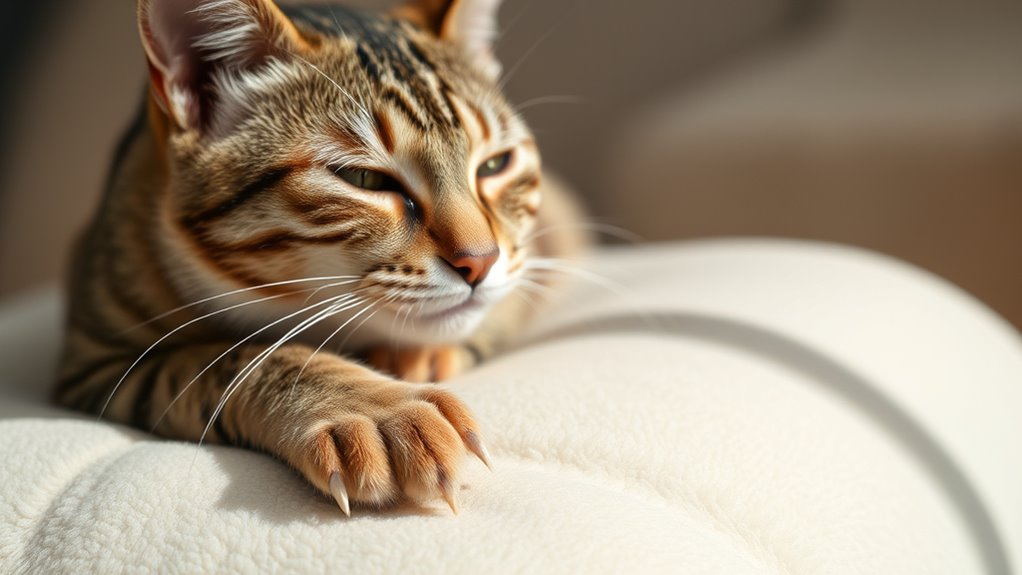
Why Do Cats Extend Their Claws When You Pet Them?
Many cat owners find themselves puzzled when their furry friends suddenly extend their claws during petting sessions. It’s a common behavior that can leave you wondering if you’ve done something wrong or if your cat is upset. You’re not alone—understanding why cats extend their claws when you pet them can help improve your bond and make interactions more enjoyable.
When you pet your cat, they may extend their claws to show comfort, curiosity, or that they’re overstimulated. Claws help them stretch, test boundaries, or mark territory, while flicking or extending claws can communicate excitement or mild irritation.
If your cat becomes tense or starts clawing aggressively, it’s often a sign they’re overwhelmed.
To understand your feline better and keep interactions positive, stick around for more tips on recognizing their signals and calming techniques.
Key Takeaways
- Cats extend their claws to stretch muscles and promote relaxation during petting.
- Claw extension can happen if they feel overstimulated or uncomfortable from being petted.
- Gentle claw flicks might be a sign of curiosity or a way to test boundaries during play.
- Clawing can also be a tactile feedback to gauge how much petting they’re comfortable with.
- Overall, it’s a natural behavior that shows your cat’s comfort, curiosity, or that they need a break.
Why Do Cats Extend Their Claws When You Pet Them?
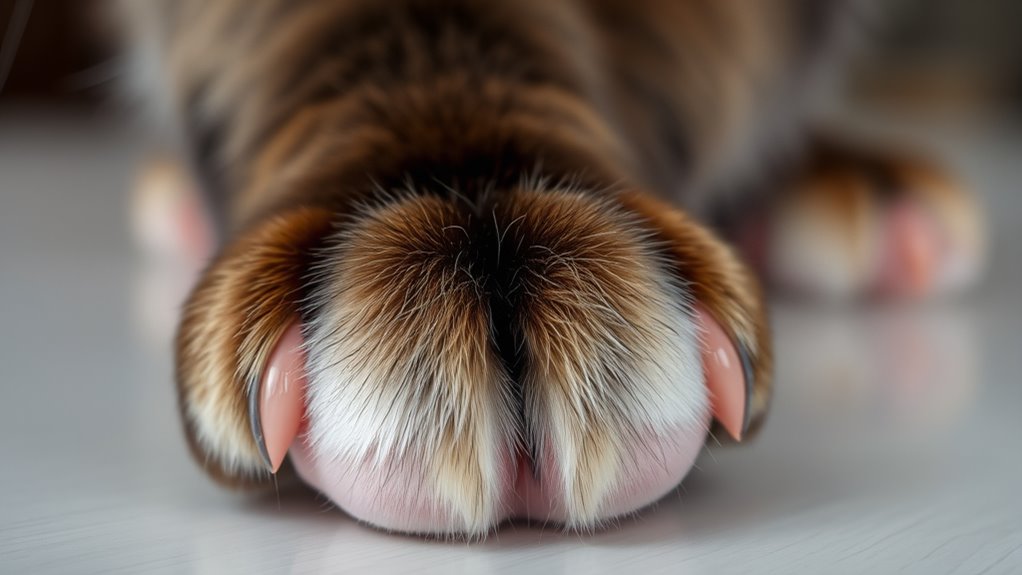
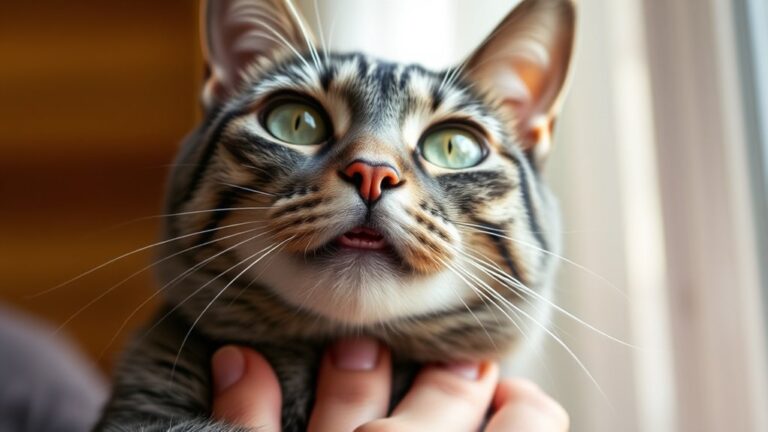
You might notice that when you pet a cat, it suddenly extends its claws, and this behavior can seem puzzling. This claw extension is a common part of feline behavior, often showing a mix of comfort and overstimulation.
Cats have sensitive nerve endings in their paws, so when they feel relaxed or curious, they may extend their claws as a natural response. Sometimes, they do this to stretch or to mark territory with scent glands in their paws.
If your touch becomes too intense or unfamiliar, your cat might react by clawing. This is a reflexive defense mechanism, not necessarily aggression. Claw extension during petting isn’t always about anger — it can mean your cat is feeling comfortable or needs a break.
If your cat claws during petting, it may be a sign of comfort or a request for a break, not anger.
Recognizing this behavior helps you understand your cat’s signals. It ensures you respect their boundaries and helps maintain a positive bond between you.
How Do Cats Use Their Claws to Communicate During Play and Petting?
Have you ever noticed a cat’s claws gently flicking out during play or petting? This is part of how cats use their claws to communicate during playful interactions and feline communication. When claws extend, it often signals excitement or engagement, but it can also mean they’re testing boundaries or feeling overstimulated.
Here are four ways cats use their claws in these moments:
- Expressing excitement – Claws flicking out show enthusiasm during play.
- Testing boundaries – Gently extending claws can indicate curiosity or mild irritation.
- Communicating overstimulation – Rapid claw flicks might warn you to back off.
- Engaging in tactile feedback – Claws help cats gauge how much force to use when interacting.
Understanding these signals helps you interpret your cat’s mood during play. It also improves your feline communication, making your bond clearer and more enjoyable.
What Are Signs That Your Cat Is Overstimulated or Feeling Threatened?
You can usually tell if your cat is feeling overwhelmed or a bit threatened by how they carry themselves. For example, if their muscles are tense or their tail is twitching, that’s a pretty clear sign they’re not feeling relaxed. Sometimes, they might even start to arch their back or flatten their ears against their head.
Vocal cues are also important to notice. Growling, hissing, or quick, shallow breaths can all indicate that your cat is uncomfortable or anxious. Paying close attention to these signs can help you react quickly and help your cat feel safe again before things escalate.
Body Language Signals
When a cat feels threatened or overstimulated, it often shows specific body language signals to let you know it’s uncomfortable. Recognizing these signs can help you avoid unwanted clawing and understand your feline friend better.
Look out for things like puffed-up fur, which makes them seem bigger. A twitching tail is also a sign of agitation. Flattened ears indicate defensiveness, and dilated pupils show they’re highly aroused or scared.
These cues usually mean your cat needs space or a break from interaction. Overstimulated cats might scratch as a defensive move. Learning to read these signals helps you respond appropriately, making your cat feel safer and reducing chances of aggressive clawing.
Vocalization Cues
Vocalizations can be powerful indicators that your cat is feeling overstimulated or threatened. Pay attention to different types of sounds, as they reveal your feline’s emotional state.
A sudden, loud yowl or hiss signals discomfort or agitation, warning you to give your cat space. Feline sounds like growling or a shortened, raspy meow can also mean stress or annoyance.
If your cat starts vocalizing more than usual or makes sharp, abrupt sounds, it might be feeling overwhelmed. These cues often happen alongside other signs like flattened ears, tail flicking, or dilated pupils.
Recognizing these signs helps you prevent escalation and respect your cat’s boundaries. This way, interactions stay calmer and safer for both of you.
Why Do Cats Claw When They’re Relaxed and Comfortable?
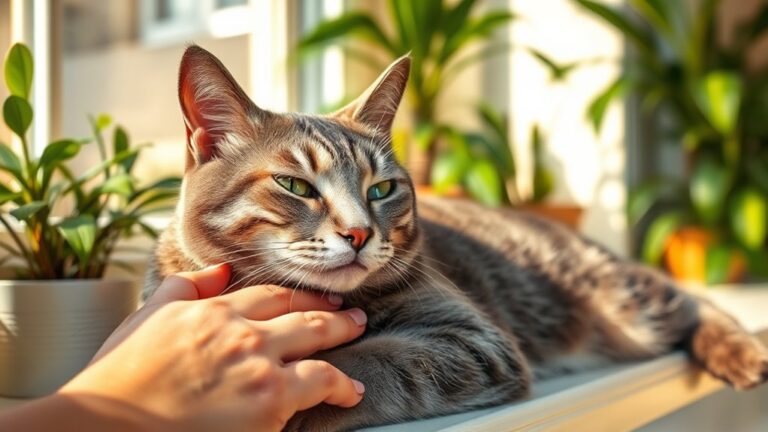
Cats often extend their claws even when they’re relaxed and comfortable, which might seem strange at first. This behavior is actually a natural part of their relaxation process, often connected to their purring and feeling secure.
When your cat claws while resting, it usually means they’re feeling safe and happy, not stressed. Here are four reasons why this happens:
- Stretching muscles – Clawing helps stretch their paws and legs, which promotes relaxation.
- Marking territory – They leave scent markers that reinforce their comfort zones.
- Claw maintenance – Extending claws helps shed old layers and keeps them sharp.
- Reinforcing relaxation – Clawing during calm moments shows they’re at ease with their environment.
This behavior isn’t destructive. It’s how your cat maintains comfort while feeling relaxed. It’s a natural way they show they feel safe and content.
How Can You Differentiate Between Playful Scratching and Stress Clawing?
Figuring out whether your cat’s scratching is playful or stressful can be tricky, but paying attention to their body language can really help. For example, notice their ears, tail, and overall posture—these cues tell you a lot about how they’re feeling.
Think about what’s going on around them. Are they scratching their favorite spot while they’re in the middle of playing, or are they scratching aggressively when they’re scared or upset? Understanding the context, along with their body language, makes it easier to tell if they’re just having fun or if they’re feeling anxious.
Getting these clues right means you can respond in a way that makes your kitty feel safe and happy.
Body Language Cues
Understanding a cat’s body language is key to telling the difference between playful scratching and stress-induced clawing. When a cat is relaxed and happy, you might notice purring or gentle kneading, along with a soft, relaxed posture.
On the other hand, stress clawing usually comes with tense muscles, dilated pupils, and flattened ears. To tell the difference, keep an eye on these cues:
- Relaxed body and slow blinking show playfulness.
- Purring while scratching suggests comfort, not stress.
- Kneading often happens when a cat feels safe and happy.
- Tense, stiff posture or flattened ears are signs of discomfort or stress.
Clawing Contexts
Differentiating between playful scratching and stress clawing depends on the context and what’s going on around the activity. Playful clawing usually happens during fun interactions, with your cat looking happy, relaxed, and only extending their claws briefly. They might knead or pounce, showing their natural hunting instincts.
Stress clawing, on the other hand, is often linked to anxiety or territorial frustration. You’ll notice tense body language, quick or intense scratching, and maybe even some vocalizations. The behavior might seem more aggressive or persistent and is often aimed at specific objects or surfaces.
Understanding these cues helps you better interpret your cat’s mood and needs. Recognizing the difference allows you to address underlying stress or encourage positive, playful interactions, respecting your cat’s natural instincts.
What Causes Cats to Claw When Stressed or Overstimulated?
When cats become stressed or overstimulated, they often scratch and claw to release tension and regain control. Stress triggers like loud noises, unfamiliar environments, or sudden movements can set off this behavior.
You might notice your cat scratching more when feeling overwhelmed. Common causes include overstimulation from petting or play, anxiety from new visitors or changes, frustration from blocked resources or territory disputes, and fear from loud sounds or sudden disturbances.
These stressors activate your cat’s instinct to claw as a way to cope. Clawing helps them vent frustration and set boundaries. Recognizing these signs can help you reduce stressors and prevent excessive scratching.
Creating a calmer environment for your cat can make a big difference. By understanding what triggers their stress, you can help them feel more secure and less likely to claw out of overstimulation.
Tips for Gentle Petting to Minimize Clawing and Keep Your Cat Calm
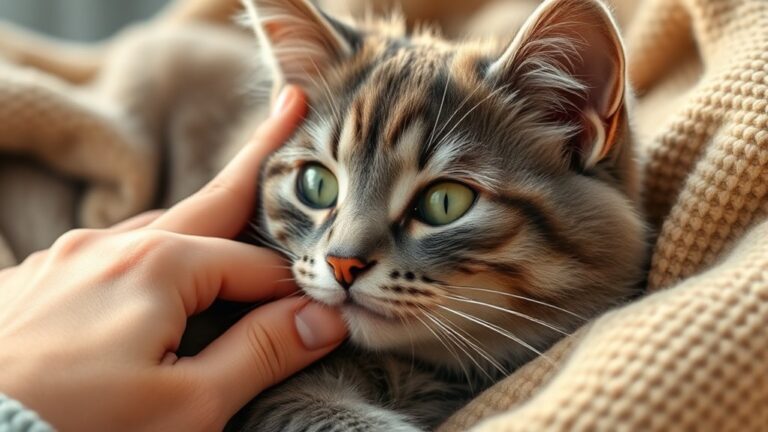
Gentle petting can help keep your cat calm and reduce clawing, but it’s important to watch for their signals. Use soft strokes along the back or head and pay attention to signs of discomfort like tail flicking or ear flattening.
Creating a calming environment—such as dim lighting, a quiet space, and familiar scents—can also help your cat relax. Respect their boundaries; if they pull away or show signs of overstimulation, stop petting right away.
Being consistent and patient helps your cat feel safe, encouraging more relaxed interactions. Remember, every cat is different, so observe how they respond and adjust your approach accordingly.
The goal is to build trust and comfort, which can reduce stress that might lead to clawing. Practicing gentle techniques and maintaining a peaceful environment makes petting enjoyable for your cat without triggering their claws.
How Can You Safely Trim and Manage Your Cat’s Claws?
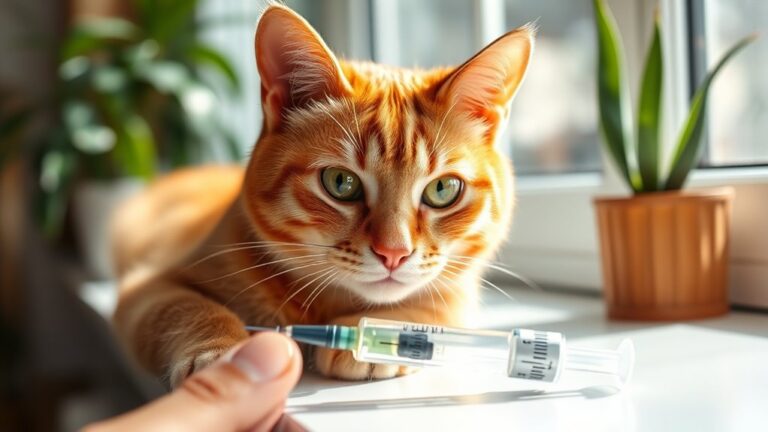
Trimming your cat’s claws safely starts with having the right tools—specifically, sharp cat nail trimmers or scissors made for small nails. Proper claw care involves gentle handling and patience.
Use these trimming techniques to keep your cat comfortable:
- Find a quiet space where your cat feels safe.
- Gently hold their paw and press the toe to extend the claw.
- Trim only the clear, curved tip—avoid the pink quick, which has nerves and blood vessels.
- Reward your cat with treats and praise afterward to create positive associations.
When Should You Consult a Veterinarian or Animal Behaviorist About Clawing Issues?
If your efforts to manage your cat’s claws aren’t reducing scratching or if your cat shows signs of discomfort, it might be time to seek professional advice. Persistent or aggressive clawing behavior could signal underlying issues or discomfort that need expert attention. A veterinarian or animal behaviorist can evaluate whether health problems, stress, or behavioral concerns are causing your cat’s clawing as a way to communicate.
| When to Seek Help | Why It Matters |
|---|---|
| Clawing causes injury or pain | Indicates possible health issues or discomfort |
| Excessive or sudden change | Signals stress, anxiety, or behavioral problems |
| Signs of distress or aggression | Suggests underlying emotional or physical concerns |
Consulting a professional helps you better understand your cat’s needs and ensures healthy, safe clawing behavior. Addressing these issues early can improve your cat’s well-being and your bond.
Recognizing and Responding to Your Cat’s Clawing Signals for Better Bonding
Recognizing your cat’s clawing signals can really strengthen your bond, since these behaviors are often how cats communicate. When you understand what they’re trying to tell you, you can respond in a helpful way.
For example, watch for signs like tail flicking or twitching, which can mean your cat is feeling agitated or overstimulated. Puffed-up fur or an arched back usually signals defensiveness or discomfort.
A fixed stare or intense gaze is often a warning to back off or slow down. When your cat pre-claws or scratches, it’s usually a sign they’re marking territory or seeking attention.
Frequently Asked Questions
Do All Cats Extend Their Claws When Petted?
Not all cats extend their claws when you pet them. Claw extension is a common part of feline behavior, often used for marking territory or stretching.
Some cats do it as a defensive response or to get comfortable, while others simply keep their claws retracted.
If your cat claws when petted, it might be a sign of overstimulation or discomfort.
Pay attention to their body language to understand how they’re feeling better.
Can Overgrown Claws Cause Health Issues in Cats?
Overgrown claws can definitely cause health risks for your cat. They may lead to discomfort, pain, and difficulty walking, which can affect your cat’s overall health.
Regular claw maintenance helps prevent these issues. If claws aren’t trimmed, they can grow into the paw pads, causing infections.
How Does Age Affect a Cat’s Clawing Behavior?
As a cat ages, you’ll notice changes in their clawing habits due to age differences. Younger cats often scratch more to mark territory and sharpen their claws.
Older cats may claw less or use different spots, like furniture or scratching posts. You might see less frequent claw extension or different aggression levels.
Understanding these age-related shifts helps you provide appropriate outlets. This way, your cat stays comfortable and healthy at every stage.
Are There Specific Breeds More Prone to Clawing During Petting?
Some breeds, like Siamese cats, tend to claw more during petting because of their energetic and curious nature. They might instinctively extend their claws to explore or defend themselves.
Breed behaviors and personality traits play a big role in this reaction. More active and sensitive cats often claw to show they’re uncomfortable.
Knowing your cat’s breed and individual personality can help you predict and manage their clawing during petting sessions.
Can Scratching Posts Reduce Clawing During Petting Sessions?
Yes, scratching posts can help reduce clawing during petting sessions. They give your cat a healthy outlet for scratching, which is important for their well-being.
Using a scratching post also helps with claw maintenance and prevents damage to your furniture. It satisfies their natural instincts and keeps their claws in good shape.
When your cat has regular access to a scratching post, they often feel more comfortable. This can make them less likely to extend their claws while you’re petting them.
Conclusion
Understanding your cat’s clawing signals is like learning a new language—each scratch and stretch is a word, each purr a sentence. When you listen closely, you build a dialogue rooted in trust and respect.
By recognizing their subtle cues and responding with gentle care, you become the skilled interpreter guiding them through comfort and connection. Cats extend their claws when they feel relaxed, curious, or sometimes overstimulated.
In this silent conversation, your bond deepens, transforming your home into a sanctuary where both of you thrive. Recognizing why cats extend their claws when you pet them helps strengthen your relationship with your feline friend.