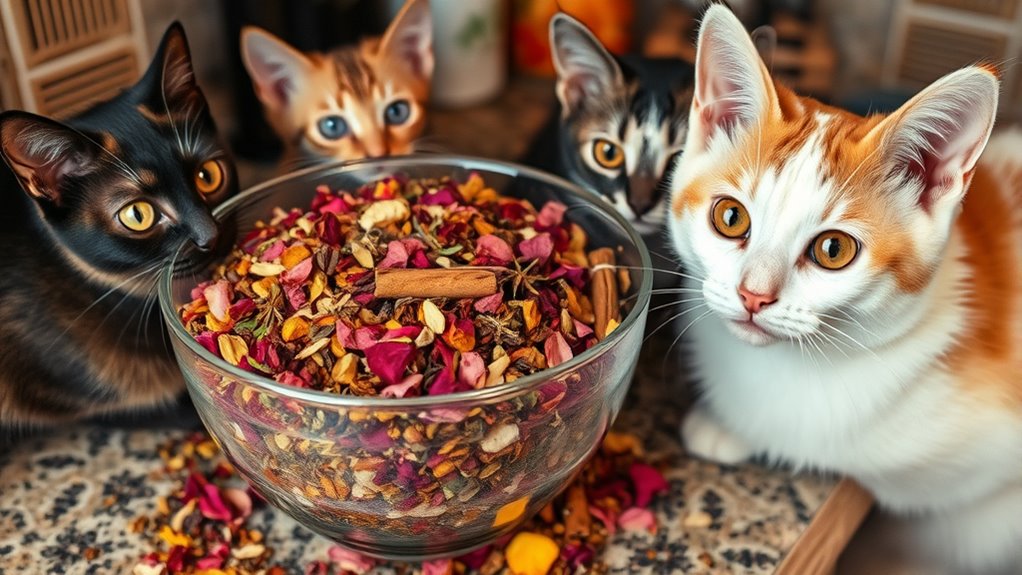
Determining Pet Pourri Safety for Cats
Many cat owners worry about keeping their furry friends safe from everyday hazards. Pet potpourri can be tempting to use for a fresh home scent, but you’re not alone in wondering if it’s safe for your cats.
To determine if pet potpourri is safe for your cat, carefully check the ingredient list for toxic items like essential oils (cinnamon, citrus, eucalyptus), lilies, dried spices, or synthetic fragrances, which can cause serious health issues.
Store it securely out of your pet’s reach and opt for natural scents like herbs or simmered fruits instead.
If you’re unsure, learning about safe alternatives and how to spot toxicity signs will help keep your cat safe.
Keep exploring to protect your beloved companion effectively.
Key Takeaways
- Check ingredient labels for toxic plants, essential oils, or synthetic fragrances before use or exposure.
- Avoid dried botanicals like lilies, cinnamon, citrus, eucalyptus, or berries, as they are harmful to cats.
- Watch your cats for signs of toxicity such as drooling, vomiting, difficulty breathing, or lethargy after they come into contact with potpourri.
- Store potpourri in secure, high places where cats can’t access it, especially in areas with lots of feline activity.
- Consider using safe alternatives like herbal sachets or natural simmering ingredients to keep things fragrant without the risks associated with traditional potpourri.
What Are the Risks of Pet Potpourri for Cats?
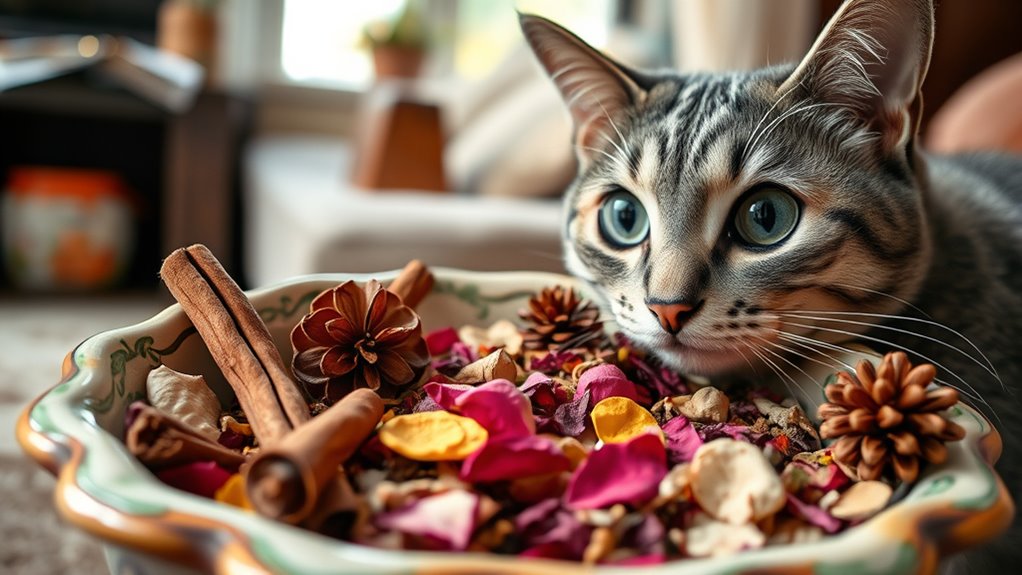
Pet potpourri may add a pleasant scent to your home, but it also poses serious health risks for your cats. The aromatic ingredients in traditional potpourri can be toxic if ingested or inhaled, leading to symptoms like drooling, vomiting, difficulty breathing, or even organ damage.
Pet potpourri can be toxic to cats, causing drooling, vomiting, breathing issues, or organ damage.
Cats are curious creatures and might nibble on the dried plant materials or powders, putting their health at risk. To keep your cat safe, consider alternatives like unscented candles, fresh flowers, or diffusers with pet-safe essential oils.
These options help you maintain a fresh-smelling environment without endangering your feline friends. Always keep potpourri out of reach, and be cautious about any scented products in your home.
Prioritizing safe, non-toxic options will protect your cats from accidental poisoning or irritation, giving you peace of mind and a healthier home environment.
Which Ingredients in Pet Potpourri Are Toxic to Cats?
Many ingredients commonly found in potpourri can be highly toxic to cats, so it’s important to know what to watch out for. Some ingredients, like essential oils such as cinnamon, citrus, and eucalyptus, can cause serious reactions in cats including drooling, vomiting, or difficulty breathing.
Other harmful components include certain plant materials like lilies, which are extremely toxic and can lead to kidney failure. Dried spices or berries may also cause upset stomachs or gastrointestinal issues. Fragrance oils and synthetic additives are dangerous too, as they can irritate your cat’s respiratory system or cause poisoning if swallowed.
Being aware of these toxic ingredients in potpourri is key to keeping your cat safe. Always check labels carefully and keep potpourri out of reach to prevent accidental ingestion. Protecting your feline friend from these hazards helps ensure their health and well-being.
How Can I Recognize Signs of Potpourri Toxicity in My Cat?
How can you tell if your cat has been poisoned by potpourri? Look for changes in your cat’s behavior, like becoming lethargic, losing interest in food, or hiding more than usual.
Your cat might also drool excessively, vomit, or have diarrhea—these are common signs of toxicity. Keep an eye out for discomfort, such as pawing at the mouth or face, or trouble breathing.
Watch for excessive drooling, vomiting, diarrhea, or signs of discomfort like pawing at the mouth or difficulty breathing.
Some cats may develop tremors or seizures if they’ve ingested harmful substances from the potpourri. Sudden shifts in activity or unusual vocalizations could also be signs your cat isn’t feeling well.
If you notice any of these symptoms, especially after your cat has been around potpourri, get veterinary help right away. Recognizing these signs early can prevent the situation from worsening and ensure your cat gets the care they need.
Always stay alert for subtle changes in your cat’s behavior—they might be trying to tell you something’s wrong.
How to Read Labels and Find Safe Pet Potpourri
When you’re checking the labels on pet potpourri, it’s important to take your time and read the ingredient list carefully. You want to spot anything that might be harmful to your cat, so keep an eye out for ingredients like essential oils or certain strong fragrances.
Being a bit vigilant about these details can really make a difference. It helps you choose a safe option, so your furry friend can enjoy your home without any worries.
Recognize Ingredient Labels
To guarantee your cat’s safety, it’s essential to understand how to read ingredient labels on pet potpourri products. Look for labels listing natural ingredients, avoiding synthetic fragrances or artificial additives.
Check for any mention of essential oils, as some may be harmful to cats. Recognize that labels should clearly specify ingredients, so watch for vague terms like “fragrance” or “parfum,” which could hide toxic substances.
When in doubt, research unfamiliar ingredients to confirm their safety. Labels that emphasize natural ingredients and avoid harmful chemicals are your best bet.
Always read carefully and scrutinize every component. This diligence helps you select pet potpourri that’s safe for your feline friend, minimizing risks and ensuring a healthier environment.
Identify Toxic Substances
Reading ingredient labels carefully is key to spotting toxic substances in pet potpourri. You should look for ingredients that contain natural ingredients and avoid those with artificial fragrances, essential oils, or synthetic chemicals that can be harmful to cats.
When examining labels, keep these tips in mind:
- Check for harmful additives like phenols, essential oils, or artificial dyes.
- Look for labels that specify safe scents and natural ingredients.
- Avoid products with unknown or unlisted ingredients, especially if they contain strong fragrances.
Choosing pet potpourri with natural ingredients and safe scents reduces risks. Always read labels thoroughly, and when in doubt, consult your veterinarian to confirm you’re selecting a safe, non-toxic option for your feline friend.
What Are Cat-Safe Alternatives to Traditional Potpourri?
Are traditional potpourri ingredients safe for your feline friends? Usually not. Many commercial potpourris contain essential oils and dried plant materials that can be toxic to cats.
Instead, consider herbal sachets made with safe herbs like lavender, chamomile, or rosemary. They emit pleasant scents without risking your pet’s health. These sachets are easy to make or buy and don’t rely on harmful essential oils.
Opt for herbal sachets with lavender, chamomile, or rosemary—safe, fragrant alternatives to harmful potpourri ingredients.
You can place them in drawers, closets, or near windows to add a gentle fragrance. Another option is simmering natural ingredients like lemon slices, cinnamon sticks, or herbs in water. This creates a fresh scent without chemicals.
Always avoid synthetic fragrances, essential oils, and dried botanicals known to be toxic to cats. These safe alternatives offer a fragrant environment that keeps your feline friends healthy while maintaining a cozy, inviting home.
Tips for Keeping Your Home Fragrant Without Putting Cats at Risk
Want to keep your home smelling great without putting your kitty at risk? It’s actually pretty simple—just pick pet-safe fragrances and always take a quick peek at the labels to make sure there’s nothing harmful inside.
Also, make sure your space is well-ventilated. Good airflow helps spread out the scents and keeps any potential irritants at bay.
Follow these easy tips, and you can enjoy a fresh-smelling home while keeping your feline friend safe and happy!
Choose Pet-Safe Fragrance Options
Choosing pet-safe fragrances is key to keeping your home smelling nice without risking your cat’s health. Go for natural options that are known to be safe for cats. When picking fragrances, look for gentle scents and steer clear of synthetic or overpowering ones.
Be sure to research essential oils carefully because many can be harmful to cats. It’s better to avoid using them unless you’re sure they’re safe.
Here are some simple tips: use unscented or herbal sprays instead of artificial air fresheners. Choose natural candles made from beeswax or soy and skip those with essential oils.
You can also try adding fresh herbs like basil or mint for a subtle, natural fragrance that’s safe for your feline friend.
Avoid Harmful Chemical Labels
Many household products and air fresheners come with labels that list potentially harmful chemicals, which can pose risks to your cat’s health. To keep scent safety in check, always read labels carefully and avoid products with chemicals like phthalates, formaldehyde, or synthetic fragrances.
Instead, opt for natural alternatives such as essential oils or homemade potpourri, but make sure to research them thoroughly beforehand. Look for labels that specify “pet-safe” or “non-toxic” ingredients, and steer clear of anything that sounds artificial or overly chemical.
Maintain Proper Ventilation
Proper ventilation plays a key role in keeping your home smelling fresh without risking your cat’s health. Good airflow helps disperse pet odor fumes and improves air quality, reducing the chance of harmful chemical buildup.
Make sure your ventilation systems are working well and are regularly cleaned. Open windows when you can to let in fresh air and cut down on indoor pollutants.
Use exhaust fans in areas like the kitchen and bathroom to boost air circulation. Additionally, air purifiers with HEPA filters can trap airborne particles and odors.
Regularly checking and improving your home’s ventilation helps prevent dangerous fumes from building up. This creates a safer, more comfortable environment for your feline friends.
How to Store Pet Potpourri Safely Away From Cats
Since pet potpourri can be very toxic to cats, it’s important to store it out of their reach. The best way is to use an airtight container with a secure lid.
Keep the container in a high, inaccessible spot, like a locked cabinet or a closet shelf. Avoid putting it on open shelves or near the edge of counters where cats might jump or knock it over.
Consider adding childproof locks on cabinets if needed. Always label storage containers clearly so there’s no confusion or accidental exposure.
Make sure to keep the potpourri away from your pet’s usual roaming areas. Regularly check that the container is secure and sealed properly.
What To Do If Your Cat Eats or Reacts to Potpourri
If your cat eats potpourri or reacts badly to it, it’s really important to watch out for certain signs like vomiting, drooling, or trouble breathing. These can be signs that your kitty isn’t feeling well or might be poisoned.
If you notice any of these symptoms, try to stay calm and act quickly. First, gently remove any remaining potpourri from your cat’s reach if you can. Then, it’s a good idea to contact your vet right away. Be ready to tell them what your cat ate, how much, and what symptoms you’ve seen. Quick action can really make a difference in helping your furry friend feel better.
Recognizing Toxic Symptoms
Recognizing the signs of toxicity in your cat is crucial for quick action. Spotting symptoms early can really make a difference in your pet’s outcome. Keep an eye out for behavioral changes like hiding, agitation, or unresponsiveness.
Physical signs might include vomiting, drooling, or trouble breathing. Your quick observation can help prevent serious complications.
Be alert for these signs: sudden lethargy or hyperactivity, loss of appetite, vomiting, respiratory distress, or excessive salivation.
If your cat shows any of these symptoms after exposure to potpourri, seek veterinary help right away. Understanding behavioral and physical signs helps you catch toxicity early and get your cat the care it needs without delay.
Immediate First Aid Steps
When you realize your cat has ingested or reacted to potpourri, act quickly to minimize harm. Your first step should be removing your cat from the source and stopping any further ingestion.
Check for signs of distress like vomiting, drooling, difficulty breathing, or lethargy. If you suspect poisoning, contact your veterinarian or an emergency animal poison control center immediately for guidance.
Do not try to induce vomiting unless a professional tells you to. While waiting for help, keep your cat calm and comfortable.
Try to gather any remaining potpourri or packaging to show the vet. Quick action can make a big difference, so prioritize prompt, informed steps to ensure your cat gets the help it needs.
How to Choose Fragrance Products That Are Safe for Cats
Choosing the right fragrance products for your home is essential to keep your cat safe and comfortable. When selecting products, focus on those that promote gentle fragrance diffusion without overwhelming your pet’s senses.
Look for natural alternatives, such as essential oils or plant-based sprays, and avoid synthetic chemicals that can be harmful. To guarantee safety, consider these tips:
Opt for products labeled as pet-safe or specifically formulated for animals. Avoid heavily scented candles or diffusers with artificial fragrances.
Choose natural options like herbal sprays or soy-based candles that contain minimal artificial ingredients. Always read labels carefully and research ingredients before trying a new fragrance.
Remember, what’s appealing to humans isn’t always safe for cats. By choosing products with natural ingredients and avoiding synthetic fragrances, you can reduce the risk of adverse reactions.
This helps create a safer, more pleasant environment for your feline friend.
Preventing Exposure: Tips to Protect Your Cat From Toxic Potpourri
To keep your cat safe from toxic potpourri, it’s important to take proactive steps to prevent accidental exposure. First, avoid placing potpourri where your cat can reach it, like on tables or shelves.
Instead, opt for natural alternatives like unscented candles or air purifiers to freshen your home without risking toxicity. If you prefer a scented environment, choose scent-free options like activated charcoal or essential oil diffusers with safe oils used in moderation.
Keep potpourri containers sealed tightly or store them in closed cabinets, especially when not in use. Regularly check your home for spilled or loose potpourri pieces, and clean up immediately.
Educate yourself about the potential dangers of scented products and avoid using them around your pets. Taking these precautions helps minimize your cat’s risk of exposure and keeps your home a safe, healthy space.
Frequently Asked Questions
Can Pet Potpourri Cause Long-Term Health Issues in Cats?
Yes, pet potpourri can cause long-term health issues in cats. The ingredients, like essential oils, dried flowers, and spices, often contain substances that are toxic to felines.
Because cats are especially sensitive, exposure can lead to respiratory problems, liver damage, or neurological issues over time.
It’s best to avoid using potpourri around cats and keep these items out of their reach to ensure their safety.
Are There Specific Brands of Pet Potpourri Considered Safer?
Ever wondered if some brands are safer for your cat? While no pet potpourri is completely risk-free, brands that focus on natural ingredients and skip artificial scents tend to be a better choice.
Always check the label for ingredients and steer clear of those with known scent toxicity or harsh chemicals. Brands like “Natural Aromas” or “EcoScents” often have clearer ingredient lists.
This makes it easier to pick options that are safer and reduce health risks for your feline friend.
How Often Should I Replace or Dispose of Pet Potpourri?
You should replace or dispose of pet potpourri regularly, ideally every few weeks, to prevent buildup of ingredients that could trigger feline sensitivity reactions.
Check for any signs of spoilage or strong odors and replace the contents as needed. Regular disposal minimizes the risk of your cat ingesting or inhaling harmful particles.
This helps create a safer environment and reduces the chances of adverse reactions related to pet potpourri ingredients.
Is Homemade Pet Potpourri Safer for Cats?
Homemade pet potpourri can be safer if you choose ingredients carefully, but it’s still a bit of a balancing act. Use pet-safe essential oils and avoid harmful ingredients like cinnamon or citrus, which can upset your cat’s stomach.
Keep your homemade blend simple with safe herbs and natural scents. Remember, even natural ingredients can pose risks, so always monitor your cat closely and talk to your vet before introducing new homemade potpourri.
What Are the Legal Regulations Regarding Pet-Safe Potpourri?
You need to know that legal regulations for pet-safe potpourri focus on proper ingredient sourcing and clear labeling standards. Authorities require manufacturers to source safe, non-toxic ingredients and accurately label products, so pet owners can make informed choices.
Always check for compliance with local regulations and verify labels specify ingredients, safety warnings, and usage instructions. This helps protect your cats and guarantees you’re using products that meet safety standards.
Conclusion
To keep your feline safe, always check labels and choose cat-friendly alternatives. Did you know that over 100 common household plants and products, including some potpourris, can be toxic to cats? Being aware of these dangers helps prevent accidental poisonings.
By staying vigilant and making informed choices, you can ensure your cat stays healthy and happy. Protect your beloved pet from hidden hazards like pet pourri and enjoy peace of mind. Remember, knowing about pet pourri safety for cats makes all the difference.