What Happens If Your Cat Licks Flea Medicine?
Many cat owners worry about keeping their furry friends safe from fleas, but accidents can still happen. If your cat licks flea medicine, it can be really concerning—and you’re not alone in feeling worried. Understanding what to do can make all the difference in protecting your pet.
If your cat licks flea medicine, it can cause poisoning with symptoms like drooling, vomiting, tremors, or behavioral changes. Toxic ingredients such as pyrethroids and organophosphates can damage their system, especially if ingested.
Quick action is essential. Remove your cat from the area, rinse their mouth, and contact a vet immediately.
Knowing these risks helps you keep your pet safe. Keep exploring to learn how to prevent and respond effectively.
Key Takeaways
- Licking flea medicine can cause poisoning symptoms like drooling, vomiting, tremors, or changes in behavior.
- Toxic ingredients such as pyrethroids and permethrin can lead to serious health problems if ingested.
- If your cat licks the medication, rinse their mouth thoroughly and contact your vet right away.
- The symptoms may last from a day to several days, depending on how much was ingested and the severity.
- To prevent this, apply the medication carefully, use protective collars, and supervise your cat after treatment.
What Are the Flea Medicine Ingredients That Could Harm Your Cat?
Flea medications contain several active ingredients that can be harmful if your cat ingests or licks them. Common risks include insecticides like pyrethroids, permethrin, and organophosphates.
These chemicals work well against fleas but can cause toxicity symptoms if your cat ingests them. Signs include drooling, vomiting, or tremors.
Other ingredients, such as neonicotinoids, might also pose risks, especially if your cat is sensitive or has health issues. When your cat licks flea medication, these substances can be absorbed into their system.
This absorption can trigger adverse reactions, so recognizing ingredient risks is key to preventing poisoning. If you notice symptoms of flea toxicity after licking flea medicine, see a vet immediately.
Knowing which ingredients to avoid or use carefully can help keep your feline friend safe and ensure effective flea control.
How Can You Tell If Your Cat Has Licked Flea Medication?
| Behavior to Watch For | Possible Signs | Actions to Take |
|---|---|---|
| Excessive licking | Redness, irritation | Check for any residue or signs your cat might have ingested some medication. |
| Grooming more often | Hair loss, skin issues | If these continue, it’s a good idea to contact your vet. |
| Persistent licking | Discomfort, distress | Remove any remaining medication and keep an eye on your cat. |
Being aware of these signs helps ensure your cat stays safe after flea treatment.
What Are the Signs of Flea Medicine Poisoning in Cats?
If your cat has licked flea medicine, it’s important to keep an eye on them for any strange behavior. Things like restlessness or just seeming really tired could be signs that something’s not right.
You should also watch out for physical symptoms such as vomiting, drooling, or even difficulty breathing. If you notice any of these signs, it might mean your cat has been poisoned by the flea medicine. Catching these signs early can make a big difference in getting your kitty the help they need.
Unusual Behavior Changes
When a cat gets poisoned from flea medication, you might notice sudden and unusual changes in their behavior. They could become more anxious, restless, or withdrawn.
Feline anxiety may increase, causing your cat to hide more or act aggressively. Watch for signs like pacing, excessive vocalization, or trembling.
The table below highlights common behavioral signs:
| Behavior Change | Description | Urgency |
|---|---|---|
| Increased anxiety | Restlessness, hiding, pacing | Immediate attention needed |
| Aggression or irritability | Snapping or hissing at people | Seek veterinary help |
| Unusual activity levels | Excessive sleeping or hyperactivity | Monitor closely |
These signs indicate your cat’s behavior is affected, and quick action is essential.
Physical Symptoms Appear
Unusual behavior changes are often the first signs that something’s wrong, but physical symptoms can appear quickly and signal serious poisoning. If your cat licks flea medicine, you might notice signs like excessive salivation, vomiting, or diarrhea.
You’ll also see changes in your cat’s grooming—such as frantic licking or self-mutilation—trying to rid themselves of the toxin. Ingestion risks can lead to muscle tremors, weakness, or even seizures.
Watch for unusual lethargy or difficulty breathing, which indicate severe poisoning. These physical symptoms develop rapidly and require immediate veterinary attention.
Keep a close eye on your cat after flea treatment, especially if they tend to lick or groom themselves excessively. Prompt action can prevent long-term health issues and keep your cat safe.
What Should You Do Right Away If Your Cat Licks Flea Medicine?
Act quickly to minimize potential harm if your cat licks flea medicine. Your immediate response is essential for proper cat care and emergency response.
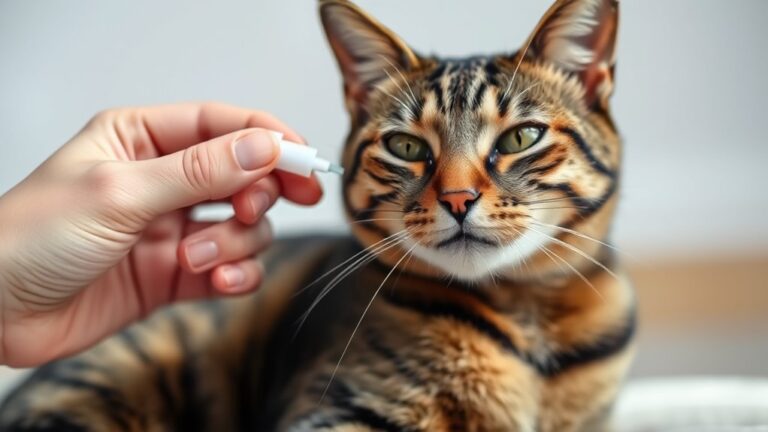
First, gently remove your cat from the area to prevent additional licking. Check the product label for specific instructions, as some medications may require rinsing or other prompt actions.
Gently remove your cat and follow label instructions for immediate cleaning or rinsing.
If the label advises rinsing, use lukewarm water and gently wash your cat’s mouth and paws to remove any remaining medication. Do not induce vomiting unless directed by a veterinarian.
Contact your vet or an emergency pet poison helpline immediately to report the incident and get tailored advice. Keep the product container nearby to provide accurate information.
Stay calm, and monitor your cat for any unusual behavior or symptoms. Quick, decisive action can help reduce the risk of adverse effects and ensure your cat gets the care they need without delay.
When Is It Time to Call the Vet for Flea Poisoning?
If your cat shows any signs of distress or unusual behavior after licking flea medication, it’s time to contact the vet promptly. Recognizing when to seek professional help is essential for flea medicine safety.
Look for symptoms like vomiting, diarrhea, drooling, difficulty breathing, or lethargy, which could indicate poisoning. Even subtle signs, such as excessive scratching or tremors, warrant a vet consultation.
Keep a record of the flea medication used and when your cat licked it, as this information helps the vet assess the situation quickly. When calling the vet, follow their consultation tips carefully—be honest about your cat’s symptoms and provide details about the product involved.
Immediate veterinary attention can prevent serious complications. Don’t delay if you’re unsure; prompt action guarantees your cat’s safety and peace of mind. Remember, when in doubt, it’s always better to err on the side of caution.
How Do Vets Treat Flea Medicine Poisoning in Cats?
When a cat ingests or licks flea medicine, vets act quickly to counteract the toxic effects and minimize harm. They focus on limiting flea medication absorption and stabilizing your cat’s condition.
First, they may induce vomiting if the ingestion was recent to remove any remaining toxin. Then, they monitor your cat’s crucial signs closely, ensuring stable respiration and heart rate.
Vets might administer activated charcoal to absorb leftover toxins in the stomach and prevent further absorption. Fluids are often given intravenously to support hydration and help flush out toxins.
They also perform blood tests to check organ function and look for any damage. Throughout treatment, your cat’s health is closely monitored.
The vet keeps a close eye for signs of neurological issues or allergic reactions and adjusts treatment as needed to help your cat recover safely.
How Long Do Symptoms of Flea Poisoning Last?
Symptoms of flea poisoning can stick around for anywhere from a few hours to several days, depending on how bad the reaction is. If you notice your cat showing any signs, it’s a good idea to act quickly—start by rinsing them off thoroughly and then give your vet a call for advice. Knowing when to get professional help can really make a difference and help prevent more serious health problems down the line.
Symptom Duration Variability
The duration of flea poisoning symptoms can vary a lot depending on several factors, like how much flea medicine your cat ingested and how sensitive they are. Some cats might show symptoms quickly after licking the medicine, while others may take longer.
Typically, symptoms can last anywhere from a few hours to several days. Things that influence this include the type and amount of flea medicine, your cat’s age and health, and how fast symptoms appear.
Your cat’s metabolic rate and individual response also play a role. Understanding this variability helps you know what to expect and when to reach out to the vet if symptoms stick around or get worse.
Immediate Action Steps
If your cat shows signs of flea poisoning, act quickly to minimize potential harm. The duration of symptoms depends on the flea medication types and how severe the exposure was. Call your veterinarian immediately for guidance.
Common symptoms like drooling, vomiting, or tremors can last from a few hours to several days, depending on the toxin and how much was ingested. Prompt response helps reduce your cat’s health impacts and shortens the time symptoms last.
| Symptom | Expected Duration |
|---|---|
| Mild reactions | 24-48 hours |
| Severe reactions | Up to 72 hours or more |
| Recovery time | Usually within a few days with prompt care |
| Long-term effects | Rare, but check with your vet if symptoms persist |
When to Seek Help
Knowing how long flea poisoning symptoms last can help you decide when to get professional help. Usually, mild symptoms like drooling or slight skin irritation go away in a day or two.
But if your cat’s behavior changes—like becoming very lethargic, vomiting, or having trouble breathing—call the vet right away. Severe poisoning can cause symptoms to last a week or more.
Keep an eye out for signs that aren’t improving or are getting worse, such as persistent vomiting or diarrhea, severe tremors or seizures, loss of appetite, or extreme tiredness.
Watch for any unusual behavior too, like hiding or aggression. Trust your vet’s advice and don’t wait if symptoms stick around or get worse.
Quick action can help prevent serious health issues for your cat.
Can You Prevent Your Cat From Licking Flea Treatments Again?
Preventing your cat from licking flea treatments can be tricky, but there are some effective strategies you can try. The key is to focus on prevention and behavioral training to discourage licking.
Start by rewarding your cat with treats or praise when they leave the treated area alone. This helps them learn good habits over time. You can also redirect their attention with toys or treats right after applying the medication, which reduces the urge to lick.
Applying the treatment in a quiet, calm environment can help minimize stress and licking triggers. If your cat keeps licking, a protective collar or cone can physically block access to the treated area.
Consistency is really important. Stick to routines and reinforce boundaries so your cat understands what’s expected. Patience and persistence are key because behavioral changes don’t happen overnight.
With gentle training and these measures, you can help prevent your cat from licking flea treatments repeatedly.
Tips for Safely Applying Flea Medications to Your Cat
Applying flea medication safely to your cat requires careful attention to detail and proper technique. Using the right application methods ensures your cat stays safe and the treatment works effectively.
First, always wear gloves to protect yourself and avoid direct contact. Choose a calm moment when your cat is relaxed to help reduce stress.
Always wear gloves and choose a calm time to apply flea medication safely and stress-free.
When handling the medication, keep it upright and follow the instructions carefully. Use a clean, flat surface to secure your cat comfortably.
Part the fur at the application site, usually between the shoulder blades. Apply the medication directly to the skin, not on the fur.
Keep your cat separated from other animals and children for the time specified on the product. Following these tips helps prevent accidental ingestion and ensures proper absorption.
This makes the process safer for both you and your cat.
What Are Safer Alternatives for Flea Control in Cats?
If you’re worried about the safety of traditional flea medications, there are some natural and gentler options to consider. Herbal sprays with essential oils like lavender or cedarwood can help repel fleas without harsh chemicals.
Flea combs are another simple tool—regularly removing fleas and eggs manually can make a big difference. Keeping your home clean by vacuuming and washing bedding also helps reduce flea habitats.
Diatomaceous earth, a food-grade powder, can be sprinkled on carpets to dehydrate fleas naturally. Introducing beneficial nematodes into your yard is a biological way to control fleas without chemicals.
Choosing these safer alternatives can lower risks and create a healthier environment for your cat.
Frequently Asked Questions
Can Licking Flea Medicine Cause Long-Term Health Issues in Cats?
Licking flea medicine can cause long-term health issues in cats, especially if they ingest a significant amount.
Short-term effects might include symptoms like vomiting, drooling, or diarrhea.
If your cat keeps licking the area or seems uncomfortable, it’s important to contact your vet.
Continuous exposure or ingestion could lead to more serious health problems over time.
Monitor your cat closely and seek professional advice promptly.
Are There Specific Flea Treatments Safer if My Cat Tends to Lick?
If your cat tends to lick, choose flea treatments labeled as safer for licking, like certain natural options or spot-on products made with pet safety in mind. Think of it as picking a gentle, non-toxic sunscreen for sensitive skin.
Preventative steps include applying treatments when your cat is distracted or using collars. Always check with your vet for recommendations to make sure your feline stays protected without risking health issues from licking.
How Much Flea Medicine Is Toxic if Ingested by My Cat?
Flea medicine toxicity depends on your cat’s weight and the type of product used. Even small amounts ingested can cause serious health problems.
Watch for symptoms like drooling, vomiting, tremors, or seizures. If you think your cat has ingested flea medicine, contact your vet right away.
Quick action can make a big difference, so don’t wait. Always follow the dosing instructions carefully to keep your feline safe and avoid toxicity.
Can Licking Flea Medication Affect My Cat’s Behavior or Mood?
Licking flea medication can cause behavioral changes in your cat, but it mainly depends on the type and amount ingested.
The licking effects might include drooling, agitation, or unusual quietness. These signs happen because the toxin affects the nervous system.
You should watch your cat closely for any behavioral shifts and contact your vet if you notice anything unusual.
Taking quick action can help prevent more serious health issues.
Is It Safe to Use Topical Flea Treatments if My Cat Constantly Licks?
It’s not safe to use topical flea treatments if your cat constantly licks, as licking can lead to ingestion of harmful chemicals.
To keep your cat safe, try to prevent licking by applying the medication in less accessible areas or using a flea collar instead.
Always follow the product’s instructions and talk to your vet if your cat keeps licking the treatment.
This way, you can make sure the treatment is both safe and effective.
Conclusion
If your curious cat takes a nibble on flea medicine, it’s like inviting trouble into your cozy home. Acting swiftly can turn a brewing storm into a minor drizzle, so stay vigilant and reach out to your vet if you suspect poisoning.
With careful application and safer alternatives, you can keep your feline friend’s health shining bright as a star in your night sky. This way, you ensure they stay happy and safe in your loving orbit.
Remember, understanding what happens if your cat licks flea medicine helps you protect your kitty and keep their health on track.