Quick Guide to Treat Flea Medicine Poisoning in Cats
Dealing with flea medicine poisoning in cats can be really stressful. You’re not alone—many pet owners worry about accidental ingestion and what to do next.
If your cat ingests flea medicine, act quickly to prevent serious harm. First, remove your cat from the area and identify the product if possible.
Contact a veterinarian immediately for guidance and avoid inducing vomiting unless instructed. Keep your cat comfortable and monitor for symptoms like drooling, lethargy, or tremors.
Supporting your cat’s recovery requires follow-up care and close observation. Stay tuned for more essential tips to handle this urgent situation effectively.
Key Takeaways
- Immediately contact a veterinarian if you suspect flea medicine poisoning in your cat.
- Identify the flea medication ingredients to help your vet determine the best treatment.
- Do not induce vomiting unless a professional advises you to do so.
- Remove the cat from the area to prevent further ingestion or exposure.
- Watch for symptoms like drooling, vomiting, tremors, or difficulty breathing, and follow your vet’s guidance.
How to Prevent Flea Medicine Poisoning in Cats
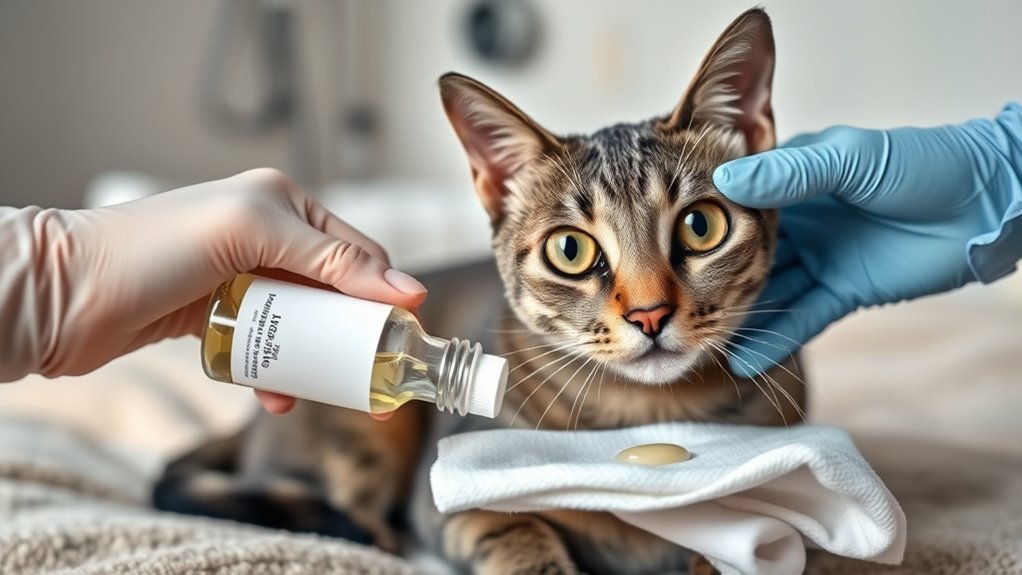
To prevent flea medicine poisoning in your cat, make sure to follow the product’s instructions carefully and choose the right treatment for your pet’s age and health.
Always pick products that are specifically made for cats, since some flea treatments made for dogs can be harmful to cats. Check the label for age restrictions, weight requirements, and application instructions before using.
It’s a good idea to talk to your veterinarian for the best flea prevention options based on your cat’s health. Never use multiple flea treatments at once unless your vet advises it, as this can increase the risk of toxicity.
Keep flea medicines stored out of your cat’s reach to prevent accidental ingestion. Regularly check your cat for fleas and use prevention products consistently to avoid relying on medicated treatments.
Recognizing the Signs of Flea Medicine Toxicity in Cats
Flea medicine toxicity can happen if your cat reacts badly to the treatment, so it’s important to spot the warning signs early. Some cats are more sensitive to the ingredients, which increases their risk of toxicity.
Watch for signs like excessive drooling, vomiting, diarrhea, or lethargy. You might also see tremors, uncoordinated movements, or trouble breathing—these are serious reactions. Changes in behavior, such as agitation or hiding, can also indicate distress.
Watch for drooling, vomiting, tremors, or difficulty breathing after flea treatment. Seek veterinary help immediately.
Skin irritation or redness at the application site is common but can sometimes worsen to swelling or blistering. In severe cases, your cat may have seizures or collapse. Recognizing these signs quickly helps you get veterinary help fast and may lessen the severity of poisoning.
Always read the medication’s label carefully to understand the ingredients and watch for any unusual symptoms after applying flea treatments. Staying alert to these signs is key to keeping your cat safe and healthy.
Immediate Steps to Take if Your Cat Ingests Flea Medicine
If you find out that your cat has ingested flea medicine, act immediately to minimize potential harm. Quick response can make a big difference. First, try to identify the ingredients of the flea medicine if you can, as this helps vets understand how toxic it might be.
Next, remove your cat from the area to prevent any more ingestion. Contact your emergency contacts or a veterinarian right away for advice. Keep these points in mind:
- Do not try to make your cat vomit unless a professional tells you to.
- Gather the packaging or label of the flea medicine so you can give accurate info.
- Watch your cat closely for signs like drooling, vomiting, or tremors.
- Follow all instructions given by emergency contacts carefully.
Your quick actions and clear communication can really improve your cat’s chances of recovery. Remember, acting fast is crucial in cases of flea medicine poisoning.
How to Safely Induce Vomiting in a Poisoned Cat
Inducing vomiting in a poisoned cat can be risky, so it’s crucial to only do so under professional guidance. If your vet advises you to try, act quickly but carefully.
Inducing vomiting in a poisoned cat is risky; always seek professional guidance before attempting.
The safest method is usually giving a small amount of hydrogen peroxide (3%) orally, but only if your vet says it’s okay. Never try to induce vomiting without expert approval, as some substances can cause more harm if vomited or if forced improperly.
Before attempting this, make sure your cat is alert and not sedated. Be ready to watch their breathing and behavior closely to keep them safe.
Keep the hydrogen peroxide nearby and follow your vet’s dosage instructions exactly. Remember, inducing vomiting is just the first step—get your cat to the vet immediately afterward.
Always seek professional guidance to avoid accidental injury or complications.
Administering Activated Charcoal for Flea Medicine Poisoning
Administering activated charcoal can help reduce the absorption of toxic flea medications in your cat’s system, but it must be done correctly and under veterinary guidance. Proper administration involves giving the right dose promptly after poisoning.
Follow your vet’s specific dosage guidelines, which depend on your cat’s weight and how severe the poisoning is. To prepare, mix the activated charcoal powder with water to make a slurry.
Use a syringe or feeding tube for easy administration, making sure the charcoal reaches the back of your cat’s mouth. Measure the correct amount based on your vet’s instructions, then mix thoroughly with water.
Once prepared, administer the slurry carefully to your cat. Keep an eye on your pet for any adverse reactions after giving the activated charcoal.
Always check with your veterinarian before giving activated charcoal, as incorrect dosage or timing can be ineffective or even harmful.
Why Veterinary Emergency Care Is Essential
Emergency veterinary care is essential because cats can deteriorate quickly after flea medicine poisoning, and prompt action can mean the difference between recovery and serious health issues.
When you seek emergency care, veterinary professionals follow specific protocols to stabilize your cat’s condition fast. These might include giving medications, providing oxygen, or supporting vital functions until the toxin is neutralized.
Having access to advanced diagnostic tools and specialized treatments is crucial for accurately assessing the severity of the poisoning and creating an effective plan. Delay in seeking help can lead to worsening symptoms or irreversible damage.
Common Symptoms of Serious Flea Medicine Toxicity
If your cat starts showing some strange physical signs or if their behavior suddenly changes, it could be a sign of serious flea medicine toxicity. Keep an eye out for obvious symptoms like drooling, vomiting, or even trouble breathing—it’s important to notice these right away.
You should also watch for behavioral changes, like your cat becoming unusually agitated or, on the flip side, very lethargic. Catching these symptoms early can really make a difference and help you get your kitty the care they need as soon as possible.
Observable Physical Changes
Serious flea medicine toxicity in cats often shows through noticeable physical changes that can alert you quickly. Watching for these signs helps you understand how serious the situation is.
Look for physical reactions like tremors or seizures, which indicate neurological issues. Excessive drooling or foaming at the mouth are also common signs of toxicity.
You might see your cat breathing rapidly or struggling to breathe. Weakness or paralysis in the limbs can be a sign that something’s wrong.
Other signs include muscle twitching or uncoordinated movements, pointing to neurological distress. Changes in the skin or coat, like swelling or redness, can also be symptoms of toxicity.
Recognizing these physical signs early means you can get urgent veterinary help. Acting quickly is vital for your cat’s safety and recovery.
Behavioral Alterations
Behavioral changes are often among the first signs that your cat is experiencing flea medicine toxicity. You might notice sudden agitation, restlessness, or hiding more than usual. Flea medication interactions can trigger abnormal stress responses, leading to hyperactivity or vocalization.
Some cats may show lethargy or seem disoriented, which are also signs of serious toxicity. Changes in eating or drinking habits can happen, along with excessive grooming or scratching. These behavioral alterations indicate your cat’s nervous system is affected and need prompt attention.
Recognizing these early signs helps you respond quickly and may prevent further health problems. Always keep a close eye on your cat after applying flea medication and seek veterinary care immediately if you notice any unusual behaviors.
What Questions Will Your Vet Ask About Your Cat’s Condition?
- When you first noticed symptoms and how they’ve progressed
- The specific flea medicine used and the dosage given
- Any treatments or medications your cat has received since exposure
- Changes in your cat’s behavior, appetite, or activity levels
Your vet will focus on symptom duration to see how long your cat has been affected and to figure out potential treatment options. They might also ask about any other health issues or previous reactions to medications.
Providing detailed answers helps your vet evaluate the situation quickly and accurately. Be ready to share all relevant information, as it guides their diagnosis and helps them recommend the best course of action to manage your cat’s poisoning.
How to Monitor Your Cat After Flea Medication Exposure
After your cat has been given flea medication, it’s a good idea to keep a close eye on how they’re doing. Just watch for any unusual behaviors or signs that something might be off.
Keep an eye out for physical symptoms like vomiting, tremors, or if your cat seems more tired than usual. Also, notice if there’s any change in their appetite or how active they are.
Watch For Behavioral Changes
How can you tell if your cat is reacting negatively to flea medication? Watch for behavioral changes that show distress or discomfort.
You might notice signs of anxiety, like restlessness, excessive grooming, or hiding. Lethargy indicators include a sudden lack of energy, reluctance to move, or sleeping more than usual.
Keep an eye out for unusual vocalizations or agitation. Your cat may seem withdrawn or overly alert, pacing or staring intently. These signs can indicate a reaction to the medication.
Pay close attention during the first 24 hours after application. If you see any of these behaviors, contact your veterinarian promptly.
Quick action can prevent more serious health issues and ensure your cat gets the care it needs.
Check For Physical Symptoms
Wondering how to spot physical signs of flea medication poisoning in your cat? First, look for symptoms like excessive drooling, vomiting, diarrhea, or difficulty breathing.
You might notice tremors, weakness, or unsteady movements, which can indicate neurological issues. Keep an eye on your cat’s coat—dullness or skin irritation can also be a sign something’s wrong.
To help your cat recover, offer easily digestible foods that support detoxification. Make sure fresh water is always available and encourage your cat to drink to prevent dehydration.
Monitoring physical symptoms closely is key to catching serious problems early. If you see any concerning signs, contact your veterinarian right away. Quick action can make a big difference in your cat’s recovery.
Monitor Appetite And Activity
Monitoring your cat’s appetite and activity levels is key to catching potential poisoning early. Keep an eye on any changes in how much they want to eat or drink.
Watch for shifts in their activity too—your cat might suddenly seem very sleepy or overly energetic.
Look for signs like reduced interest in food or play, excessive sleeping, weakness, restlessness, or agitation.
Also, note if they lose coordination or balance. These could be signs that the flea medicine is affecting their health.
Regularly observing your cat’s behavior helps you spot problems early so you can get veterinary help quickly. Staying vigilant about their appetite and activity is a crucial part of managing potential poisoning.
Supporting Your Cat’s Recovery With Follow-Up Care
After your cat begins to recover from flea medicine poisoning, providing consistent follow-up care is essential to guarantee a full and safe recovery. Focus on offering a nourishing diet to support healing and strengthen their immune system.
Make sure your cat has access to fresh water at all times to stay hydrated. Creating a comfortable environment helps reduce stress and promotes recovery; keep their resting area quiet, warm, and cozy.
Monitor their behavior closely, watching for any signs of lingering or returning symptoms. Regularly check their skin and coat for improvements or issues.
Follow your veterinarian’s instructions for medications or topical treatments, and schedule follow-up visits to assess progress. Stay patient and gentle, giving your cat time to heal fully.
Your attentive care now will help prevent complications and restore your cat’s health more swiftly.
Frequently Asked Questions
Can Flea Medicine Poisoning Cause Long-Term Health Issues in Cats?
Flea medicine poisoning can cause long-term health issues in cats if not treated promptly. You might notice flea medicine symptoms like vomiting, tremors, or lethargy, which require immediate veterinary intervention.
Without proper care, toxins could affect your cat’s organs or nervous system over time. It’s essential to seek veterinary help quickly, as early treatment can minimize long-lasting effects and help your cat recover fully.
Are There Natural Remedies to Counteract Flea Medicine Toxicity?
About 70% of pet owners look for natural remedies first, but there’s limited evidence that they actually work for flea medicine toxicity.
You might consider natural detox options like activated charcoal or milk thistle, which could help your cat recover.
Supportive care, such as keeping your cat hydrated and in a calm environment, is really important.
Always talk to your veterinarian before trying any natural remedies to make sure they’re safe and appropriate for your cat.
How Can I Tell if My Cat Is Allergic to Flea Medication?
You’ll notice flea medication reactions if your cat shows allergy symptoms like excessive itching, swelling, redness, or difficulty breathing shortly after application. Keep an eye out for hives, vomiting, or lethargy, which also indicate an allergic reaction.
If you see any of these allergy symptoms, remove the medication immediately and contact your vet. Acting quickly helps prevent serious complications and keeps your cat safe.
What Are the Risks of Using Human Flea Treatments on Cats?
Using human flea treatments on cats is a terrible idea. Think of it as inviting disaster. These products contain ingredients that can cause toxicity in cats, leading to severe reactions or even poisoning.
Instead, look for safe treatment options specifically designed for felines. Always check with your vet before using any product.
Don’t gamble with your cat’s health by applying products made for humans. Your beloved pet deserves proper, safe care.
Is It Safe to Give My Cat Home Remedies Before Visiting the Vet?
You shouldn’t give your cat home remedies before visiting the vet, as some flea treatment alternatives can be harmful or ineffective.
Instead, focus on your cat’s health by consulting a veterinarian for safe options. Home remedies might delay proper treatment and make your cat’s condition worse.
Always seek professional advice first to ensure your cat stays safe and gets the right care for flea problems.
Conclusion
Think of your cat’s health like tending a delicate garden. You need to catch pests early before they cause serious harm.
By knowing the signs of flea medicine poisoning and acting fast, you’re protecting your feline friend from potential danger. Just like a gardener’s quick action saves fragile blooms, your swift response can prevent a small problem from blossoming into a major crisis.
Stay vigilant, and your cat will thrive in a safe, happy environment. Recognizing symptoms early is key to treating flea medicine poisoning effectively.