How Long Does Tapeworm Medicine Take to Work in Cats?
Dealing with tapeworms in your cat can be really stressful. Many pet owners feel overwhelmed trying to figure out how quickly treatment will work and how to prevent it from happening again. You’re not alone—it’s a common concern, and understanding the process can help ease your worries.
Tapeworm medicine in cats typically starts working within a few hours to a day, with most worms dying quickly. You may see tapeworm segments passed within 1 to 3 days after treatment, and symptoms like diarrhea or vomiting should improve soon after.
However, full clearance can take a week, depending on infection severity and medication.
If you want to understand how to support your cat’s recovery and guarantee reinfection doesn’t happen, keep going.
Key Takeaways
- Tapeworm segments are usually passed within 1 to 3 days after treatment.
- Symptoms like increased appetite and reduced diarrhea typically improve within a few days.
- Complete elimination of tapeworms may take up to one or two weeks, depending on how severe the infection is.
- Regular follow-up and stool checks are important to confirm the parasites are fully gone.
- Proper hygiene and flea control help the medication work better and prevent reinfection.
How Long Does It Take for Cats to Start Passing Tapeworm Segments?
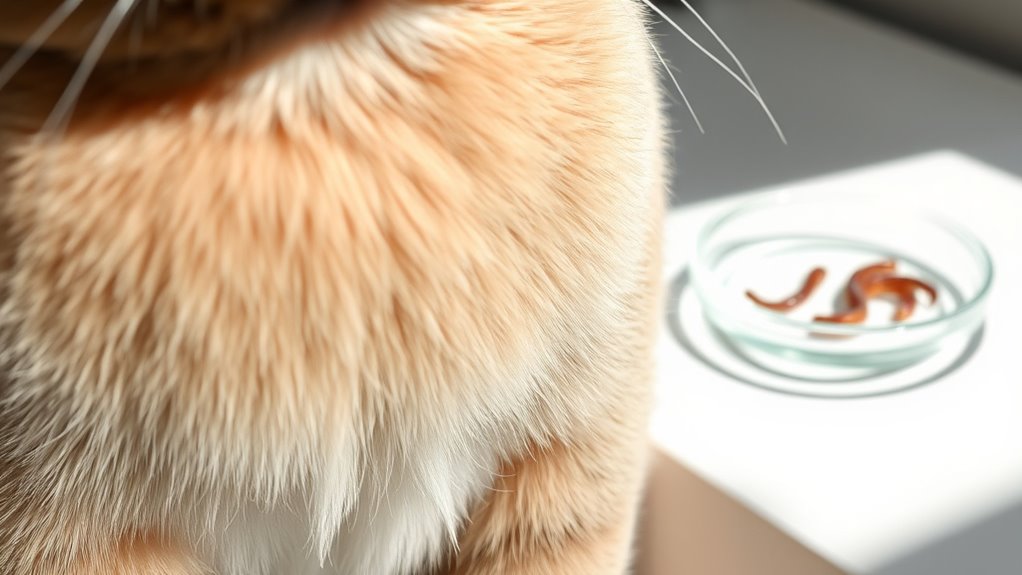
Typically, you can expect a cat to start passing tapeworm segments within a few days after treatment. The treatment duration varies, but most cats will begin shedding segments around 1 to 3 days post-treatment.
The appearance of these segments is quite distinct: small, rice-like grains that may be attached to the fur near the anus or seen in the stool. You might notice them moving slightly or see them in your cat’s bedding or litter box.
It’s important to stay observant during this time, as passing segments means the medication is working to eliminate the worms. The timing can be affected by factors like how severe the infection is and the type of medication used.
Keep in mind, some cats may start passing segments sooner, while others might take a little longer. Monitoring your cat’s behavior and cleanliness during this period helps ensure the medication is effective.
When Will My Cat’s Symptoms Improve After Treatment?
You may wonder when your cat will start feeling better after treatment. The symptom timeline can vary, but most cats show noticeable improvements within a few days.
You can expect your cat’s appetite to return to normal and any diarrhea or vomiting to subside shortly after the medication kicks in. Treatment goals include a gradual reduction in visible tapeworm segments and an overall boost in your cat’s energy.
Keep in mind that some symptoms like weight loss or anemia might take longer to improve, depending on how severe the infection was. It’s important to follow your vet’s instructions and give the medication exactly as prescribed.
While initial signs of recovery are encouraging, full symptom resolution can take a week or more. If symptoms persist or get worse, contact your vet for further evaluation and possible follow-up treatment.
Signs That Your Cat Is Responding to Tapeworm Treatment
One clear sign that your cat is responding to tapeworm treatment is a decrease in the visible tapeworm segments around the anus and in the stool. During symptom observation, you may notice fewer or no rice-like segments, which suggests the medication is working.
Your cat might also start grooming more normally and show improved overall comfort. Keep an eye out for other signs of health improvement, like increased activity and a better appetite.
If you don’t see these changes within a few days, it could mean you need to adjust the treatment. This might involve trying a different medication or changing the dosage.
Remember, consistent symptom observation is key to knowing if the treatment is effective. If symptoms persist or get worse, contact your veterinarian right away to reassess and adjust the plan.
Staying vigilant helps ensure your cat gets the best care and relief possible.
What Factors Affect How Quickly Tapeworm Medicine Works in Cats?
Several factors can influence how quickly tapeworm medicine starts working in cats. These include the type of medication used, how severe the infection is, and the cat’s overall health. All these elements can affect how soon you’ll see results and the right dosage.
Here are three key factors:
- Type of medication: Different tapeworm treatments work at different speeds, with some acting faster than others.
- Severity of infection: A light infestation might clear up quickly, but a heavy one can take longer to see results.
- Overall health: A healthy cat’s immune system can help speed up recovery, while health issues might slow things down.
How Long Does It Take for Tapeworms to Fully Clear From a Cat’s System?
After you start treating your cat for tapeworms, you’ll usually notice the worms being expelled within a few days. But keep in mind, how long it takes for them to be completely gone can vary a bit. Things like the type of medication your vet prescribes and your cat’s overall health play a role in how quickly they clear out.
It’s a good idea to keep an eye on your kitty during this time and watch for any remaining signs of tapeworms. Make sure to follow your vet’s instructions for post-treatment check-ups and any additional steps needed to ensure your cat is fully cured.
Timeline for Worm Expulsion
Typically, you can expect tapeworms to start leaving your cat’s system within a few days of treatment, but it might take up to two weeks for them to be fully expelled. The worm’s lifecycle and the treatment process both play a role in this timeline. During this time, your cat’s body works to break down and get rid of the worms.
You might see segments in your cat’s stool within 1-3 days after treatment. Full removal can take up to 14 days, depending on the lifecycle of the worms.
It’s important to regularly check your cat’s stool and follow your vet’s advice. Re-treat if necessary to ensure all worms are gone.
Patience is key as your cat’s system clears out the remaining worms.
Factors Influencing Clearance
The time it takes for tapeworms to fully clear from your cat’s system depends on several factors that influence the body’s ability to eliminate the worms. Your cat’s dietary habits can impact this process; a balanced diet supports immune response, helping the body clear the worms faster.
Age also matters—kittens and older cats may take longer because their immune systems are weaker. Proper treatment dosage is crucial to ensure the medication effectively targets the parasite lifecycle; underdosing can delay elimination.
Environmental cleanliness reduces the risk of reinfection, which is important for a quick recovery. High stress levels can suppress your cat’s immunity, making it harder for the body to clear the worms.
Concurrent infections can also slow down clearance by taxing your cat’s immune system. Overall, these factors work together to determine how quickly your cat’s system clears tapeworms after treatment.
Monitoring Post-Treatment Signs
Monitoring your cat after treatment is key to making sure the tapeworms are gone for good. Keep a close eye on your cat for any signs that might indicate the infection is still there. Watch out for things like persistent scooting, visible segments in stool or around the anus, or increased licking.
To be sure your cat has recovered, focus on these simple steps:
- Regularly observe your cat for symptoms that could mean tapeworms are still present.
- Collect stool samples to check for any remaining worms or segments.
- Schedule follow-up vet visits to confirm that the infection has been cleared.
Staying consistent with monitoring helps you catch any issues early and ensures your cat is fully recovered.
What If My Cat Still Has Tapeworms After Treatment?
If your cat still has tapeworms after treatment, don’t panic right away. It’s a good idea to think about what could be causing a reinfection, like fleas or maybe contaminated areas in your home. Sometimes, the medication might not completely do the trick the first time, or your cat could have picked up new worms from fleas or environment.
The effectiveness of the treatment can really depend on the medication used and how your cat responds to it. If you notice the worms are still there after a while, it’s best to check back with your vet. They might suggest trying a different treatment or doing some additional tests to figure out what’s going on.
Possible Reinfection Causes
Even after giving your cat tapeworm medication, it can still get reinfected if it comes into contact with new sources of infection. These sources are often related to your cat’s environment.
Fleas are the main culprits. If your cat catches new fleas, it can become reinfected with tapeworms. Controlling fleas is key to preventing this.
Hunting or outdoor time can also expose your cat to rodents that carry tapeworm larvae. Keeping your cat indoors or supervising outdoor activities can help reduce this risk.
Poor hygiene practices matter too. Not cleaning bedding, litter boxes, or areas your cat spends time in can leave behind infective eggs. This can lead to reinfection.
Good hygiene and flea control are essential. They help break the cycle and keep your cat protected from future tapeworm infections.
Treatment Effectiveness Factors
Sometimes, even after giving your cat tapeworm medication, they might still have worms. Several factors can influence whether the treatment works.
These include the type of medication and the timing of doses. If worms stick around, it could be because the dose was wrong or given at the wrong time, or maybe you need to switch medications.
Some medicines require a second dose to fully get rid of tapeworms, especially if your cat gets reinfected quickly. Here’s a quick guide:
| Factor | Impact |
|---|---|
| Medication Type | Not all meds work equally well for every cat |
| Dosage Timing | Giving doses at the right time boosts effectiveness |
| Reinfection Risk | Reinfection can happen if the environment isn’t cleaned |
| Dose Accuracy | Wrong doses might leave some worms behind |
| Follow-up Treatment | Sometimes, a second dose is needed to finish the job |
Always follow your vet’s advice and schedule follow-up treatments to make sure all worms are gone.
When To Revisit Vet
Wondering when to see your vet again if your cat still has tapeworms after treatment? If symptoms stick around, it’s time for a follow-up. You should revisit your vet if:
- You still see tapeworm segments or eggs in your cat’s stool after a few days.
- Your cat keeps showing signs like weight loss, vomiting, or an increased appetite.
- There’s no noticeable improvement within a week or two during the expected treatment check.
Persistent symptoms could mean the treatment didn’t fully work or that your cat got reinfected. Visiting your vet again ensures proper assessment and possible medication adjustments. Prompt follow-up helps get rid of tapeworms completely and keeps your cat healthy.
Follow-Up Treatments and Preventive Measures for Tapeworms in Cats
After treating your cat for tapeworms, it’s important to follow up with additional treatments and preventive measures to ensure the infection is completely cleared and to prevent reinfection.
One key step is sticking to a regular deworming schedule recommended by your vet, especially if your cat goes outside or hunts rodents. Monthly or quarterly deworming helps keep tapeworms away and keeps your cat healthy.
Follow your vet’s deworming schedule regularly, especially if your cat hunts or goes outside, to prevent tapeworm reinfection.
Keeping your environment clean also makes a big difference. Regularly vacuum and wash bedding to remove fleas and eggs, which often carry tapeworms.
Controlling flea infestations is crucial since fleas are the main intermediate hosts. Routine vet check-ups can help spot any signs of reinfection early.
Which Medications Are Used to Treat Tapeworms and How Fast Do They Work?
Several medications are effective in treating tapeworms in cats, with praziquantel being the most commonly prescribed. This medication quickly kills tapeworms by targeting their outer shell, usually within a few hours. Other medication options include epsiprantel and fenbendazole, which your vet might recommend based on your cat’s needs.
Here are some key points to keep in mind:
- Medication types: Praziquantel, epsiprantel, and fenbendazole are popular choices.
- Dosage guidelines: Your vet will give you specific instructions based on your cat’s weight and health.
- Speed of effectiveness: Most tapeworms die within a few hours of treatment, with some medications working faster than others.
Always follow your vet’s dosage instructions, and check with them if symptoms stick around or come back after treatment. Proper medication ensures your cat recovers quickly and stays healthy long-term.
Supporting Your Cat During Treatment for Faster Recovery
Supporting your cat during treatment can make a big difference in how quickly and comfortably they recover. To help speed things up, focus on gentle, easy-to-digest foods. Offer bland options like boiled chicken or special vet diets made for sensitive stomachs. Good nutrition boosts their immune system and overall strength.
Comfort is just as important. Provide a warm, quiet spot where your cat can rest without disturbances. Keep their litter box clean to prevent reinfection and reduce stress. Watch their activity levels—avoid too much play or jumping to prevent strain.
Make sure they always have fresh water to stay well-hydrated. Gentle petting and reassurance help lower their stress, making treatment more bearable. By creating a calm environment and paying attention to their diet, you can support your cat’s recovery and help them feel more comfortable during this time.
When to Consult Your Veterinarian About Your Cat’s Treatment Progress
Wondering when to check in with your vet about your cat’s treatment progress? Staying proactive during treatment is really important.
You should reach out if your cat isn’t showing signs of improvement after a few days. Persistent symptoms might mean the medication isn’t working as expected.
Also, contact your vet if you notice any adverse reactions, like vomiting, diarrhea, or lethargy. Quick communication is key to adjusting the treatment plan.
If you see tapeworm segments still after the expected timeframe, it’s time for a follow-up. This helps determine if additional treatment is needed.
Regularly talking to your vet helps keep your cat’s recovery on track. Don’t hesitate to ask if you’re unsure about progress or have concerns.
Monitoring symptoms and sticking to the treatment plan are essential for effective parasite control.
Frequently Asked Questions
Can Tapeworms Come Back After Treatment in Cats?
Tapeworms can come back after treatment if the underlying cause isn’t addressed, like fleas. You might notice tapeworm segments in your cat’s feces or around its anus.
To make treatment more effective and prevent it from coming back, be sure to give your cat all prescribed medication and control fleas thoroughly. Regular check-ups help catch any reinfection early, keeping your cat healthy and free of tapeworms.
Are There Any Side Effects From Tapeworm Medication in Cats?
Yes, there can be treatment reactions, but they are usually mild. Some cats might experience vomiting, diarrhea, or lethargy after medication.
These side effects are typically temporary and rare. To keep your cat safe, always follow your vet’s instructions carefully and monitor your cat closely.
If reactions seem severe or last a long time, contact your vet right away. Overall, tapeworm medication is safe and effective when used as directed.
How Often Should I Administer Tapeworm Medication to My Cat?
You should give your cat tapeworm medication as your vet advises, usually once a month for prevention or after you notice tapeworm symptoms.
Make sure to follow the correct dosage, especially if your cat is showing signs like weight loss or scooting.
Regular treatment helps prevent reinfection, but always check with your vet to find the best schedule for your cat’s health and environment.
Can I Treat My Cat for Tapeworms at Home Safely?
You can’t safely treat tapeworms in your cat with home remedies or natural treatments alone.
While some natural options claim to help, they aren’t proven to be effective and could delay proper treatment.
It’s best to consult your veterinarian for safe, effective medication.
They can recommend the right tapeworm medicine and ensure your cat’s health improves without risking side effects or complications from unproven home remedies.
What Are the Best Ways to Prevent Tapeworm Infections in Cats?
To prevent tapeworm infections in your cat, focus on natural remedies like adding pumpkin seeds or garlic to their diet, which can help repel parasites. Make dietary changes that support their immune system, such as feeding high-quality, balanced food.
Regular grooming and controlling fleas are essential since fleas transmit tapeworms. Keep your cat indoors or limit outdoor access to reduce exposure.
Finally, schedule routine vet check-ups for early detection and overall health.
Conclusion
Think of your cat’s healing journey as tending a delicate garden. With patience and the right care, the weeds of tapeworms will be pulled, and new growth will flourish.
Trust in your veterinarian’s guidance, nurture your feline friend, and stay vigilant.
Tapeworm medicine in cats usually starts working within a few hours to a couple of days. Most cats see improvements within 24 to 48 hours after treatment.
However, complete elimination of tapeworms may take a few days, depending on the medication used and your cat’s health.
Keep an eye on your cat and follow your vet’s instructions for follow-up care.
Soon, the vibrant blooms of health will return, reminding you that even the tiniest battles can lead to a beautiful, resilient garden of wellness.