What Requirements Do You Have for a Rusty Spotted Cat Pet?
Are you dreaming of adding a rusty spotted cat to your family but worried about the challenges of caring for such a unique pet? You’re not alone—many people struggle with understanding what it takes to provide a safe and happy environment for these elusive little cats.
Owning a rusty spotted cat means providing a secure, enriched environment that mimics their natural habitat, with plenty of hiding spots and climbing structures.
Make certain you comply with local laws and obtain any necessary permits, as ownership is often restricted.
You’ll need a high-protein diet, regular socialization, and daily playtime to keep them happy and healthy.
Avoid common mistakes like neglecting mental stimulation or space.
To guarantee you meet all these needs, continue exploring the full care requirements.
Key Takeaways
- Ensure you have the necessary permits and follow local laws to make sure owning a rusty spotted cat is legal, since exotic pet regulations can differ a lot depending on where you live.
- Create a spacious, enriching environment that resembles their natural habitat, including plenty of hiding spots and climbing structures for them to explore.
- Feed them a diet that’s high in animal protein and appropriate for their species, sticking to a regular feeding schedule and always providing fresh water.
- Spend time daily socializing, playing actively, and gently handling your cat to build trust and help prevent stress.
- Avoid common mistakes by making sure they get enough mental stimulation, a varied diet, and plenty of space for exercise and exploration.
What Are Rusty Spotted Cats and How Do They Look?
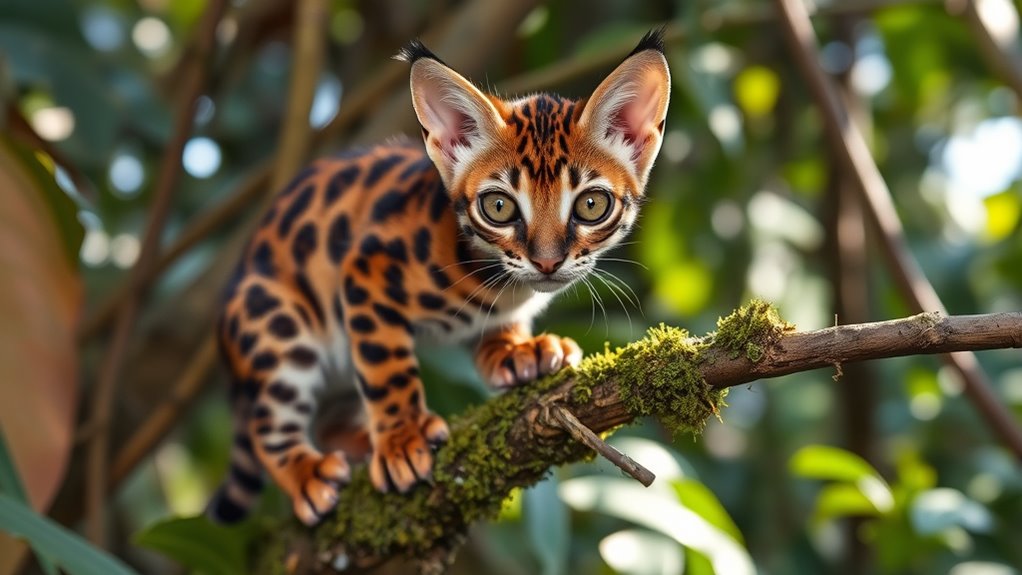
Rusty spotted cats are small, wild feline species native to India and Sri Lanka. Their physical features include a slender body about 16 to 20 inches long, with a short tail and sharp, alert ears.
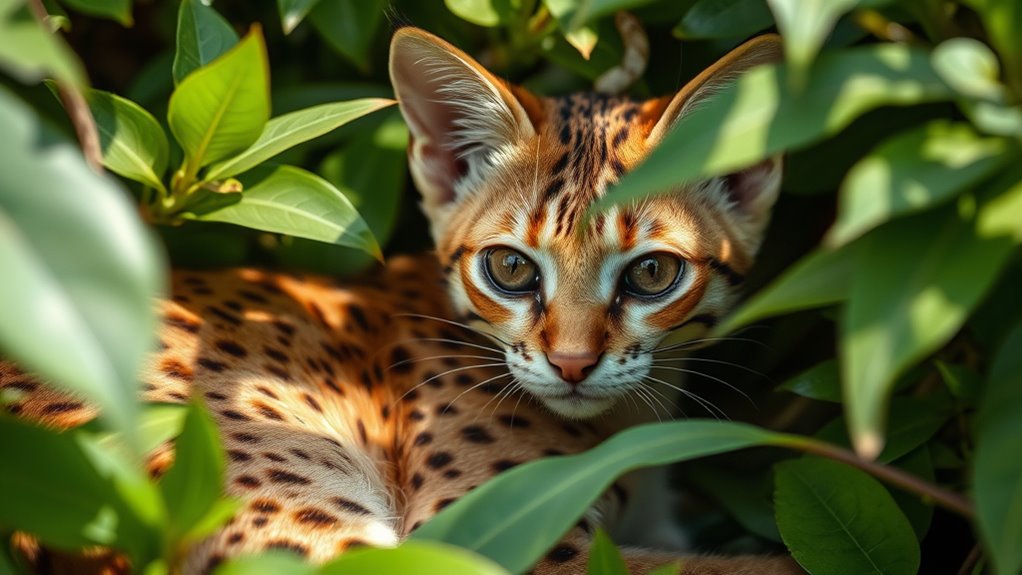
Their coat stands out with a warm, sandy background covered in striking, rusty-orange spots. These markings help them blend into their natural surroundings, making them excellent at camouflage.
Their large, expressive eyes are perfect for hunting and staying active at night. These cats prefer dense forests, grasslands, and scrubby terrains, where they can easily hide and move around.
In the wild, they’re solitary and elusive, often hiding among dense vegetation during the day. When night falls, they become active, using their small size and agility to navigate tight spaces and hunt small prey.
Understanding their physical traits and habitat helps us appreciate these rare, enchanting creatures even more.
Are There Legal Restrictions for Owning a Rusty Spotted Cat?
Are there legal restrictions you need to be aware of before considering a rusty spotted cat as a pet? Yes, owning exotic pets like rusty spotted cats is regulated by laws that vary depending on where you live. Many countries and states have strict rules or even bans on keeping wild or exotic animals as pets. These laws are in place to protect both the animals and the local environment.
Before bringing one home, it’s important to research your area’s specific regulations. Some places require special permits or licenses for exotic pet ownership, while others don’t allow it at all. Owning a rusty spotted cat without proper legal approval can result in hefty fines or having the animal taken away.
It’s crucial to understand these restrictions upfront so you can avoid legal issues and ensure the safety and wellbeing of the cat. Always check with local authorities or wildlife agencies before considering an exotic pet like a rusty spotted cat.
What Kind of Habitat and Space Do These Cats Need?
Since these cats are naturally adapted to wild environments, they need plenty of space that mimics their natural habitat for their well-being. Rusty spotted cats require a variety of hiding spots, climbing structures, and open areas to explore.
Their space needs are smaller than larger wildcats but still require enough room for exercise and natural behaviors. Create a secure, enriched environment that encourages climbing, stalking, and resting.
Use trees, shrubs, and hiding places to replicate their forest habitat. Avoid confining them to small cages or cramped spaces, as that can cause stress and health issues.
A spacious, stimulating environment keeps them physically healthy and mentally engaged. Meeting their habitat needs is essential for their happiness and well-being in captivity.
How Should You Prepare Their Diet and Feeding Routine?
Providing a balanced and species-appropriate diet is key to keeping your rusty spotted cat healthy and happy. Knowing what they like helps you choose the right foods, mainly high-quality meats, small rodents, and special feline diets.
A balanced, species-appropriate diet with quality meats and small rodents keeps your rusty spotted cat healthy and happy.
Since they are carnivores, their meals should be rich in animal protein and low in fillers. Stick to a routine by feeding them twice a day, adjusting portions based on their age and activity level.
Avoid free-feeding to prevent overeating and obesity. Always have fresh water available, and keep an eye on how much they drink to ensure they stay properly hydrated.
Watch for any changes in their eating habits, as these could indicate health issues. By giving proper nutrition and a consistent feeding schedule, you support your rusty spotted cat’s overall health, energy, and longevity.
How Can You Properly Socialize and Handle Your Rusty Spotted Cat?
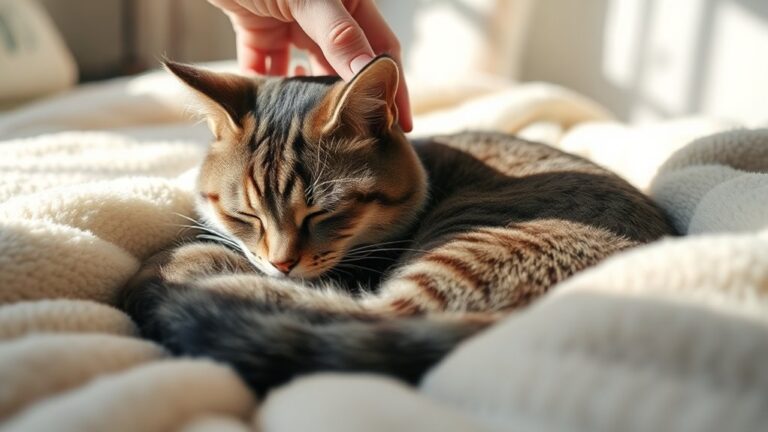
If you want to socialize and handle your Rusty Spotted Cat the right way, start by using gentle handling techniques. This helps build trust between you and your feline friend. It’s important to be patient and consistent with your approach, so your cat feels safe and comfortable.
Stick to a regular socialization routine, and keep an eye out for any signs of stress, like purring loudly or trying to hide. If you notice these signals, it’s a good idea to give your cat some space and adjust your approach. Recognizing how your cat feels is key to making sure they stay relaxed and secure during your interactions.
Gentle Handling Techniques
Building trust with your rusty spotted cat is essential before handling or socializing them. Use gentle playtime to create a positive connection and help prevent fear or aggression.
When handling, adopt gentle techniques—support their body securely, avoid sudden movements, and keep your voice calm. Let your cat approach you at its own pace and never force contact.
Pay attention to their body language. If they seem tense or distressed, give them space. Short, frequent handling sessions help your cat become comfortable with your touch.
Socialization Routine Steps
Establishing a consistent routine is key to effectively socializing and handling your rusty spotted cat. Use gentle, positive interactions like softly talking, offering treats, and brief petting sessions.
Keep interaction regular but not overwhelming—short daily sessions work best. As your cat gets more comfortable, gradually increase the duration, always watching for signs of stress.
Consistency helps your cat feel secure and builds trust over time. Avoid sudden movements or loud noises during these sessions, and always respect your cat’s boundaries.
Recognizing Stress Signals
How can you tell if your rusty spotted cat is feeling stressed? Look for stress signals in their body language. You might notice flattened ears, a puffed-up tail, or a tense posture.
Dilated pupils and rapid breathing also indicate discomfort. Your cat may hide or avoid interaction altogether, showing signs of withdrawal.
Watch for excessive grooming or grooming in unusual spots, which can be a sign of anxiety. Recognizing these signals early helps you respond in a calm and gentle way.
Providing a quiet retreat and avoiding sudden changes can help your cat feel safe. Understanding feline body language helps you know when your cat needs space or comfort.
What Are the Key Health Care and Veterinary Needs?
Maintaining the health and well-being of a rusty spotted cat requires regular veterinary care and attention to its specific needs. Preventive care is key to catching health issues early and keeping your cat in top shape.
Schedule routine veterinary check-ups at least once a year, or more often if your vet recommends. These visits help monitor weight, dental health, and overall wellness.
Vaccinations are essential to protect against common feline diseases. Your vet can advise on the best schedule for your cat’s needs.
Vaccinations safeguard your rusty spotted cat from common feline diseases; consult your vet for the ideal schedule.
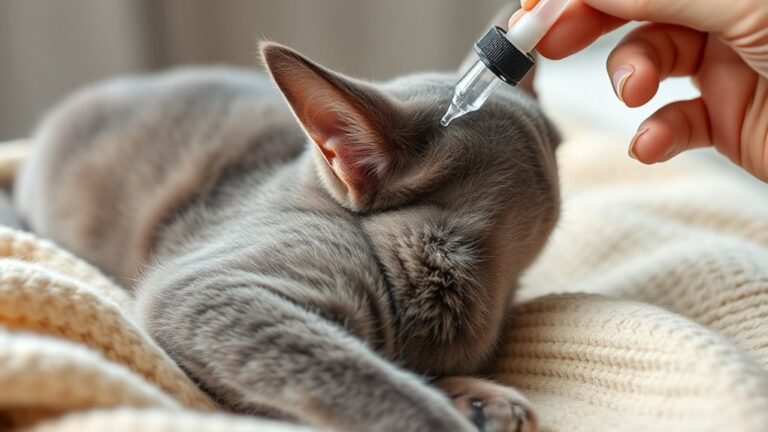
Regular parasite prevention, including flea, tick, and worm treatments, also plays an important role. Be attentive to any changes in behavior, appetite, or activity levels, and report these to your vet promptly.
Maintaining a consistent health care routine ensures your rusty spotted cat stays healthy, comfortable, and happy for years to come.
How Do You Create a Safe, Stimulating Environment at Home?
Creating a safe and stimulating environment for your rusty spotted cat isn’t just about making a cozy space. It’s about intentionally designing an area that encourages exploration and keeps hazards at bay.
Start by adding enrichment toys that tap into their hunting instincts. These toys help keep their minds active and engaged.
Next, incorporate vertical spaces like tall cat trees or shelves. They love climbing and enjoy having vantage points to observe their surroundings.
Make sure to remove or secure fragile items and cords that could be dangerous if chewed or pulled. Safety first!
Finally, create multiple hiding spots where your cat can retreat if they feel overwhelmed or need rest. This helps them feel secure and relaxed in their environment.
What Enrichment Activities Keep Rusty Spotted Cats Happy?
Engaging your rusty spotted cat with various enrichment activities is key to keeping them happy and healthy. Playful toys are essential because they stimulate your cat’s natural hunting instincts.
Opt for toys that mimic prey, like feather wands or small, moving balls, to encourage active play. Interactive games also help keep your cat mentally sharp and physically fit.
Choose prey-like toys and interactive games to keep your rusty spotted cat active and mentally stimulated.
Use puzzle feeders or treat-dispensing toys to challenge their problem-solving skills while rewarding their curiosity. Rotating toys regularly prevents boredom and keeps their interest alive.
Setting up climbing trees or shelves allows your cat to explore and satisfy their love for heights. This adds variety to their environment and keeps them engaged.
Incorporate different textures and types of toys to cater to their sensory needs. Providing these enrichment activities helps prevent behavioral issues and fosters a more content, engaged rusty spotted cat.
How Much Time and Commitment Do They Require?
How much time and effort do rusty spotted cats actually require from their owners? These cats need a moderate to high time commitment to thrive. Daily interactions are essential for their mental and physical health. You’ll need to dedicate time to play, bonding, and providing mental stimulation.
Here are four key considerations:
- Daily Playtime: Expect to spend at least 30 minutes each day engaging in active play. This helps keep them happy and healthy.
- Feeding Routine: Regular feeding and monitoring their diet require consistent effort. It’s important to keep their nutrition on track.
- Grooming: Although low-maintenance, occasional grooming helps keep their coat healthy and looking good.
- Environmental Enrichment: Providing toys and territory to prevent boredom demands ongoing attention. This keeps your cat mentally stimulated and content.
What Common Mistakes Should You Avoid When Caring for a Rusty Spotted Cat?
One common mistake to avoid when caring for a rusty spotted cat is underestimating their need for mental and physical stimulation. Many owners fall for habitat myths, thinking they can keep these cats in small spaces. In reality, they need plenty of enrichment to thrive.
Make sure not to have misconceptions about their diet either. Some believe they only eat raw meat, but it’s better to diversify their meals with high-quality protein and occasional treats.
| Mistake | Consequence |
|---|---|
| Ignoring mental stimulation | Boredom and destructive behavior |
| Believing habitat myths | Lack of space and stress |
| Misunderstanding diet | Malnutrition and health issues |
Putting effort into their environment with proper enrichment, enough space, and a balanced diet will keep your rusty spotted cat happy and healthy. Don’t overlook their unique needs — they require more than just basic care.
Frequently Asked Questions
What Is the Average Lifespan of a Rusty Spotted Cat in Captivity?
You can expect a rusty spotted cat to live around 12 to 15 years in captivity. Their behavior is generally active and curious, so they need a habitat that mimics their natural environment with climbing spaces and hiding spots.
Providing a stimulating habitat helps keep them healthy and happy. With proper care, diet, and attention to their unique needs, you can enjoy many years with this small, elusive feline.
How Much Does It Cost to Adopt or Buy a Rusty Spotted Cat?
Buying or adopting a rusty spotted cat can cost between $1,500 to $3,000, depending on the breeder or adoption source. Think of it as investing in a rare gem—these cats are unique and delicate.
Adoption fees often cover health checks and vaccinations, while breeders might charge more for pedigree. Be prepared for ongoing costs like food, veterinary care, and enrichment to keep your feline friend happy and healthy.
Are Rusty Spotted Cats Suitable for First-Time Exotic Pet Owners?
Rusty spotted cats aren’t ideal for first-time exotic pet owners because of their behavioral traits and habitat needs. They’re shy, solitary, and can be unpredictable.
They require a secure, enriched environment that mimics their natural habitat. Managing their unique needs can be tricky if you’re new to exotic pets.
You’ll need patience, experience, and a commitment to providing a safe space. Because of this, they’re better suited for experienced owners who understand their specific habitat and behavioral nuances.
What Special Grooming Needs Do Rusty Spotted Cats Have?
Rusty spotted cats have minimal grooming needs, but you should regularly use grooming tools like soft brushes to keep their fur healthy and reduce shedding.
They require occasional fur maintenance to prevent matting, especially if they have longer coats. Brushing once or twice a week usually suffices.
This routine helps keep their coat shiny and clean, making grooming a simple yet essential part of caring for your rusty spotted cat.
Can Rusty Spotted Cats Live Peacefully With Other Pets?
Think of a rusty spotted cat as a delicate dance partner—you need patience and proper steps. They can live peacefully with other pets if you use effective socialization techniques and provide habitat enrichment.
Gradually introduce your pets in controlled environments, rewarding calm interactions. This helps your rusty spotted cat feel secure and build trust, making harmonious coexistence possible.
With time and careful effort, your pets can become a balanced, happy family.
Conclusion
Owning a rusty spotted cat isn’t just a choice; it’s a commitment to understanding and nurturing a wild spirit in your home. These tiny cats have unique needs that require special attention and care. If you’re ready to meet those needs, you’ll find a loyal, fascinating companion.
Providing a safe and stimulating environment is key. They thrive in spaces that allow for exploration and play, mimicking their natural habitat as much as possible. Remember, they’re more than pets—they’re a wild treasure needing your care and respect.
Are you prepared to welcome the adventure and turn your home into their sanctuary? The journey begins with you, and with the right preparation, owning a rusty spotted cat can be a rewarding experience.