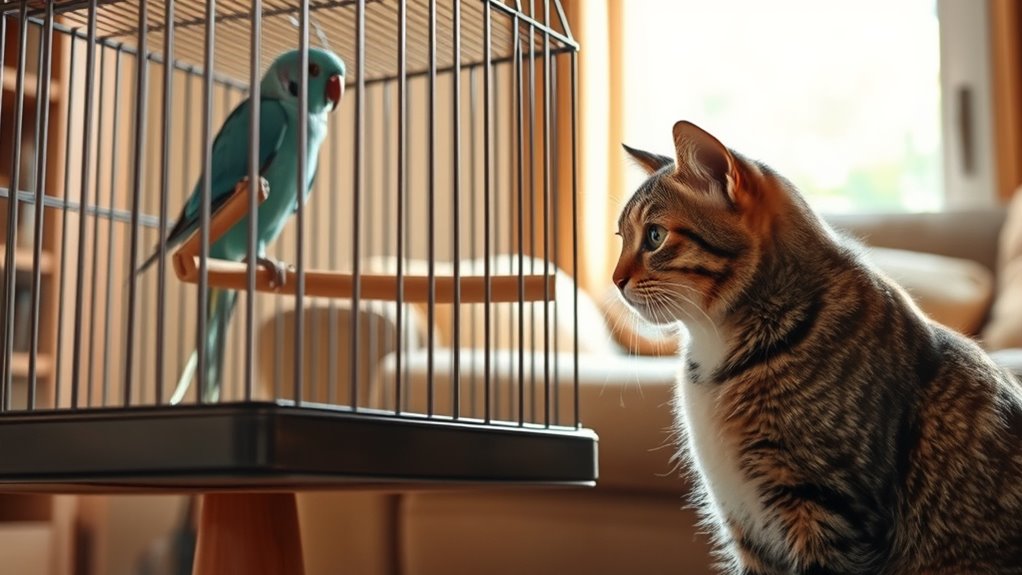
5 Tips to Have a Cat and Bird as Pets Together Safely
Bringing a cat and a bird into the same home can be a wonderful experience, but many pet owners worry about safety and coexistence. You’re not alone—keeping both animals happy and secure can feel challenging at times.
With a little planning, you can create a peaceful environment where your furry and feathered friends thrive.
To keep your cat and bird safe together, recognize your cat’s predator instincts and use interactive toys to satisfy their hunting urges.
Create secure spaces for your bird with proper barriers and supervision, and introduce both gradually to reduce stress.
Establish routines and safe zones, like cat-proof enclosures, to prevent accidents.
Regularly monitor their interactions and guarantee your bird’s environment stays free from hazards.
If you keep these tips in mind, you’ll foster a peaceful coexistence—more helpful insights await.
Key Takeaways
- Introduce them gradually with controlled interactions to help reduce stress and build trust between your cat and bird.
- Use secure barriers and enclosures to make sure the cat can’t reach the bird unsupervised.
- Keep the bird’s cage in a quiet, safe spot away from drafts and the cat’s reach.
- Always supervise interactions, especially at first, to prevent chasing or aggressive behavior.
- Give the bird safe spaces and routines to help it feel comfortable and less anxious around the cat.
Recognizing and Managing Your Cat’s Predator Instincts
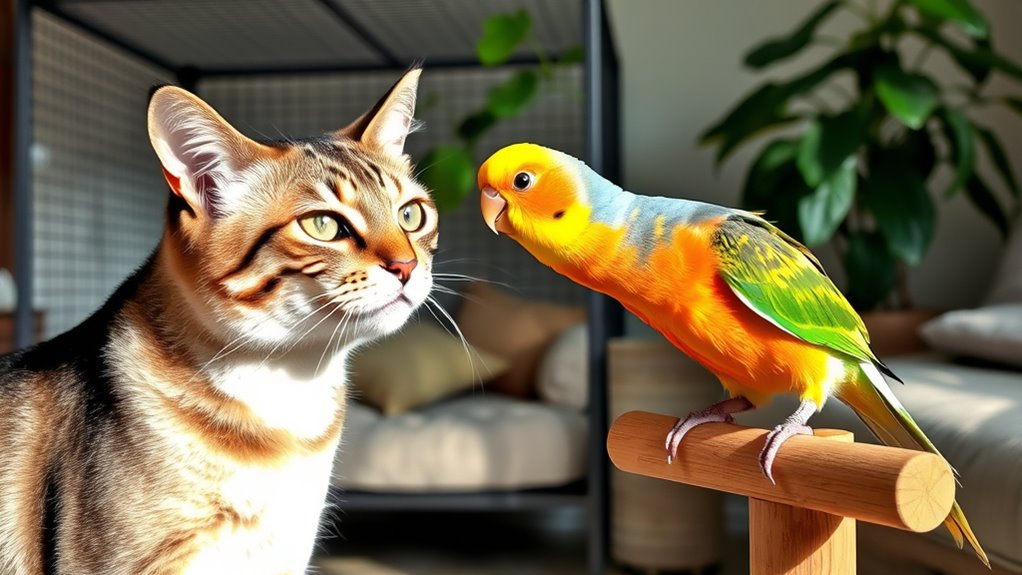
Because cats are natural predators, it’s important to recognize signs of their hunting instincts early on. You’ll notice behaviors like stalking, pouncing, or fixating on movement, which show a strong prey drive.
Managing these instincts requires consistent training techniques that redirect their energy. Using interactive toys that mimic prey can satisfy their hunting urges without risking your bird’s safety.
It’s essential to understand your cat’s natural instincts and set boundaries to prevent impulsive chasing. You might also want to provide designated play sessions that help your cat burn off excess energy safely.
Regularly reinforcing positive behavior and discouraging aggressive pursuits will help manage their prey drive over time. Remember, it’s about guiding natural behaviors, not eliminating them.
With patience and clear training techniques, you can help your cat control its hunting instincts. This creates a safer environment for your bird and helps your cat stay happy and stimulated.
Creating Safe Spaces for Your Bird at Home
Choose a cage with appropriate bar spacing and a leak-proof bottom to avoid injuries and messes. Place the cage in a quiet, well-lit area away from drafts, direct sunlight, and kitchen fumes.
Select a sturdy cage with proper bar spacing and a leak-proof base, placed in a safe, quiet, well-lit spot away from hazards.
To expand safety, create safe play areas outside the cage that are free from hazards like sharp objects, toxic plants, or open water. Use bird-proofed furniture and secure screens on windows to prevent escapes or falls.
Regularly check your bird’s environment for potential dangers. Thoughtful design helps give your bird a secure space that promotes healthy activity and peace of mind, while also making it easier for your cat to respect the bird’s boundaries.
How to Introduce Your Cat and Bird Without Stress?
Introducing your cat and bird can go smoothly if you plan ahead. Start with slow introductions, letting both animals get used to each other’s presence without feeling threatened.
Keep your cat on a leash or in another room at first, so you can control the situation easily. Let the bird observe from a safe, enclosed space like a cage or a secure room.
During these early meetings, use positive reinforcement—praise, treats, or gentle petting—to reward calm behavior from your cat. Avoid rushing; gradual exposure helps reduce stress and builds trust.
Keep interactions short at first and supervise closely. Over time, gradually increase their time together as both animals become more comfortable.
Patience is key. A calm, positive approach creates the right foundation for a safe, stress-free introduction.
Setting Up Barriers and Supervision for Ongoing Safety
To guarantee ongoing safety, setting up effective barriers and supervising interactions between your cat and bird is essential. Use cat-proof enclosures to create secure areas where your bird can play or rest without risk. These enclosures prevent your cat from accessing the bird’s space unexpectedly, reducing potential stress or injury.
Furthermore, establish bird-safe zones in your home—places where the bird can retreat and relax freely. Always supervise any interaction outside these zones, especially during initial introductions or when your cat is unsupervised nearby. Consider installing physical barriers like baby gates or closed doors to keep your cat away from the bird’s area when needed.
Regular supervision guarantees that your pets respect boundaries and reduces the chance of accidents. Remember, consistent oversight combined with well-designed barriers helps maintain a safe environment. This gives your cat and bird the best chance to coexist peacefully.
Tips for Long-Term Pet Safety and Peaceful Coexistence
Maintaining long-term safety and harmony between your cat and bird takes ongoing effort and mindful practices. Meet your bird’s dietary needs with nutritious, appropriate food to keep it feeling secure and well-fed. This helps reduce stress and territorial instincts that might lead to aggression.
At the same time, keep your cat engaged with regular play sessions that channel its hunting instincts into safe outlets. Interactive toys and scheduled playtime prevent boredom and help minimize curiosity-driven risks.
Create a stable environment by establishing routines. Predictable schedules for feeding, cleaning, and play help both pets feel secure. Keep a close eye on their interactions, especially during initial bonding periods, and supervise until you’re confident they coexist peacefully.
Frequently Asked Questions
Can All Cat Breeds Coexist Safely With Birds?
Not all cat breeds coexist safely with birds because some have stronger hunting instincts. Breeds like Ragdolls or Maine Coons tend to be calmer and less aggressive, which helps reduce risks to your bird.
But even gentle breeds can act on their cat instincts, so always supervise their interactions. Never leave your cat alone with your bird to keep everyone safe.
It’s also a good idea to create a secure space where your bird can retreat if needed. That way, both your cat and bird can coexist more peacefully.
What Are Signs of Stress in a Bird During Introductions?
During introductions, watch for stress signs in your bird’s body language, like fluffed feathers, rapid breathing, or dilated pupils. These indicate your bird might be overwhelmed or uncomfortable.
You might also hear loud chirping or panic calls, which are clear signs of stress. If you notice these, give your bird some space and reduce noise around them.
Gradually reintroduce interaction once your bird seems calmer. Recognizing these signs helps ensure both your bird and cat feel safe during the process.
How Often Should I Supervise Interactions Between Cat and Bird?
Think of supervising cat and bird interactions like a movie director watching a scene unfold. You should supervise every interaction, especially initially, and keep it short—around 10 to 15 minutes.
Gradually increase the time as trust builds between your pets. Use observation techniques like watching body language and listening for signs of stress.
This constant supervision helps you catch any signs of discomfort early. It ensures both pets stay safe and comfortable during their interactions.
Are There Specific Toys to Keep Both Pets Engaged Safely?
Yes, there are specific toys designed for safe interaction and engagement for both cats and birds. Look for interactive play toys that encourage gentle play, like puzzle feeders or soft fetch toys.
Always ensure your pets have access to safe environments where they can’t accidentally harm each other. By choosing toys that promote safe interaction, you help keep both pets entertained and secure while fostering a positive bond.
What Should I Do if My Cat Shows Aggressive Behavior?
Did you know that about 70% of cats show some aggressive behavior at some point? If your cat acts aggressively, the first step is to remove it from the situation quickly to prevent anyone from getting hurt.
Try focusing on behavior modification through positive reinforcement. Reward your cat when it stays calm, so it learns that good behavior gets your attention and treats.
Make sure your cat has safe spaces where it can retreat and feel secure. Giving it a quiet spot to relax can help reduce stress and aggression.
Consistent, gentle training over time can really help decrease aggressive tendencies. This way, both your cat and your bird can stay safe and comfortable.
Conclusion
By blending patience with preparedness, you create a peaceful, protected environment where your cat and bird can coexist happily. Establish clear boundaries and build barriers to boost safety, making sure your shared space stays serene and secure.
With watchful supervision and wise management, you’ll weave a wonderful world where wild instincts wane, and harmonious happiness hums. Adopt these essential tips to foster a fearless, friendly friendship between your feline and feathered friends.