What Makes You Have a Unique Pallas Cat Pet?
Struggling to find a pet that truly stands out and matches your unique personality? Many people dream of having a feline that’s both rare and captivating, but they don’t know where to start. If you’re drawn to extraordinary animals, a Pallas cat might just be the perfect fit for you.
Having a Pallas cat as a pet makes you unique because of its striking appearance, with plush gray and beige fur, a wide, flat face, and a luxurious mane that sets it apart from typical cats.
Its independent, solitary nature means you’re caring for a low-maintenance yet wild-looking feline with special needs. Their curious behaviors and specialized environment requirements add to the uniqueness.
To uncover how to properly care for and bond with this rare feline, keep exploring more about their world.
Key Takeaways
- Their striking appearance, with plush fur, a unique facial structure, and camouflage patterns, makes Pallas cats visually stand out.
- They’re naturally solitary and independent, which means they’re low-maintenance and tend to be calm pets that do well with minimal interaction.
- Creating a habitat that mimics the wild—like climbing structures and hiding spots—can really boost their well-being and make them feel more at home.
- Their specialized diet and enrichment needs mean caring for a Pallas cat is a bit different from typical cats, requiring tailored attention.
- Legal and ethical considerations around ownership and conservation add a responsible, unique aspect to having a Pallas cat as a pet.
What Are Pallas Cats and What Makes Them Unique?
Pallas cats, also known as manuls, are small wild cats native to Central Asia’s rugged steppes and deserts. Their long history shows they’ve thrived in this tough environment, adapting to survive extreme temperatures and sparse vegetation.
Their habitat mainly includes rocky, arid regions with little plant life, which provides perfect cover for hunting small mammals and birds. Unlike domestic cats, they have a sturdy build, thick fur, and a wide, flat face that helps them move around rocky terrain.
They also have a dense coat that keeps them warm in cold climates and a tail that helps with balance. Understanding their history and habitat shows just how well they’ve adapted to survive in such a harsh environment.
These cats are elusive and have specialized features that make them truly one of a kind in the wild. They stand out from other feline species thanks to their unique adaptations.
What Do Pallas Cats Look Like? Physical Traits and Appearance
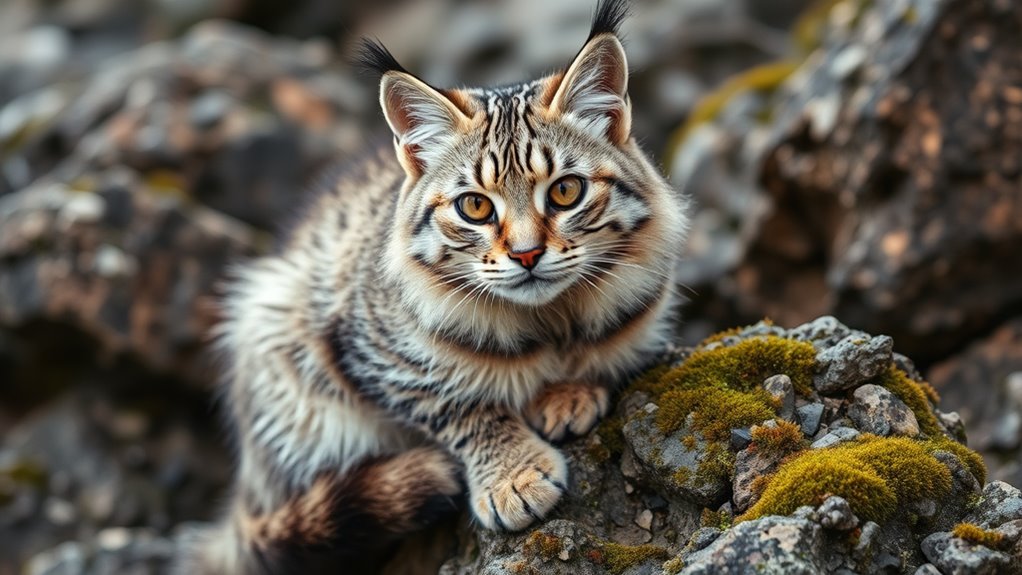
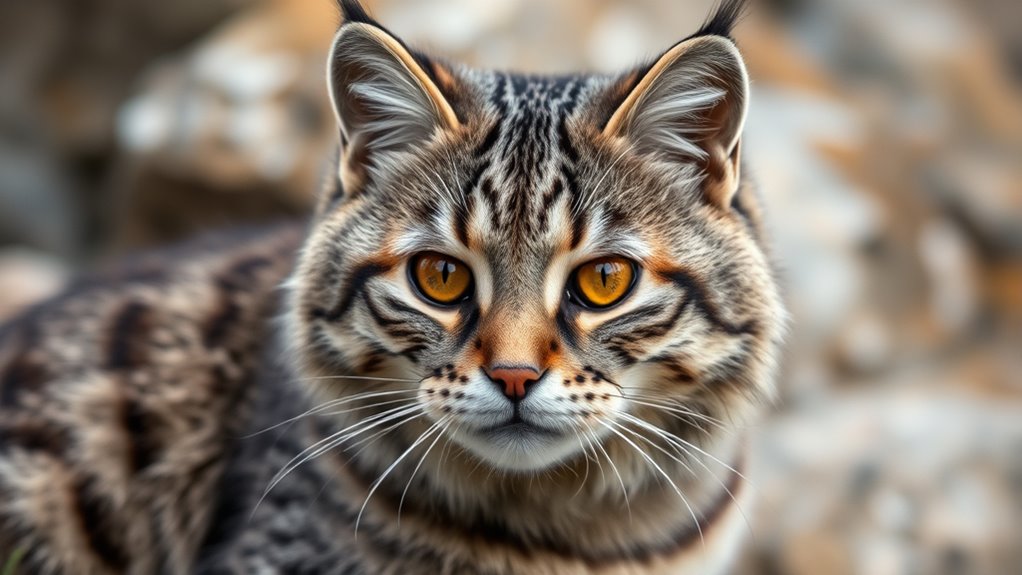
Their striking appearance makes Pallas cats stand out from other wild felines. You’ll notice their dense, plush coat with distinctive patterns—usually a mix of gray, beige, and cream, which helps them blend into rocky terrains.
Their fur is thick and soft, with a luxurious mane around their neck that gives them a robust look. Pallas cats have small, rounded ears positioned low on their head, adding to their adorable yet wild look.
Their soft, thick fur and low-set rounded ears give Pallas cats a charming yet wild appearance.
Their eye color is a captivating shade of yellow or amber, which contrasts beautifully with their facial features. Their face is broad with a short, flat nose and prominent cheekbones, giving them a unique appearance.
Even though they are small, their muscular build makes them extremely agile hunters. All these traits combine to create an intriguing, almost cartoonish look—adorable yet fierce—that’s truly one-of-a-kind among wild cats.
Why Are Pallas Cats’ Behaviors So Quirky and Curious?
Have you ever wondered why Pallas cats behave so quirking and curious? These traits come from their natural instincts and how they’ve adapted to the tough steppes of Central Asia.
Their quirky behaviors, like sudden bursts of activity or resting in strange positions, are actually their way of investigating and hunting. Pallas cats are solitary hunters with sharp senses that make them curious about their surroundings.
Their playful and unpredictable actions are driven by their need to stay alert for prey. Plus, their thick fur and stocky build often make them look even more curious, as they stretch or curl up in odd ways.
These behaviors are more than just cute quirks. They’re vital for their survival, helping them navigate a tough environment. Overall, their quirky behaviors are really expressions of their natural instincts and adaptations.
Are Pallas Cats More Independent Than Other Cats?
You might notice that Pallas cats tend to keep to themselves more than other felines. Thanks to their natural solitary instincts, they usually prefer to be on their own. They often require less attention and fuss, which makes them quite different from your typical house cat.
Because of their independence, they’re generally more self-sufficient. But at the same time, it’s important to remember that they value their space. So, if you’re caring for a Pallas cat, make sure to respect their need for some alone time.
Natural Solitary Tendencies
Pallas cats are known for their naturally solitary behavior, often preferring to keep to themselves rather than seek out social interactions. Their solitary instincts come from their wild roots, shaping their independent nature.
When you observe a Pallas cat, you might notice they patrol large territories alone and avoid others. They hunt small prey, relying on their own skills to catch food.
They rest in secluded spots like rocky crevices or tall grasses, preferring minimal contact with others. Even with their owners, they usually keep their distance unless necessary.
This independence isn’t just a habit; it’s a part of their evolutionary history. Their solitary tendencies help them survive tough environments and make them more self-reliant than many domestic cats.
Understanding this trait is key to caring for a Pallas cat and respecting their natural tendencies.
Less Need for Attention
Because of their solitary nature, Pallas cats tend to require less attention and constant interaction than many other domestic cats. They’re naturally more independent, often engaging in independent play without needing your constant presence.
This trait makes them low maintenance compared to more social breeds. You won’t need to devote hours to interactive toys or frequent cuddling sessions. Instead, they’re content exploring their environment or resting quietly on their own.
Their self-sufficient behavior means you can enjoy a calmer, less demanding pet. While they still need basic care and companionship, they don’t crave constant attention like some cats do.
This independence allows for a more relaxed relationship, where your Pallas cat comfortably entertains itself and only seeks interaction when it’s ready.
Unique Independence Traits
While many domestic cats enjoy social interactions and constant companionship, Pallas cats stand out for their remarkable independence. They often venture out alone, hunt small prey, and rest quietly in secluded spots. You might notice them:
- Patrolling their territory with silent confidence
- Engaging in playful antics without much prompting
- Choosing to perch alone on high ledges
- Displaying a calm, reserved demeanor during interactions
This self-reliance makes them less dependent on human attention. They prefer to entertain themselves and enjoy their solitude. Their playful antics show they’re curious and lively, but they don’t seek constant companionship. Their independence truly sets Pallas cats apart from other feline pets.
How Do You Care for a Pallas Cat’s Special Needs?
Caring for a Pallas cat’s special needs means understanding its unique physical and behavioral traits. These cats have specific dietary restrictions, so you’ll need to provide a diet that mimics their natural prey, like small rodents and insects, to keep them healthy.
Avoid processed or inappropriate foods that could cause digestive issues or nutritional deficiencies. Regular veterinary check-ups are essential, especially for dental health, kidney function, and overall wellbeing.
Keep an eye out for signs of illness, such as lethargy or changes in appetite, and address any issues promptly. Because of their unique physiology and behavior, you should avoid sudden stressors and keep their routine consistent.
What Is Involved in Enclosure and Environment Setup for Pallas Cats?
Setting up an enclosure for a Pallas cat is all about picking the right size and design to make sure it’s comfortable and safe. You want a space that’s big enough for your cat to move around freely and explore — think of it as creating a little habitat that mimics their natural environment as much as possible.
Don’t forget to add some enrichment items like climbing structures, hiding spots, and toys. These will keep your Pallas cat mentally stimulated and happy. Also, make sure to include safety features like secure fencing and escape-proof barriers so your cat can’t get out or hurt itself. With a bit of planning, you’ll create a healthy, engaging space that’s perfect for your unique feline friend.
Enclosure Size and Design
Creating an appropriate enclosure for a Pallas cat requires careful consideration of size and design to guarantee their natural behaviors are supported. You should aim for a spacious, multi-level environment that mimics their wild habitat. Consider these key features:
- Sturdy enclosure materials like metal or thick glass for durability and safety.
- Raised platforms and hiding spots to encourage climbing and hiding.
- Natural ground cover such as rocks, soil, and grass for digging and exploring.
- Enrichment elements like logs, branches, and toys to stimulate hunting instincts.
Designing with habitat enrichment in mind guarantees your Pallas cat stays active and engaged, while proper enclosure materials keep the environment secure and comfortable. Proper size and thoughtful design promote their well-being and mimic their natural environment.
Enrichment and Safety Measures
Ensuring your Pallas cat’s enclosure is both enriching and safe means adding specific safety features and stimulating elements that promote natural behaviors. Include climbing structures, hiding spots, and varied textures to encourage exploration and activity.
Safety precautions are essential. Secure fencing, escape-proof doors, and non-toxic plants help prevent accidents. Incorporate behavioral enrichment with toys, scratching posts, and puzzle feeders.
Visualize these elements in your environment:
| Climbing Structures | Hiding Spots | Stimulating Toys |
|---|---|---|
| Rope bridges | Burrows | Puzzle feeders |
| Platforms | Caves | Interactive balls |
| Tree branches | Hiding boxes | Scented objects |
This setup keeps your Pallas cat engaged while maintaining safety at the forefront.
What Do Pallas Cats Eat? Feeding and Nutrition Tips
Pallas cats are obligate carnivores, meaning their diet must mainly consist of meat to meet their nutritional needs. To keep them healthy, try to mimic their natural prey and stick to a regular feeding routine.
Pallas cats require a meat-based diet, mimicking natural prey, with a regular feeding routine for optimal health.
Imagine offering small rodents or specially formulated prey imitation foods designed for felines. Always provide fresh water for hydration needs.
You might also consider nutritional supplements if recommended by a vet. Proper portion control is important to prevent overfeeding and maintain a healthy weight.
Feeding frequency varies based on age and activity level, but most adult Pallas cats are fed twice a day. Always prioritize food safety by avoiding spoiled or inappropriate foods.
Pay attention to their dietary preferences and adjust as needed to keep them healthy. Prey imitation should be as natural as possible to stimulate their instincts.
Proper hydration and a balanced diet are essential for their well-being. With the right care, your Pallas cat can thrive in your home.
Legal and Ethical Considerations for Owning a Pallas Cat
Owning a Pallas cat involves navigating complex legal and ethical considerations that are key to responsible pet ownership. You need to understand the laws that either restrict or allow private ownership, which often include permit or license requirements.
Ethical sourcing is really important. Avoid breeders with questionable practices and focus on those committed to ethical breeding. This helps ensure you’re supporting responsible practices.
As an owner, you have a big responsibility to keep your cat happy and healthy. This means providing a proper habitat and giving the right care.
Supporting wildlife conservation efforts is also crucial. Doing so helps protect Pallas cats in the wild and prevents illegal trade and habitat loss.
Being aware of and following laws designed to protect both the species and their natural environment is vital.
How to Build a Bond With Your Pallas Cat and Keep Them Happy
Building a bond with your Pallas cat really begins with trust. Think of it as a slow dance—you want to be patient and consistent. One great way to do this is by spending regular playtime together, especially activities that mimic their natural hunting instincts. It’s not just fun; it also helps them feel safe and understood.
You’ll also want to create an enriching environment for your feline friend. That means providing toys and hiding spots where they can explore and hide. These little hideouts keep their minds active and help them feel secure. The more you understand what they need and engage with them regularly, the stronger and happier your connection will become. It’s all about making them feel loved and appreciated in their own special way.
Establish Trust Through Play
Since trust is the foundation of a strong bond, engaging your Pallas cat in playful activities is one of the most effective ways to foster that connection. Playtime benefits include building trust, reducing stress, and encouraging natural hunting instincts.
Try trust-building activities like tossing small toys for your cat to chase, mimicking prey. Using a wand toy for active, interactive play is also great. Setting up puzzle feeders can challenge their problem-solving skills.
Gentle hand-feeding during play helps promote comfort and familiarity. These activities create positive associations and strengthen your bond. Remember, consistency and patience are key.
Making your Pallas cat feel safe, loved, and confident in your presence is the ultimate goal.
Provide Enriching Environment
Creating an enriching environment for your Pallas cat means offering a variety of stimulating activities and safe spaces that match their natural instincts. Think climbing trees, hiding spots, and scratching posts that resemble their wild habitat.
Use interactive toys to keep their minds busy and prevent boredom, encouraging playful behavior. Spending time with your cat and encouraging gentle interactions helps build trust and social bonds.
Adding diverse textures, scents, and vantage points makes their environment more engaging and mimics the wild. This keeps your cat both mentally and physically active.
What Are the Challenges and Rewards of Raising a Pallas Cat?
Raising a Pallas cat can be both incredibly rewarding and challenging, especially because these elusive creatures have unique needs that differ from common household pets. Their independence and wild instincts mean you need to understand their behavior and adapt your training accordingly.
The rewards include forming a rare bond with a creature that’s both playful and mysterious. But expect challenges like managing their high energy—they need plenty of space and stimulation to avoid destructive behaviors.
Form a rare bond with a playful, mysterious companion while managing their high energy with ample space and stimulation.
Understanding their communication is also key. They use subtle signals that require patience and careful observation.
You’ll need to provide a specialized diet and habitat that closely mimics their natural environment.
Handling their elusive nature can be tough—they may hide or be wary, making socialization a slow process.
Despite these hurdles, the unique connection you develop with a Pallas cat makes every effort worth it, offering a truly one-of-a-kind pet experience.
Frequently Asked Questions
Can Pallas Cats Be Kept as Indoor Pets Only?
Yes, you can keep a Pallas cat as an indoor pet, but it requires careful attention to their behavioral needs. You’ll need to provide plenty of indoor enrichment to keep them stimulated, like climbing structures and toys.
Pallas cats are naturally solitary and active, so understanding their needs helps prevent boredom and stress. With the right enrichment and a safe environment, they can thrive indoors.
Just remember, they still need space to investigate and explore to stay happy and healthy.
What Are the Health Risks of Owning a Pallas Cat?
Pallas cats pose potential health risks, mainly because of their unique behavior and diet needs. Their elusive, energetic nature can lead to scratches or bites, which may cause infections.
Their specialized diet, rich in specific nutrients, can cause nutritional deficiencies or health issues if not managed properly. You should also be aware of zoonotic diseases, as their wild instincts and behaviors increase the risk of transmitting illnesses to humans.
How Much Does a Pallas Cat Typically Cost?
Pallas cat pricing varies widely, typically costing between $1,500 and $5,000 depending on the breeder and the cat’s age and health.
When buying from Pallas cat breeders, make sure they’re reputable and prioritize the animal’s well-being. Be prepared for ongoing care expenses, too.
Always check the legality of ownership in your area to avoid issues down the line. This investment reflects the rarity and uniqueness of owning such a distinctive feline.
Do Pallas Cats Require Veterinary Specialists?
Your Pallas cat needs veterinary specialists, like a tailor-made suit, fitted to its unique needs. Their behavior can be quite different from other cats, so it’s important to find a vet familiar with exotic or wild feline health.
Proper Pallas cat nutrition is vital, and specialists guarantee your pet’s diet supports their specific needs. Regular checkups with a knowledgeable vet help keep your Pallas cat healthy, happy, and thriving in your home.
Are Pallas Cats Suitable for First-Time Exotic Pet Owners?
Pallas cats aren’t really suitable for first-time exotic pet owners because their temperament and behavior can be unpredictable. They tend to be solitary, territorial, and sensitive to stress, which means they need experienced handling.
Their unique behavior means they require specific care, making them a challenge for beginners. If you’re new to exotic pets, it’s better to start with more domesticated animals.
Pallas cats do best with knowledgeable owners who understand their needs and can provide a calm, secure environment. They’re not the easiest pets to care for, especially for someone just starting out.
Conclusion
Owning a Pallas cat makes you stand out, but it’s not just about rarity. These cats give you a glimpse into a wild, mysterious world. Their striking appearance and quirky behaviors challenge what you think a typical cat is.
They’re more than just pets. Some believe they’re semi-domestic, but newer studies suggest they have strong wild roots. Embracing their unique needs and quirks makes caring for them a true adventure.
Having a Pallas cat as a companion shows that sometimes, the wild can find a home with you. Their distinct personality and wild heritage make them truly extraordinary pets.