What Happens If I Stop Giving My Cat Thyroid Medicine?
Many cat owners worry about their furry friends’ health, especially when it comes to managing conditions like hyperthyroidism. If you’re giving your cat thyroid medicine, you’re not alone—many people struggle with knowing what happens if they stop.
Stopping your cat’s thyroid medicine suddenly can cause serious health problems like weight loss, increased heart rate, and even heart failure.
Without proper management, hyperthyroidism symptoms can worsen fast, leading to weakness or fainting.
Consistent treatment helps prevent these risks and keeps your cat comfortable. If you’re unsure about stopping medication, it’s best to consult your vet first.
Keep going to find out how to keep your cat safe and healthy.
Key Takeaways
- Stopping medication can cause hyperthyroidism symptoms to worsen quickly, like weight loss and increased activity.
- Suddenly stopping treatment may lead to serious health risks such as heart problems or failure.
- Not giving your cat consistent medication can cause mood swings, energy level changes, and overall health to decline.
- Quitting suddenly can also lead to behavioral changes and physical deterioration.
- Always talk to your veterinarian before stopping or changing your cat’s thyroid medicine.
Risks of Stopping Your Cat’s Thyroid Medication
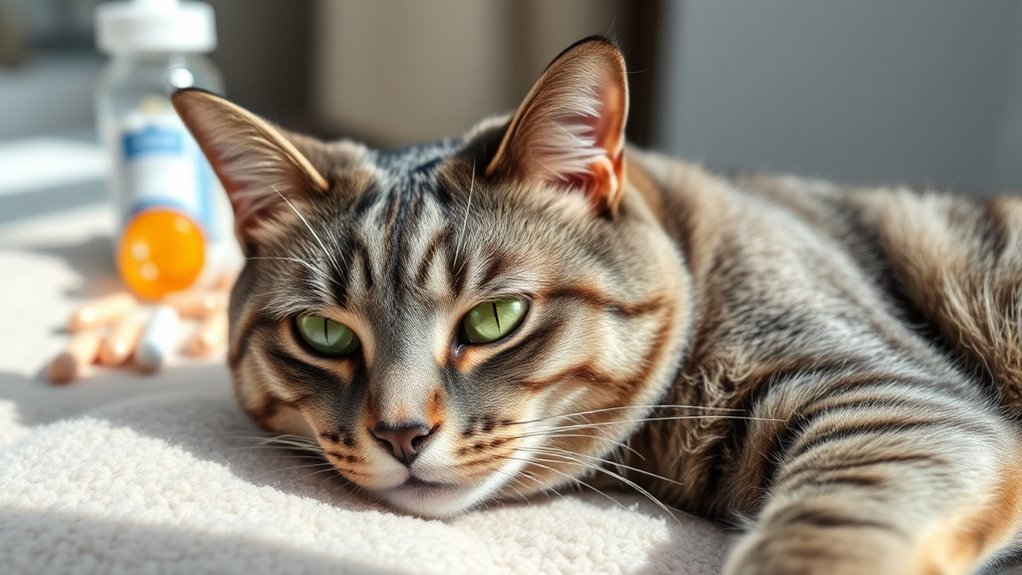
Stopping your cat’s thyroid medication can lead to serious health risks. When you neglect proper medication adherence, your cat’s condition may worsen quickly.
Hyperthyroidism, if left untreated, can cause weight loss, increased heart rate, and high blood pressure. These symptoms threaten your feline’s overall health and lifespan.
Without consistent medication, your cat’s thyroid levels become unstable, which can lead to heart problems or even heart failure. Skipping doses or stopping medication altogether disrupts your pet’s hormonal balance and makes symptoms worse.
This can also cause behavioral changes like restlessness or aggression, impacting your cat’s quality of life. Staying on your veterinarian’s prescribed treatment is crucial to control hyperthyroidism and keep your cat healthy.
Failing to do so not only worsens symptoms but also jeopardizes your cat’s long-term well-being. Always follow your vet’s instructions to ensure your feline stays comfortable and healthy.
Symptoms of Worsening Hyperthyroidism in Cats
If your cat’s hyperthyroidism gets worse, you might notice their heartbeat speeding up and them being more active than usual. It can be pretty noticeable if they suddenly seem more energetic or restless.
You might also see them losing weight faster than they were before, even if they’re eating normally. Keep an eye out for these signs because catching them early means you can get your vet involved quickly and adjust their treatment if needed.
Increased Heart Rate
When hyperthyroidism worsens because your cat missed or stopped medication, their heart rate can go up significantly. This fast heartbeat shows your cat may be experiencing more energy, which puts extra strain on the heart.
A rapid heart rate stresses your cat’s heart, making it work harder than usual. You might notice your cat panting, feeling restless, or being unusually energetic — all of which can be worrying.
This increased activity in the heart can also cause fainting or weakness if not treated. Keep a close eye on these signs, as they show the condition is getting worse.
If your cat shows signs of an increased heart rate, contact your veterinarian right away. Proper care is crucial to avoid serious problems and keep your cat healthy.
Weight Loss Progression
As hyperthyroidism gets worse without proper treatment, your cat may start to lose weight even if they still have a good appetite. You might notice sudden weight changes—sometimes they gain weight first, then quickly lose it.
This weight loss happens because the excess thyroid hormone speeds up your cat’s metabolism, leading to muscle wasting and fat loss. It’s common for their appetite to change too; they might seem hungrier but still keep losing weight.
If you stop giving your cat thyroid medicine, these symptoms can get worse, leading to severe weight loss and weakness. Keep a close eye on what your cat is eating and how their body feels.
Spotting these signs early can help you get veterinary advice quickly, which can prevent further health problems.
Why Consistent Thyroid Treatment Matters
Consistent thyroid treatment is crucial because it helps keep your cat’s hormone levels stable, avoiding the symptoms and complications that come with fluctuations. When you follow the prescribed plan, you support a steady thyroid function that keeps your cat active and comfortable.
Skipping doses or stopping treatment can cause hormone levels to spike or drop, leading to weight changes, lethargy, or hyperactivity. To understand why this matters:
- The thyroid gland’s balance is upset, causing mood swings and discomfort.
- Your cat’s energy levels can swing wildly, like a rollercoaster ride.
- Symptoms such as weight gain or loss may become more severe.
- The risk of developing other health issues increases.
Sticking to the treatment plan helps keep your cat’s thyroid functioning properly, preventing unnecessary suffering and costly complications. Consistency is key to managing your cat’s health and improving their quality of life.
When Should You Talk to Your Veterinarian?
Knowing the right time to contact your veterinarian can make a big difference in your cat’s health. If you notice any changes in behavior or physical condition, it’s important to act quickly.
Symptoms like increased tiredness, weight changes, or a dull coat could mean your cat needs medical attention. Keep track of medication timing; missed doses or inconsistent giving can worsen symptoms or cause complications.
If your cat isn’t responding well to treatment or you’re unsure about adjusting the dose, reach out to your vet right away. Regular check-ups are also key, especially if your cat isn’t improving or new symptoms appear.
Staying alert to your cat’s symptoms and medication schedule helps keep them healthy. Addressing issues early gives your feline friend the best chance at a good quality of life.
Are There Alternatives to Long-Term Medication?
You might be curious if there are other options besides giving your cat medication for their thyroid condition. Sometimes, natural remedies and supplements can provide some relief, but it’s really important to talk to your vet before trying anything new. They can help you figure out what’s safe and effective for your cat.
Plus, adjusting your cat’s diet might also make a difference. Proper nutrition can support their overall health and could be a helpful addition to or replacement for medication, depending on what your vet recommends.
Natural Remedies and Supplements
While some pet owners hope to find natural alternatives to long-term medication, it’s important to remember that thyroid conditions often need careful management. Natural remedies and supplements, like herbal remedies and homeopathic treatments, can seem appealing but aren’t proven substitutes for medication.
If you’re considering these options, picture a tiny jar of herbal tinctures, promising gentle support. Or maybe a homeopathic remedy designed to stimulate your cat’s healing response. You might also think about herbal patches applied to the skin for slow absorption or a calming herbal tea infused with natural ingredients.
While these alternatives may offer some benefits, always check with your vet before trying them. Natural remedies shouldn’t replace prescribed medication without professional guidance, because managing a thyroid disorder requires precision.
Dietary Management Strategies
Dietary management can support your cat’s thyroid health, but it’s not a replacement for medication.
You might consider supplements designed to help the thyroid, but don’t rely on them instead of prescribed treatments without your vet’s advice.
Feeding a balanced, nutritious diet helps keep your cat healthy and can support thyroid function.
Choosing high-quality food that meets your cat’s specific needs is key to getting the right nutrients.
Some owners look into special diets made for thyroid health, but these should always be used alongside your vet’s recommendations.
Remember, diet alone usually isn’t enough to control hyperthyroidism, so always check with your vet before making big changes.
Proper nutrition can complement medical treatments and help promote your cat’s overall well-being.
Can Stopping Medication Cause Heart Problems?
Stopping thyroid medication suddenly can put your cat at risk for heart problems because the medication helps regulate their metabolism and heart function. Without proper treatment, your cat’s heart health can decline quickly.
You might notice signs like an increased heart rate, making your cat seem restless or anxious. Heart murmurs or irregular rhythms can also be detected during vet exams.
Other signs include weakness or difficulty breathing, which are signs of heart failure. In some cases, your cat may experience sudden collapse or fainting episodes.
These issues show why stopping medication abruptly can be risky. When thyroid levels get out of balance, the heart has to work harder, increasing the chance of serious problems.
Keeping your cat on a consistent medication schedule is really important to prevent heart-related health issues. Always talk to your vet before stopping or changing your cat’s treatment to keep their heart and overall health safe.
How Quickly Do Symptoms Return After Stopping?
Once you stop your cat’s thyroid medication, their symptoms can come back surprisingly fast, often within just a few days to a week. The exact timeline depends on how long your cat has been on medication and how they respond to stopping it.
Cats with hyperthyroidism often become dependent on their medication, so stopping suddenly causes symptoms to reappear quickly. You might notice increased weight loss, hyperactivity, or a rapid heartbeat as early as a few days after stopping.
Without the medication’s regulation, the body quickly reverts to its pre-treatment state, leading to a fast return of symptoms. If you’re thinking about stopping your cat’s medication, it’s really important to talk to your vet first.
They can help you understand what to expect and whether a gradual reduction might be safer. Remember, stopping suddenly can make your cat’s condition worse quickly because of their medication dependence.
Long-Term Effects of Halting Thyroid Therapy
Halting thyroid therapy in your cat can lead to serious long-term health problems. Without consistent medication, your cat’s body struggles to keep thyroid hormone levels normal, which affects many functions. Over time, this imbalance can cause symptoms to worsen and damage to organs.
Stopping thyroid medication in your cat can cause irreversible health issues and organ damage over time.
Long-term effects include:
- Heart issues – untreated hypothyroidism can make your cat’s heart slow down or develop irregular rhythms.
- Weight gain – without proper thyroid hormone levels, your cat may become increasingly overweight.
- Muscle weakness – a prolonged deficiency can lead to muscle loss and mobility problems.
- Coat and skin problems – the skin may become dry and flaky, and hair loss can get worse.
If you stop medication, these problems can become irreversible. That’s why it’s so important to keep monitoring your cat’s health and regularly check in with your vet to prevent long-term damage from unregulated thyroid hormones.
Should You Stop Medication Without Vet Approval?
Deciding to stop your cat’s thyroid medication without consulting your vet can lead to serious health risks. Your cat’s condition needs careful monitoring, and sudden changes can cause weight fluctuations, behavioral issues, or more severe problems.
Before making any adjustments, talk openly with your vet about medication alternatives or dosage changes. Good communication ensures you understand the risks and benefits of continuing or stopping treatment.
| Action | Consideration |
|---|---|
| Stop medication without vet | Risk of relapse or worsening symptoms |
| Consult your vet first | Explore medication options or dosage adjustments |
| Self-adjust medication | Can cause imbalance, making the condition harder to control |
| Follow professional advice | Keeps your cat’s health on track |
How to Safely Discontinue Thyroid Medication Under Vet Guidance
Always chat with your vet before stopping your cat’s medication. It’s really important to keep an eye on any changes in your cat’s behavior or health and let your vet know right away if you notice anything unusual.
If your vet suggests slowly lowering the dose, make sure to do it gradually. Taking it step by step helps keep your kitty safe and comfortable throughout the process.
Consult Your Veterinarian First
Before stopping your cat’s thyroid medication, it’s important to talk to your veterinarian first. They know how crucial it is to follow the right steps for your cat’s health.
Your vet will do a thorough exam to check your cat’s current condition. They’ll also run blood tests to make sure thyroid levels are stable.
Based on that, they’ll create a safe tapering plan to reduce medication gradually. This helps minimize any risks or side effects.
Finally, your vet will schedule regular follow-ups to keep an eye on your cat’s progress and make adjustments if needed.
Monitor Cat’s Behavior Carefully
Once your veterinarian has outlined a plan to gradually reduce your cat’s medication, it’s important to keep a close eye on their behavior throughout the process. Watch for any changes in your cat’s usual habits, like increased lethargy, appetite changes, or restlessness.
Behavioral changes can tell you how your cat is responding to the medication reduction. Keep a detailed record of any unusual behavior, noting the time and how severe it is.
If you notice significant or worrying changes, contact your vet right away. Monitoring your cat’s behavior helps catch potential issues early, ensuring they stay safe and healthy.
Staying attentive during this time allows you to give your veterinarian valuable insights, making the medication adjustment as smooth and safe as possible.
Adjust Dosage Gradually
When reducing your cat’s thyroid medication, it’s important to do it gradually and with your vet’s guidance. This helps prevent sudden health issues and gives you time to adjust.
Start with a small decrease in dosage, then watch how your cat responds. Keep a close eye on their energy, appetite, and behavior.
Make sure to keep a detailed log of your cat’s reactions. Regular check-ins with your vet are key to see if further adjustments are needed.
Frequently Asked Questions
Can Stopping Medication Improve My Cat’s Condition?
Stopping your cat’s thyroid medication can make their condition worse and cause serious health problems. While alternative treatments might seem tempting, they often don’t control the condition as well as prescribed medication.
Skipping treatment long-term can lead to weight gain or loss, tiredness, and even heart issues. Always talk to your vet before making any changes—they can help you find safe options to keep your cat healthy.
Will My Cat’s Appetite Change if I Stop Medication?
Stopping your cat’s medication is like turning off a delicate engine; it can cause unpredictable changes.
When you stop, you might notice your cat’s appetite going up or down, and their weight might change too.
Your cat’s body struggles to stay balanced without the medication, which can lead to health issues.
Always check with your veterinarian before making any changes to your cat’s treatment plan.
This way, you can keep your cat healthy and happy.
How Long Does It Take for Symptoms to Reappear?
Symptoms can reappear within a few days to a few weeks after stopping thyroid medication, but it varies depending on your cat’s health.
The symptom timeline may include increased appetite, weight loss, and hyperactivity. Ignoring these signs can lead to serious health issues, like heart problems or worsening thyroid conditions.
It’s best to check with your vet before making any changes to your cat’s medication to ensure proper care and monitoring.
Are There Behavioral Changes After Discontinuation?
Yes, your cat may experience behavioral changes after stopping thyroid medication.
You might notice changes in their personality, like increased irritability or lethargy, because of the stress caused by hormone imbalance.
These shifts happen because the thyroid hormone levels drop, which can affect their mood and energy levels.
It’s important to keep a close eye on your cat and talk to your vet if you see any significant behavioral changes.
Is Withdrawal From Medication Dangerous for Cats?
Withdrawing medication from your cat can be risky because it might cause a sudden change in thyroid function, which can lead to health problems.
Stopping treatment suddenly could also make medication side effects come back or get worse.
Always talk to your vet before making any changes. They can help you figure out how to safely taper off the medication if needed.
This way, you can keep your cat’s health stable and reduce the risks of sudden thyroid issues.
Conclusion
Think of your cat’s health like tending a delicate garden. Stopping their thyroid medication without guidance is like neglecting to water or prune—things can quickly become overgrown with weeds or wither away.
To keep your feline friend thriving, stay vigilant and follow your vet’s advice. Without proper treatment, your cat may develop symptoms like weight changes, lethargy, or behavioral shifts.
If you stop giving your cat thyroid medicine abruptly, their condition could worsen, leading to serious health issues. With proper care and timely intervention, you can help your cat flourish.
Ensuring they stay on their medication as prescribed keeps them comfortable and lively, preventing any chaos caused by unmanaged thyroid problems.