Why Does My Cat’s Tail Vibrate When I Pet Her?
Have you ever noticed your cat’s tail vibrating when you pet her and wondered what it means? If so, you’re not alone—many cat owners find themselves puzzled by this quirky behavior. Understanding what your feline friend is trying to tell you can feel tricky, but it’s a key part of building a stronger bond.
Your cat’s tail vibrating when you pet her usually signals happiness, curiosity, or contentment. It’s a way she shows excitement or engagement, especially during gentle petting on preferred spots like her cheeks or chin.
However, a rapidly flicking or stiff tail can also mean she’s overstimulated or uncomfortable.
Every cat is different, so paying attention to her overall body language is key. Keep exploring to learn more about what her tail and body are telling you.
Key Takeaways
- Tail vibration often means your cat is excited, curious, or feeling content during relaxed petting sessions.
- Gentle, slow petting can cause pleasurable tail vibrations, showing she’s enjoying it.
- If her tail moves quickly or feels tense, she might be overstimulated or uncomfortable.
- Watching her tail vibrations along with other body language cues helps you figure out if she’s happy or overwhelmed.
- Her past experiences and personal sensitivity also affect how she reacts with tail vibrations when you pet her.
What Do Vibrating Tails Really Mean in Cats?
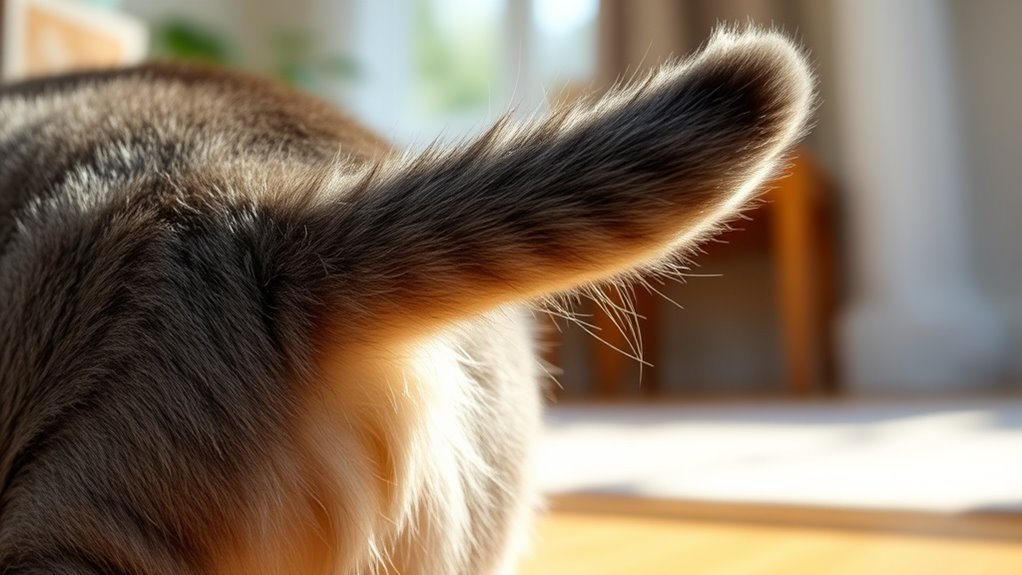
When your cat’s tail starts vibrating, it usually signals a specific emotional state or intention. The causes behind tail vibration can vary, but it’s often a key part of feline communication.
Generally, a vibrating tail shows excitement or curiosity. When your cat is focused on something interesting, like a bird outside or a toy, her tail might quiver gently. This movement indicates she’s engaged and alert.
A gently quivering tail often signals curiosity and focused engagement with something interesting.
Sometimes, a vibrating tail can also signal contentment, especially during relaxed petting sessions. However, it can also be a warning sign if combined with other signs like flattened ears or hissing, showing irritation or discomfort.
Recognizing these feline communication signals helps you understand her mood better. The causes behind tail vibrations are rooted in your cat’s instinctive ways of sharing her feelings.
Paying attention to context and accompanying body language is key to interpreting what a vibrating tail truly means.
How Your Petting Style Affects Tail Vibrations
Your petting style can really affect how your cat’s tail reacts, especially in terms of vibrations. Gentle, slow petting usually encourages relaxed tail responses, like soft vibrations or flicks that show she’s happy.
On the other hand, too much pressure or rough petting can make her tail stiffen or twitch, which often means she’s uncomfortable or overstimulated. Try different petting techniques and watch how she reacts to see what she enjoys most.
Focus on areas like her cheeks, chin, or along her back, as these often get positive tail responses. Avoid sudden moves or rough handling, since these can cause unpredictable tail vibrations or even make her defensive.
Pay attention to how your petting affects her tail vibrations. This helps you understand her mood better and build a trusting bond. Tail cues are subtle, so observing them closely allows you to adjust your approach for a more enjoyable time together.
Recognizing Happiness and Excitement Through Tail Movements
Cats often communicate their happiness and excitement through their tail movements, so it’s important to watch these subtle signals closely. When your cat wags or gently thrashes her tail, it’s a sign she’s feeling positive and engaged.
A tail held high, especially with a slight quiver or flick, usually means she’s confident and content. If she rubs against you with her tail upright, she’s showing affection and joy.
A gently swaying tail or one that’s twitching at the tip can also indicate excitement or curiosity. These movements are part of how cats communicate their feelings.
Paying attention to these signals helps you understand her emotional state and respond appropriately. Be sure to consider the context and her body language for a clearer picture of her feelings.
Recognizing these cues can strengthen your bond and make your interactions more meaningful.
Signs Your Cat Is Overstimulated or Agitated
When your cat starts showing signs of overstimulation or agitation, their body language can really give you some clues. For example, you might notice their posture becoming tense or their tail flicking or lashing around quickly. These are pretty clear signs that they’re feeling uncomfortable or overwhelmed.
Getting to know these cues is super helpful because it means you can step in and give your kitty a break before things get out of hand. Paying attention to their signals can make a big difference in keeping things calm and ensuring your cat feels safe and relaxed.
Recognizing Body Language Cues
If her ears flatten, pupils dilate, or her body tenses up, these are signs she’s feeling overwhelmed. An arched back or a puffed-up tail also indicates she’s upset.
Watch for rapid tail movements or a tail that’s thrashing, as these show her stress is increasing. By noticing these cues, you can decide whether to give her space or offer comfort.
Understanding her body language helps prevent overstimulation and makes your interactions more enjoyable and respectful of her feelings.
Understanding Tail Movements
- Rapid tail flicks or lashing can show excitement or agitation.
- A puffed-up tail often indicates surprise or feeling threatened.
- When the tail is low and twitching, it might mean the animal is nervous or cautious.
- Gentle swaying of the tail can be a sign of relaxed contentment.
- Jerky tail movements usually suggest alertness or agitation.
How to Read Your Cat’s Body Language Alongside Tail Signals
Your cat’s body language gives you important clues about how they’re feeling, especially when you pay attention to their tail signals. Understanding the basics of body language helps you see beyond just their tail gestures.
Your cat’s body language reveals their feelings, especially through tail signals and overall posture.
For example, a relaxed posture with a gently wagging tail usually means your cat is happy. On the other hand, a puffed-up tail or one held high and stiff can show they’re alert or upset.
The meaning of tail signals becomes clearer when you look at the whole body—ears, eyes, and stance—to see if your cat is comfortable, curious, or stressed. A tail that vibrates softly while your cat purrs and rubs against you often means they’re happy and affectionate.
But if their tail flicks or lashes rapidly, it might mean they’re annoyed or impatient. By noticing these combined signals, you can better understand your cat’s mood and respond in a way that helps them feel safe and loved.
When Should You Be Concerned About Your Cat’s Tail Flicks?
Have you ever noticed your cat’s tail flicking rapidly and wondered if it’s a cause for concern? While tail communication often signals excitement or curiosity, sudden or persistent tail flicks can mean discomfort or agitation. Knowing when to worry helps you respond the right way.
Watch for these signs:
- Excessive or aggressive tail flicking, especially if paired with hissing or growling.
- Tail bristling or puffing up, which shows fear or anger.
- Tail twitching quickly without a clear reason, indicating stress.
- Tail tucked tightly, suggesting anxiety or submission.
- Constant tail thrashing, which could be a sign of pain or frustration.
Understanding what your cat’s tail is telling you is key to knowing how they’re feeling. If tail flicks get worse or are combined with other signs of distress, it’s best to see a vet. Recognizing these signals helps keep your cat happy and comfortable.
Why Different Cats React Differently to Tail Vibrations
You’ll see that cats react differently to tail vibrations, and that’s mainly because they each have their own unique personalities. Some cats might be more playful or curious, while others could be more reserved or cautious.
Their past experiences also play a big role in how they respond. For example, a cat that’s had positive experiences with gentle tail touches might be more relaxed, whereas one that’s had some negative encounters could be more sensitive or even a bit skittish.
And don’t forget, every cat’s sensory perception is a little different. Some are more sensitive to vibrations and subtle cues, while others might not notice them as much. All these factors combined make each cat’s reaction to tail vibrations quite unique.
Personal Temperament Variations
Different cats respond to tail vibrations in unique ways, largely because of their individual temperaments. Your cat’s personality traits influence how she perceives and reacts to these sensations. Some cats may find the vibration soothing and seek more petting, while others might feel overstimulated or uneasy. Understanding her individual comfort levels helps you interpret her reactions accurately.
Consider these factors:
- Highly social cats may enjoy prolonged petting and tail vibrations.
- Reserved cats might prefer minimal touch, showing subtle signs of discomfort.
- Playful cats could interpret vibrations as interactive stimuli.
- Sensitive cats tend to react strongly, needing gentle contact.
- Confident cats often tolerate more vigorous petting without stress.
Knowing her unique traits helps you adjust your approach and deepen your bond.
Past Experiences Influence Reactions
A cat’s past experiences shape how she responds to tail vibrations today. If she’s had positive encounters with gentle petting, she’s more likely to associate tail vibrations with comfort and enjoy the sensation.
On the other hand, if she’s experienced rough handling or frightening situations, she might react nervously or even swat. These past encounters create emotional triggers that influence her current reactions.
Some cats may become more tolerant over time, while others stay sensitive based on previous interactions.
Understanding that her history affects her response helps you interpret her tail vibrations better. Recognizing her emotional triggers allows you to adjust your approach, making her feel safe and secure during petting sessions.
Sensory Sensitivity Differences
Cats vary in how they perceive and respond to tail vibrations because of differences in their sensory sensitivities. Some cats have heightened sensory processing, making them more aware of even subtle vibrations, while others may be less responsive. This variation influences their emotional reactions; a vibrating tail might mean excitement, irritation, or curiosity depending on the cat.
Your cat’s past experiences also shape her reactions, but her innate sensory sensitivities play a key role. Highly sensitive cats may react intensely to vibrations, while less sensitive cats might ignore tail movements. Emotional responses can range from playful to defensive.
Past trauma can make a cat more sensitive overall. Some cats even associate vibrations with positive experiences, which can influence how they respond.
Tips for Calming Your Cat During Overstimulation
When your cat starts to show signs of overstimulation, like rapid tail flicking or flattened ears, it’s important to respond quickly to help them calm down. Using calming techniques can really make a difference.
Gently stop petting and give your cat space to retreat. Create a soothing environment by reducing loud noises and bright lights, which can overstimulate them further.
Speak softly and avoid sudden movements to prevent escalation. Offering a cozy hiding spot or blanket can help your cat feel secure.
You might also try redirecting their attention with a favorite toy or a gentle brush. Keep interactions brief and watch their cues closely.
Patience is key. Your calm demeanor reassures your cat and encourages relaxation. By maintaining a peaceful environment and respecting their boundaries, you help your cat recover from overstimulation and feel safe again.
Other Ways Cats Communicate Beyond Tail Signals
Beyond tail signals, cats communicate through a variety of other behaviors that reveal their mood and intentions. You can notice this in their vocal communication—purring, meowing, or hissing shows how they’re feeling.
Ear positions also tell a lot; ears forward indicate curiosity or friendliness, while flattened ears suggest fear or aggression. Facial expressions like narrowed eyes or slow blinking signal trust or contentment.
Whisker movements, such as whiskers pushed forward, suggest excitement or alertness. Body posture reveals confidence or defensiveness—arched backs mean fear, while relaxed stances show comfort.
Scent marking through rubbing or scratching helps establish territory and comfort. Playful behaviors like pouncing or chasing show excitement, while grooming habits reflect self-care and relaxation.
Paying attention to these cues helps you better understand what your cat is trying to communicate beyond tail vibrations.
Common Mistakes When Interpreting Your Cat’s Tail Behavior
You might find yourself getting the wrong idea about what your cat’s tail is telling you if you only look at one signal and ignore everything else around it. It’s easy to jump to conclusions if you don’t consider the full picture.
For example, a tail flick might mean something different depending on what’s happening around your cat. If you don’t pay attention to the context, you might think your kitty is upset when they’re actually just excited or curious.
Misreading Tail Movement
Interpreting your cat’s tail movements can be tricky, and it’s easy to misread their signals if you’re not paying close attention. Tail communication is subtle, and the same movement can mean different things depending on the situation.
For example, a tail held high might show confidence, but if it’s flicking rapidly, your cat could be annoyed. Be careful not to assume every twitch or vibration is good or bad without considering what’s going on around them.
Here are some common mistakes:
- Thinking all tail flicks mean agitation
- Misreading a tail puff as fear when it’s actually playfulness
- Overlooking how the tail’s position relates to other body language
- Ignoring the speed and rhythm of tail movements
- Assuming every vibration signals happiness when it could mean overstimulation
Understanding feline behavior means paying close attention to tail signals in context.
Ignoring Context Clues
Have you ever noticed how a cat’s tail movement can change depending on the situation? Ignoring these clues can lead to misinterpreting tail signals and feline behavior. For example, a tail vibrating gently might mean happiness, but if your cat’s tail twitches rapidly, it could signal irritation or stress.
Without considering the overall mood or environment, you risk misunderstanding her signals. A relaxed, gentle tail vibration usually shows contentment or affection. Rapid tail twitching might mean annoyance or agitation.
Puffing the tail generally indicates fear or a defensive stance. If your cat is lying down with a flicking tail, it could be bored or mildly irritated. Always observe the full body language to better understand what your cat is trying to tell you.
Frequently Asked Questions
Can Tail Vibrations Indicate Pain or Health Issues in Cats?
Tail vibrations can sometimes signal pain or health issues in cats, so you should pay attention to tail health. If your cat’s tail vibrates excessively or suddenly, it might be a sign of discomfort or pain.
Watch her behavior closely—if she seems distressed or shows other symptoms, it’s a good idea to check with your vet.
Understanding these signals can help you keep your cat healthy and comfortable by catching potential problems early.
Do Certain Breeds Have Different Tail Vibration Behaviors?
Think of your cat’s tail as a musical instrument, with vibrations like different notes. Breed differences can influence how they communicate through tail movements.
Some breeds naturally show more subtle or vigorous tail vibrations. For example, Siamese cats often have more expressive tail movements.
Other breeds might be more reserved in their tail signals. Recognizing these breed-specific behaviors can help you better understand your cat’s mood and signals.
This understanding can strengthen your bond through attentive observation of their unique tail language.
How Does a Cat’s Age Influence Tail Vibration Responses?
As your cat ages, her tail communication and vibration responses can change. Younger cats tend to show more lively tail vibrations when they’re happy or excited.
Older cats might have subtler signals because of decreased energy or health issues. You’ll notice her tail isn’t as expressive during interactions.
Pay close attention to these changes, as they give you clues about her comfort, mood, and overall well-being at different life stages.
Are Tail Vibrations a Sign of a Cat’s Personality or Mood?
Sure, tail vibrations are like a cat’s way of texting you their mood—think of it as tail communication. When your cat’s tail quivers, it’s usually her way of showing contentment or excitement, revealing her emotional expression.
You might think she’s just teasing her tail, but really, she’s communicating her feelings non-verbally. So, yes, tail vibrations are a pretty clear sign of her personality and mood.
Can Environmental Changes Affect My Cat’s Tail Vibration Patterns?
Yes, environmental changes can affect your cat’s tail vibration patterns. They influence tail communication, often signaling stress responses or excitement.
Sudden sensory overload from loud noises or new surroundings may cause your cat’s tail to vibrate more. Conversely, a calm environment helps reduce stress, calming tail movements.
Conclusion
Understanding your cat’s tail vibrations helps strengthen your bond and keeps her comfortable. Did you know that a vibrating tail often signals happiness? Over 60% of cats show this when they’re relaxed.
By paying attention to her body language and adjusting your petting style, you can prevent overstimulation. This makes sure she feels safe and happy during your time together.
Keep observing her cues—your attentive approach turns pet time into a joyful, stress-free experience. Recognizing why your cat’s tail vibrates helps you connect better and ensures she’s comfortable.