Step-by-Step Guide to Give Your Cat Liquid Medicine
Many cat owners know the struggle of giving liquid medicine to their feline friends. It can be stressful for both you and your cat, especially if they’re nervous or resistant.
To give your cat liquid medicine, start by creating a calm environment and preparing all needed supplies.
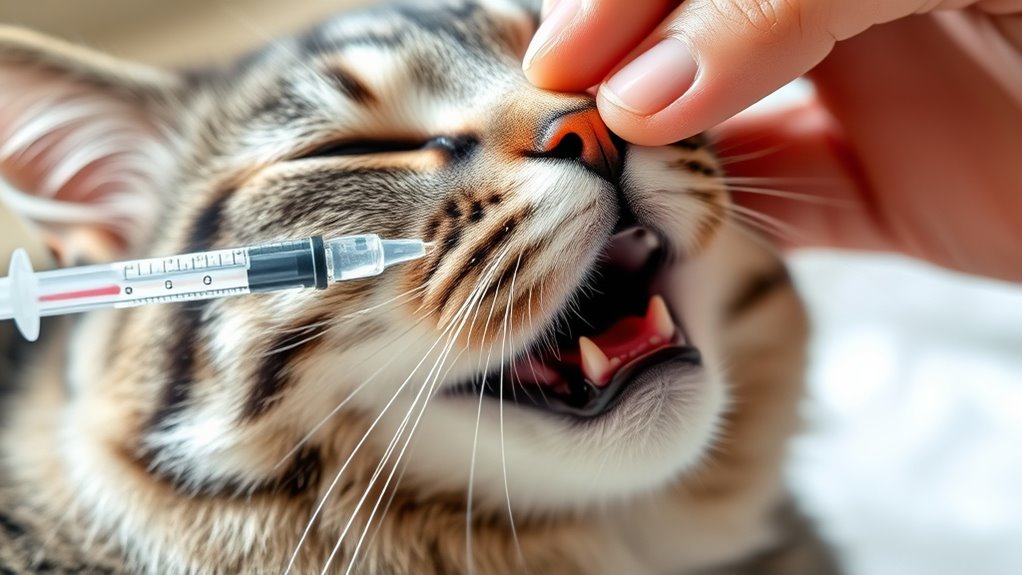
Gently hold or wrap your cat to prevent sudden movements and tilt their head slightly up. Use a syringe or dropper to place the medicine in the side of their mouth, encouraging swallowing by slightly tilting their head.
Mask the flavor if needed and take your time to avoid stress. Keep going, and you’ll uncover more tips for smoother medication sessions.
Key Takeaways
- Prepare a calm environment, gather your supplies, and handle your cat gently to help reduce any anxiety during medication.
- Pick a method that works best for your cat, like using a syringe or mixing the medicine with food.
- Hold your cat securely, tilt its head slightly upward, and aim for the side of the mouth for easier swallowing.
- Mask the medicine’s taste with flavor enhancers or treats, and give it slowly to prevent choking.
- Keep an eye out for signs of stress or resistance, and don’t hesitate to seek veterinary help if your cat is uncooperative or shows any adverse reactions.
Why Properly Giving Liquid Medicine Matters for Your Cat
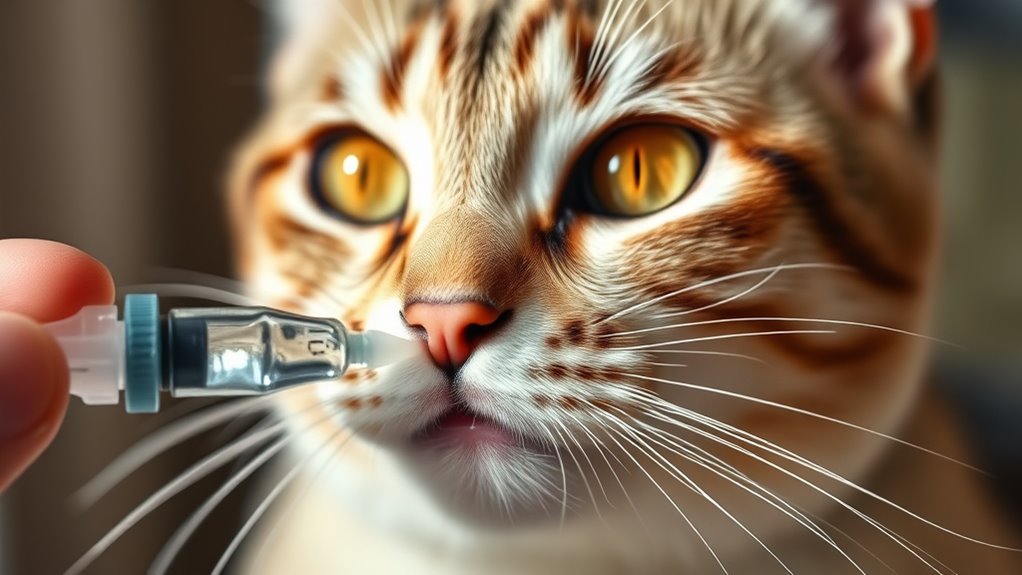
Giving your cat liquid medicine properly ensures they get the right dose, which is crucial for their recovery and well-being.
Consistent administration guarantees your cat receives the correct amount each time, preventing underdosing or overdosing that could slow healing or cause side effects.
Understanding feline anatomy is key, especially knowing how their mouth and throat work.
Cats often swallow quickly or resist, so knowing how their oral structures function helps you deliver the medicine effectively.
Using the proper technique reduces stress for your cat and lowers the risk of spillage or choking.
When you stay consistent and understand their anatomy, you build trust and make medication time easier.
This approach speeds up recovery and keeps your cat comfortable and safe during treatment.
Ultimately, paying attention to these details ensures your cat gets the full benefit of their medication, supporting their health and happiness.
Preparing Your Cat and Environment for Medication
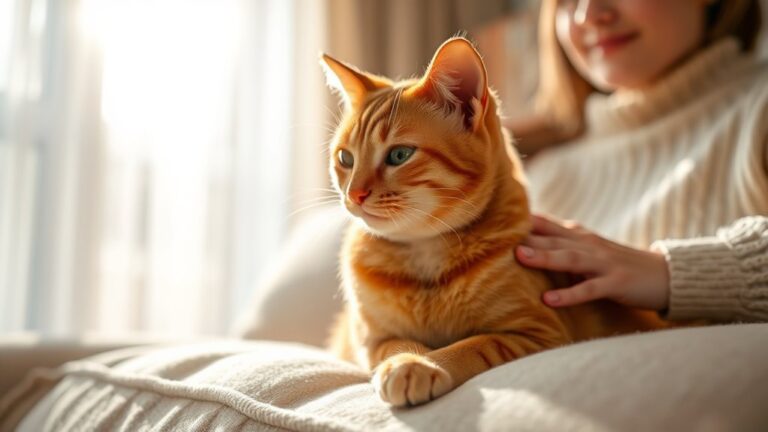
Before giving your cat medication, it’s helpful to set up a calm and quiet environment. This can help keep your kitty relaxed and reduce any stress or anxiety.
When handling your cat, do so gently and softly. Being gentle prevents causing fear or discomfort, making the whole process much easier for both of you.
Create Calm Environment
Creating a calm environment is essential to making the process less stressful for both you and your cat. A relaxed setting helps reduce anxiety and makes administering medication smoother. To create this atmosphere, consider playing calming music to promote stress relief.
Prepare all supplies beforehand so you’re not scrambling during the process. Find a quiet, comfortable spot where your cat feels safe, away from loud noises or disturbances. Use soft, gentle voices to soothe your cat, and keep your movements slow and deliberate.
This environment encourages trust and minimizes fear, making medication time easier for everyone involved. By establishing a peaceful setting, you’ll help your cat stay calm, making the experience quicker and less stressful.
Use Gentle Handling
Gentle handling is essential to making your cat comfortable and cooperative during medication time. Use a gentle approach to avoid stressing your cat, which can make giving medicine more difficult.
Keep your movements slow and calm, and speak softly to reassure your feline. Offer treats or praise afterward to help your cat associate the process with positive experiences.
Avoid sudden movements or rough handling, as this can cause fear or resistance. If your cat becomes anxious, take a break and try again later, always putting their comfort first.
Preparing your cat and environment with a gentle approach builds trust and makes the process smoother for both of you. Remember, patience and kindness are key to successfully administering medication.
How to Choose the Best Method to Administer Liquid Medicine
How do you determine the best way to give your cat liquid medicine? Start by thinking about your cat’s personality and preferences. Some cats handle syringes better, while others might stay calmer with a dropper or syringe at a comfortable angle.
Check out the liquid medicine options, since some are thick and can be easier or trickier to give. Consider what feels right for you—if one method seems too stressful, try another. You might also want to test small doses first to see which method your cat accepts best.
Use a syringe or dropper for accurate dosing and easy control. A syringe with a curved tip can also be more comfortable for your cat.
You can try mixing the medicine with a small amount of tasty food if that’s appropriate. Make sure your cat stays calm, and choose a quiet environment to make the process smoother.
Picking the right method helps ensure your cat gets the medication without unnecessary stress.
Techniques for Safely Holding and Restraining Your Cat
Giving your cat liquid medicine can be tricky, but the key is to hold them securely without stressing them out. It’s all about using gentle restraint techniques that help keep your cat calm and prevent any sudden moves. You want to be patient and calm yourself, so your cat feels safe during the process.
Keep an eye on your cat’s body language—if they seem relaxed, it’s a good sign. If they start to struggle or look anxious, take a moment to comfort them before trying again. The goal is to make the experience as smooth and stress-free as possible for both of you.
Secure Your Cat Properly
Ensuring your cat is properly secured is essential for safe medication administration. Proper restraint helps prevent sudden movements, reducing stress and keeping your cat safe.
To achieve secure positioning, gently but firmly hold your cat’s body, supporting their chest and hindquarters. Keep your hands steady to avoid startling them.
You can wrap your cat in a towel or blanket to limit movement. Hold the cat against your body with one arm around the chest, and use your other hand to gently support the head and neck.
Maintain a calm, confident demeanor to reassure your cat. This secure positioning minimizes the risk of scratches or escapes, making the process safer for both of you.
Use Gentle Restraint Techniques
Using gentle restraint techniques is key to keeping your cat calm and safe during medication.
Apply gentle pressure by holding your cat securely but softly, avoiding any tight grips that cause discomfort or stress. Use a calm voice to reassure your cat throughout the process.
Incorporate positive reinforcement, like offering a treat or gentle petting afterward, to create a positive association with the experience.
Keep movements slow and deliberate to prevent startling your cat. If your cat struggles, pause and try again with a calmer approach.
Remember, patience and gentle handling help reduce anxiety and make administering medicine safer for both of you.
With consistent, gentle restraint and positive reinforcement, your cat will become more comfortable during future medication sessions.
Monitor Body Language Carefully
Pay close attention to your cat’s body language during restraint to keep them comfortable and safe. Recognizing these cues helps you spot stress early and prevent it from escalating.
Look for tense muscles, flattened ears, or a flicking tail—these are signs your cat might be overwhelmed. If you notice these signals, gently loosen your grip or give them a break.
Keep an eye on wide eyes or dilated pupils, which can indicate distress. Being aware allows you to adjust your approach, making the process less stressful for your feline friend.
How to Help Your Cat Swallow Liquid Medicine
Helping your cat swallow liquid medicine can be tricky, but with the right approach, it gets easier. Start by gently holding your cat’s head and tilting it slightly upward. This helps encourage swallowing and keeps the medicine from escaping.
Hold the syringe or dropper at the corner of your cat’s mouth, aiming toward the back of the throat. Calm your cat with a soothing voice and gentle strokes to make the process less stressful.
Placing the liquid on the side of the tongue can help your cat swallow more naturally. If your cat resists, gently open their mouth with your fingers and quickly give the medication.
Be patient, take your time, and stay calm. Gentle, consistent handling makes it smoother, and your cat will become more cooperative over time with practice.
Masking Medicine in Food or Treats for Fussy Cats
If your cat is particularly fussy about taking medicine, hiding the liquid in their food or treats can work well. Pick treats that your cat loves, like soft treats, small pieces of cooked meat, or special catnip treats.
To make the medicine tastier, try adding flavors like tuna juice, chicken broth, or gravy. These help mask the medicine’s taste and make your cat more willing to eat the treat.
Make sure to choose treats small enough so your cat can’t eat around the medicine. You can also warm the treat slightly to release more aroma and make it more tempting.
Be careful with flavor additions to avoid giving your cat anything harmful. The goal is to create a tasty treat that effectively disguises the medicine.
This way, your cat gets their dose without fuss or stress, making the whole process easier for both of you.
Common Mistakes to Avoid When Giving Liquid Medicine
When giving your cat liquid medicine, it’s easy to make mistakes that can cause stress or reduce how well the treatment works. One common mistake is rushing, which can lead to incorrect timing or dosage errors.
Make sure to give the medicine at the right intervals. This is important for proper absorption and successful treatment. Be precise with doses; giving too much or too little can affect your cat’s health or slow down recovery.
Avoid guessing or eyeballing measurements. Use a syringe or dropper for accuracy. Administering the medicine too quickly can cause choking or stress, so take your time.
Stay calm and gentle to make the process easier for your cat. Consistency is key—missed doses or irregular timing can slow down recovery.
Pay attention to medication timing and dosage accuracy. This helps ensure your cat gets the best possible care.
How to Recognize Stress or Discomfort During Medication
It’s important to keep an eye out for signs that your cat might be feeling stressed or uncomfortable when you’re giving her medication. Sometimes, she might show anxious behaviors like trembling, hiding, or trying to pull away. She may also vocalize more than usual, like meowing loudly or persistently.
If you notice her acting differently—maybe she’s more irritable, less playful, or avoiding eye contact—that’s a good sign she might not be feeling okay. Recognizing these cues early on allows you to pause and make adjustments, helping to keep her calm and comfortable before her stress gets worse.
Signs of Anxiety
Recognizing signs of anxiety in your cat during medication is key to ensuring their comfort and safety. Cats can show different signs of stress when they’re feeling overwhelmed or uncomfortable.
Look for behaviors like flattened ears, dilated pupils, stiff body posture, or rapid breathing. You might also notice your cat trying to escape or softly growling. These signs often show up quickly when they feel threatened or uneasy.
Being attentive helps you step in early, making the process easier for both of you. Remember, every cat reacts differently, so watch your pet closely during medication. Recognizing these signs allows you to adjust your approach, reduce their anxiety, and keep the experience as calm as possible.
Unusual Vocalizations
Unusual vocalizations are a clear sign that your cat is experiencing stress or discomfort during medication. You might notice strange sounds like yowling, growling, or high-pitched meows that differ from their normal voice.
These vocal stresses indicate they aren’t comfortable and may be feeling anxious or scared. Pay close attention to any sudden increase in loudness or unusual sounds during the process.
Vocal stress often comes with other signs of distress, like tense body language or trying to escape. Recognizing these cues helps you understand when your cat is overwhelmed.
This way, you can pause, soothe, or adjust your approach. Addressing these signs quickly can make giving medication less stressful for both of you.
Changes in Behavior
Changes in your cat’s behavior during medication are key indicators of stress or discomfort. You might notice subtle or obvious behavior changes that signal your cat isn’t happy with the process.
Watch for stress responses like flattened ears, tail flicking, or tense muscles. Your cat may also become more withdrawn or try to escape.
Some cats might vocalize more than usual or show aggressive behavior. Recognizing these signs helps you stop and comfort your cat before stress worsens.
Keep an eye out for flattened ears or dilated pupils, sudden scratching or biting, hiding or avoidance, and increased vocalizations or growling.
Understanding these behavior changes allows you to adjust your approach and keep medication stress-free.
Troubleshooting Tips for Difficult or Uncooperative Cats
Dealing with a difficult or uncooperative cat can be challenging, but there are effective strategies to make administering liquid medicine easier. One approach is to refine your pilling techniques, like gently wrapping your cat in a towel to limit movement and holding their head securely.
If your cat resists, consider offering small treats beforehand to create a positive association. Sometimes, traditional methods don’t work, so exploring alternative medications like flavored liquids or compounding options can reduce stress for both of you.
Using a syringe or dropper carefully, aim for the side of the mouth to avoid gagging. If your cat becomes too aggressive or stressed, take a break and try again later.
Patience is key; never force medication if your cat gets overly upset. Remember, consistency and calm handling can turn a difficult situation into a smoother experience over time.
When to Seek Veterinary Help for Medication Challenges
Knowing when to seek veterinary help is essential if you’re struggling to give your cat medication despite trying different techniques. If your cat shows signs of distress, refuses medication repeatedly, or exhibits adverse reactions like unusual lethargy or vomiting, it’s time to consult your veterinarian.
Persistent resistance or worsening behavior might indicate underlying issues, including medication side effects or discomfort. Consider seeking help if your cat consistently refuses medication despite gentle approaches.
You should also reach out if you notice side effects such as vomiting, diarrhea, or lethargy after administering the medicine. If your attempts cause stress or injury to either of you, it’s a good idea to get professional advice.
Additionally, if the medication isn’t producing the expected results or symptoms worsen, consult your vet. They can help assess whether the medication is right or suggest alternative methods.
Don’t delay seeking help if you’re unsure—your veterinarian can guide you to keep your cat safe and comfortable.
Frequently Asked Questions
Can I Give Liquid Medicine to My Cat With a Syringe or Dropper?
Yes, you can give liquid medicine to your cat with a syringe or dropper. Using a syringe allows you to control the amount and direction, making it safer and easier.
The dropper method is also effective, especially for smaller doses. Just make sure to hold your cat gently and aim the medicine toward the side of their mouth.
Both tools help make giving medicine less stressful for your cat.
What if My Cat Spits Out the Liquid Medicine?
If your cat spits out the liquid medicine, it’s like trying to stop a tidal wave with a paper umbrella. Don’t panic—try mixing the medicine with a tiny bit of tasty food or treats to hide the taste.
You can also give it with a syringe gently, making it less stressful for your cat. Or ask your vet about flavoring options to make the medicine more appealing.
With patience and persistence, this can become a manageable routine.
Are There Natural Alternatives to Liquid Medication for Cats?
Yes, you can explore natural options like herbal remedies and homeopathic treatments for your cat. These alternatives might help support your cat’s health naturally, but always check with your veterinarian before trying them.
Herbal remedies, such as chamomile or ginger, can sometimes help ease minor issues. Homeopathic treatments are another option, but make sure they are safe and suitable for your cat’s specific condition to prevent any adverse effects.
How Do I Store Liquid Medicine Safely at Home?
You should store liquid medicine in a cool, dry place, ideally at the temperature recommended on the label, often between 68-77°F. Keep the container tightly closed to prevent contamination and check the expiration date regularly.
Avoid storing it in the bathroom or near heat sources. Proper storage guarantees the medicine remains effective and safe for your cat, preventing accidental misuse or spoilage.
Can I Mix Liquid Medicine With Water or Other Liquids?
You can usually mix liquid medicine with water or other liquids, but it’s best to check with your vet first to make sure they’re compatible.
When giving medicine, mixing it with a small amount of liquid might help your cat swallow it more easily and make the process less stressful.
However, some medicines can lose their effectiveness when mixed, so always confirm it’s safe with your vet beforehand.
Be sure to follow your vet’s instructions for proper dosing and mixing to keep your cat healthy.
Conclusion
So, now you’re practically a feline pharmacist, armed with tips and tricks to coax that liquid medicine into your kitty’s tiny mouth. Remember, patience, a gentle touch, and a sprinkle of humor turn what could be a battle into a bonding moment.
After all, nothing says “I love you” like successfully giving medicine without losing your mind or your cat’s trust. Happy medicating, and may your feline patient always be cooperative—or at least mildly amused with the process.