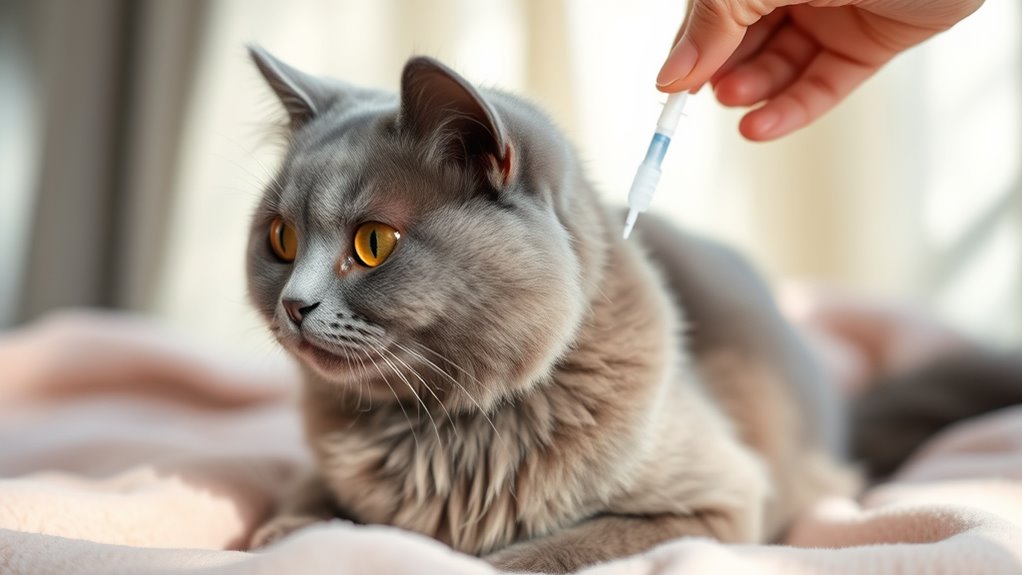
How Often Can You Put Flea Medicine on Your Cat?
Dealing with fleas on your cat can be a real challenge, and you’re not alone in feeling overwhelmed by the options and instructions out there.
Many pet owners struggle to find the right balance between keeping their feline friend flea-free and avoiding potential side effects.
You should generally apply flea medicine to your cat once a month, following the manufacturer’s instructions for dose and timing.
Regular treatments help control fleas effectively and prevent infestations.
Factors like your cat’s age, weight, and severity of fleas may influence how often you treat them.
Avoid overdoing it, as this could cause side effects or resistance.
If you want to learn more about safe application and prevention tips, keep exploring these important details.
Key Takeaways
- Most flea medicines are recommended for monthly use, so follow the product instructions and your vet’s advice.
- Overdoing flea treatments can cause skin irritation, allergic reactions, or even resistance, so stick to the dosing guidelines.
- Signs like excessive scratching or flea dirt mean your cat might need treatment, usually once a month or as your vet suggests.
- Seasonal changes also matter—more treatments in spring and summer, and less in winter.
- Never use dog flea products on cats, and avoid mixing different treatments. Always check with your vet to find the safest schedule.
How Does Flea Medicine Work and Why Timing Matters
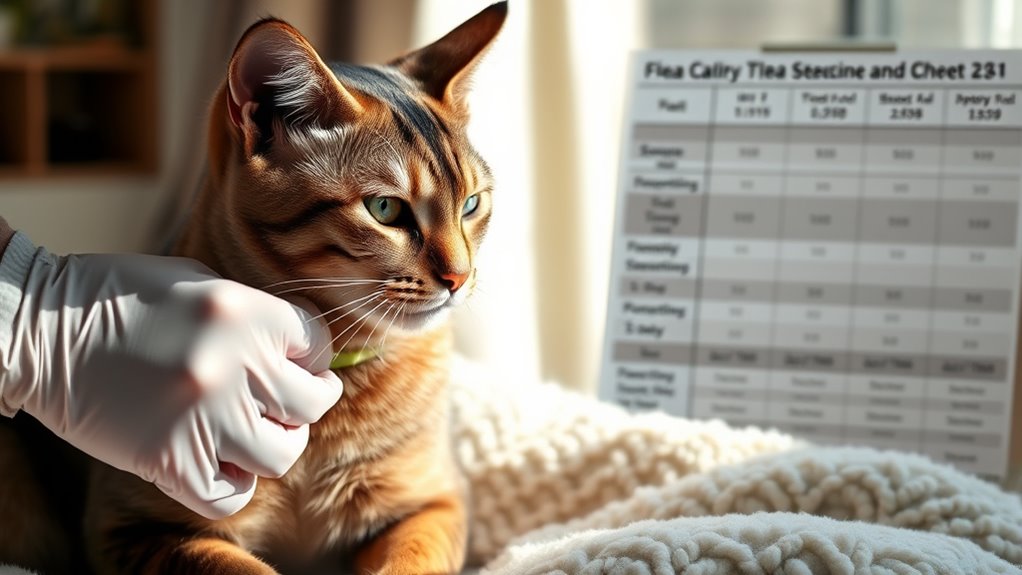
Understanding how flea medicine works is key to protecting your cat effectively. Flea treatments target different stages of the flea life cycle, like eggs, larvae, and adults. Most products focus on killing adult fleas quickly to reduce discomfort and prevent bites.
Effective flea medicine targets all flea life stages to protect your cat and prevent future infestations.
Some medications also disrupt the development of eggs and larvae, breaking the cycle and stopping future infestations. Timing is crucial because if you apply treatment too late or irregularly, fleas can reproduce and spread fast.
For example, adult fleas might be eliminated, but eggs can hatch weeks later if your treatment isn’t consistent. To stay ahead, you need to follow the recommended schedule closely.
Proper timing makes sure you interrupt the flea life cycle at every stage. This maximizes the medication’s effectiveness and helps keep your cat flea-free longer.
What Types of Flea Treatments Are Available for Cats
There are quite a few options when it comes to treating your cat for fleas, so you can find something that fits your cat’s personality and your lifestyle. You might consider topical medications, which you apply directly to your cat’s skin. These are usually easy to use and can be very effective.
Or, if your cat isn’t a fan of topical treatments, there are oral medications you can give them. These are often hidden in treats or pills, making them a convenient choice for many pet owners. Additionally, flea collars or devices are available that slowly release flea-repelling substances or use other technologies to protect your cat.
Each of these options has its own benefits and application methods, so it’s a good idea to think about what will work best for your cat’s needs. Knowing about these choices can help you make confident decisions to keep your feline friend flea-free and comfortable.
Topical Flea Medications
They provide fast relief and can last for a month or more. While topical options are effective, some pet owners prefer natural remedies for flea prevention, though these may not be as potent.
Always follow the product instructions carefully to avoid overdosing or missing areas. Topical treatments are generally safe when used correctly, but check with your vet if your cat has sensitive skin or health issues.
Regular application helps keep fleas at bay and protects your cat from infestations.
Oral Flea Treatments
Here are some key points:
- They usually need to be given once a month.
- Some formulas offer continuous protection for up to three months.
- They’re often less messy and easier to apply than topical medications.
Oral treatments can be especially good for cats with sensitive skin or allergies to topical products.
Choosing the right oral flea treatment depends on your cat’s health and your preference for ease of use.
Flea Collars and Devices
Some collars also repel ticks and prevent flea eggs from hatching, helping to break the flea life cycle. When choosing a flea collar, make sure it fits well and is specifically formulated for cats, since some collars made for dogs can be toxic. Regularly check the collar’s fit and replace it as recommended to keep it effective and your cat comfortable.
How Often Do Manufacturers Recommend Applying Flea Medicine?
Most manufacturers recommend applying flea medicine to your cat every 30 days. Following these guidelines helps ensure continuous protection against fleas and prevents re-infestation. It’s important to stick to the instructions to avoid overuse or under-treatment.
Most flea medicines should be applied monthly to keep your cat protected and prevent re-infestation.
Always read the label for specific timing instructions. Use the recommended dosage based on your cat’s weight and age. Avoid applying multiple products at once unless your vet advises it.
Check regularly for any side effects or allergic reactions after applying the medication. While many products are meant for monthly use, some formulations might need more or less frequent application.
Following the manufacturer’s advice carefully is key for the best results. Proper adherence to flea medicine guidelines helps keep your cat safe and flea-free.
Factors That Influence How Frequently You Should Treat Your Cat
Things like your cat’s age and weight can really influence how often you should be treating them. For instance, younger or smaller cats might need a different schedule compared to older or larger ones. It’s all about finding that right balance to keep them healthy and comfortable.
Then, there’s the severity of the flea problem itself. If your cat has a serious infestation, you might need to treat more frequently. Plus, the type and strength of the product you’re using matter a lot. Some treatments are designed for regular use, while others are stronger and used less often.
Age and Weight Considerations
Age and weight are key factors in deciding how often to apply flea medicine to your cat. For kittens, follow specific guidelines because their growing systems need careful timing and dosage.
For adult cats, adjusting based on weight is important to ensure safe and effective treatment. Usually, lighter cats need smaller doses, while heavier cats might need more frequent applications or higher doses.
Keep these points in mind:
- Kittens under 8 weeks often need specialized, less frequent treatments.
- Cats between 8 weeks and 1 year may need adjusted frequency based on their weight.
- Overweight cats might need dosage adjustments based on their weight.
Always check with your vet for age-specific and weight-based recommendations. Proper evaluation of age and weight helps ensure your cat gets safe, effective flea protection without over- or under-medicating.
Severity of Infestation
The severity of your cat’s flea infestation directly impacts how often you should apply flea medicine. If the infestation is severe, you might need to treat more often to break the flea life cycle effectively.
A heavy infestation means more eggs, larvae, and pupae, which can hatch and mature quickly if left untreated. Flea treatments that target all stages of the flea life cycle are essential to control severe infestations.
Regular applications help eliminate adult fleas and prevent new ones from developing. On the other hand, a mild infestation might need fewer treatments.
Monitoring your cat and watching for flea activity will help you decide how often to treat. This way, you’re addressing the infestation severity properly.
Product Type and Strength
Different flea products vary in their formulation and potency, which directly influences how often you should administer treatment. The product effectiveness depends on its strength and active ingredients, affecting the recommended dosage guidelines. Stronger products may last longer but require precise application to avoid overdosing. Conversely, milder formulas might need more frequent use for effective control.
Consider these points:
- Topical treatments often need monthly application, depending on strength.
- Oral medications might have longer intervals, like every 30 days, based on dosage guidelines.
- Flea collars vary in duration, from 30 days to several months.
- Sprays and shampoos are typically used more frequently but offer shorter-lasting protection.
Always follow specific product instructions for the best results and safety.
How to Tell When Your Cat Needs a Flea Re-Treatment
Wondering when your cat needs another flea treatment? Watch for changes in flea behavior like increased scratching, biting, or grooming. These signs often mean fleas are still around or have come back.
Pay close attention to your cat’s skin. Skin irritation, redness, or small bumps are clear clues fleas are causing discomfort. You might also notice flea dirt—tiny black specks—on your cat’s coat or bedding.
If your cat seems more restless or shows signs of discomfort, it’s time to reapply flea medicine. Regular checks are especially important during peak flea season.
Remember, even if you don’t see fleas, your cat can still be infested. Staying vigilant helps prevent severe skin irritation and keeps your feline friend comfortable.
If you suspect a re-infestation, don’t delay re-treatment. Acting quickly ensures your cat stays flea-free and happy.
Risks of Overusing Flea Medicine and How to Prevent Them
Overusing flea medicine can cause health problems for your cat, like skin irritation, allergic reactions, or even poisoning. Plus, too much treatment can lead to flea resistance, making future infestations tougher to manage.
To prevent these issues, make sure to follow the label instructions carefully to avoid applying too much. Space out treatments based on your vet’s advice to keep your cat safe.
Keep an eye on your cat after each treatment for any bad reactions. If you notice any symptoms, contact your vet right away.
Use targeted treatments instead of giving unnecessary doses. This helps reduce the risk of resistance and toxicity, keeping your cat healthier.
Creating a Flea Prevention Schedule That Works for Your Cat
Creating a flea prevention schedule that actually works for your cat is all about understanding how often you should be applying treatments, especially during those busy peak seasons. It’s a good idea to keep an eye on how your cat responds to the treatments and make adjustments if needed. That way, you can stay ahead of fleas all year round.
Frequency of Application
How often you should apply flea medicine depends on your cat’s specific needs and the product’s instructions. The frequency varies based on the treatment intervals recommended for each product, so always follow the label.
Typically, you might need to apply treatments monthly for most topical and oral products. Spot-on treatments are usually given every 30 days to keep fleas at bay.
Some long-acting injections may need to be administered every 12 weeks. During heavy infestations, more frequent applications might be necessary, but only if advised by your vet.
Sticking to the prescribed treatment schedule helps prevent fleas from becoming resistant and ensures your cat stays protected. Keep an eye on how your cat responds, and consult your vet if you’re unsure about changing the schedule.
Seasonal Prevention Strategies
Creating a seasonal flea prevention schedule tailored to your cat’s environment and lifestyle can greatly reduce the risk of infestations. Flea activity varies with seasonal fluctuations, often peaking during warmer months when the flea life cycle speeds up. To stay ahead, adjust your prevention routine accordingly.
During spring and summer, apply flea medicine more frequently. In cooler months, you might reduce applications since flea activity declines. Understanding the flea life cycle helps you time treatments effectively.
Use this schedule as a guide:
| Season | Recommended Action | Notes |
|---|---|---|
| Spring/Summer | Weekly or bi-weekly treatments | Flea activity peaks, and their lifecycle speeds up |
| Fall | Bi-weekly or monthly treatments | Flea activity decreases, so monitor closely |
| Winter | Monthly or as needed | Flea activity is lowest, so reduce frequency |
Following this approach keeps your cat protected all year round.
Monitoring and Adjustments
Regularly monitoring your cat for signs of fleas is key to making sure your prevention plan is working. By keeping an eye on their behavior and inspecting their coat, you can see if the flea treatment is effective or if you need to make changes.
Think about these factors when adjusting your approach:
- How often you see fleas or flea bites
- Any changes in your cat’s environment, like new pets or outdoor access
- Seasonal changes that can affect flea activity
- How your cat responds to the current flea medication — if fleas keep showing up, it might be time to tweak the plan
Tracking these details helps you customize your flea prevention to suit your cat’s needs. Regular checks also help you catch problems early, so you can stay ahead of fleas and keep your cat comfortable and flea-free.
Tips for Properly Applying Flea Medicine Safely and Effectively
Applying flea medicine correctly is key to keeping your cat safe and making sure the treatment works. Start by parting your cat’s fur to expose the skin and applying the medication directly there.
Use the applicator as directed, usually at the back of the neck or between the shoulder blades, to prevent your cat from licking it off. Make sure your cat is calm and gently restrained before applying.
Follow safety precautions by washing your hands thoroughly afterward and avoiding contact with the medication until it dries. Never apply more than the recommended dose, and don’t use human flea products on your cat.
Check the instructions carefully, as some products need specific application methods. By paying attention to these tips, you help get the best results and protect your cat from side effects.
Common Mistakes to Avoid When Treating for Fleas
One common mistake pet owners make is applying too much flea medicine, thinking it will work faster or be more effective. This comes from flea medicine myths and the idea that bigger doses mean better results. But overdosing can cause toxicity or skin irritation, which is dangerous for your cat.
To avoid problems, remember these points:
- Follow the label instructions exactly—more isn’t better.
- Don’t mix different flea treatments unless your vet says it’s okay.
- Avoid applying flea medicine on broken or irritated skin.
- Never use dog flea products on cats—they contain ingredients that can be toxic to felines.
Understanding flea medicine myths helps prevent mistakes that could hurt your pet. Always check the proper dosage and frequency with your vet or the product’s instructions.
Applying medication correctly ensures your cat stays safe and flea-free without taking unnecessary risks.
When to Consult Your Veterinarian About Flea Control
While following the instructions on flea medicine labels is important, there are times when consulting your veterinarian becomes necessary to guarantee your cat’s health and safety. If you notice signs like persistent itching, hair loss, or skin infections, it’s time to seek professional advice.
Understanding your cat’s flea life cycle helps determine the right treatment timing, but a vet can provide tailored recommendations based on your cat’s age, health, and environment.
If fleas continue to reappear despite regular treatments, or if you’re unsure about the correct product or dosage, consult your veterinarian. They can recommend the most effective flea control plan, including combination treatments or alternative options.
Furthermore, if your cat has underlying health issues or is pregnant, veterinary recommendations are crucial to avoid adverse reactions. Always reach out to your vet when in doubt, to assure safe and effective flea management.
Frequently Asked Questions
Can I Use Human Flea Medication on My Cat?
You should never use human flea medication on your cat, as it can pose serious flea medication risks and lead to human toxicity.
Cats metabolize drugs differently, so what’s safe for humans isn’t necessarily safe for them. Using human products can cause poisoning, seizures, or even death.
Always choose veterinarian-approved flea treatments specifically made for cats, and be sure to follow the dosing instructions carefully to keep your pet safe.
Are There Natural Alternatives to Chemical Flea Treatments?
Did you know that over 60% of pet owners look for natural alternatives to fight fleas?
Herbal remedies and essential oils can be good options, but you need to be careful when using them.
Some essential oils, like lavender or cedarwood, help repel fleas. Just remember to dilute them and avoid applying directly to your cat’s skin.
Always check with your vet before trying herbal remedies to make sure they’re safe and effective for your pet.
How Do I Prevent Fleas From Returning After Treatment?
To prevent fleas from coming back, keep up with regular flea control treatments and stay on top of cleaning.
Groom your cat often to catch fleas early and remove eggs before they hatch. Wash their bedding regularly and vacuum your home thoroughly.
Try to keep your cat indoors during peak flea season. And don’t forget to talk to your vet about a long-term flea prevention plan to keep your cat flea-free.
What Signs Indicate Flea Medicine Is Causing a Reaction?
Think of your cat’s body as a delicate garden, and flea medicine as a potent fertilizer. Signs of allergic reactions or side effects include excessive itching, swelling, redness, or hair loss.
You might notice your cat scratching more than usual or developing hives. If you see these symptoms, stop the medication immediately and talk to your vet.
Prompt action helps protect your feline friend’s health and keeps your garden thriving.
Is It Safe to Treat Multiple Cats at Once?
Yes, it’s generally safe to treat multiple cats at once in a multi-pet household, but make sure to follow the recommended treatment frequency for each product.
Always read the label carefully and use products that are specifically formulated for cats, since some flea treatments aren’t safe for households with different species or age groups.
If you’re unsure, it’s best to consult your veterinarian. Keep an eye on your cats for any adverse reactions after treatment.
Conclusion
By understanding how flea medicine works and sticking to a tailored schedule, you’ll protect your cat effectively. Remember, the right timing can feel like a coincidence—sometimes, your cat shows signs just when you need to act.
With careful application and regular check-ins, you’ll create a routine that keeps fleas at bay. This helps ensure your feline friend stays healthy and happy.
Knowing how often you can put flea medicine on your cat is key. Following the recommended schedule can make all the difference in preventing infestations.
It’s a small effort that can make a big difference. Sometimes, the timing just feels perfectly right to keep your cat flea-free.