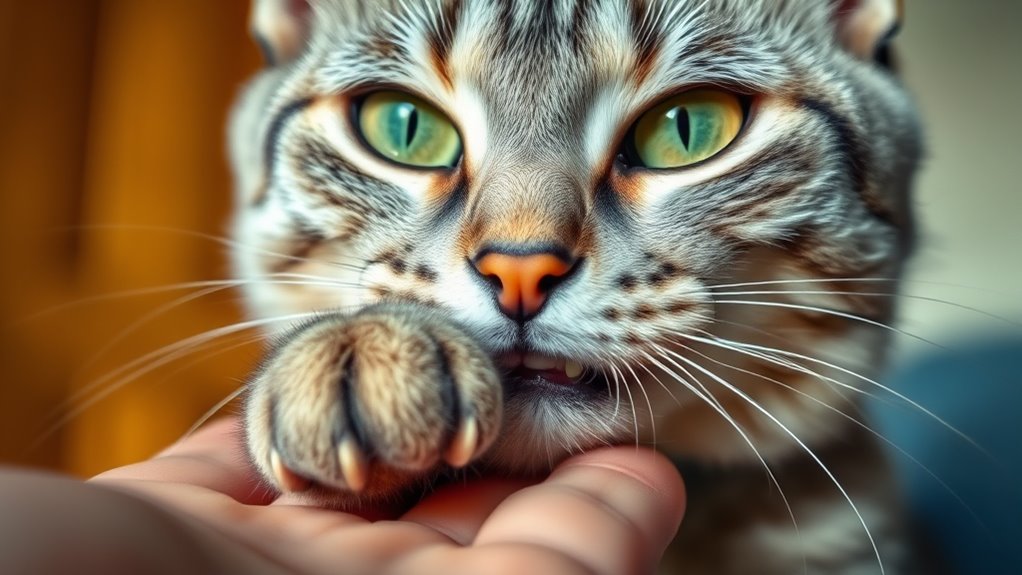
Why Does My Cat Bite Me When I Pet Her?
Are you frustrated because your cat bites you when you try to pet her? You’re not alone—many cat owners struggle with this confusing behavior. Understanding why your feline friend reacts this way can help improve your bond and keep her happy.
Your cat biting while you pet her often signals overstimulation or discomfort, especially if she shows signs like tail flicking, flattened ears, or tense muscles.
Some cats bite to express playfulness or affection, but health issues like dental problems or arthritis can also make touch painful.
Pay attention to her body language and adjust your petting style to keep her relaxed.
If these behaviors persist, exploring more tips can help you build a better bond with your feline.
Key Takeaways
- Cats might bite when they’ve been petted too long or if you touch sensitive spots.
- Watch for subtle signs like tail twitching or ears flattening—they often show discomfort before a bite.
- Every cat has a different personality and sensitivity, which affects how they react to being petted.
- Sometimes, biting is due to health problems that cause pain or irritation.
- Paying attention to your cat’s boundaries and warning signs can help prevent bites.
Why Do Cats Bite During Petting?
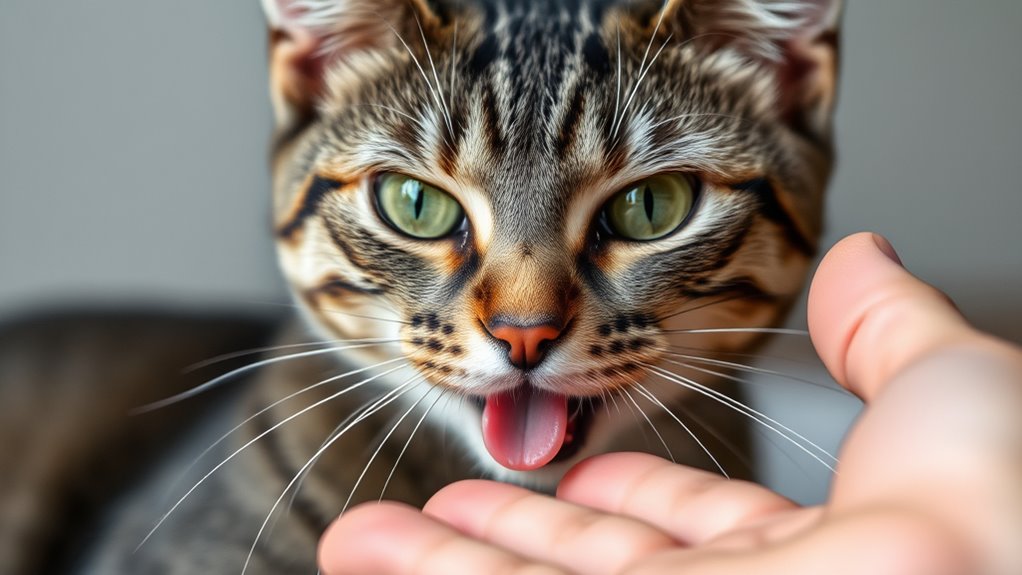
Have you ever wondered why your cat suddenly bites while you’re petting her? It’s a common part of cat behavior and often shows how they communicate their feelings.
Biting can happen because of overstimulation, which varies from cat to cat and depends on their grooming habits. Some cats give subtle signals like purring or tail twitching, showing they’re nearing their comfort limit.
When you pet your cat gently, you might accidentally cross her threshold, leading to a bite. Cats also bite to show affection—sometimes it’s playful, other times it’s a warning.
Stress from unfamiliar surroundings or loud noises can make a usually calm cat more reactive. Understanding these cues helps you adjust how you pet her, making interactions more positive.
Recognizing why cats bite is key to building trust and strengthening your bond.
How to Recognize Overstimulation Signs in Cats
Got it! Here’s a more conversational version of your text:
—
You might notice your cat showing signs of overstimulation through small things like flicking their tail, flattening their ears, or even giving a sudden nip. These little hints can tell you that your kitty is starting to reach its limit.
Paying close attention to these cues is really helpful because it allows you to step back before your cat gets overwhelmed. To keep things comfortable for your feline friend, try to spot and reduce common triggers—like too much petting or handling that’s a bit rough. That way, you can help your cat stay happy and relaxed!
Common Overstimulation Indicators
Many cats show clear signs when they become overstimulated, and recognizing these indicators can help prevent bites and scratches.
Purring signals often shift from calming to tense, which might mean your cat is nearing her limit. Keep an eye on her tail—rapid flicking, lashing, or a puffed-up tail are strong signs she’s overwhelmed.
You might also notice her ears flattening or her pupils dilating. Tense muscles, lip licking, or a twitching nose can all indicate she’s getting agitated.
These cues help you know when to back off before your cat feels the need to bite. Being aware of these overstimulation signs allows you to adjust your petting and make her more comfortable.
Preventing Overstimulation Triggers
Recognizing the signs of overstimulation early can help prevent your cat from reaching her limit and biting. Pay attention to her petting preferences and sensory sensitivity—some cats tolerate touch in specific areas or for limited timeframes.
Signs like tail flicking, flattened ears, or shifting away indicate she’s becoming overwhelmed. When you notice these cues, gently stop petting and give her space.
Maintaining a consistent petting routine tailored to her comfort level helps reduce triggers for overstimulation. Avoid prolonged contact or petting sensitive areas if she shows signs of discomfort.
By respecting her boundaries and understanding her sensory sensitivity, you can create a more positive experience. This minimizes the chance of overstimulation and bites.
This approach fosters trust and keeps interactions enjoyable for both of you.
How Your Petting Technique Influences Your Cat’s Behavior
The way you pet your cat really makes a difference in how they feel. When you use gentle touches, it can help them relax and build trust with you. Cats appreciate calm and gentle interactions—they tend to respond nicely when they feel safe.
On the other hand, sudden movements or rough handling can easily startle or upset your cat. This might make them feel defensive, and sometimes that can even lead to bites. It’s always a good idea to pay attention to your cat’s personal space and respect their boundaries. That way, your time together stays positive and comfortable for both of you.
Gentle Touches Promote Calmness
Gentle touches can really help your cat feel calm and secure. Using calming petting techniques creates a soothing environment that can lower stress and reduce biting.
Pay attention to how your cat responds. Gentle, slow strokes work best. Avoid rapid movements or pressing too hard, as these can make your cat agitated.
Here’s a quick guide to choosing the right touch:
| Touch Type | Duration | Effect |
|---|---|---|
| Light petting | 2-3 seconds | Promotes relaxation |
| Gentle strokes | 5-10 seconds | Builds trust |
| Firm pressure | 1-2 seconds | Helps with reassurance |
| Soft scratching | 3-4 seconds | Comforts and calms |
| Quiet pauses | Varies | Prevents overstimulation |
Creating a calm environment with gentle petting encourages relaxation and helps decrease biting tendencies.
Sudden Movements Startle Cats
Even when you’re careful with your petting, sudden movements can still startle your cat and trigger defensive reactions. Cats have a strong startle response rooted in their feline instincts, which evolved to protect them from predators.
Quick or jerky motions can be mistaken for threats, causing your cat to react defensively, sometimes with a nip or bite. To prevent this, try to keep your movements slow and predictable during interactions.
Pay attention to your cat’s body language—if she tenses or flicks her tail, she might be feeling uneasy. Remember, even gentle petting can be disrupted by abrupt motions, triggering her natural instinct to defend herself.
Respect Personal Space Boundaries
How you approach petting your cat really affects how comfortable she feels and whether she wants to stay close. Respecting her personal space and boundaries helps prevent overstimulation and bites.
Pay attention to her body language—if she leans into your touch, she’s comfortable. If she pulls away or tenses up, she needs some space. Avoid petting her too roughly or on sensitive spots like her belly or tail.
Instead, follow her cues and give her breaks when she seems ready. Don’t force contact if she shows signs of discomfort. This helps build trust and keeps her feeling safe.
When you respect her boundaries, she’s more likely to enjoy petting sessions without feeling threatened or overwhelmed.
Health Problems That Might Make Your Cat Bite
Sometimes, health issues can cause your cat to bite because she’s feeling discomfort or pain. If she suddenly bites during petting, it might be a sign of a health problem.
Conditions like dental pain, arthritis, or skin irritations can make touch uncomfortable for her. Doing a quick pain assessment can help identify these issues.
Health problems can also cause anxiety, making your cat more likely to bite.
Here’s a quick overview:
| Condition | Symptoms | Action |
|---|---|---|
| Dental disease | Chewing on objects, bad breath | Vet check for dental health |
| Arthritis | Limping, reluctance to move | Pain management, vet visit |
| Skin irritations | Scratching, redness, swelling | Skin exam, topical treatments |
Understanding these health triggers can help you find the root cause and reduce biting episodes.
Reading Your Cat’s Body Language to Prevent Bites
When your cat starts to feel uncomfortable or threatened, her body language can give you important clues about her mood. Recognizing these emotional cues is key to preventing bites and improving your feline communication.
Watch for signs like pinned-back ears or a flicking tail, which can indicate agitation. Dilated pupils or a tense body are signals that she’s feeling stressed.
Also, look for avoidance or slow blinking, as these often mean she needs some space. Being attentive to these cues can help you keep your cat comfortable and safe.
Why Are Some Cats More Sensitive Than Others?
Some cats are naturally more sensitive because of their individual personalities and genetic makeup. Your cat’s sensitivity level depends on her unique temperament, which influences how she reacts to touch and her environment. Some cats are more tolerant, while others can easily become overwhelmed or irritated.
| Sensitivity Level | Typical Behavior | Suitable Handling |
|---|---|---|
| Low | Calm, relaxed, enjoys petting | Gentle, brief interactions |
| Moderate | Comfortable but sometimes wary | Respect boundaries, watch cues |
| High | Easily overstimulated or frightened | Minimal contact, patience |
Knowing your cat’s temperament helps you understand her comfort zones. Highly sensitive cats may react strongly to touch or sudden movements, making them more likely to bite when overwhelmed. Recognizing these differences helps you customize your interactions for her safety and comfort.
How Can I Prevent My Cat From Biting During Petting?
If you want to stop your cat from biting when you’re petting them, the first thing is to pay attention to what might be triggering their biting. Sometimes, cats bite because they get overstimulated or because you’re touching a spot they don’t like. It’s good to notice these signs early so you can adjust.
When you’re petting your cat, try to keep it gentle and keep the sessions short. Watch how they’re reacting—if they start to get twitchy or try to pull away, it might be time to stop. This helps them stay relaxed and enjoy the interaction without feeling overwhelmed.
And don’t forget, providing your cat with toys or other ways to play helps them burn off extra energy. That way, they’re less likely to bite your hands out of frustration or excitement. It’s all about giving them healthy outlets for their energy and making sure the petting time is a positive experience for both of you.
Recognize Biting Triggers
Recognizing the specific triggers that lead to biting during petting can help you prevent it from happening in the first place. Cats often bite as part of their way of communicating. To spot these triggers, watch your cat’s reactions closely. Signs like tail flicking, ears flattening, or twitching whiskers are good clues.
You might notice that certain areas, like the belly or tail, tend to trigger biting. Or perhaps your cat gets overstimulated after a while.
Think about sensitive spots where your cat tends to bite, how long your petting sessions last, and if certain handling techniques seem to provoke her.
Understanding these cues helps you respect her limits and reduce biting incidents.
Use Gentle Handling Techniques
Using gentle handling techniques can make a big difference in preventing biting during petting sessions. Start by using gentle strokes and avoid any sudden or rough movements that might startle your cat.
Pay attention to her body language. If she tenses or tries to move away, it’s a sign to stop or change your approach. Keep your voice soft and calming because loud or high-pitched sounds can cause discomfort or anxiety.
Focus on areas your cat enjoys being touched, like her cheeks or under her chin. Avoid sensitive zones like the belly or tail until she’s more comfortable. Consistent, gentle handling helps build trust, making her less likely to bite out of fear or overstimulation.
Provide Alternative Outlets
Offering your cat appropriate outlets for her natural behaviors can really help reduce her urge to bite during petting. When she has other ways to express her energy and hunting instincts, she’s less likely to bite out of frustration.
Try adding playtime options like scheduled play sessions with interactive toys that mimic prey movements. These keep her engaged and satisfy her natural instincts. Providing scratching posts and puzzle feeders also helps.
Giving her these outlets means she’s less likely to redirect her energy onto your hands while you’re petting her. A well-stimulated cat is less prone to biting.
Keep her mentally and physically engaged with activities that channel her instincts positively. This makes petting a more enjoyable experience for both of you.
When Should I Talk to a Vet or Behaviorist?
Knowing when to talk to a vet or behaviorist can be tricky, especially if your cat’s biting seems unusual or persistent. If your cat suddenly starts biting more often, shows signs of aggression, or seems distressed during petting, it’s time to see a vet.
Persistent biting might mean pain, illness, or neurological issues that need professional diagnosis. A vet can do a thorough exam to rule out medical problems.
If no physical cause is found, consider getting help from a behaviorist. They can identify triggers and create strategies to change your cat’s behavior.
Also, if your cat’s biting is accompanied by other concerning signs like hiding, aggression toward other pets, or changes in eating habits, seek professional advice quickly. Addressing these early can prevent things from getting worse and make your cat’s life better.
When you’re unsure, it’s always safest to consult a professional.
Building Trust: Tips for a Better Bond With Your Cat
Building trust with your cat is key to creating a strong, positive bond. Focus on activities that help her feel comfortable and safe. Gentle interactions are a great start; let her set the pace and approach when she’s ready.
Building trust with your cat creates a strong, positive bond through gentle, patient interactions.
Use positive reinforcement to reward calm behavior. Offer treats or praise during peaceful moments so she begins to associate your presence with good things. Staying consistent is important—keep routines steady and respect her boundaries to help her feel secure.
Here are some effective trust-building activities:
- Start gentle petting sessions and watch her responses.
- Play with toys that encourage interactive fun without overwhelming her.
- Create cozy spaces where she can retreat and feel safe and in control.
How to Tell Play Bites From Aggressive Bites
How can you tell if your cat’s bites are playful or aggressive? Look at her body language and the context of the interaction.
Playful nibbles usually happen during friendly play and are gentle. You might notice her softly purring, chasing your hand, or gently biting without stress.
Her ears are often relaxed, and her tail may sway or flick softly. These bites are light, quick, and stop when you pull away.
On the other hand, aggressive bites come with warning signs. Flattened ears, dilated pupils, or a twitching tail are common.
Her body may be tense, and she might hiss or lash out suddenly. She could bite hard without warning, showing she’s upset or scared.
Knowing the difference helps you respond correctly. It prevents accidentally encouraging aggressive behavior or misreading her signals.
Frequently Asked Questions
Can Diet Affect My Cat’s Likelihood to Bite During Petting?
Yes, your cat’s diet can influence her biting behavior during petting. If her dietary preferences aren’t met or she lacks nutritional balance, she might become irritable or overstimulated.
Ensuring a balanced diet with proper nutrients helps maintain her overall health and mood. When your cat feels good physically, she’s less likely to bite out of discomfort or frustration.
This makes interactions more enjoyable for both of you.
Do Age or Breed Influence a Cat’s Biting Behavior?
Age factors and breed characteristics can definitely influence your cat’s biting behavior. Younger cats often get overstimulated and nip, while older cats might be more reserved or cranky.
Some breeds, like Siamese or Bengal, have more energetic or assertive personalities, making biting more common during play or petting.
Understanding your cat’s age and breed traits helps you read their signals better, preventing bites and building a trusting, gentle bond.
How Does Previous Trauma Impact a Cat’s Biting Tendencies?
Previous trauma can really impact your cat’s biting behavior because of trauma responses and triggers. If she’s been handled roughly or gone through stressful situations, she might bite to defend herself or show she’s uncomfortable.
These past experiences can make her more sensitive to being touched, especially in places she considers vulnerable. To help her feel safer, create a calm environment and avoid forcing petting on her.
Give her time to build trust, and she’ll become more comfortable. This can reduce her urge to bite and help her feel more secure around you.
Can Environmental Changes Cause My Cat to Bite More Often?
Yes, environmental changes can cause your cat to bite more often. When she faces stressors or territory shifts, she might feel anxious or irritable.
These changes can make her more sensitive to touch, which might lead to biting during petting. To help reduce this behavior, try to keep her environment stable and predictable.
Providing safe spaces and introducing changes gradually can help her feel secure. This can make her less prone to biting and more comfortable overall.
Are There Specific Toys That Can Reduce Biting During Petting?
Yes, certain toys can help reduce biting during petting. Try offering your cat interactive toys like wand toys or puzzle feeders to redirect her focus and energy.
Calming sprays can also create a soothing environment, which may decrease her tendency to bite. Engaging her with these toys and calming products can help her feel more relaxed.
When she’s more relaxed, she’s less likely to bite when you pet her. This can really improve your bond and make petting more enjoyable for both of you.
Conclusion
Remember, understanding your cat’s signals and respecting her limits can prevent bites and strengthen your bond.
If she seems aggressive or you’re unsure about her behavior, consulting a vet or behaviorist can help clarify things and offer solutions.
Don’t worry—patience and observation go a long way. With consistent effort, you’ll create a safe, loving space where your cat feels comfortable and happy to be petted without biting.
Knowing why your cat bites when you pet her is key. It could be due to overstimulation, pain, or simply her mood at the moment.
Pay attention to her body language—twitching tail, flattened ears, or sudden pulls away often signal she needs a break.
Respect her signals, and try to pet her gently, especially in areas she prefers. This can reduce the chances of biting.
Remember, every cat is different, and building trust takes time. With patience, you’ll foster a positive, bite-free bond with your feline friend.