Does Flea Medicine Make Your Cat Sick?
If you’re a cat owner, you know how stressful flea problems can be. Finding the right flea medicine that keeps your feline safe without causing side effects can feel overwhelming. You’re not alone—many people struggle with choosing the best product for their pets.
Flea medicine can make your cat sick if not used properly, especially if the product isn’t suited for their age, weight, or health condition. Side effects like skin irritation, vomiting, or allergic reactions are possible. Some cats may show signs of discomfort or behavioral changes.
To keep your feline safe, always follow the vet’s advice and product instructions.
Keep exploring for tips on choosing the safest options and how to spot issues early.
Key Takeaways
- Improper use or incorrect dosage of flea medicine can cause side effects like skin irritation or gastrointestinal upset.
- Allergic reactions, including swelling or difficulty breathing, may happen in sensitive cats.
- Behavioral changes such as hiding, agitation, or loss of appetite can be signs of adverse effects.
- If your cat has pre-existing health conditions or sensitivities, they might be more prone to negative reactions.
- Keeping an eye on your cat after treatment and consulting a vet quickly can help prevent or fix potential sickness.
Are Flea Medications Safe for Cats?
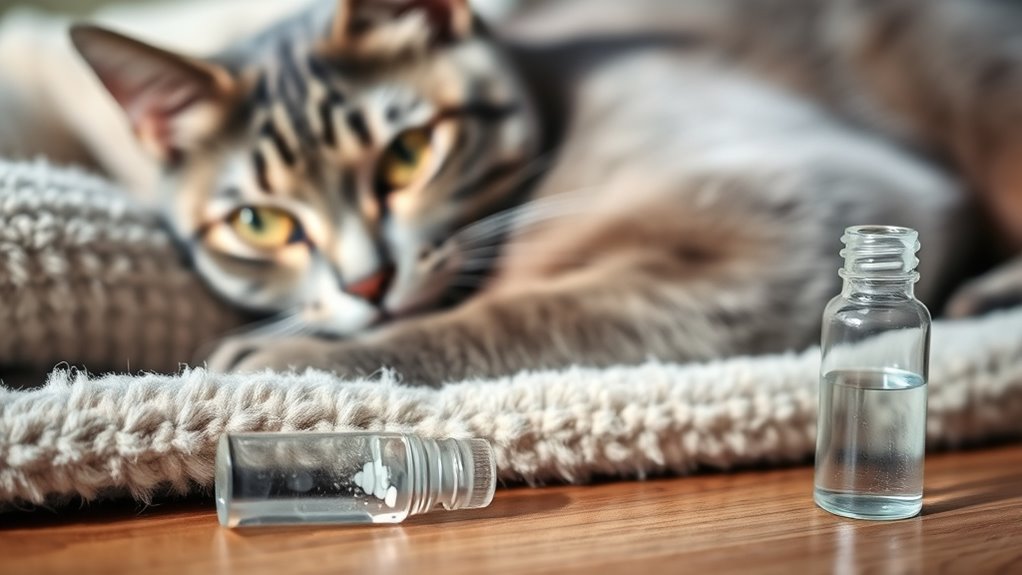
But some products can cause side effects, especially if misused or given to the wrong age or weight of cat. Always read labels carefully and talk to your vet before applying any treatment.
If you’re worried about potential risks, natural remedies or flea combs can help reduce exposure to chemicals. These options might be less effective but can be part of a good flea prevention plan.
How to Choose the Safest Flea Treatment for Your Cat
Choosing the safest flea treatment for your cat requires careful consideration of the product’s ingredients, your cat’s age and weight, and any existing health conditions. Research different options and prioritize products with proven safety records. Look for flea prevention strategies that combine both chemical and holistic treatment options to reduce risks. Always consult your veterinarian before starting any new flea control plan.
Consider these tips:
- Check labels for active ingredients and avoid those with known side effects.
- Opt for products specifically formulated for your cat’s age and weight.
- Use natural or holistic treatment options, such as herbal sprays or collars, as complementary measures.
- Avoid over-the-counter treatments that aren’t vet-approved or recommended.
- Stay informed about the latest research and safety updates from reputable sources.
Balancing chemical treatments with holistic approaches can help protect your cat without compromising health. Being selective and well-informed guarantees you choose the most effective, safest flea prevention strategies.
Common Side Effects of Flea Medications in Cats
Flea medications can sometimes cause side effects in cats, so it’s a good idea to keep an eye out for any reactions. You might notice skin irritation, upset stomach, or allergic responses after giving the medication.
Being aware of these possible issues can help you react quickly and keep your kitty safe. If you see any unusual behavior or symptoms, it’s always best to check with your vet to make sure everything’s okay.
Skin Irritation Risks
While flea medications are generally safe when used correctly, skin irritation is a common side effect that pet owners should watch for. Some cats may experience skin sensitivity or topical reactions after application.
You might notice your cat scratching, licking, or biting the treated area more than usual. Redness, swelling, or small bumps can also develop, indicating irritation.
To minimize risks, always follow the product instructions carefully. Keep an eye out for signs of adverse reactions, especially within the first 48 hours.
If irritation persists or worsens, consult your veterinarian. Remember, every cat reacts differently, so monitoring their skin condition after applying flea medicine is essential.
Prompt attention can prevent more serious skin issues and keep your feline healthy.
Gastrointestinal Upset
Skin irritation is a common concern after applying flea medication, but gastrointestinal upset is another side effect to watch for. You might notice your cat vomiting, diarrhea, or decreased appetite shortly after treatment.
These symptoms can disrupt your cat’s gastrointestinal health and may indicate sensitivity or a reaction to the medication. Sometimes, medication interactions with other drugs your cat is taking can increase the risk of upset stomach.
It’s important to monitor your cat closely after applying flea treatments and report any persistent or severe symptoms to your veterinarian. While gastrointestinal upset isn’t always serious, it can cause discomfort and dehydration if left untreated.
Ensuring the right dosage and following instructions can help minimize these side effects and support your cat’s overall gastrointestinal health.
Allergic Reactions Possible
Allergic reactions are a possible side effect of flea medications in cats, and recognizing them early can prevent more serious health issues. Some cats have a flea allergy or medication sensitivity that triggers adverse responses.
Signs of allergic reactions include itching, swelling, or redness at the application site. You might also notice vomiting, diarrhea, or difficulty breathing. These symptoms mean you should get your vet involved right away.
Keep in mind that a flea allergy can make your cat more uncomfortable, and sensitivity to medication varies. To stay safe, always follow the dosage instructions carefully.
After applying flea medication, watch your cat closely, especially during the first few doses. If you see any of these signs, contact your vet promptly to prevent the situation from worsening.
Signs Your Cat Might Be Sick After Treatment
After giving your cat flea medication, it’s a good idea to watch for any changes in their behavior. Sometimes, they might hide more than usual or seem a bit more agitated. These little signs can be their way of telling you something’s off.
Also, keep an eye on their appetite. If your cat suddenly loses interest in food or starts scratching more than usual, it could indicate a reaction or another issue. catching these symptoms early is really important—it helps ensure your kitty gets the help they need as soon as possible.
Unusual Behavior Changes
While flea medications are generally safe when used correctly, keep an eye out for any unusual behavior changes in your cat afterward. These cues can be subtle but are important stress indicators that something might be wrong.
You might notice your cat acting abnormally, like hiding more than usual or avoiding interaction altogether. Other signs include excessive grooming, restlessness, or loud vocalizing.
Some cats may seem unusually lethargic or appear confused. Pay attention to these changes, as they could be reactions to the medication. Recognizing these signs early can help you decide if your cat needs veterinary care.
Being alert to these behavioral cues ensures you catch potential issues before they get worse.
Loss of Appetite
A noticeable loss of appetite in your cat after flea treatment can be a sign that something isn’t quite right. Your cat may seem uninterested in food or refuse meals altogether.
This reaction could indicate a sensitivity to the medication or an adverse response. If you suspect the flea treatment is causing this, consider using alternative treatments that might be gentler.
Providing tempting foods or supplements can help keep your cat’s strength up while you keep an eye on their condition. Watch for any changes in behavior and contact your vet if the loss of appetite continues.
Addressing these symptoms quickly can prevent further health issues and help your cat recover from any negative reactions to the treatment.
Excessive Scratching
Excessive scratching following flea treatment can be a sign that your cat is uncomfortable or having an allergic reaction. If your feline suddenly starts scratching more than usual, it might be reacting to the flea prevention you’ve used.
You could notice signs like redness, hair loss, or irritated skin. Instead of only relying on traditional flea prevention methods, try soothing baths or gentle brushing. These can help calm your cat and reduce itching.
Watch out for other symptoms like swelling or inflamed skin, which might mean an allergic response. Catching these early can help prevent more discomfort for your cat.
If scratching keeps going or gets worse, it’s best to see your veterinarian. They can help find the right solution to keep your cat comfortable and healthy.
Can Flea Medications Cause Allergic Reactions?
Have you ever wondered if flea medications could trigger allergic reactions in your cat? It’s possible, especially if your cat is sensitive to certain ingredients.
Some ingredients, like pyrethroids or permethrin, are common in flea treatments and can cause allergic reaction symptoms in some cats. These might include itching, swelling, or redness.
Pyrethroids and permethrin in flea treatments can cause allergic reactions like itching, swelling, and redness in some cats.
You may also notice respiratory issues like sneezing or difficulty breathing. Your cat might scratch excessively or lick their fur more than usual.
In rare cases, an allergic reaction could lead to more severe symptoms, such as vomiting or collapse. Always read the label carefully before applying any flea medication.
If you notice any adverse signs, consult your vet. While most cats tolerate flea treatments well, being aware of allergic reaction symptoms helps you catch problems early and keep your feline friend safe.
What Factors Increase Your Cat’s Risk of Side Effects
Certain factors can make your cat more likely to experience side effects from flea medications. Your cat’s health history plays a big role. If they’ve had allergies or sensitivities before, they might react more strongly to the medicine ingredients.
Age also matters. Kittens and senior cats tend to have more delicate systems, which can increase their risk. A weakened immune system is another factor that can make side effects more likely.
The type of flea medicine ingredients is important too. Some formulations are harsher than others. And if your cat has recently been on other medications or treatments, interactions could boost the chances of side effects.
Keep an eye on these factors:
- Pre-existing allergies or sensitivities
- Cat’s age, especially kittens or seniors
- Any underlying health conditions
- Recent medication or treatment use
- The specific ingredients in the flea medication
How to Safely Apply Flea Medicine to Minimize Risks
Always take a moment to read the instructions carefully before applying flea medicine to your cat. It’s really important to use the correct dosage to keep your kitty safe.
Once you’ve applied the medication, keep a close eye on your cat for any unusual signs or reactions. By doing this, you can catch any potential issues early and help ensure your feline friend stays happy and healthy.
Read Instructions Carefully
Before applying flea medicine to your cat, it’s important to read and follow all the instructions on the product label carefully. This helps you understand how to apply the treatment safely and correctly.
An instructions overview ensures you know the proper way to use the product. Pay close attention to the dosage because using too much or too little can be dangerous.
Make sure to read all the details before you start. Follow the recommended method for application and look out for any warnings or precautions.
Check the label for the right area on your cat to apply the medicine. After using it, store the product exactly as instructed to keep it safe.
Following these steps minimizes risks and keeps your cat safe. The instructions guide you through proper use, and understanding the correct dosage prevents accidental overexposure or underdose.
Use Appropriate Dosage
Applying the correct dosage of flea medicine is essential for your cat’s safety. Always follow the manufacturer’s instructions to determine the right amount based on your cat’s weight and age.
Using an incorrect amount can increase the risk of adverse reactions or toxicity. Be cautious about medication interactions, especially if your cat is already on other treatments.
Consult your veterinarian to make sure the flea medication won’t interfere with any other medications your cat is taking. Never guess or eyeball doses; using the correct amount minimizes risks and guarantees effectiveness.
Properly measuring and applying the medication helps protect your cat from unnecessary harm while effectively controlling fleas. When in doubt, ask your vet for guidance to avoid mistakes that could make your cat sick.
Monitor Cat After Application
After applying flea medicine to your cat, keep a close eye on its behavior and physical condition for at least 24 to 48 hours. Monitoring helps you catch any adverse reactions early and keeps your cat safe.
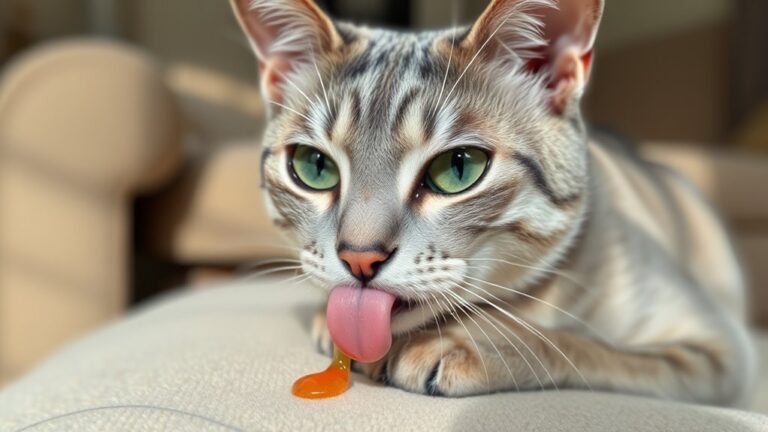
Look out for signs like excessive scratching, drooling, vomiting, or lethargy. During this time, keep your cat indoors to prevent contact with other animals, and avoid bathing it for 48 hours.
Check the application site for redness or swelling. Use a gentle, calm approach to reduce stress while monitoring your cat. Regularly inspect its overall condition and behavior.
If you notice anything unusual, contact your veterinarian right away. Proper post-application care and attentive monitoring will help ensure your cat stays safe and comfortable after flea treatment.
When to Call the Vet About Side Effects
Recognizing when to call the vet about side effects is essential to keeping your cat safe after administering flea medicine. If you notice symptoms like excessive drooling, vomiting, diarrhea, difficulty breathing, or swelling around the face or neck, don’t wait—contact your veterinarian immediately.
Even subtle signs such as lethargy, loss of appetite, or scratching at the application site deserve attention. Familiarize yourself with side effects awareness so you can act quickly if needed.
During your vet consultation tips, ask about what specific reactions to watch for based on your cat’s health history and the medication used. Keep a record of any unusual behaviors or symptoms, as this information helps the vet determine whether immediate care is necessary.
Prompt action can prevent serious complications. Trust your instincts—if something seems off after flea treatment, it’s better to be cautious and seek professional advice without delay.
Are Natural or DIY Flea Treatments Safer for Cats?
Many pet owners wonder if natural or DIY flea treatments are safer options for their cats compared to commercial products. While they might seem gentler, natural remedies and essential oils can still pose risks if not used carefully.
Some essential oils are toxic to cats, even in small amounts, so it’s important to research before applying anything. DIY remedies often lack scientific backing and may be ineffective or harmful.
Consider these points:
- Not all natural remedies are safe for cats.
- Essential oils like tea tree or peppermint can cause poisoning.
- Homemade treatments might contain ingredients irritating to feline skin.
- Proper dilution and correct application are crucial.
- Always consult your vet before trying any DIY or natural options.
While natural remedies might seem safer, always verify their safety for cats and seek professional advice to protect your beloved pet.
Recognizing If Your Cat Is Not Tolerating Flea Medication Well
How can you tell if your cat isn’t tolerating flea medication properly? Watch for signs like vomiting, excessive drooling, or lethargy, which could mean your cat is having a bad reaction. Changes in behavior or appetite are also common signs to look out for.
Flea medication absorption can vary because each cat has different sensitivities. Some cats might be more prone to side effects than others.
Use this table to better understand potential reactions:
| Symptom | Possible Cause |
|---|---|
| Skin irritation or redness | Allergic reaction or improper absorption |
| Vomiting or diarrhea | Sensitivity to medication ingredients |
| Lethargy or weakness | Toxic response or overdose |
| Excessive grooming or scratching | Skin discomfort or irritation caused by medication |
If your cat shows any of these signs, contact your veterinarian right away. It’s important to ensure your cat’s safety and adjust the treatment if needed.
Frequently Asked Questions
Can Flea Medication Cause Long-Term Health Issues in Cats?
Flea medication can cause long-term health issues in cats, especially if they have medication sensitivity factors or experience flea toxicity symptoms.
You might notice signs like lethargy, vomiting, or skin reactions. To reduce risks, always follow the product’s instructions and talk to your vet, especially if your cat has a history of sensitivities.
Regular check-ups help catch any adverse effects early, keeping your feline healthy and comfortable.
Are There Specific Breeds More Prone to Adverse Reactions?
Just as some trees are more sensitive to storms, certain breeds have a genetic predisposition to adverse reactions. Breeds like Siamese and Oriental cats tend to be more sensitive to flea medicine.
Your feline friend’s genetic makeup influences their response, so paying close attention to breed-specific sensitivities helps. Always consult your vet to choose the safest flea treatment, especially if your cat belongs to a breed known for increased sensitivity.
How Often Should I Reapply Flea Medication Safely?
You should reapply flea medication based on your vet’s recommendations and the product’s instructions for flea medication frequency.
Typically, it’s safe to reapply every 30 days, but some treatments might need longer or shorter intervals. Always follow the safe application guidelines to avoid overuse or adverse reactions.
If you notice any side effects, contact your vet right away. They can help adjust the flea treatment plan and ensure your cat stays healthy.
Do Flea Medications Affect Indoor Cats Differently?
Flea medications can subtly influence indoor cats, especially if they have flea sensitivity indoors. You might notice some changes in your indoor cat’s behavior or slight discomfort after applying the treatment.
While these medications are generally safe, some cats are more sensitive than others. It’s a good idea to keep an eye out for any reactions, just to be safe.
Always follow your vet’s guidance, especially for indoor cats. This ensures the treatment works well without causing unintended effects, keeping your feline friend happy and healthy.
What Are Alternative Flea Prevention Methods Without Medication?
You can try natural remedies like herbal sprays or diatomaceous earth for flea prevention.
Essential oils such as cedarwood or lavender may help, but use them cautiously and dilute properly.
Regular bathing with gentle, flea-killing shampoos can reduce fleas effectively.
Environmental control is also key—vacuum frequently, wash bedding, and use flea traps.
These methods can greatly decrease flea populations without medication, keeping your cat safe and comfortable.
Conclusion
Remember, choosing the right flea medication is like walking a tightrope—you want to protect your cat without crossing into dangerous territory. Stay vigilant for signs of distress and don’t hesitate to ask your vet if something feels off.
After all, your cat’s health is the most precious treasure. With careful care, you can keep those fleas at bay without fear. Just be mindful that flea medicine can sometimes make your cat sick if not used properly.
Turning your home into a sanctuary is possible when you choose the right flea medicine. It’s all about finding a safe option that keeps fleas away without harming your feline friend.