Why Does My Cat Lick Me When I Pet Her?
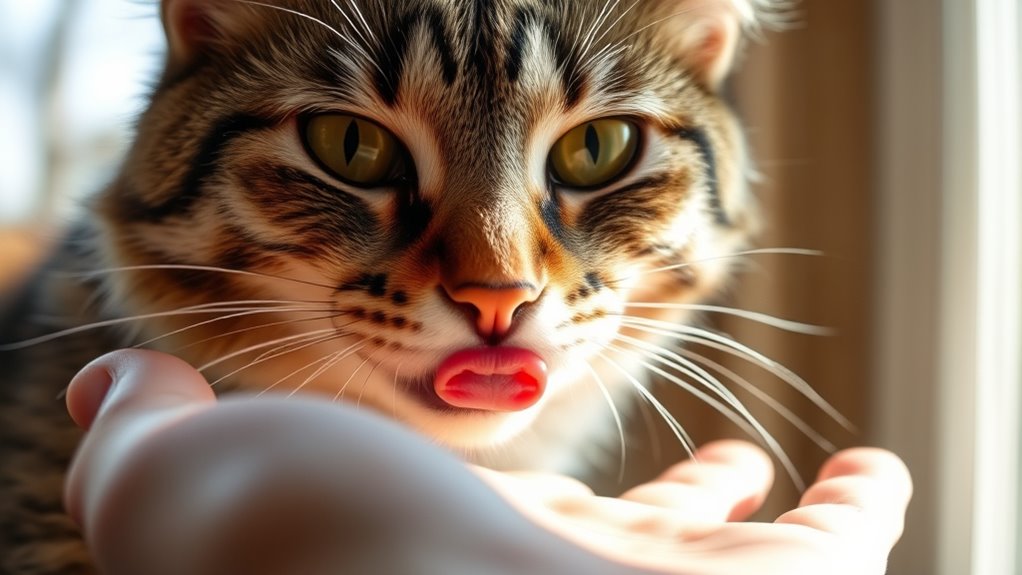
Many cat owners wonder why their feline friends lick them when they’re being petted. If you’ve ever asked yourself this, you’re not alone. Understanding your cat’s behavior can be confusing, but it’s often a sign of affection and trust.
When your cat licks you during petting, it’s a sign of affection, trust, and comfort. Licking mimics grooming behavior and helps strengthen your bond. It can also indicate that she feels safe with you.
Sometimes, quick or excessive licking might be her way of seeking attention or showing stress. Understanding her body language and habits can help you better interpret her reasons.
Keep exploring to learn more about your cat’s unique signals and needs.
Key Takeaways
- Licking shows your cat trusts and loves you, meaning she feels safe and bonded with you.
- It’s also a grooming habit, similar to how cats clean each other as a way to bond socially.
- When she licks while you’re petting her, it’s often a sign she’s happy and comfortable.
- If she licks quickly or unevenly, she might just be seeking attention or reassurance.
- Too much licking could mean she’s stressed, irritated, or has health issues that might need a vet’s attention.
Why Does My Cat Lick Me When I Pet Her?
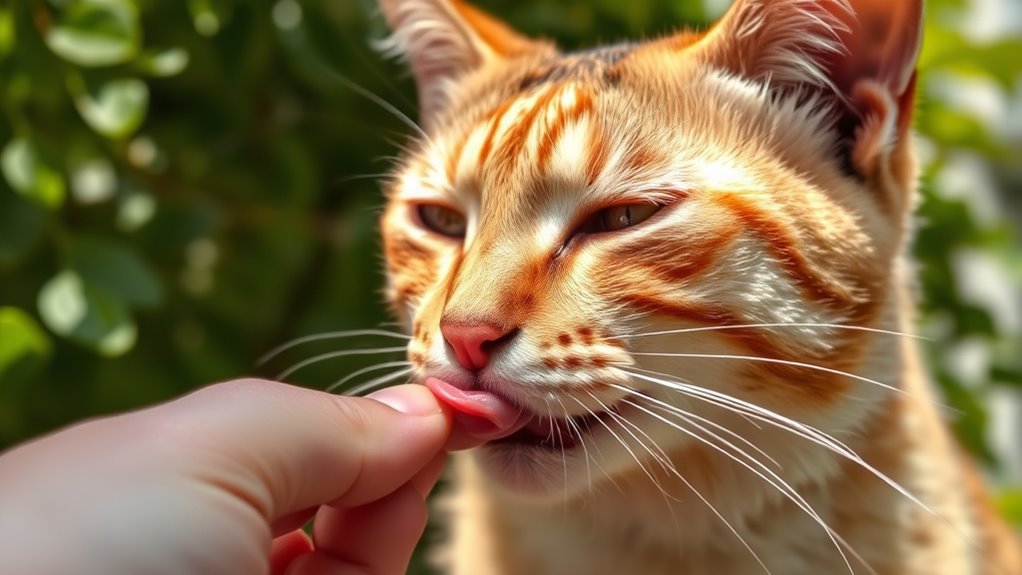
When your cat licks you while you’re petting her, it’s often a sign of affection and trust. This behavior is part of how cats communicate, showing she feels safe and comfortable with you.
A licking cat signals trust, affection, and comfort, showing she feels safe and connected with you.
Cats use licking as a way to bond, similar to grooming other cats in their social group. It’s a sign of love, indicating she considers you part of her family.
Licking also helps your cat mark you with her scent, reinforcing her connection to you. From a behavior perspective, this is a positive sign that your pet enjoys your company.
It’s her way of saying, “I trust you,” and building a close bond. Keep in mind, each cat is different, but generally, a licking cat is happy and reassured.
Recognizing these signals helps you understand her better and strengthens your relationship through clear feline communication.
What Does It Mean When Cats Lick During Petting?
If your cat starts licking during petting, it’s often a sign she’s feeling especially comfortable and content in that moment. This licking behavior is a way for her to communicate trust and relaxation.
Cats groom and lick as a way to connect and show affection, so during petting, it means she feels safe with you. Licking can also be a calming signal, helping her stay relaxed while receiving attention.
Sometimes, it’s her way of marking you with her scent, which reinforces her bond with you. But be aware that excessive licking might indicate stress or a health issue.
How Licking Shows Your Cat’s Affection and Bonding
Licking is one of your cat’s most genuine ways of showing affection and strengthening your bond. When your cat licks you, it’s a sign she trusts and cares about you. Her licking patterns reveal her feelings and her desire to connect.
For example, gentle, frequent licks suggest comfort and love, while more intense licking might mean she’s seeking reassurance. Understanding these subtle signals helps you better interpret her behavior.
| Licking Pattern | Meaning | Context |
|---|---|---|
| Soft, slow licks | Affection and trust | During cuddles or petting |
| Repeated quick licks | Bonding, seeking attention | When she wants to be close or playful |
| Uneven licking | Comfort, reassurance | After stressful events |
| Licking herself then you | Showing care, mimicking grooming | Reinforcing her bond with you |
| Excessive licking | Overstimulation or affection overflow | When she’s overly excited or stressed |
Is Licking a Sign That My Cat Trusts Me?
When your cat licks you, it’s usually a pretty good sign that they trust you and feel comfortable around you. It’s like their way of grooming you, just like they would with another cat they’re close to.
If your cat regularly grooms you, that’s a clear sign they see you as part of their social group and feel safe in your presence. It’s their way of showing affection and bonding with you, so you can take it as a big compliment!
Licking as Affection
A cat’s willingness to lick you often signals trust and affection. Licking is a form of feline communication that shows your cat feels comfortable and safe with you.
When your cat licks, she’s expressing love and acceptance in her own way. It’s similar to how cats groom each other, which is a sign of social bonding.
By licking you, she’s marking you with her scent, reinforcing her connection. It’s a clear sign that she considers you part of her social group.
Remember, this act isn’t just about cleanliness but a meaningful gesture of affection. Your cat’s licking is her way of saying she trusts you and enjoys your company.
It’s one of the sweetest signs of her emotional attachment.
Bonding Through Grooming
Grooming behaviors like licking go beyond simple cleanliness—they’re a deep expression of trust and bonding. When your cat licks you, it’s a sign she considers you part of her social group.
Cats use grooming behaviors to strengthen social bonds, much like how they groom each other in the wild. By licking you, she’s showing trust and affection, signaling that she feels safe and comfortable around you.
This behavior helps reinforce your relationship and builds a sense of security. When your cat chooses to groom you, it’s a clear sign she sees you as a trusted companion.
What Are Other Reasons Cats Lick When You Pet Them?
Cats often lick during petting because it’s their way of showing affection and strengthening your bond. It’s a familiar gesture that signals trust and friendship.
But they also lick for other reasons. Sometimes, it’s grooming behavior—your cat is cleaning herself and extends that to you as part of social signals. Licking can also be a way to mark territory by spreading scent to claim you as part of their space.
Additionally, cats use licking to explore their surroundings. They gather information about your texture or scent through this behavior. It’s a sensory exploration that helps them understand their environment better.
| Reason | Explanation |
|---|---|
| Social signals | Showing trust and friendship |
| Territorial marking | Scent transfer to claim you as part of their space |
| Sensory exploration | Gathering info about your texture or scent |
Sometimes, licking might also relate to play aggression or health issues. It can signal comfort or indicate that something might be wrong. Recognizing these different reasons helps you better understand what your cat is trying to tell you.
How Can I Tell If My Cat’s Licking Is Stress-Related?
While licking can be a sign of affection or curiosity, it can also indicate stress or discomfort in your cat. To figure out if stress is behind her licking, watch for her stress signals and behavior cues.
Signs like flattened ears, dilated pupils, or a tense body suggest she’s feeling anxious. If she suddenly becomes more withdrawn or hides more than usual, those are also stress signs.
Excessive grooming or licking in specific areas can be her way of coping with anxiety. Pay attention to her overall mood and environment—things like new people, loud noises, or routine changes can trigger stress.
If her licking seems obsessive or comes with other stress behaviors, it’s a good idea to check her surroundings and find ways to help her feel more relaxed. Recognizing these cues helps you support her well-being and keep her feeling safe and comfortable.
What Does Excessive Licking Indicate?
Excessive licking in cats can mean a few different things. Sometimes, it’s a sign that your cat is feeling anxious or stressed out. You might notice other signs too, like hiding more often or pacing around.
On the flip side, licking can also just be your cat’s way of showing love and comfort. So, if your cat is licking a lot, it’s good to look for other clues to figure out whether they’re feeling anxious or simply being affectionate.
Signs of Anxiety
When your feline friend starts licking themselves or you more than usual, it can be a sign of underlying stress or anxiety. Excessive licking often falls under anxiety behaviors, showing your cat is trying to self-soothe.
You might notice other signs like restlessness, hiding, or changes in appetite. These behaviors indicate your cat feels uneasy or overwhelmed. Recognizing these signs allows you to implement calming techniques, such as providing a quiet space or using pheromone diffusers.
Reducing triggers like loud noises or new environment changes also helps. If your cat’s anxiety persists, it’s best to consult your veterinarian for tailored advice. Addressing these signs early can ease your cat’s distress and prevent further behavioral issues.
Signs of Affection
A cat’s persistent licking can be a clear sign of affection and bonding. In cat communication, licking is a way your feline shows trust and love. It’s rooted in feline behavior that shows she considers you part of her social group.
When she licks you after petting, she might be marking you with her scent, reinforcing her bond. Excessive licking often indicates comfort and attachment, making her feel secure around you.
You’ll notice she’s relaxed and happy, using licking as a gentle way to connect. Pay attention to her overall demeanor—if she’s calm and purring, it’s a positive sign of affection.
This behavior shows she views you as a safe, loved companion in her world.
When Should I Be Concerned About My Cat’s Licking Habits?
Determining when your cat’s licking crosses the line from normal affection to a sign of concern can be tricky. Pay attention to changes in their licking behaviors—if your cat suddenly starts licking excessively or compulsively, it might signal stress, anxiety, or health issues.
While licking is a common way cats communicate, persistent or intense licking could indicate skin irritation, allergies, or pain. Watch for signs like bald patches, redness, swelling, or raw skin where your cat licks.
If your cat’s licking becomes obsessive or if they lick objects, themselves, or you more than usual, it’s time to see a veterinarian. Excessive licking can sometimes hide underlying problems that need treatment.
How Can I Encourage Healthy Licking and Strengthen Our Bond?
Building a strong bond with your cat can naturally encourage healthy licking behaviors that deepen your connection. To do this, focus on positive interactions that reward your cat’s trust.
Here are four ways to encourage healthy licking and strengthen your bond:
- Encourage play – Engage your cat with toys to build trust and create positive associations.
- Use positive reinforcement – Praise or treat your cat when she licks gently, reinforcing the behavior.
- Maintain consistency – Regular routines help your cat feel secure, making her more comfortable during petting and licking.
- Respect boundaries – Let her initiate licking and avoid forcing contact, which could cause stress.
Reading Your Cat’s Body Language During Petting
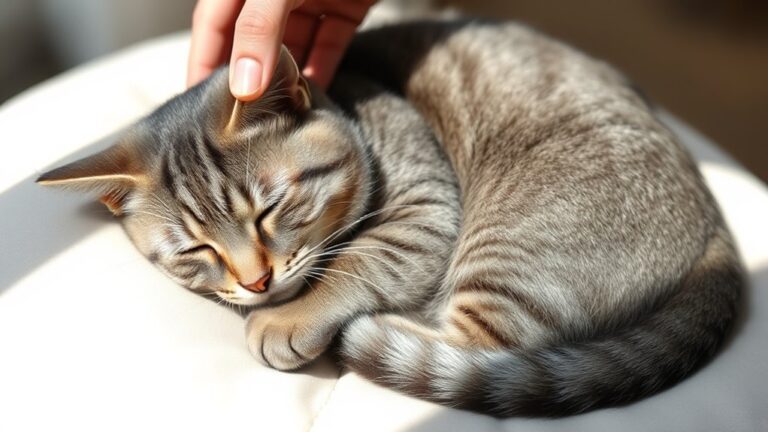
As you’re petting your cat, keep an eye out for signs that she’s feeling relaxed and comfortable. Things like purring, soft eyes, and a loose, relaxed posture are good indicators that she’s enjoying the attention.
But if she starts to stiffen up, swats at your hand, or tries to move away, those are signs she might be feeling stressed or uncomfortable. Recognizing these signals is really important because it helps you know when to give her some space or change your approach. That way, you can keep your feline friend feeling safe and happy during your cuddle sessions.
Recognizing Relaxed Postures
When your cat feels relaxed during petting, her body will often signal comfort through specific postures. Recognizing these signs helps you understand her level of feline relaxation and whether she’s truly content.
Look for soft, slow blinking, which shows trust and calmness. Gentle purring also indicates she’s enjoying the interaction.
Notice loose, stretched limbs with relaxed muscles—these are signs she’s comfortable. A gently swaying tail or a tail held high without puffiness are also good indicators.
These signals are key in reading your cat’s body language and show she’s relaxed and happy. When her ears are forward and her eyes are half-closed, she’s clearly enjoying the moment.
Paying attention to these subtle cues helps you foster a positive bond. It also ensures petting remains a pleasant experience for both of you.
Identifying Stress Signals
Even if your cat seems relaxed during petting, it’s important to stay alert for signs of discomfort or stress. Watch for stress indicators like flattened ears, twitching tail, or dilated pupils—these signals show she’s overwhelmed.
Stress triggers can include loud noises or unfamiliar surroundings, while environmental factors may cause her to seek a safe space. Recognizing feline body language helps you respond calmly with techniques like gentle petting or offering a cozy spot.
| Stress Indicators | Behavior Signals |
|---|---|
| Flattened ears | Swatting or biting |
| Puffed-up fur | Hiding or avoiding |
| Dilated pupils | Tense body or stiff stance |
Understanding these cues allows you to adjust your approach and help make your cat feel more comfortable.
Frequently Asked Questions
Can Licking Indicate Health Problems in My Cat?
Licking behavior can sometimes signal health issues, so it’s worth paying attention. If your cat excessively licks herself or you, it might indicate allergies, skin problems, or stress.
While grooming habits are normal, unusual or constant licking can be a stress response or a sign of discomfort. Monitor her overall health indicators, and if the licking persists or worsens, consult your vet to rule out any underlying health problems.
Why Does My Cat Lick Certain Areas More Than Others?
You know what they say: “A little goes a long way.” Your cat licks certain areas more because of grooming and social bonding.
She might focus on spots she finds important or comfortable, like her paws or face. This helps her show affection or mark her territory.
This selective licking helps her bond with you and stay clean. It highlights her natural instincts and your close connection.
Is It Normal for Kittens to Lick Their Owners?
Yes, it’s normal for kittens to lick their owners. This bonding through grooming shows trust and affection.
When your kitten licks you, she’s mimicking her natural grooming instincts, which helps strengthen your bond. Licking also makes her feel more secure and connected.
As she grows, this behavior might decrease or change, but it’s a positive sign that she sees you as part of her family.
How Does Licking Differ Between Male and Female Cats?
You’ll notice male and female cats express affection differently through licking. Male cats often use licking as a way to mark territory or bond socially, showing dominance or friendship.
Females tend to have more steady grooming habits, using licking as a gentle way to show affection and communicate.
Their licking styles reveal their social bonds; males can be more assertive, while females are typically more nurturing. This makes each cat’s way of licking uniquely expressive.
Can Licking Be a Sign of Feline Anxiety or Boredom?
Yes, licking can be a sign of feline anxiety or boredom. When your cat licks you, she might be looking for comfort or trying to relieve stress.
If she’s licking excessively, it could mean she’s trying to soothe herself or just needs more stimulation. Providing more playtime, toys, and a calm environment can help.
These changes can reduce her need to lick for comfort and help her feel more relaxed and engaged.
Conclusion
When your cat licks you during petting, it’s like a gentle whisper of trust and affection. It shows a bond built on love and comfort, turning simple moments into special ones.
This act speaks volumes, transforming fleeting cuddles into lasting memories. Your cat’s licking is her way of saying, “You’re part of my world.”
So, cherish these signs of connection. Remember—your cat’s licking is a beautiful gesture of trust and love, making everyday cuddles even more meaningful.