What Causes Cats to Purr When You Pet Them?
If you’re a cat owner, you’ve probably wondered why your feline friend purrs when you pet them. It’s a common question, and many people struggle to understand what that adorable sound really means.
When you pet your cat, the physical touch stimulates their nervous system, triggering a reflex that causes their muscles to contract and produce the rhythmic vibrations of purring. This response signals comfort, happiness, or even self-soothing in stressful situations.
Individual personalities and the gentleness of your touch can influence how much they purr.
If you want to understand more about what your cat’s purring really means, keep exploring—there’s a lot more to unearth.
Key Takeaways
- Gentle petting stimulates nerve endings, which triggers a relaxation response that starts purring.
- Petting mimics maternal grooming, activating comfort-related neural pathways in cats.
- Cats connect petting with positive feelings, so purring becomes a sign they’re happy.
- Physical contact releases endorphins, making them feel good and encouraging purring.
- Petting helps reduce stress and anxiety, so cats purr as a way to soothe themselves.
What Is Purring and Why Do Cats Do It?
Purring is a rhythmic vibration that cats produce, often heard when they’re relaxed or content. This behavior has evolved over time, serving as a way for cats to communicate and soothe themselves.
The evolution of purring suggests it started as a survival trait, helping cats calm anxiety or pain. Today, it’s also a way for cats to show they’re comfortable or trusting, signaling their feelings to humans and other animals.
When you pet your cat, the purring acts as a gentle message that they feel safe and happy. Interestingly, cats can purr in many situations, not just when they’re relaxed—sometimes during distress or illness.
This suggests that purring might also have a self-healing function. Overall, purring is more than just a sound; it’s a complex behavior linked to a cat’s emotions and evolutionary history.
How Do Cats Make That Purring Sound? The Science Explained
When your cat starts to purr, a complex process unfolds inside its body that produces that familiar, rhythmic sound. The mechanics involve quick, rhythmic contractions of the voice box muscles, called the laryngeal muscles.
These contractions open and close the glottis, which is the space between the vocal cords, at a rate of 25 to 150 vibrations per second. This rapid movement causes turbulent airflow, creating the characteristic purring sound.
Your cat’s brain sends signals to these voice box muscles, coordinating the movements smoothly. The purring pattern is consistent and rhythmic, and it might serve various functions like communication or self-healing.
Interestingly, cats can purr during both relaxation and discomfort, showing how complex this behavior really is. Overall, the science behind purring reveals a finely tuned system of muscle control and neural coordination that produces those soothing vibrations you recognize as a purr.
Why Do Cats Purr When You Pet Them? Understanding the Trigger
When you pet your cat gently, it often responds by purring, which is a pretty clear sign that it’s feeling comfy and happy. It’s like your cat’s way of saying, “Hey, I really like this!” That little purr isn’t just a random noise—it’s actually a way for your feline friend to show they’re relaxed and at ease.
Plus, when your cat purrs while you’re petting it, it helps strengthen your bond. It’s like a secret language that builds trust between you two. Getting to know what makes your cat purr can really help you understand how they’re feeling, so you can make sure your time together is always a positive experience.
Gentle Touch Stimulates Purring
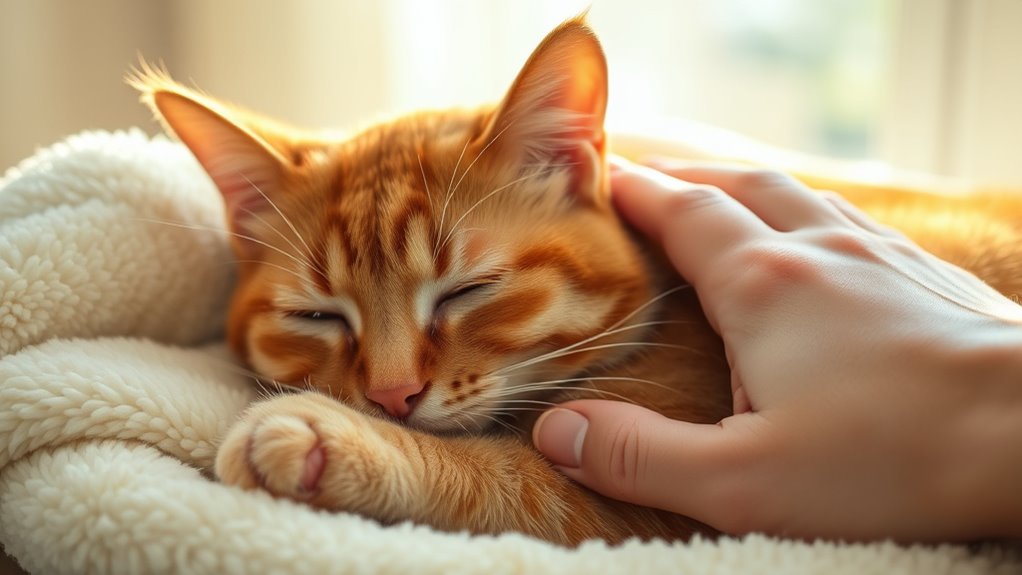
A gentle touch often triggers a cat’s purring response, as their body instinctively associates light petting with comfort and safety. When you give gentle strokes, you activate soothing vibrations that encourage your cat to relax even more.
Cats tend to respond positively to this delicate contact because it mimics the gentle grooming they experience from their mother or fellow cats. The soft, consistent pressure creates a calming effect that can start or keep their purring going.
You’ll notice that the more gentle and steady your touch, the deeper and more rhythmic their purring becomes. This reaction is a sign of contentment and trust, strengthening the bond between you and your feline friend.
Gentle strokes are a simple yet powerful way to trigger that comforting purr.
Comfort and Contentment Signals
Cats show their comfort and happiness through subtle signals, with purring being one of the main signs. When you pet them, their purring often means they feel safe and relaxed in their environment. These signals help you understand their emotional state.
Recognizing their body language is key to knowing how they feel. For example, a relaxed posture with loose muscles and slow blinking indicates contentment and trust.
The position of their tail also matters. An upright or gently flicking tail is a sign of happiness and comfort. Steady, gentle purring vibrations show they feel emotionally safe and satisfied.
Lastly, their ears and whiskers can tell you a lot. When their ears are forward-facing and their whiskers are relaxed, it means they are calm and at ease.
Bonding and Trust Building
Purring often happens during petting because it helps strengthen the bond between you and your cat, building trust and emotional connection. When your cat purrs, it’s a sign she feels safe and comfortable.
This vocalization is part of bonding rituals that deepen her affection. Pay attention to these cues:
- Your cat approaches willingly, showing she’s at ease.
- She leans into your touch, indicating trust.
- She maintains eye contact, which signals a strong emotional connection.
- She purrs softly, reinforcing her feeling of safety and attachment.
These behaviors create a feedback loop, where purring acts as a way for your cat to communicate and foster mutual trust.
Over time, these signals strengthen your relationship, making petting a special bonding experience for both of you.
Do All Cats Purr When You Pet Them? Variations in Behavior
Ever wonder why some cats purr when you pet them while others don’t? It all depends on their unique personalities and behavioral differences. Not all cats share the same purring habits; some purr loudly and often, while others rarely do.
Your cat’s individual responses can be influenced by environmental factors and how you interact with them. These elements shape how they react to your touch and whether they purr or not.
Here’s a quick look at these differences:
| Cat Personality | Purring Response | Influencing Factors |
|---|---|---|
| Confident | Purrs often | Social environment |
| Shy | Purrs minimally | Past experiences |
| Playful | Purrs during play | Interaction style |
Understanding these variations helps you see that your cat’s purring isn’t just about being happy. It also shows their comfort level and personality traits.
What Do Different Purring Sounds Mean? Contentment vs. Self-Soothing
You’ve probably heard your cat’s purrs when they’re just chilling out and feeling totally happy. Those happy purrs are a clear sign that your kitty is content and relaxed. On the other hand, you might notice softer or more persistent purring when your cat seems a bit stressed or uncomfortable. In those moments, the purring could be them trying to soothe themselves.
Getting to know these little differences in their purrs can really help you figure out how your cat is feeling. Are they purring because they’re happy and comfortable? Or are they purring as a way to calm down during a rough patch? It’s a small thing, but understanding it can make you a better kitty parent.
Contentment Purring Indicators
Different purring sounds can reveal whether your cat is feeling content or just self-soothing. When your cat is truly happy, their purring usually has certain traits: higher frequencies, a steady rhythm, and a relaxed body posture. These are clear signs of contentment.
Here are some indicators to look for:
- A consistent, steady purring tone without any pauses
- Relaxed body language, like soft blinking or stretching out
- Purring that matches your petting rhythm smoothly
- A gentle, soothing sound, often at higher frequencies
Recognizing these signs helps you understand your cat’s emotional state. It shows they’re happy and comfortable in your company, not just self-soothing during stressful moments.
Self-Soothing Signals
While purring often signals happiness, cats also purr to soothe themselves when they’re stressed or in unfamiliar situations. This behavior helps them manage anxiety and stay emotionally balanced when things feel new or uncomfortable.
Different purring sounds can show this calming process, which is different from the purrs they make when they’re content. When your cat purrs during stressful moments, it’s their way of calming nerves and regaining control.
You might notice a softer, faster vibration—this signals they’re trying to soothe themselves. Recognizing these signals helps you understand how your cat is feeling emotionally.
Supporting your cat’s need to purr during stressful times can boost their overall well-being. It helps them feel safe and secure, knowing they have ways to calm down when things get overwhelming.
How Trust and Comfort Influence Your Cat’s Purring
Trust and comfort are key factors that really influence your cat’s purring behavior. When your cat feels safe, it’s more likely to purr when you pet it because its trust and comfort levels are high.
Look for these signs:
- Your cat comes to you willingly, with half-closed eyes and relaxed body language.
- It leans into your touch, showing it enjoys and trusts you.
- The cat stays close and makes eye contact, which signals it’s comfortable.
- It purrs softly, a clear sign that it feels secure and at ease.
These behaviors show your cat trusts you and feels comfortable. The more trust your cat has, the more genuine and frequent its purring becomes. This bond makes your pet feel safe and loved, encouraging more relaxed and happy purring episodes.
Can Cats Purr When They’re in Pain or Discomfort? Recognizing the Signs
Although purring is often a sign of contentment, cats can also purr when they’re in pain or discomfort. Recognizing pain indicators is crucial because purring alone doesn’t always mean your cat feels safe.
Cats in pain might still purr as a way to self-soothe, which is an emotional response. Look for other signs like hiding, changes in appetite, rapid breathing, or a lack of energy.
They may also groom themselves excessively or show sensitivity to touch in certain areas. These behaviors signal discomfort rather than happiness.
Understanding that cats can produce purring as a response to pain helps you better interpret their emotional responses. If your cat is purring but also displays these pain indicators, it’s important to consult a veterinarian to rule out injury or illness.
Recognizing these signs guarantees you respond promptly, supporting your cat’s health and well-being.
How Your Cat’s Body Language Goes Hand-in-Hand With Purring
Your cat’s body language gives you important clues that go hand-in-hand with their purring sounds, helping you understand how they really feel. Paying attention to these cues along with their purring patterns shows their emotional state.
For example, a relaxed posture with a stretched-out body, soft eyes, and gentle tail movements means your cat is content and comfortable. They seem happy and at ease.
When your cat kneads or softly presses their paws, it’s a sign of affection and satisfaction, often paired with gentle purring. It shows they’re feeling happy and secure.
Watch their ears and whiskers. Forward-facing ears and relaxed whiskers suggest happiness, while flattened ears or tense whiskers mean they might be uncomfortable or stressed.
Finally, check their tail. A slowly swaying or upright tail signals a confident, happy cat. But if their tail is puffed up or tucked, it’s a sign of stress or fear.
How Understanding Purring Helps You Bond Better With Your Cat
Understanding what your cat’s purring means can really strengthen your bond because it reveals how they truly feel and how comfortable they are.
Recognizing purring as a form of feline communication helps you respond more naturally to your cat’s needs. When your cat purrs during petting, it usually means they’re happy and trusting you.
It shows they’re comfortable and content. On the other hand, subtle changes in purring can signal stress or discomfort, so you can adjust how you’re interacting with them.
By understanding these cues, you build a deeper connection and create a sense of safety for your cat. This awareness helps you interpret their emotions more accurately, making your interactions more meaningful.
Over time, this better communication encourages your cat to trust you more, strengthening your relationship. Basically, understanding purring transforms petting from just a simple act into a shared moment of comfort and affection.
FAQs: Common Questions About Cat Purring
Curious about why cats purr and what it really means? Many myths about purring exist, but understanding the facts helps you interpret your cat’s behavior better. When your feline purrs, it’s often a sign of comfort, happiness, or even self-healing.
However, some misconceptions suggest cats always purr when they’re content. That’s not true. Here are some common questions to help clarify things:
1. Why do cats purr when they’re injured or unwell?
Purring can be a way for cats to soothe themselves or promote healing, not just a sign of happiness.
2. Can cats purr loudly or softly?
Yes, the intensity of purring varies based on their mood and situation.
3. Is purring always a good sign?
Most of the time, yes, but sometimes cats purr to mask pain or stress.
4. Do all cats purr?
No, some breeds don’t purr or only do so faintly.
Knowing these facts helps you read your cat’s cues more accurately, moving beyond myths to genuine understanding.
Frequently Asked Questions
Can Cats Purr to Communicate With Humans or Other Animals?
Yes, cats purr to communicate with humans and other animals. Your feline uses purring to show comfort, happiness, or even to seek attention.
It’s their way of sharing feelings and bonding with you. When you pet them and they purr, they’re telling you they feel safe and content.
Recognizing purring as a form of communication can help strengthen your bond and give you a better understanding of what your cat is feeling.
Is Purring Always a Sign of Happiness in Cats?
Not all purring behaviors signal happiness; cats also purr when they’re anxious, in pain, or unwell. You might think purring always means contentment, but it’s actually an emotional signal that can convey different feelings.
Pay attention to your cat’s body language and the context. If your cat’s purring occurs alongside a relaxed posture, it’s probably a sign of happiness.
However, if the purring is paired with signs of distress, it could mean your cat is uncomfortable or stressed.
Do Kittens Start Purring Before or After Birth?
Kittens start purring after birth, during early development, as they begin to interact with their environment.
They usually don’t purr before birth, but they respond to their mother’s voice and vibrations in the womb. This early response helps strengthen their bond and gives them comfort even before they are born.
Their purring after birth continues to help bond with their mother and humans. It also signals that they’re happy or feeling relaxed and safe.
Can Cats Purr Loudly Enough to Be Heard From a Distance?
Yes, cats can purr loudly enough for you to hear from a distance. Some cats reach up to 50 decibels, which is about the same as a quiet conversation.
The purring mechanism involves quick muscle movements inside the larynx. It’s a key part of how cats communicate.
This loud purring can mean your cat is happy or sometimes distressed. It helps you understand how your cat is feeling, even from far away.
How Does Age Affect a Cat’s Purring Frequency and Tone?
As your cat ages, its purring development and age differences influence purring frequency and tone.
Younger cats often purr more frequently and with a higher pitch, signaling excitement or contentment.
Older cats may purr more softly or at a different frequency, reflecting comfort or health changes.
You’ll notice variations in tone and intensity as your cat matures, revealing how age impacts its purring behavior and communication style over time.
Conclusion
Understanding why your cat purrs when you pet them uncovers a secret world of companionship that’s as profound as revealing the universe itself. When you recognize their purring signals, you’re not just hearing a sound—you’re forging a bond stronger than steel.
So, keep paying attention to those gentle vibrations because each purr is a tiny symphony of trust and comfort. This simple act of petting and their purring show how cats communicate their happiness and bond with you.
In the end, knowing why cats purr when you pet them helps deepen your connection. Their purring is more than just a sound; it’s a sign of love and trust that makes your relationship with your feline friend truly extraordinary.