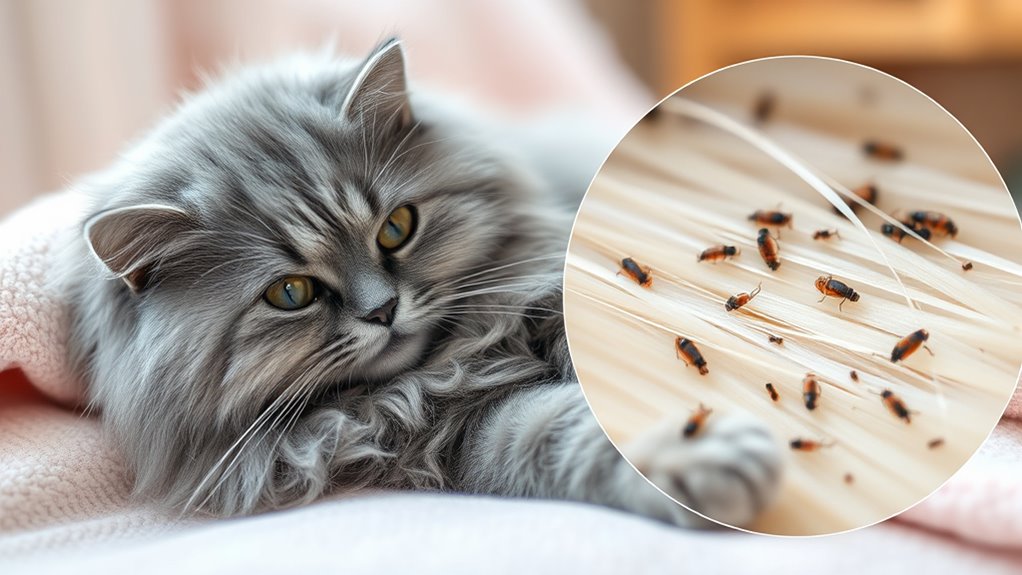
How to Determine if Indoor Cats Need Flea Medicine
Many indoor cat owners worry about fleas, even if their feline friends rarely go outside. You’re not alone—many people struggle with keeping fleas away from their cozy homes. It’s easy to overlook the signs, but catching them early makes all the difference.
Even if your cat stays indoors, watch for signs of fleas like excessive scratching, biting, or flea dirt on their fur.
Look for redness, hair loss, or irritated skin, which may indicate allergies or flea bites. Fleas can hitch a ride on clothing or visitors and thrive in warm, cozy spots inside your home.
To keep your feline safe, find out more about effective prevention methods and when to start treatment.
Key Takeaways
- Keep an eye on your cat for signs of fleas, like excessive scratching, biting, or grooming.
- Check for flea dirt, which looks like small black specks, on their fur or skin.
- Look for skin irritation, redness, hair loss, or sore spots that could mean flea bites.
- Think about whether your cat has recently been outside or around other pets.
- Regularly inspect bedding, carpets, and furniture for flea eggs, larvae, or adult fleas.
Why Indoor Cats Still Need Flea Prevention

Even if your cat stays indoors, they can still be at risk of fleas. Indoor environments aren’t completely foolproof—they can harbor flea eggs, larvae, and pupae that are part of the flea lifecycle.
Fleas don’t need outdoor access to survive. They can hitch a ride inside on your clothing, shoes, or even other pets that venture outdoors.
Fleas can easily come inside on clothing, shoes, or other pets, even without outdoor access.
Once inside, fleas can quickly establish a colony in your home’s carpets, furniture, and bedding. This means your indoor cat is vulnerable to bites and potential health issues like allergies or skin infections.
Understanding the flea lifecycle helps you see how easily fleas can persist indoors. Eggs hatch into larvae, then pupate into adult fleas, ready to jump onto your cat.
Preventing fleas requires interrupting this cycle early. That’s why indoor cats still need regular flea prevention, even if they never step outside.
How Do Fleas Usually Infest Indoor Cats?
Fleas often find their way into indoor homes through different indirect routes, making it surprisingly easy for them to infest cats indoors. They usually hitch a ride on pets or people who have been outside, then jump onto your cat when they come inside.
Once on your cat, fleas go through their life cycle—laying eggs in the fur, which then fall into your indoor environment. These eggs hatch into larvae, then pupate, and finally emerge as adult fleas ready to feed.
Because your home provides a warm, cozy space, fleas can thrive indoors without needing to go outside again. They hide in carpets, furniture, and bedding, making it easy for your cat to come into contact with them.
Understanding this cycle helps you see how fleas can infest indoor cats, even if they rarely go outdoors.
Can Fleas Live Fully Indoors Without Going Outside?
While fleas are often linked to outdoor areas, they can survive and reproduce entirely indoors if conditions are just right. They have a complete lifecycle that includes eggs, larvae, pupae, and adults.
Inside, fleas can thrive if there’s a steady blood source, like your cat, and a warm, humid environment. Their lifecycle allows them to persist for months without going outside, especially if they find hiding spots like carpets, bedding, or furniture.
Fleas thrive indoors with a blood source and warm, humid conditions, hiding in carpets, bedding, and furniture.
Adult fleas lay eggs constantly, which fall into these spots and hatch over time. Larvae feed on organic debris, and pupae stay dormant until vibrations or heat signal it’s time to emerge.
Thanks to this resilient lifecycle, fleas can establish a full colony indoors without your cat ever leaving the house. That’s why indoor cats are still at risk, even if they stay inside all the time.
How to Recognize Fleas and Flea Allergic Reactions in Your Cat
How can you tell if your cat has fleas or is experiencing a flea allergy? Look for common flea symptoms like excessive scratching, biting, or grooming, especially around the neck, tail, and ears.
Flea dirt—tiny black specks—may be visible on your cat’s skin or fur. You might also notice hair loss, redness, or irritated skin from allergic reactions.
Flea allergic reactions often cause intense itching and inflammation, leading to sore spots or scabs. Some cats develop secondary infections from constant scratching.
Keep an eye out for visible fleas or flea eggs on your cat’s coat or bedding. Recognizing these signs early helps you decide if your indoor cat needs treatment.
Even if your cat stays indoors, fleas can still cause allergic reactions if they’re brought inside on clothing or other pets. Accurate identification ensures prompt action to keep your cat healthy and comfortable.
When Should You Start Using Flea Medicine for Your Indoor Cat?
So, when should you start using flea medicine for your indoor cat? Well, even if your kitty mostly stays inside, there are some situations where it’s a good idea to start thinking about flea prevention. For example, if you have visitors with pets or if your cat has access to outdoor areas like windowsills or balconies, they could still be at risk.
It’s also smart to keep an eye out for any signs that your cat might have fleas. Things like scratching a lot, hair loss, or even tiny flea dirt particles in their fur can be clues. If you notice any of these signs, it’s best to act quickly before the fleas become a bigger problem.
Starting flea medication early can really help prevent a full-blown infestation and keep your furry friend comfortable and happy.
Flea Exposure Risks
Indoor cats may seem protected from fleas, but they can still be exposed, especially if they come into contact with infested bedding, rugs, or even visitors’ clothing. Flea exposure risks depend on various factors, including the flea life cycle, which allows fleas to develop quickly in warm, humid environments.
Exposure sources include contact with infested items or outdoor areas where infested animals have been. Environmental factors like poor cleaning or high humidity increase the risk, and transmission routes such as direct contact or shared bedding help facilitate infestation.
To see if your cat might be at risk, consider these points:
- Contact with infested objects or animals
- Environmental conditions that favor fleas
- Presence of fleas or flea dirt indoors
- Recent outdoor visits or visitors’ pets
Signs of Infestation
Even if your cat lives indoors, signs of flea infestation can still pop up unexpectedly. Fleas have a quick life cycle, and the indoor environment offers plenty of hiding spots for eggs, larvae, and pupae.
Look for scratching, biting, or licking, especially around the neck and tail base. You might also notice tiny dark specks—flea dirt—on your cat’s skin or bedding.
Visible fleas are often hard to see, but they may jump when disturbed. Check your cat regularly, especially if you have other pets or if you’ve been outdoors recently.
Fleas thrive indoors, so early detection is key. Recognizing these signs helps you decide when to start flea medicine and break the flea life cycle before things get worse.
Step-by-Step: How to Check Your Indoor Cat for Fleas
To check your cat for fleas, start by examining their fur closely, especially around the neck, behind the ears, and near the tail base. Use your fingers or a fine-toothed flea comb to gently part the fur and look for tiny black specks, which could be flea dirt.
You can also shake out the comb onto a damp paper towel. Flea dirt will turn reddish-brown when wet, making it easier to spot. Additionally, look for redness, irritated patches, or small bites on your cat’s skin.
Regularly check during grooming sessions, especially if your cat shows signs of itching or scratching. Consistent grooming helps catch fleas early and keeps your cat comfortable.
Top Flea Prevention Strategies for Indoor Cats
Implementing effective flea prevention for your indoor cat involves more than just occasional treatments; it requires a consistent approach. You can incorporate natural remedies like diatomaceous earth or herbal sprays to deter fleas without harsh chemicals.
Maintaining a clean indoor environment is essential—vacuum often and wash bedding regularly to disrupt the flea life cycle. Grooming techniques, such as daily brushing, help you spot fleas early and remove eggs before they hatch.
Understanding the flea life cycle allows you to target each stage effectively. For example, breaking the cycle prevents infestation growth. To make it easier, here’s a quick overview:
| Method | Benefits | Tips |
|---|---|---|
| Natural remedies | Gentle, chemical-free control | Use with regular cleaning |
| Grooming techniques | Early detection, removal of eggs | Brush daily, inspect thoroughly |
| Indoor environment | Limits flea habitat, disrupts cycle | Vacuum often, wash bedding |
Combining these strategies keeps your cat flea-free naturally and effectively.
Are OTC Flea Medications Safe for Your Indoor Cat?
Are over-the-counter (OTC) flea medications safe for your indoor cat? While many OTC options claim to be safe, it’s important to consider OTC safety and your cat’s sensitivities.
Not all medications are suitable for every feline, especially those with underlying health issues or sensitivities. To ensure safety, keep these points in mind:
- Check the ingredients for anything known to cause adverse reactions in cats.
- Always consult your veterinarian before using any OTC product, particularly if your cat has sensitivities.
- Follow the dosage instructions carefully to avoid overdose or toxicity.
- Watch for signs of adverse reactions like vomiting, lethargy, or skin irritation, and seek veterinary care immediately if needed.
How Often Should You Give Flea Medication to Your Cat?
Determining how often to give flea medication to your cat depends on the specific product you’re using and your cat’s lifestyle. Flea medication frequency varies based on the active ingredients and formulation, so always follow the dosage recommendations provided by the manufacturer.
Flea medication frequency depends on the product and your cat’s lifestyle—always follow manufacturer instructions.
Some products are designed for monthly use, while others might require treatment every few weeks, especially during peak flea season. For indoor cats, the need for frequent treatment may be less, but it’s still crucial to stick to the recommended schedule.
Check the packaging or talk to your veterinarian to confirm the correct dosage for your cat’s weight and health. Over- or under-dosing can lead to ineffective treatment or possible health risks.
Regular application according to the instructions helps keep your cat protected without unnecessary exposure. Remember, consistent treatment is key to preventing fleas and keeping your cat comfortable.
Simple Steps to Keep Fleas Out of Your Home
Keeping fleas out of your home is all about staying consistent with your cleaning routine. Regularly vacuuming carpets and washing bedding often can really make a difference. It might seem simple, but these small steps help remove fleas and their eggs before they have a chance to settle in.
You’ll also want to use preventative treatments on your pets and around your house. This creates a barrier that keeps fleas from taking hold in the first place. When you stay on top of these treatments, it’s much easier to keep your indoor cats and your home flea-free. Just a little effort goes a long way in protecting your space!
Regular Cleaning Practices
Regular cleaning is one of the most effective ways to prevent fleas from taking hold in your home. Consistently perform these steps to keep fleas at bay:
- Regular vacuuming: Focus on carpets, rugs, and upholstery where fleas and eggs can hide. Empty the vacuum bag or canister immediately afterward.
- Wash pet bedding: Clean your cat’s bedding weekly in hot water to eliminate fleas, eggs, and larvae.
- Clean hard surfaces: Wipe down floors, furniture, and baseboards to remove any eggs or fleas that may have fallen.
- Declutter: Reduce clutter and stuffed items that can harbor fleas and eggs, making cleaning more effective.
Sticking to these practices helps create an environment less hospitable to fleas.
Preventative Treatments
Preventative treatments are essential for stopping fleas before they make themselves at home in your house. You can consider natural remedies and holistic approaches to protect your indoor cats.
Regularly vacuum carpets, furniture, and bedding to remove flea eggs and larvae. Use natural repellents like diatomaceous earth or essential oils (make sure they’re safe for cats) to deter fleas.
Applying holistic treatments such as herbal sprays or collars made from natural ingredients can also be effective. Keep your home dry and maintain good hygiene since fleas thrive in damp environments.
Always check with your veterinarian about safe, preventive options tailored to your indoor cats. Combining these simple steps with consistent cleaning creates a barrier, reducing the risk of fleas infiltrating your home without relying solely on chemical treatments.
Frequently Asked Questions
Can Indoor Cats Get Fleas Without Any Outdoor Exposure?
Yes, indoor cats can get fleas without outdoor exposure. Fleas can enter your home through various ways, like new pets, visitors, or even on your clothes.
The flea lifecycle allows them to thrive indoors, especially if the environment is warm and humid. Once inside, fleas can hide in carpets, bedding, and furniture.
This makes it possible for your indoor cat to pick up fleas even without ever going outside.
What Are the Signs of Flea Infestation in Indoor Cats?
You’ll notice flea infestation signs in your indoor cat through flea behavior like scratching, biting, or licking excessively.
You might also see tiny black specks—flea dirt—on their fur or around their environment. Fleas can thrive in your indoor space if your cat interacts with infested objects or people.
Regularly check your cat’s skin, especially around the neck and tail, and keep things clean to catch an infestation early and prevent it.
Are There Natural or Home Remedies for Flea Prevention?
Yes, you can try natural remedies like herbal treatments and essential oils, but be cautious.
Some essential oils, like lavender or eucalyptus, can be safe if they are very diluted, but many are toxic to cats.
Herbal treatments such as chamomile or rosemary might help repel fleas.
Always check with your vet before using any home remedies, as some natural options can harm your feline friends.
How Do I Choose the Best Flea Medication for My Indoor Cat?
To choose the best flea medication for your indoor cat, think about the different types like topical treatments, oral pills, or collars.
Focus on options that are safe for indoor cats by selecting products made specifically for them and talking to your vet.
Look for products that are proven effective, have few side effects, and are easy to apply.
Always follow the instructions carefully and check for any health considerations to keep your cat comfortable and safe.
Is It Necessary to Treat My Entire Home for Fleas?
If your indoor cat shows flea signs, treating your entire home is often necessary because fleas can hide in indoor environments.
For example, a homeowner noticed fleas on their cat despite indoor-only living. Since fleas have a lengthy life cycle and can thrive indoors, you should treat all areas, including bedding and carpets.
This approach breaks the flea life cycle and prevents reinfestation, ensuring your cat stays flea-free.
Conclusion
Even if your cat never steps outside, fleas can sneak in like tiny ninjas, causing chaos in your home and turning your cozy haven into a flea battlefield.
Don’t wait for your feline friend to turn into a scratching, irritated mess. Stay ahead of those pesky invaders!
Regular prevention isn’t just a good idea; it’s your secret weapon in keeping your indoor cat’s kingdom flea-free and happy.
Stay vigilant, and keep those fleas at bay by knowing when indoor cats need flea medicine.