Home Testing for Cat Allergies: Identify Them Yourself
Many people love cats but struggle with allergies that can make daily life uncomfortable or even unbearable. If you’re wondering whether you’re allergic to cats, you’re not alone—many share the same concern.
Luckily, home testing kits make it easier than ever to find out without rushing to the doctor.
If you want to identify whether you’re allergic to cats yourself, home testing kits can help. These kits allow you to collect a blood or skin sample easily at home, which is then analyzed for allergens.
Choose a reputable, validated kit with clear instructions, and carefully follow the steps to get your results.
Keep in mind that results may vary, and understanding what they mean is important.
Keep exploring to learn how to interpret your results and manage your allergies effectively.
Key Takeaways
- Use trusted home allergy test kits that check for specific IgE antibodies to spot potential cat allergies.
- Follow the instructions carefully to collect blood or skin samples accurately for trustworthy results.
- Pay attention to symptom patterns along with the test results to better figure out if cats are causing your allergies.
- Check common allergen spots like bedding, furniture, and litter boxes where cat dander tends to gather.
- Think about re-testing or talking to a healthcare professional if your symptoms stick around or the results aren’t clear.
How Do Home Cat Allergy Tests Work and Are They Accurate?
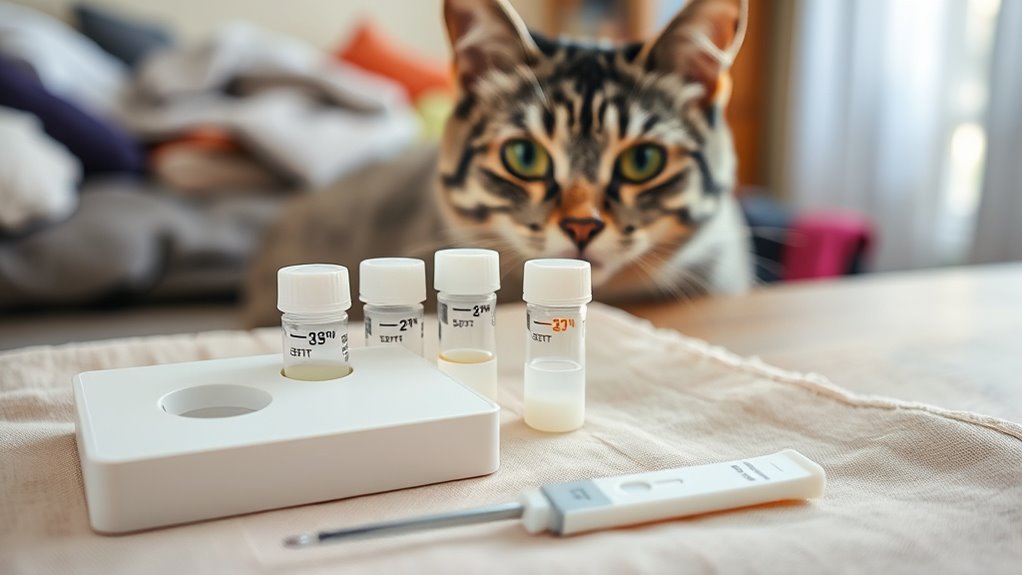
Wondering how home cat allergy tests work and if they’re reliable? With home testing, you usually collect a small blood or skin sample and send it to a lab for analysis.
These tests look for specific antibodies, like IgE, that your body makes in response to cat allergens. After processing your sample, the lab gives you results about whether you have an allergy and how severe it might be.
While home testing is convenient, questions about accuracy pop up. Some tests can give false positives or negatives, especially if samples aren’t collected correctly or if the test kit isn’t approved by health authorities.
It’s really important to follow the instructions carefully to get reliable results. Keep in mind that home tests aren’t always as precise as lab-based allergy testing.
They can be a helpful starting point, but for a definitive answer, it’s best to see an allergy specialist.
How to Choose a Reliable DIY Kit for Cat Allergies
Choosing a reliable DIY kit for cat allergies can seem overwhelming with so many options out there. To make sure you pick a trustworthy test, focus on brands known for their accuracy and quality.
Look for kits that have positive reviews and are backed by customer feedback.
When evaluating your options, keep these key points in mind:
- Brand reputation: Choose brands with a solid track record in allergy testing.
- Test accuracy: Prioritize kits validated through clinical studies or certifications.
- Ease of use: Pick kits with clear instructions and simple procedures.
- Customer reviews: Read feedback to get a sense of reliability and user satisfaction.
How to Use a Home Allergy Test Kit: A Step-by-Step Guide
Using a home allergy test kit is straightforward, but it’s important to follow each step carefully for accurate results. First, read the instructions thoroughly before you start.
Set up a clean, flat surface to work on and wash your hands to prevent contamination. Use the provided lancet or needle to gently prick your fingertip and collect a small blood sample.
Follow the allergy testing tips to apply the blood precisely to the designated test areas on the strip or card. Make sure the sample is correctly placed and wait the specified time, usually 15-20 minutes, for the results to develop.
Avoid touching the test areas during this period to prevent smudging. Once the time is up, interpret the results according to the instructions, noting any reactions or color changes.
Be sure to carefully dispose of all used materials and wash your hands again. Accurate reading depends on following these steps closely and adhering to the kit instructions.
Understanding Your Test Results and What They Mean
When you look over your test results, try to notice the intensity levels. They can give you an idea of how strong your allergy reaction might be. It’s helpful to see which results point to possible allergies so you can take the right steps.
Getting a good handle on what these signs mean can really help you manage your exposure better. And of course, it’s always a good idea to chat with your healthcare provider about what your results mean and what your next moves should be.
Interpreting Test Intensity
Test intensity levels show how strongly your immune system reacts to cat allergens, giving you useful insight into your allergy severity. When interpreting these results, keep in mind that test sensitivity factors can affect the readings.
A higher intensity means a stronger reaction, but it doesn’t automatically mean your allergy is severe—other factors also play a role. Remember, even mild reactions can cause noticeable symptoms.
Strong reactions often indicate higher sensitivity, but variations can happen because of test sensitivity factors. Always compare your results to the reference ranges for a clearer picture.
Recognizing Potential Allergies
Have you ever wondered what your test results really mean about potential allergies? If your results show higher levels for cat allergens, you might notice symptoms like sneezing, a runny nose, or itchy eyes.
But keep in mind, these symptoms can also come from environmental factors like dust, pollen, or strong odors. A positive test shows sensitivity, but it doesn’t mean you’ll definitely have severe reactions.
Pay attention to when your symptoms happen. Are they linked to being around cats or specific environmental triggers?
Understanding your test results means considering both allergy symptoms and environmental factors that might affect you.
This awareness can help you figure out if cats are the main cause or if other allergens are contributing to your discomfort.
When to Re-Test or Consult a Professional
If you’re still experiencing symptoms even after testing, it’s probably a good idea to retest or check in with a healthcare professional. Sometimes, results can be unclear or conflicting, and getting a second opinion can help make sure you understand what’s going on.
And of course, if you have any severe reactions or symptoms that worry you, don’t wait — seek medical help right away. It’s always better to be safe and get expert advice when things seem serious.
Persistent Symptom Monitoring
Persistent symptoms despite home testing might mean it’s time to seek professional help. Keep an eye on your symptom patterns and note how often they happen. Tracking this can help you see if your reactions stay the same or change over time.
If symptoms last for weeks or get worse, that’s a good sign you should talk to a healthcare professional. Regularly review your symptom diary to spot any triggers or shifts in your reactions.
Consider re-testing if:
- Your symptoms change or become worse
- You notice new or different reactions
- Symptoms stick around for more than a few days
- You’re unsure about your test results or their accuracy
Keeping these details in mind will help you decide when it’s time to get expert advice. Persistent symptoms are a sign that you should seek professional insight to confirm allergies and explore effective treatment options.
Uncertain Test Results
When your home test results are unclear or don’t match your symptoms, it’s a good idea to consider re-testing or seeing a healthcare professional. Sometimes, factors like inconsistent results or difficulty understanding the test can impact how reliable it is.
If your results seem contradictory or don’t match how you feel, don’t rely only on that first outcome. Re-testing can help confirm or rule out allergies, but seeing a healthcare provider gives you a more accurate picture.
Severe Allergic Reactions
Consider re-testing or consulting a specialist if you notice:
- Worsening allergy symptoms despite measures.
- Recurring severe reactions.
- Uncertainty about previous test results.
- New or unusual symptoms.
Taking prompt action can help prevent complications and ensure you’re managing your cat allergies safely and effectively.
Common Mistakes to Avoid During Home Testing
Even with the convenience of home testing, it’s easy to make mistakes that could affect your results. One common mistake is poor test timing. Reading the results too early or too late can lead to inaccurate findings. Be sure to follow the instructions carefully to check the test at the right moment.
Another mistake involves sample handling. Mishandling samples—like contaminating the test area or not collecting enough—can skew results. Use the provided tools correctly and avoid touching the testing surface or sample area unnecessarily.
Also, don’t rush through the process. Patience is key for accurate readings. Keep your testing environment clean and dry to prevent any interference.
Skipping steps or not following the instructions precisely can compromise your results. This makes it harder to tell if cats are truly triggering your allergies. Paying attention to test timing and sample handling helps ensure you get the most reliable outcome.
Tips for Reducing Allergic Reactions While Living With Cats
If you’re living with cats and want to reduce allergic reactions, one of the best things you can do is keep up with regular grooming. Brushing your cat often helps cut down on the amount of dander they shed, which is a big culprit behind allergies. Plus, giving your cat baths occasionally can also make a difference.
It’s also a good idea to set up some allergen-free zones in your home, like a cozy bedroom where your cat isn’t allowed. That way, you have a safe space to retreat to when your allergies act up. Making these small changes can really help make everyday life a lot more comfortable, even with feline friends around.
Regular Grooming Practices
Regular grooming is one of the most effective ways to reduce cat allergens in your home. Keeping up with proper grooming helps cut down on loose fur and dander that can trigger allergies.
Use gentle brushing and bathing techniques to keep your cat clean and reduce the spread of allergens. Invest in good-quality tools like brushes suited for your cat’s coat type and de-shedding tools to remove loose hair efficiently.
Regular grooming has many benefits: fewer allergens in your environment, a healthier coat, and a calmer cat. To get the best results, establish a consistent routine and make sure your cat feels comfortable throughout.
This proactive approach helps lower allergen levels and creates a more allergy-friendly living space.
Creating Allergen-Free Spaces
| Allergen-Free Zone Tips | Benefits |
|---|---|
| Keep cats out of bedrooms | Reduce exposure during sleep. |
| Use air purifiers | Improve indoor air quality. |
| Regular cleaning | Minimize dander buildup. |
How to Identify Specific Cat Allergens in Your Home
Pinpointing the specific cat allergens in your home can feel overwhelming, but focusing on common sources makes it easier. Start by observing where your symptoms get worse and inspecting those areas closely.
Look for typical allergen sources, like spots where your cat spends a lot of time or sheds fur. These are often the places where allergens collect the most.
Consider checking areas like cat bedding and blankets, carpets, upholstered furniture, furniture surfaces, and curtains. Litter boxes and surrounding areas are also key spots to examine.
These locations tend to gather allergy triggers, making them prime targets for testing. Regular cleaning and vacuuming can help reduce allergen buildup.
Using dust-mite-proof covers and air purifiers can also help you figure out if these triggers are contributing to your symptoms. Recognizing these sources allows you to better manage your environment and minimize your exposure.
When to Consider Allergy Treatments or Rehoming Your Cat
Wondering when it’s time to consider allergy treatments or rehoming your cat? If allergy symptoms like sneezing, itching, or respiratory issues stick around even after managing your environment, it’s probably time to look at your options.
Allergy treatments like medications or immunotherapy can help lessen symptoms, but they might not get rid of the problem completely. If your reactions stay severe or get worse, rehoming should become a serious consideration.
Allergy treatments may help, but if symptoms worsen, rehoming your cat could be the responsible choice.
Your health and wellbeing come first. Sometimes that means finding a new home for your cat if allergy relief isn’t possible. Rehoming isn’t easy, but it can be the responsible choice if your allergies are affecting your quality of life or creating health risks.
In the end, you’ll need to weigh how bad your symptoms are against the emotional bond you have with your cat. Talking to a healthcare professional or allergist can help you decide what’s best for both your health and your pet’s future.
Maintaining a Healthy Environment to Minimize Allergic Reactions
Creating a healthier environment is key to reducing your cat allergy symptoms. You can do this by using effective air purification techniques and allergen control methods.
Regular cleaning helps remove dander and fur that trigger allergies. Using HEPA filters in your air purifiers captures tiny allergens and improves air quality.
Reducing clutter and upholstered furniture minimizes allergen buildup. Washing your cat’s bedding and your bedding weekly also helps limit allergens.
Designating certain areas as cat-free zones creates allergen-free spaces where you can breathe easier. These steps, along with consistent cleaning and air purification, greatly lower allergen levels.
Incorporating these allergen control methods makes managing allergy symptoms easier and creates a healthier environment for both you and your cat.
Frequently Asked Questions
Can Home Tests Differentiate Between Cat Allergies and Other Pet Allergies?
Home tests typically can’t tell the difference between cat allergies and other pet allergies because their accuracy is limited. They mainly detect the presence of allergens in general, so you won’t get specific results or a clear idea of your symptoms.
If you suspect you’re allergic to multiple pets, it’s best to see a healthcare professional for more precise testing. Relying only on home tests can lead to misunderstandings and ineffective ways to manage your allergy symptoms.
How Long Does It Take to Get Results From a Home Cat Allergy Test?
You’ll usually get results from a home cat allergy test within 15 to 20 minutes. These tests are made for quick, accurate results, giving you immediate feedback on your allergy status.
Just keep in mind that how reliable the results are can depend on how carefully you follow the instructions. For the most accurate diagnosis, it’s a good idea to check with a healthcare professional, especially if your symptoms continue or are severe.
Are There Any Safety Concerns With DIY Allergy Testing Kits?
There are safety concerns with DIY allergy testing kits because their test accuracy and kit reliability can vary.
You might get false positives or negatives, which can lead to misdiagnosis or unnecessary worry.
Handling samples improperly could also cause contamination or skin irritation.
Always follow the instructions carefully and consider talking to a healthcare professional for more accurate, reliable results.
Your safety and health should come first when testing for allergies at home.
What Are the Costs Associated With At-Home Cat Allergy Testing?
The costs of at-home cat allergy testing usually range from $50 to $150, making it a more affordable choice compared to professional testing.
While DIY kits are cheaper, you should think about test accuracy. These kits might not be as precise as lab tests.
Choosing a reliable kit can save you money in the long run, but make sure it’s validated for accuracy to get trustworthy results.
Can Home Tests Detect Allergy Severity or Just Presence?
Home testing mainly reveals the presence of cat allergies, but it doesn’t quite capture their full story—like a whisper rather than a shout. While it offers a good starting point, the allergy accuracy in home tests isn’t enough to determine severity or how much it impacts you.
For a clearer picture, consulting a healthcare professional is best. They can assess the full extent of your allergy and guide you on managing it effectively.
Conclusion
Now that you’ve learned how to test yourself at home and interpret your results, the next step is crucial. Will your findings mean a simple adjustment or a bigger change? The answers might surprise you, and your next move could transform your living situation forever.
Stay vigilant, keep monitoring your symptoms, and don’t hesitate to seek professional help if needed. The key to comfort—and a happier home—lies in understanding your cat allergy and taking the right steps.