What Do Cat Allergies Look Like?
Many people struggle with cat allergies, and it can be really frustrating to deal with the symptoms. You’re not alone—these reactions affect millions of cat lovers every year.
Understanding what cat allergies look like can help you manage your symptoms better.
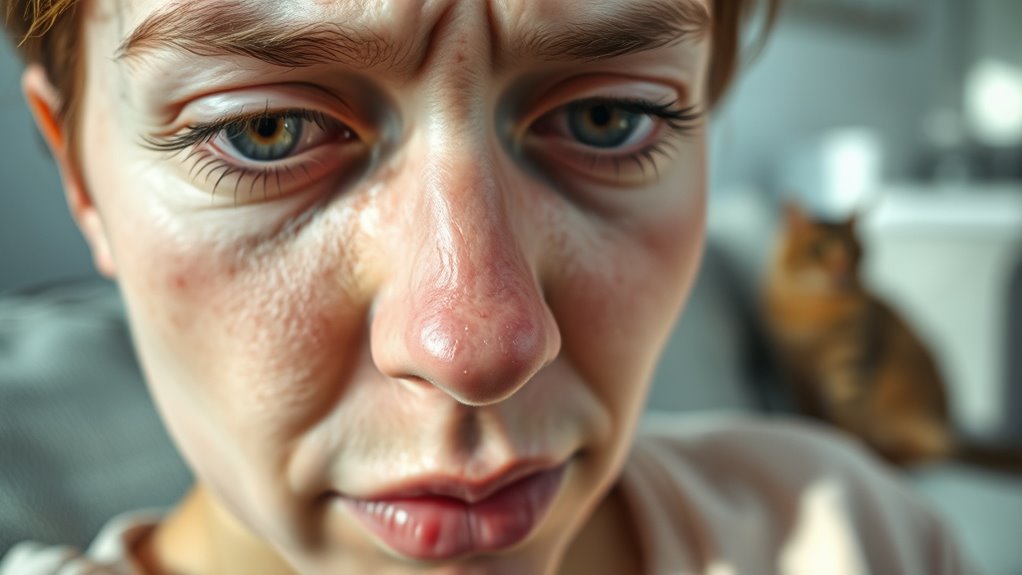
If you have a cat allergy, you might notice sneezing, itchy or watery eyes, and a runny nose shortly after contact. Skin reactions like hives, redness, or swelling can also occur on your skin.
You may experience coughing, wheezing, or difficulty breathing if the allergy worsens.
Watch for persistent symptoms or swelling around your face or lips, as these could signal a serious reaction.
Keep exploring to learn more about what your symptoms might mean.
Key Takeaways
- Cat allergies often cause sneezing, a runny nose, itchy eyes, and congestion.
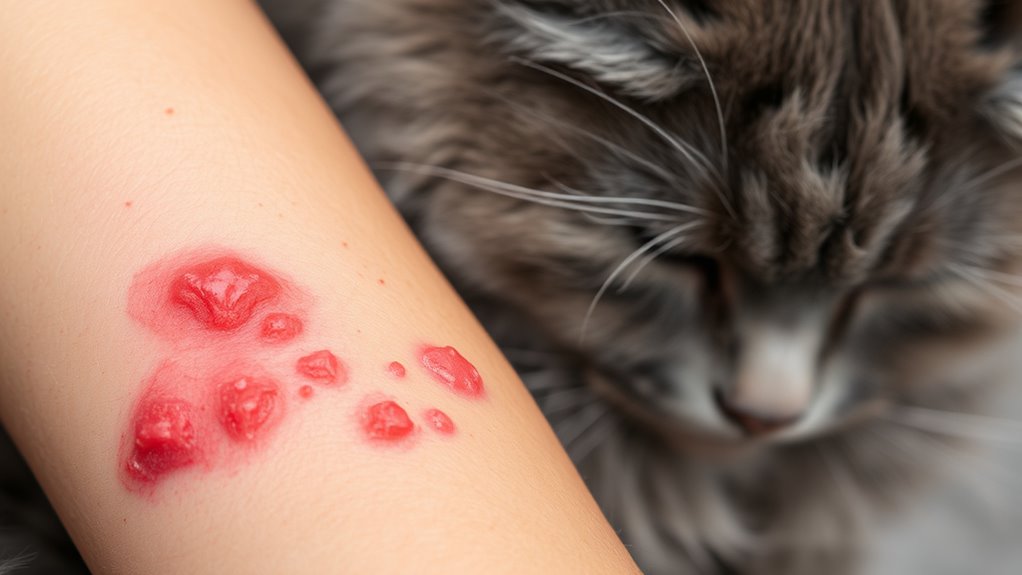
- Skin reactions can include red, itchy patches, hives, or swelling after touching cats.
- Respiratory symptoms like coughing, wheezing, and shortness of breath may come on quickly.
- Severe reactions might make it hard to breathe, cause swelling of the face or lips, or lead to hives.
- If your symptoms stick around or get worse, it’s a sign the allergy is severe and you should see a doctor.
What Are the Most Common Signs of a Cat Allergy?
Wondering if you’re experiencing a cat allergy? The most common signs include sneezing, a runny or congested nose, itchy eyes, and nasal irritation.
Suspect a cat allergy? Watch for sneezing, nasal congestion, itchy eyes, and irritation.
You might also notice coughing, wheezing, or shortness of breath, especially if you have asthma. Skin reactions like hives or rashes can appear after touching a cat or its belongings.
These symptoms are caused by triggers such as dander, saliva, and urine, which stay on fur and around the house. Many people think only fur causes allergies, but allergens are often tiny proteins in saliva and skin flakes.
Recognizing these signs early helps you figure out if a cat allergy is the cause. Reactions can range from mild discomfort to more serious symptoms.
If you notice consistent allergy signs around cats, it’s a good idea to see a healthcare professional for testing and advice.
How Do Mild and Severe Cat Allergy Reactions Differ?
Mild and severe cat allergy reactions can differ quite a bit in how strong they are and how they affect your daily life. With mild symptoms, you might notice sneezing, a runny nose, or itchy eyes. They’re annoying but usually easy to handle with over-the-counter meds or by avoiding cats.
Severe symptoms are much more intense. You could have trouble breathing, swelling, or hives. These reactions can disrupt your daily routine and might need emergency medical help.
The main difference is how your body responds: mild symptoms are often localized and manageable, while severe reactions can be life-threatening. Recognizing this helps you know when to seek treatment or stay away from cats.
Understanding how reactions differ can help you prepare and protect yourself from serious health risks linked to cat allergies.
Recognizing Respiratory Symptoms of a Cat Allergy
If you’re around cats and start sneezing or your nose gets all runny or stuffy, those could be signs of a cat allergy. Coughing can also be part of the picture. These are pretty common reactions, but it’s good to pay attention to the details so you can tell if it’s an allergy or something else.
Getting to know these symptoms can really help you understand your body’s response better. Sometimes, other respiratory problems can look similar, so recognizing the specific signs of allergy makes it easier to figure out what’s going on.
Common Respiratory Indicators
Respiratory symptoms are often the first signs of a cat allergy, and recognizing them early can help you manage your reactions effectively. When you’re exposed to pet dander, your body reacts to allergen triggers in the air, leading to common respiratory indicators.
You might notice sneezing, a runny or stuffy nose, or itchy, watery eyes. Coughing and wheezing are also common responses, especially if your airways become inflamed.
Some people experience shortness of breath or tightness in the chest, which shows that your lungs are reacting to the allergen triggers. These symptoms can develop quickly after exposure and may get worse over time if you keep coming into contact with pet dander.
Recognizing these respiratory signs helps you take quick steps to reduce your allergy symptoms.
Differentiating Allergic Reactions
Understanding the differences between allergic reactions and other respiratory issues is key to managing your symptoms effectively. Cat allergy triggers like pet dander and saliva often cause specific respiratory symptoms that are different from common colds.
Environmental factors such as dust or pollen can make reactions worse. To recognize allergic responses, look for persistent sneezing that continues even after a cold passes.
Itchy, watery eyes that feel inflamed are common signs. You might also notice a tight, wheezing cough that lingers, or shortness of breath after being around pets.
Unlike infections, allergy symptoms tend to stick around or get worse with exposure to cat allergy triggers or environmental factors. Knowing these signs helps you tell allergies apart from other respiratory issues.
This way, you can take targeted steps to reduce exposure and manage your symptoms more effectively.
How to Spot Skin Reactions Caused by Cat Allergies
Have you noticed red, itchy patches or swelling on your skin after spending time around cats? These are common signs of skin reactions caused by allergy triggers.
Skin irritation from cat allergies often looks like hives, redness, or swelling, especially on areas that touched the cat or its fur. You might also see a rash that shows up quickly after exposure.
Pay attention to the timing—if symptoms appear soon after contact, it’s probably related to allergy triggers. Scratching can make the irritation worse or cause small cuts, making things more uncomfortable.
Sometimes, your skin may feel warm or tender when touched. Recognizing these signs early can help you identify a skin allergy to cats and take steps to reduce exposure.
If your skin reactions persist or get worse, it’s best to see a healthcare professional for diagnosis and advice on managing your allergy.
What Do Eye Allergic Symptoms Look Like?
When you’re allergic to cats, your eyes can really let you know. You might see redness and feel like your eyes are irritated, which can be pretty uncomfortable. It’s common to notice that your eyes become itchy and start watering, almost like they’re trying to wash away the allergen.
Paying attention to these signs can help you figure out if your eyes are reacting to your cat. If you notice these symptoms, it might be a good idea to check in with a doctor or take steps to reduce your exposure.
Redness and Irritation
Imagine:
- Your eyes feeling gritty, like tiny grains scratching the surface.
- A bright redness spreading across the whites, making your eyes look inflamed.
- A burning sensation that worsens with exposure or rubbing.
- Persistent irritation that seems impossible to ignore.
Understanding what causes redness and how to apply irritation remedies can help you manage these symptoms effectively.
Itchy and Watery Eyes
Pollen interaction, especially during high seasons, can greatly worsen these symptoms, even if you’re not directly exposed to cats. Your eyes may also become red and sensitive to light, adding to the discomfort.
These symptoms are your body’s way of trying to flush out irritants, but they can persist if exposure continues. Recognizing these signs early helps you take steps to minimize contact with triggers, reducing eye irritation and improving your comfort throughout allergy season.
Subtle or Less Obvious Signs of a Cat Allergy
Sometimes, the signs of a cat allergy aren’t as obvious as sneezing or itchy eyes. You might notice subtle symptoms that catch you off guard, often triggered by unexpected situations. These less obvious signs can include:
- Feeling unusually tired after being around pets
- Mild skin irritation or a rash that appears without a clear cause
- Slight congestion or a stuffy nose that sticks around
- Coughing or throat clearing without a clear reason
These symptoms may seem minor but can be clues to an allergy you didn’t initially suspect. Because they are subtle, they’re easy to overlook or dismiss. Recognizing these signs can help you identify unexpected triggers, especially if you’re around cats often. Paying attention to these less obvious signs can lead to better allergy management and help you avoid more severe reactions later.
When Should You Be Concerned About a Serious Allergic Reaction?
If you start having trouble breathing, notice swelling, or see hives suddenly pop up, that’s a big red flag. You should get medical help right away—don’t wait around.
And if your symptoms stick around or get worse after being exposed to something, it’s definitely serious. When in doubt, it’s always better to be safe and seek help promptly. Your safety comes first!
Signs of Severe Breathing Difficulty
How can you tell if a cat allergy is causing serious breathing problems? Watch for signs that your breathing becomes labored or irregular. If allergy triggers lead to difficulty breathing, you might notice:
- Rapid, shallow breaths that feel strained
- Whistling or wheezing sounds when you inhale or exhale
- A tight feeling in your chest, making it hard to take deep breaths
- Sudden, persistent coughing that doesn’t stop
These symptoms show that your airway may be swelling or constricting. You should seek immediate medical attention. Severe breathing difficulty can escalate quickly, so recognizing these signs early is crucial to prevent a life-threatening reaction. Stay alert for your body’s signals when exposed to allergy triggers.
Swelling and Hives Appearance
Swelling and hives can develop quickly during an allergic reaction, showing that your body is reacting strongly to a cat allergy. Swelling can be localized around the eyes, lips, or face, or it can spread to other areas.
Hives usually happen when your immune system reacts to an allergen, causing raised, itchy welts on your skin. These welts can appear suddenly and change shape or size pretty fast.
If you notice swelling or hives spreading, especially if you have trouble breathing or feel dizzy, it’s important to seek medical help right away. Mild hives and swelling might go away on their own, but severe reactions need prompt treatment to prevent things from getting worse.
Always keep an eye on your symptoms to know when emergency care is needed.
Persistent or Worsening Symptoms
- Difficulty breathing or wheezing that gets worse quickly.
- Swelling of the face, lips, or throat that could block your airway.
- Sudden dizziness or loss of consciousness.
- Intense itching or hives that spread rapidly.
These symptoms mean your immune system is overreacting and your allergy triggers are causing a dangerous escalation.
Don’t ignore persistent or worsening issues. Seek emergency care to prevent life-threatening complications and address the underlying allergy triggers promptly.
How Can You Differentiate Cat Allergy Symptoms From Other Allergies?
Determining whether your allergy symptoms come from cats or other triggers can be tricky since many allergy signs overlap. To tell the difference, pay attention to when and where your symptoms happen.
If your symptoms get worse after being around cats or in places with pet dander, it could be a cat allergy. Getting tested for cat allergies can confirm this and help identify if cats are the main cause.
But environmental factors like pollen, dust mites, or mold can cause similar symptoms. If your symptoms happen outdoors during certain seasons or in dusty areas, it might point to other allergies.
Keep track of your exposure and symptoms to notice patterns. If reactions mainly happen around pets, a healthcare provider can do specific tests to tell apart cat allergies from other allergies.
Knowing the difference helps you manage your environment better and get the right treatment.
Understanding the Role of Flea Allergies and Skin Conditions
Flea allergies are a common cause of skin irritation in both cats and humans, often mimicking other skin conditions. When fleas bite, your cat’s immune system overreacts, leading to intense itching, redness, and inflammation. You might notice your cat scratching excessively, biting at their skin, or developing scaly patches.
To manage this, flea prevention is essential. Using regular treatments can break the cycle of allergy flare-ups. If your cat shows signs of discomfort, skin treatments like medicated shampoos or topical ointments can soothe irritation and promote healing.
Visualize these symptoms as:
- Tiny, dark specks (flea dirt) on the skin or fur
- Red, inflamed patches that look raw
- Excessive scratching and biting
- Hair loss or bald spots from persistent grooming
Addressing flea allergies promptly helps prevent secondary skin infections and improves your cat’s comfort and health. Consistent flea prevention and effective skin treatments are vital to managing these allergic reactions.
Tips for Monitoring and Confirming Your Cat Allergy Symptoms
Monitoring your cat’s allergy symptoms involves paying close attention to changes in their behavior and skin condition. Keep a detailed record of symptoms like itching, hair loss, or skin redness by tracking them consistently. This helps you notice patterns and how severe the symptoms are over time.
If you think your cat might have allergies, consider scheduling allergy testing with your vet. Testing can confirm whether allergies are causing your cat’s discomfort and help rule out other skin issues. During this process, note any environmental factors that could trigger symptoms, like new products or diet changes.
Regularly observing and documenting your cat’s reactions gives your vet valuable information, making diagnosis more accurate. Combining symptom tracking with professional testing ensures you get a clear understanding of your cat’s allergies. This way, you can plan targeted treatment and management strategies.
Frequently Asked Questions
Can Cat Allergies Develop Suddenly After Years of Exposure?
Yes, cat allergies can develop suddenly after years of exposure. Sometimes, your immune system becomes more sensitive over time, which can lead to a sudden onset of allergy symptoms.
Changes in allergy triggers, like more cat dander or other environmental factors, can also cause this. If you notice new symptoms, it’s important to identify the triggers and see a healthcare professional for proper diagnosis and management.
Are Some Cat Breeds Less Likely to Trigger Allergies?
Some cat breeds are gentle on your allergies, making them a good choice if you’re sensitive. Low allergen breeds and hypoallergenic cats usually produce fewer allergenic proteins, which can help reduce your symptoms.
While no cat is completely allergy-free, these breeds tend to cause less irritation. Consider options like Siamese, Balinese, or Siberian cats, and spend time with them first to see if they’re a better fit for your lifestyle and health.
Do Cat Allergies Worsen Over Time Without Treatment?
Cat allergies can get worse over time if you don’t treat them, since allergy symptoms tend to become more severe as the condition progresses.
If you ignore allergy management, your immune system may become more sensitive, leading to increased sneezing, congestion, and asthma symptoms.
To avoid this, consider treatment options like antihistamines, allergy shots, or making environmental changes.
Dealing with allergies early can help keep symptoms under control and prevent long-term problems.
It’s important to see a doctor promptly to get the right advice and treatment.
How Long Do Allergic Symptoms Typically Last After Exposure?
After exposure, allergic symptoms usually last from a few hours to several days, depending on your sensitivity and how much you’re exposed to.
You might notice nasal stuffiness, itchy eyes, or coughing that stick around or flare up as long as your body reacts.
The length of symptoms varies based on how severe your allergy is and whether you take antihistamines.
To help reduce ongoing symptoms, try to limit your exposure and consider talking to a healthcare professional.
Can Children Outgrow Cat Allergies?
Yes, children can outgrow cat allergies. As their immune system matures, it sometimes reacts less to allergens from cats.
Many kids see their allergy symptoms improve over time, especially with regular exposure, which helps their immune system build tolerance.
However, some children may continue to have allergies into adulthood. Regular check-ups and allergy testing can help keep track and manage their condition effectively.
Conclusion
Understanding the signs of a cat allergy helps you act quickly, like a knight spotting a dragon’s roar. Watch for respiratory, skin, and eye symptoms, and don’t hesitate to get medical advice if things get worse.
Pay close attention to sneezing, coughing, or wheezing. Skin reactions like hives or itchiness are also common signs. And if your eyes become red, itchy, or teary, it’s time to take note.
Monitoring your symptoms helps you stay ahead of the allergy. Think of it as channeling your inner Sherlock Holmes to uncover what’s triggering your reactions.
Remember, being aware of cat allergy symptoms today keeps the allergy dragons at bay. This way, you can enjoy peace of mind in this modern age.