What Causes You to Develop Cat Allergies Later in Life?
If you’ve loved cats all your life but suddenly find yourself sneezing or itching around them, you’re not alone. Many people struggle with developing cat allergies later in life, and it can be confusing and frustrating.
You may develop cat allergies later in life due to changes in your immune system, environmental factors, or increased exposure. As you age or experience lifestyle shifts, your immune response can become more sensitive to proteins in cat saliva, dander, or urine.
Factors like poor air quality, stress, or new living conditions can heighten your chances of allergy development.
To better understand what triggers these late-onset allergies and how to manage them, keep exploring this topic.
Key Takeaways
- Changes in your immune system over time can cause you to become sensitive to cat allergens you didn’t react to before.
- Being around cats more often or coming into contact with their allergens can also trigger allergies later in life.
- Environmental factors like pollution and poor indoor air quality can make allergy symptoms more likely.
- Stress and health issues can boost immune responses, which might lead to new allergies showing up.
- Plus, if allergies run in your family, you’re more likely to develop cat allergies as you get older.
What Are Cat Allergies and How Do They Develop?
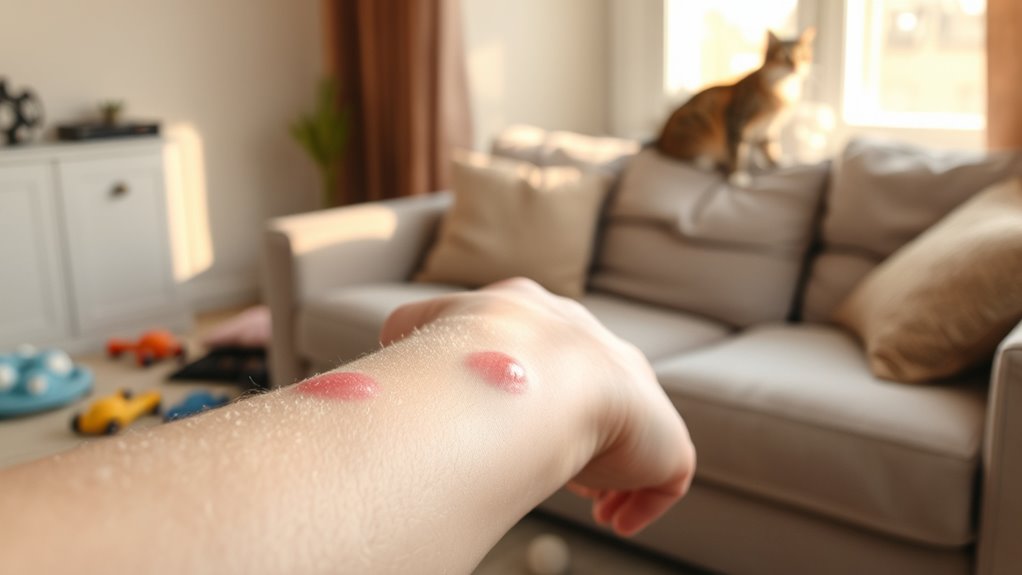
Cat allergies happen when your immune system overreacts to proteins in a cat’s skin cells, saliva, or urine. This reaction can cause sneezing, itching, or watery eyes.
The allergens come from different sources, like dander, saliva, and urine. If allergies run in your family, you’re more likely to develop them. Environmental factors like dust, pollution, or tobacco smoke can make your sensitivity worse or increase your chances.
Your lifestyle can also influence your risk. Spending more time around cats or cleaning less often might play a role. Age matters too—some people develop allergies later in life, even if they didn’t have issues before.
Why Do You Develop New Cat Allergies Later in Life?
Although many people develop allergies early in life, it’s not uncommon to suddenly become sensitive to cats later on. Your genetic predisposition plays a big role; if allergies run in your family, you might be more likely to develop new sensitivities as you age.
Lifestyle changes can also influence this. Moving to a new home, adopting a cat later in life, or increased exposure to pet dander can trigger new allergic reactions.
Stress, health conditions, and changes in your environment may weaken your immune system’s ability to tolerate allergens, making you more susceptible. Sometimes, your immune system’s response shifts over time, recognizing proteins from cats as threats even if you previously had no issues.
All these factors combined can lead to developing new cat allergies later in life, even if you’ve been around cats without problems before.
How Changes in Your Immune System Can Trigger New Allergies
Your immune system can change over time, which may cause you to develop new allergies even if you previously had no reactions.
As you age, your immune response evolves due to age factors, hormonal influences, and lifestyle changes. These shifts can alter how your body recognizes allergens, increasing the risk of allergy development.
Genetic predisposition also plays a role, making some people more susceptible to new allergies later in life. Environmental triggers, combined with dietary impacts, can further influence immune function.
This can prompt your immune system to overreact to substances like pet dander. Changes in hormone levels, especially during menopause or stress, can also modify immune responses.
All of these factors make you more prone to allergies. Overall, the dynamic nature of your immune system means that even long-standing non-allergic people can suddenly become allergic due to internal and external influences.
Environmental Factors That Make Cat Allergies More Likely
Environmental factors play a big role in increasing your chances of developing cat allergies later on. Poor air quality and pollution can make you more sensitive to pet dander and indoor allergens.
Seasonal changes and climate variations also affect allergen levels, making allergy symptoms worse at certain times of the year.
Your lifestyle habits matter too. Spending more time indoors or having poor ventilation can trap pet dander and other allergens, raising your risk.
Genetics also play a part—if allergies run in your family, you’re more likely to develop new sensitivities.
You can also be affected by increased pollution in urban areas, poor indoor air circulation, and seasonal changes in pollen and mold levels.
Long-term climate shifts can also influence the presence of allergens.
All these factors combined make developing a cat allergy later in life more possible, especially if your environment encourages allergen buildup.
Can Stress and Health Conditions Worsen Cat Allergy Symptoms?
Absolutely, stress and health conditions can definitely make cat allergy symptoms worse. When you’re feeling stressed out or not feeling your best, your immune system tends to become more reactive. That means your allergy symptoms—like sneezing, itchy eyes, or congestion—can become more intense.
Plus, if you’re dealing with other health issues, it can make your body more sensitive to pet dander. Your immune system might overreact more easily, which can really ramp up your allergy symptoms. So, when your health is a bit off, managing allergies can feel even more challenging.
Stress Amplifies Allergic Responses
Stress can significantly worsen allergy symptoms, especially those caused by cat allergens. When your emotional health takes a hit, your immune system reacts more strongly, making symptoms worse.
Anxiety can increase your body’s sensitivity to allergens, so symptoms become more intense. To help manage this, try stress management and relaxation techniques.
Incorporating lifestyle changes like regular exercise and mindfulness can boost your overall well-being. Remember, emotional health plays a big role in how your body responds to allergens.
Focusing on reducing stress helps prevent your immune system from overreacting and eases allergy symptoms. Managing stress isn’t just about feeling better emotionally — it also benefits your physical health and allergy resilience.
Underlying Conditions Increase Sensitivity
Underlying health conditions can make your immune system more reactive, increasing your sensitivity to cat allergens. When you have underlying health issues, your body may respond more intensely to common triggers like pet dander.
These conditions can weaken your immune defenses or cause inflammation, which boosts your overall sensitivity. So even tiny amounts of cat allergens can cause stronger symptoms.
Managing underlying health is really important because it directly affects how your body reacts to these triggers. If your health isn’t at its best, your immune system might overreact, making allergy symptoms worse.
Understanding how underlying health impacts sensitivity helps explain why your reactions might get worse over time. It also encourages you to address health issues proactively.
Immune System Fluctuations
Fluctuations in your immune system can really impact how severe your cat allergy symptoms get. When your immune response is unpredictable or weakened, it might react more strongly to allergens, making allergy symptoms worse.
Stress, illness, or lack of sleep can weaken your immune defenses, which makes you more vulnerable. On the other hand, a healthy immune system can better manage its response, helping to reduce symptoms.
Stress triggers the release of chemicals that make allergic reactions worse. Illness can further weaken your immune response, leading to more severe symptoms. Poor sleep disrupts immune regulation, increasing your sensitivity to allergens.
Chronic health conditions can also skew your immune response toward developing allergies. These fluctuations may cause your immune system to overreact to cat allergens, making symptoms more noticeable.
Managing stress and staying healthy are key to controlling your immune response and helping to keep allergy symptoms in check over time.
How Exposure and Sensitization Lead to Cat Allergies
When you’re around cat allergens a lot, your immune system can start to see them as something harmful. It’s like your body becomes a bit more alert to their presence over time.
As this happens, your immune system can become more sensitive, meaning it reacts more strongly even to tiny amounts of allergens. So, the more you’re exposed, the higher the chance that you’ll develop an allergy later on.
Gradual Immune Response Development
Exposure to cat allergens over time can gradually shape your immune system’s response, leading to sensitization. As you encounter these allergens repeatedly, your immune system may shift from maintaining immune tolerance to reacting more aggressively.
Genetic predisposition plays a role, making some people more likely to develop allergies later in life. This process involves your immune system recognizing cat proteins as threats, even if you initially tolerated them.
Factors influencing this development include changes in immune regulation with age, increased allergen exposure in certain environments, stress impacting immune function, and a family history of allergies or asthma.
Over time, your immune system might become hypersensitive, resulting in allergic reactions despite no prior issues. This gradual process highlights how sensitization can develop subtly, often without immediate warning signs.
Increased Allergen Exposure Risks
Repeatedly coming into contact with cat allergens increases your risk of developing sensitivities, especially if your immune system starts to see these proteins as threats. The more allergen exposure you have, the higher the chance your immune system reacts negatively over time.
Risk factors like living with cats, frequent visits to environments with cats, or working in shelters can boost your exposure levels. This consistent allergen exposure can lead to increased sensitivity, even if you had no issues before.
The cumulative effect of repeated contact makes it more likely you’ll develop allergies later in life. Being around cats often and having prolonged exposure are key factors that raise the chances your immune system might respond with allergic symptoms.
Sensitization Over Time
Over time, your immune response can become more sensitive to cat allergens as it encounters them more often. This process, called sensitization, happens gradually with repeated allergen exposure. As your body recognizes these proteins as threats, it reacts more strongly, leading to allergy symptoms.
Factors that influence this include your genetic predisposition and how often you come into contact with cats. Your immune system starts producing specific antibodies (IgE) in response to allergens. Repeated exposure then strengthens the immune response, making allergy symptoms more severe.
Sensitization can happen even if you’ve previously tolerated cats without any issues. Continuous allergen exposure might eventually trigger allergy symptoms later in life. Understanding this process shows how ongoing contact can turn a mild or no reaction into a full-blown allergy.
This emphasizes the importance of managing your exposure to cats if you’re at risk to prevent worsening symptoms over time.
Common Myths About Adult-Onset Cat Allergies Debunked
Many people believe that adult-onset cat allergies are rare or simply impossible, but that’s not true. This myth can lead to confusion about allergies and how they develop.
You might think that if you weren’t allergic as a child, you can’t develop allergies later. That’s false. Allergies can develop at any age because of changes in your immune system or exposure levels.
Some assume only new cats trigger allergies. However, existing cats can cause symptoms if your sensitivity develops over time.
Others believe allergy medications will always control symptoms. But allergies can evolve or worsen unexpectedly, making treatment more complicated.
Recognizing these myths helps you understand the reality of adult-onset cat allergies. They can appear suddenly or after years of tolerance.
This highlights the importance of proper diagnosis and treatment. Don’t let misconceptions stop you from addressing allergy symptoms effectively.
How to Recognize Symptoms and When to Get Tested
Wondering if you might be experiencing allergy symptoms related to cats? Recognizing the signs early helps you decide when to seek testing. Common symptoms include sneezing, a runny or stuffy nose, itchy eyes, and coughing.
You might also notice skin reactions like rashes or hives. To confirm if these are caused by a cat allergy, consider testing methods such as skin prick tests or blood tests. These help identify if your immune system reacts to cat allergens.
Be alert to symptoms, especially if they worsen after exposure to cats or cat-related environments. If your reactions persist or interfere with daily life, it’s a good idea to see an allergist for testing. Early diagnosis can help you explore management options and avoid unnecessary discomfort.
Tips to Manage and Reduce Your Cat Allergy Symptoms
If you’re dealing with cat allergy symptoms, one of the best things you can do is keep your home as clean as possible. Regularly vacuuming and dusting can really help cut down on pet dander floating around.
You might also want to consider choosing hypoallergenic cat breeds, as they tend to produce fewer allergens. Using air purifiers in your living space can make a noticeable difference too, by filtering out those tiny particles that trigger allergies.
And if you’re still struggling, don’t forget that medications or therapies are available to help manage your symptoms. It’s all about finding what works best for you so you can enjoy a more comfortable, allergy-free home.
Regular Cleaning Practices
Regular cleaning is essential for managing cat allergy symptoms, especially since allergens like dander can cling to surfaces and circulate in the air. Establishing consistent cleaning routines helps reduce allergen levels and improves indoor air quality.
To maximize allergen reduction, consider these tips:
- Vacuum carpets, furniture, and curtains often with a HEPA filter vacuum.
- Dust surfaces with a damp cloth to trap allergens instead of spreading them around.
- Wash your cat’s bedding, blankets, and fabric items regularly.
- Use an air purifier with a HEPA filter to catch airborne allergens.
Implementing these practices minimizes allergen buildup, making your environment more allergy-friendly and easing your symptoms. Regular cleaning is a simple but effective way to stay ahead of allergen exposure and breathe easier.
Allergy-Friendly Pet Choices
Choosing an allergy-friendly pet can make a big difference in managing your symptoms. If you’re sensitive to cats, try exploring pet options like small mammals, reptiles, or fish, which usually produce fewer allergens.
For cats, look for hypoallergenic breeds like Siberian or Balinese. They tend to shed less dander and are less likely to trigger reactions. Keep in mind, no cat is completely allergy-free, but these breeds are often better for allergy sufferers.
To help reduce allergens further, keep your living space well-ventilated and use HEPA filters. Spending time with different breeds or pet alternatives before adopting can help you see how your allergy responds.
Choosing the right pet can let you enjoy companionship without as many allergy symptoms.
Medication and Therapies
When allergy symptoms become persistent or severe, medications and therapies can offer significant relief. You have several options, including antihistamines, decongestants, and nasal sprays, which help reduce your allergic response.
Allergy shots, a type of immunotherapy, can gradually build your tolerance and lessen symptoms over time. Medications like leukotriene receptor antagonists may also help control inflammation.
Therapy techniques such as allergen avoidance strategies and using air purifiers are effective in managing symptoms. Consider these options:
- Antihistamines and nasal sprays
- Immunotherapy or allergy shots
- Using HEPA air purifiers and regular cleaning
- Avoiding triggers and reducing exposure
Combining medication options with therapy techniques allows you to better control your cat allergy symptoms.
When to Consider Allergy Treatments or Avoidance Strategies
If your allergy symptoms get worse or suddenly become more severe later in life, it might be time to think about allergy treatments or avoidance strategies. Recognizing when your immune response is reacting strongly to triggers helps you decide what to do.
If exposure to cats causes persistent symptoms like sneezing, itchy eyes, or trouble breathing, consider seeking professional advice. Avoidance strategies, such as keeping cats out of bedrooms or using HEPA filters, can help reduce your immune response.
Additionally, allergy treatments like immunotherapy might be helpful if your symptoms interfere with daily life.
Frequently Asked Questions
Can Changing Environments Influence the Development of New Cat Allergies?
Changing environments can influence the development of new cat allergies by increasing your exposure to environmental triggers and allergens. When you move to a new place or spend more time in different settings, you might come across more cat dander or other allergens.
This increased exposure can sensitize your immune system over time. Being in varied environments makes it easier for your body to develop allergic reactions, even later in life.
Do Certain Cat Breeds Cause More Allergies Later in Life?
Certain cat breeds do cause more allergies later in life because of their breed’s allergenic potential. Breeds like Siamese and Persian tend to produce more allergen proteins, which can increase allergy risks.
If you’re concerned, consider hypoallergenic cat options like the Sphynx or Russian Blue. These breeds typically produce fewer allergens.
Choosing these breeds can help reduce allergy symptoms, making it easier to enjoy your feline companion without discomfort.
How Does Aging Affect Immune Responses to Pet Allergens?
As you age, your immune system’s responses to pet allergens can change, often becoming more sensitive because of age factors. Environmental changes and allergen exposure over time may lead to increased sensitivity, causing you to develop allergies later in life.
Your immune system may react more strongly or differently, making allergens from pets that you previously tolerated now problematic. This ongoing process shows how aging influences immune responses and the development of allergies.
Can Medications or Health Changes Trigger New Allergies to Cats?
Yes, medications or health changes can trigger new allergies to cats. Medications might change how your immune system reacts, making you more sensitive to pet allergens.
Also, health issues like autoimmune diseases or respiratory problems can weaken your immune system. This can increase your chances of developing new allergies.
These factors can cause your body to react differently, even if you’ve never had allergies before. So, new allergies to cats can sometimes be linked to changes in your health or medications.
Are There Genetic Factors That Increase Adult-Onset Cat Allergies?
Yes, genetic predisposition can make you more likely to develop adult-onset cat allergies. If your family has a history of allergies, you’re at increased risk.
Environmental triggers, like exposure to cats or other allergens, can activate your genetic tendencies over time. As a result, even if you’ve never had allergies before, these factors combined may lead to developing cat allergies later in life.
Conclusion
As you see, developing cat allergies later in life is more common than you might think—about 10% of adults report new allergies each year. Changes in your immune system, environment, and stress levels can all trigger these reactions.
Stay vigilant to recognize symptoms early and explore management options. With awareness and proper strategies, you can enjoy the companionship of cats without compromising your health.
Don’t let cat allergies take over—take control today!