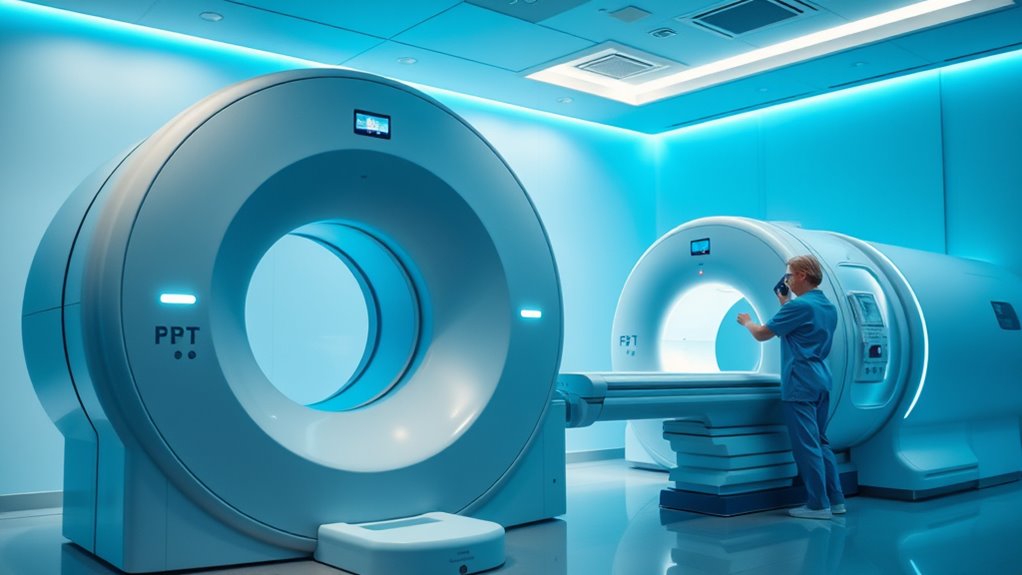
What Is the Difference Between CAT Scan and PET Scan?
Are you feeling overwhelmed trying to understand different medical scans and what they mean for your health? You’re not alone—many people struggle with figuring out the purpose of tests like CAT scans and PET scans. Knowing which scan is right for you can make all the difference in getting the right diagnosis.
A CAT scan uses X-rays to create detailed pictures of your bones, organs, and tissues, focusing on their structure. In contrast, a PET scan detects metabolic activity by tracking radioactive tracers, showing how tissues function.
You’d choose a CAT scan for injuries or structural issues, while a PET scan helps identify diseases like cancer early by revealing cellular activity.
To learn more about how these scans compare and their uses, keep exploring.
Key Takeaways
- CAT scans use X-rays to produce detailed images of internal structures, while PET scans detect metabolic activity using radioactive tracers.
- CAT scans give you static, structural images, whereas PET scans show functional, metabolic information about tissues.
- CAT scans are great for diagnosing injuries, fractures, and structural issues; PET scans are better for spotting cancer activity and how diseases spread.
- PET scans involve radioactive materials, making them more suitable for assessing how tissues function; CAT scans involve radiation but focus on anatomy.
- Combining both scans provides a complete picture of both the structure and function of tissues and organs.
What Are CAT and PET Scans and How Do They Work?
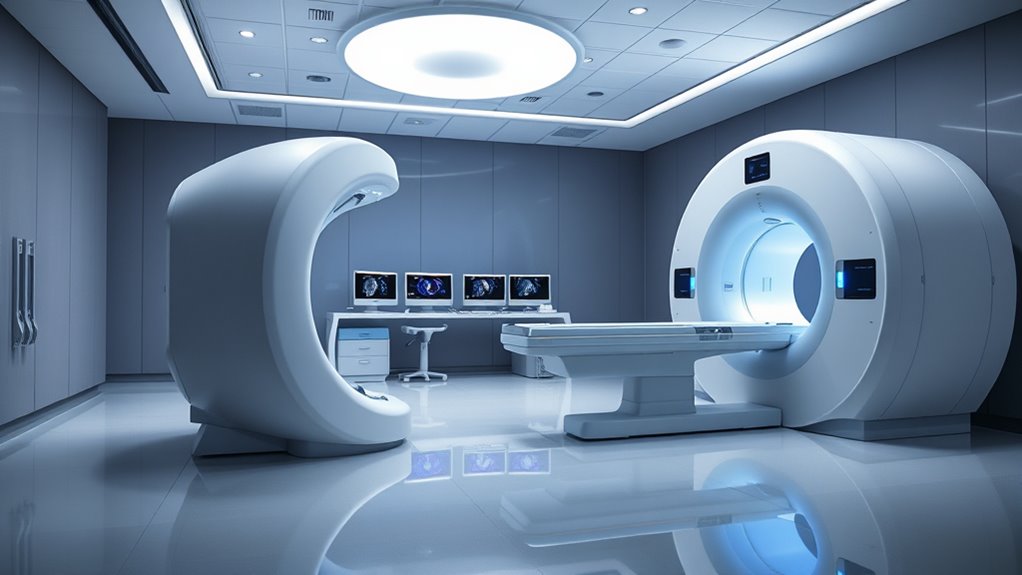
CAT and PET scans are advanced imaging techniques that help doctors see inside your body in different ways. They use specialized scan technology to produce detailed images, making diagnosis and treatment planning easier.
A CAT scan, or CT scan, uses X-ray beams that rotate around your body. It captures cross-sectional images of bones, organs, and tissues. These create detailed 3D visuals that show structural issues or abnormalities.
In contrast, a PET scan involves injecting a small amount of radioactive material that emits signals detected by scanners. This imaging highlights metabolic activity and functions within tissues, which is especially useful for detecting cancer or brain disorders.
Both scans give important insights, but they focus on different things. CAT scans emphasize anatomy, while PET scans focus on cellular activity. Knowing these differences helps your healthcare team choose the best imaging method for your condition.
How Do CAT Scans Differ From PET Scans Technologically?
CAT scans use X-ray technology to create detailed images of your body’s structures. They focus on providing clear, static pictures of what’s inside you. Basically, they show your anatomy—bones, organs, and tissues—very clearly.
On the other hand, PET scans work a bit differently. They detect metabolic activity by tracking radioactive tracers that are usually injected into your body. This helps them give you insights into how your tissues and organs are functioning, not just what they look like. So, while CAT scans are great for seeing the structure, PET scans tell you more about the activity happening inside.
Imaging Technology Differences
While both imaging techniques give us valuable insights into the body’s interior, they work using very different technologies. CAT scans use X-ray beams that rotate around your body, creating detailed cross-sectional images of bones and tissues.
These images are based on advancements in X-ray technology and provide high-resolution structural details. In contrast, PET scans detect gamma rays emitted from radioactive tracers injected into your body, highlighting metabolic activity.
This makes PET scans better suited for observing how tissues function rather than their structure. The technology applications differ: CAT scans focus on detailed anatomical images, while PET scans emphasize functional processes.
These differences in imaging technology allow each scan to serve specific medical purposes effectively.
Functional vs. Structural Imaging
Although both scans produce images of the inside of your body, they do so using fundamentally different technologies. This makes each suited for specific purposes.
A CAT scan provides structural imaging, capturing detailed cross-sectional images of bones, organs, and tissues. It’s great for identifying physical abnormalities, injuries, or tumors.
In contrast, a PET scan focuses on functional imaging, showing how tissues and organs are working by detecting metabolic activity. It highlights areas of increased or decreased function.
This can reveal problems like cancer, neurological disorders, or heart disease even before structural changes happen. While a CAT scan shows you the body’s anatomy, a PET scan reveals its activity.
Understanding this difference helps you choose the right scan for your specific medical needs.
When Should You Choose a CAT Scan?
Wondering when a CT scan is the right choice? You should consider one when your healthcare provider needs detailed images of your bones, organs, or soft tissues quickly.
It’s especially useful for things like traumatic injuries, suspected fractures, or internal bleeding. CT scans are also common for diagnosing cancers, infections, or lung diseases.
The main reasons to choose a CT scan include its speed, ability to provide cross-sectional images, and high accuracy in detecting abnormalities.
A CT scan offers rapid, detailed, and accurate imaging to identify abnormalities effectively.
If you need a comprehensive view of complex structures or quick results, a CT scan is often the best option.
It’s particularly helpful in emergency situations or when precise location of an issue is important.
While it involves some radiation exposure, the benefits usually outweigh the risks in urgent or detailed diagnostic cases.
Always follow your healthcare provider’s advice to see if a CT scan is right for your specific condition.
When Is a PET Scan the Better Option?
If you’re trying to spot changes in your body’s metabolism or figure out how far cancer has spread, a PET scan might be the way to go. Unlike a CAT scan, which focuses on images of your body’s structure, a PET scan shows cellular activity. This makes it especially helpful for catching issues early on.
Basically, it can give you a clearer picture of what’s happening inside you and help your doctor decide on the best treatment plan.
Detecting Metabolic Changes
In detecting metabolic changes in the body, PET scans often give more detailed insights than CT scans. They show how metabolic pathways and cellular activity change, helping you see active disease processes.
PET scans highlight areas of increased glucose uptake, which indicates heightened cellular activity. This can happen before structural changes are visible, making PET especially useful for catching early metabolic shifts.
| Metabolic Process | Indicator | Commonly Assessed Condition |
|---|---|---|
| Glucose metabolism | Uptake levels | Cancer, inflammation |
| Oxygen consumption | Distribution | Brain activity, tumors |
| Protein synthesis | Rate | Cell growth, infections |
| Lipid metabolism | Lipid accumulation | Metabolic disorders |
| Mitochondrial function | Energy production | Neurodegenerative diseases |
Assessing Cancer Spread
In evaluating cancer spread, PET scans often provide more accurate and early detection compared to CT scans. This makes them especially useful for precise cancer staging, helping you understand how far the disease has advanced.
PET scans reveal metabolic activity, highlighting cancer cells that might not show up on CT images. When deciding on treatment options, PET scans give important insights into tumor size, location, and whether the cancer has spread.
This information is vital for creating an effective treatment plan. If early detection of metastasis is needed or if the cancer’s extent is uncertain, a PET scan is usually the better choice.
It offers a comprehensive view that’s essential for optimizing your cancer management strategy.
What Do CAT and PET Scan Images Show?
CAT and PET scan images show different kinds of information about what’s happening inside your body. CAT scans give detailed pictures of bones, organs, and tissues, focusing on their structure. This clear imaging helps spot tumors, fractures, or abnormalities accurately.
PET scans, on the other hand, reveal how your tissues and organs are functioning by showing their metabolic activity. They’re especially useful for detecting cancer, brain disorders, or heart conditions.
The images from PET scans give insight into how well your body’s systems are working, which complements the structural details from CAT scans. Both techniques are important for diagnosis but focus on different aspects: CAT scans reveal anatomy, while PET scans show function.
Together, they provide healthcare providers with a complete picture of your health, helping with accurate diagnosis and treatment planning.
Do You Need Both a CAT and a PET Scan?
Deciding whether you need both a CAT scan and a PET scan depends on your specific health situation. Your doctor considers the scan necessity and your symptoms to choose the best imaging strategies. Sometimes, one scan provides enough information, but in complex cases, combining both gives a clearer diagnosis.
| Scan Type | Purpose | Advantages |
|---|---|---|
| CAT Scan | Detailed images of bones and tissues | Quick, widely available |
| PET Scan | Detects metabolic activity, cancer cells | Reveals functional info |
Using both scans can give a thorough view—anatomical details from the CAT scan plus metabolic insights from the PET scan. Your healthcare team evaluates whether adding both scans is necessary for accurate diagnosis and effective treatment planning.
In some cases, a single scan is enough, but for complex or unclear situations, both scans ensure a complete assessment.
How to Prepare for Your CAT or PET Scan
Preparing for your CAT or PET scan involves following specific instructions to ensure accurate results. First, you’ll receive scan preparation tips from your healthcare provider. These might include fasting for several hours before the procedure, especially for PET scans, to get clear images.
Follow your healthcare provider’s fasting and preparation instructions for clear, accurate CAT or PET scan results.
Dietary restrictions are common, so avoid eating or drinking anything except water as instructed. For some scans, you’ll need to temporarily stop certain medications, so be sure to inform your doctor about all the medicines you’re taking.
Wear comfortable, loose clothing without metal zippers, belts, or jewelry, which can interfere with imaging. You may also be asked to remove makeup, hairpins, or dental appliances.
Stay well-hydrated unless told otherwise, as this can help with contrast agents. Following these scan preparation tips carefully helps make sure your images are precise and your results are reliable.
Always check with your healthcare team for any specific instructions before your appointment.
Are CAT and PET Scans Safe? Risks and Safety Tips
While both CAT and PET scans are generally safe medical imaging procedures, it’s good to be aware of potential risks and safety tips. The main concern is managing radiation exposure, which is usually low but still worth noting.
For PET scans, you might receive a contrast agent. Understanding its safety profile can help ease your worries. Some people worry about allergic reactions or side effects, so tell your doctor about any allergies you have.
Preparation tips like fasting or staying hydrated can improve scan accuracy and reduce risks. Even though radiation exposure is minimal, pregnant women should discuss any concerns with their healthcare provider.
Follow-up care is important if you notice any unusual symptoms after the scan. Overall, knowing these safety tips can help you feel more confident and ensure a smooth, safe imaging experience.
How Do Doctors Read and Use Your Scan Results?
Have you ever wondered how your doctor interprets the detailed images from your scan? During scan interpretation, a radiologist carefully reviews the images, looking for any abnormalities or signs of disease. They analyze the details and compare them to normal anatomy to spot issues.
Radiologist insights help your doctor understand what the images reveal, guiding diagnosis and treatment plans. They look for clues like unusual shapes, sizes, or densities that might indicate health problems.
Think of the process like this:
- Examining the images from different angles
- Identifying any suspicious areas
- Comparing findings to previous scans or reference images
- Providing a detailed report for your doctor
Your doctor then uses this report to decide the next steps in your care. Accurate scan interpretation is crucial to ensure you get the right diagnosis and timely treatment.
What Factors Help You Decide Between a CAT and a PET Scan?
When you’re trying to decide between a CAT scan and a PET scan, your doctor looks at what they need to see to make an accurate diagnosis. It really depends on the specific purpose of the scan—like whether they’re checking for structural issues or looking at how your organs are functioning.
Your overall health, current condition, and symptoms also play a role in the decision. Plus, things like how much the tests cost and whether they’re available at your location can influence which one is recommended. Knowing these factors can help you understand why your doctor might choose one scan over the other.
Diagnostic Purpose Differences
Deciding between a CAT scan and a PET scan mainly depends on what your healthcare provider needs to find out. If they want detailed images of anatomy, a CAT scan is usually the way to go. For spotting metabolic activity and early signs of disease, especially cancer, a PET scan gives unique insights.
Think about these factors:
- Type of condition: Is it structural or metabolic?
- Required detail: Do they need precise anatomy or functional information?
- Clinical applications: Are they looking for tumors, brain issues, or heart problems?
- Diagnostic needs: How fast, sensitive, and specific does the scan need to be?
Your healthcare provider will choose the best scan based on what fits the clinical situation. They’ll weigh diagnostic accuracy against the specific info needed to guide treatment.
Patient Condition Factors
Your current health condition plays a key role in deciding whether a CAT scan or a PET scan is more suitable. If your patient history suggests structural issues like injury or tumors, a CAT scan is usually preferred for detailed images of bones and tissues.
On the other hand, if your symptoms point toward metabolic activity or cancer detection, a PET scan offers functional information that helps assess how your tissues are working. Symptom evaluation guides your healthcare provider in choosing the right scan.
For example, unexplained weight loss or abnormal blood markers might indicate the need for a PET scan. Your overall health, previous diagnoses, and specific symptoms all influence the decision, ensuring the imaging test provides the most accurate and useful information for your diagnosis.
Cost and Availability
- Insurance coverage differences between the two scans.
- Facility accessibility and proximity.
- Cost variations based on your insurance plan.
- Urgency of diagnosis and scheduling availability.
Understanding these aspects helps you decide which scan fits your budget and logistical needs.
This way, you can get the necessary imaging without unnecessary delays or expenses.
Frequently Asked Questions
Can a Patient Undergo Both Scans During the Same Appointment?
You can often have both scans during the same appointment, but it depends on how they are scheduled and your medical needs. Hospitals and clinics usually try to make things convenient for you, so they may plan the procedures close together.
Typically, you’ll need to wait between scans for preparation or to let contrast dye clear. It’s always best to check with your healthcare provider beforehand to ensure everything is coordinated smoothly and to understand any prep needed for each scan.
How Long Does Each Scan Typically Take to Complete?
A CAT scan usually takes about 10 to 30 minutes, while a PET scan can last around 30 to 60 minutes. The scan time can affect how comfortable or stressful the experience feels.
During each scan, it’s important to stay still to get clear images. Knowing how long each scan takes helps you prepare mentally and physically.
This way, the whole process can go more smoothly and be less overwhelming.
Are There Specific Conditions That Only PET Scans Can Detect?
PET scans are unique because they can detect specific conditions like cancer by measuring tumor detection and metabolic activity.
Unlike CT scans, which provide detailed images of structures, PET scans show how tissues and organs function.
This makes them especially useful for identifying active tumors or metastases.
If you’re concerned about metabolic activity or tumor detection, a PET scan offers insights that other imaging methods might not provide.
What Are the Costs Associated With CAT and PET Scans?
Like a modern-day Da Vinci sketch, scan pricing varies widely, often ranging from $1,000 to $6,000 per scan. You might find insurance coverage helpful, but it’s essential to check your plan’s specifics, as some procedures may be partially or fully covered.
Costs depend on location, facility, and whether contrast materials are used. Always ask your provider about out-of-pocket expenses before scheduling your scan to avoid surprises.
Do Age or Health Conditions Affect the Choice of Scan?
Age and health conditions play a big role in choosing the right scan because they help doctors decide what’s safest and most effective.
For example, older adults or people with kidney problems might need to avoid contrast dyes used in some scans.
Your overall health, allergies, and medical history all help determine whether a CAT scan or PET scan is better for you, aiming for accurate results with minimal risks.
Conclusion
Imagine stepping into a diagnostic journey, where each scan paints a vivid picture of your health.
Whether a CAT scan’s detailed cross-section or a PET scan’s vibrant metabolic map reveals what’s beneath the surface, understanding their differences helps you make informed choices.
CAT scans use X-rays to create detailed images of your body’s structures, helping detect injuries and abnormalities.
PET scans, on the other hand, show how your tissues and organs are functioning by tracking radioactive tracers, revealing metabolic activity.
Knowing these differences can guide you in choosing the right scan for your needs.
Trust in these powerful tools to illuminate your path to wellness, turning complex images into clarity.
Your health story unfolds with precision and care, with CAT and PET scans helping you make confident decisions.
Understanding their roles ensures you get the most accurate diagnosis and the best possible care.