How to Choose the Right Medicine to Give My Cat for Cold
Caring for a sick cat can be really stressful, especially when you’re unsure about the right medicine to give. Many pet owners struggle with knowing what’s safe and effective for their feline friends.
Finding the right treatment for a cold can feel overwhelming, but you’re not alone.
To choose the right medicine for your cat’s cold, start by recognizing symptoms and consult your vet for a proper diagnosis.
Avoid giving human cold medications, as they can be toxic and include harmful ingredients like acetaminophen or ibuprofen.
Focus on vet-approved options, consider your cat’s age and health, and follow dosage instructions carefully.
Supportive care like providing warmth and hydration can help, but always seek professional guidance for effective treatment.
Remember, there’s more to guarantee your cat’s safe recovery.
Key Takeaways
- Talk to your vet first to see if your cat really needs medicine based on how bad the symptoms are.
- Make sure any medication you choose is made for cats and approved by a vet.
- Check the ingredients to avoid toxic stuff like acetaminophen or ibuprofen.
- Think about your cat’s age, health, and any other medicines they’re taking before giving anything.
- Follow your vet’s instructions on dosage carefully and watch how your cat responds.
How Can You Tell If Your Cat Has a Cold and When to See the Vet
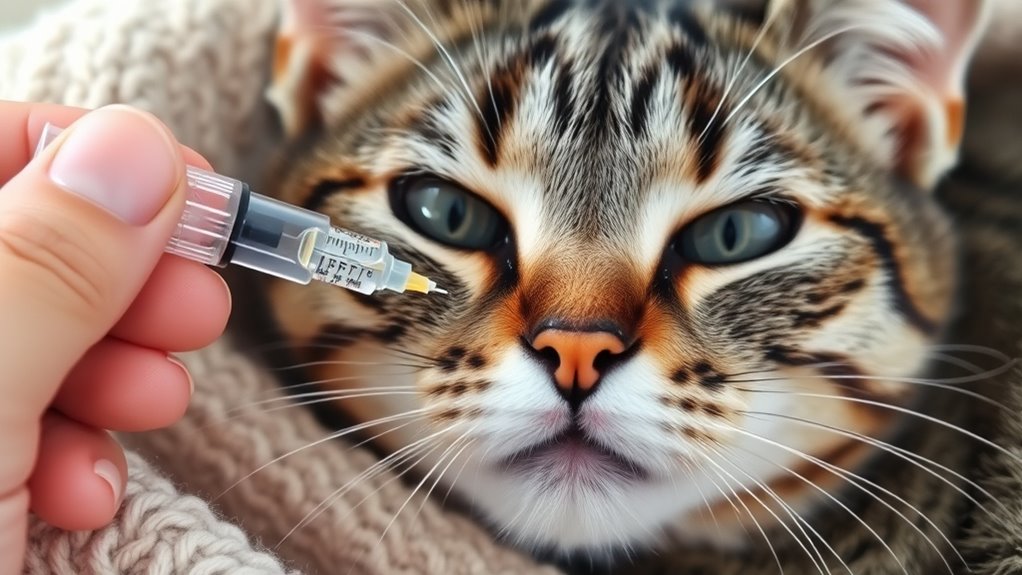
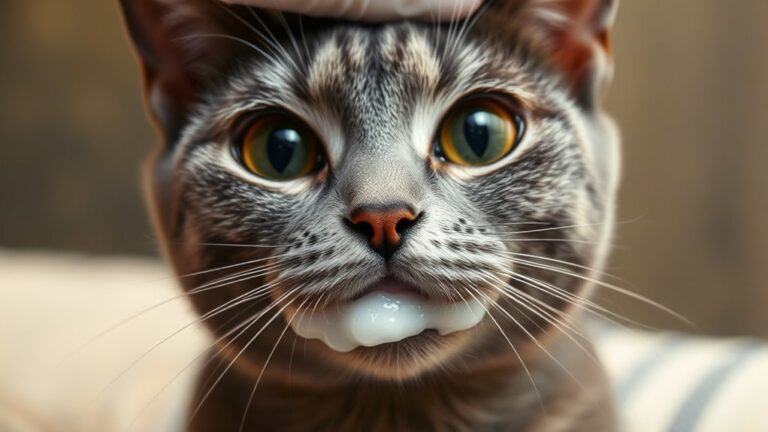
How can you tell if your cat has a cold and when it’s time to see the vet? Watch for symptoms like sneezing, a runny nose, or watery eyes. You might also notice coughing, decreased appetite, or lethargy.
These signs can be mild respiratory issues or might indicate something more serious. If your cat’s symptoms last more than a few days or get worse, it’s important to see a vet.
Symptoms may be mild or serious; seek veterinary care if they persist or worsen.
Pay attention if your cat has trouble breathing, wheezing, or seems uncomfortable. Rapid or labored breathing, refusing to eat, or being very tired are signs you should seek help right away.
Early diagnosis and treatment can prevent bigger problems. Remember, not all respiratory issues are harmless, so don’t wait if your cat shows these signs. Recognizing them helps ensure your cat gets the care it needs quickly.
Why Are Human Cold Medications Unsafe for Cats?
You should never give your cat human cold medications because many of these drugs contain ingredients that are toxic to cats.
Human medication dangers are significant because cats metabolize drugs differently, making certain ingredients potentially deadly.
For example, acetaminophen and ibuprofen, common in many over-the-counter cold remedies, can cause severe health risks like liver damage, kidney failure, or even death.
Some ingredients like antihistamines or decongestants may seem harmless but can lead to adverse effects such as rapid heart rate, agitation, or breathing problems.
Since cats are sensitive to many substances, giving them human medications without a vet’s guidance can do more harm than good.
Always remember that what’s safe for humans isn’t necessarily safe for cats.
To protect your feline friend, consult a veterinarian for safe treatment options instead of risking dangerous medication dangers.
What Factors Should You Consider When Choosing Cold Medicine for Cats?
When choosing cold medication for your cat, it’s important to think about how severe their symptoms are. Mild signs might not need any medication, but more serious ones could require specific treatment.
Next, look out for potential medication interactions. Some products can interfere with other drugs your cat might be taking, so check the labels carefully.
Always review the active ingredients to ensure they’re safe for cats. Not all human medicines are suitable, and some combinations can be harmful.
Your cat’s age and overall health matter too. Older or immunocompromised cats might react differently to certain medicines.
Most importantly, always consult your vet to make sure the medication is right for your cat’s specific condition and needs.
Remember these key factors: symptom severity, possible drug interactions, ingredients, your cat’s health, and vet advice.
How to Find Safe, Vet-Recommended Cold Treatments for Cats
When your cat isn’t feeling well, it’s super important to chat with your vet before giving any cold treatments. They know what’s safe and effective for your furry friend, so their advice should always come first.
Make sure to look for medications that are specifically labeled as safe for cats and approved by veterinarians. This way, you can feel more confident that you’re choosing something that won’t do more harm than good.
Knowing which products are trusted helps you pick the right treatment without putting your cat’s health at risk. Always prioritize professional guidance to keep your kitty happy and healthy!
Consulting Veterinarian Recommendations
Consulting a veterinarian is essential to confirm that any cold treatment for your cat is safe and effective. Their guidance helps you choose options that prioritize medication safety and suit your cat’s specific needs. When you visit or call your vet, they’ll consider your cat’s age, health history, and symptoms to recommend the best course of action.
Think of these points during your consultation:
- Accurate diagnosis of your cat’s condition
- Vet-approved medications or supplements
- Correct dosage and administration instructions
- Alternative remedies if medications aren’t suitable
- Monitoring tips for recovery and safety
Following your veterinarian’s guidance helps prevent complications and promotes safe, effective relief for your cat’s cold. Always trust their expertise over online advice or over-the-counter options.
Recognizing Safe Medications
Finding safe, vet-recommended cold treatments for your cat starts with understanding which medications are approved and appropriate for feline use. Look for products containing safe ingredients designed specifically for cats, since some human cold remedies can be toxic.
Recognize the different medication types your vet might suggest, like nasal sprays, syrups, or tablets. Always check the label to make sure it’s safe for cats and verify the correct dosage.
Avoid any medication not explicitly made for felines, as unsafe ingredients or wrong types can cause serious reactions. When in doubt, ask your vet to confirm that a treatment is safe and suitable for your cat.
This way, you can give your kitty relief without risking any harm.
Are Natural Remedies and Supportive Care Enough for Your Cat?
Natural remedies and supportive care can definitely help soothe your cat’s cold symptoms, but keep in mind that how well they work can vary from one cat to another. It’s important to pay attention to your kitty and notice any signs that might mean you should see a vet. Sometimes, what seems like a simple cold could turn into something more serious if left untreated.
Supporting your cat with good care at home is great, but it’s not a substitute for professional veterinary treatment when it’s really needed. If your cat’s symptoms worsen or don’t improve after a few days, or if you notice things like difficulty breathing, loss of appetite, or extreme lethargy, don’t hesitate to reach out to your vet. They can make sure your furry friend gets the proper care and help them get back to feeling better faster.
Effectiveness of Natural Remedies
While natural remedies and supportive care can help ease some cold symptoms in your cat, they often aren’t enough to fully get rid of the infection. Herbal remedies and home treatments might offer comfort, but they usually don’t target the virus itself.
Natural remedies like steam inhalation or herbal teas can temporarily soothe your cat’s congestion. But relying only on these methods could delay needed medical care. It’s important to know their limits and when to call the vet.
Some natural options include steam treatments to clear nasal passages, herbal supplements to boost immunity, warm cozy resting spots, gentle saline nasal sprays, and plenty of water or broth to keep your cat hydrated.
These approaches can support recovery, but they shouldn’t replace professional treatment if your cat’s symptoms get worse.
Recognizing When Veterinary Care Needed
Even though supportive care and natural remedies can help ease your cat’s cold symptoms, they might not always be enough for a full recovery.
If you notice symptoms getting worse or lasting longer than 7-10 days, it’s time to see a vet.
Persistent sneezing, nasal discharge, or trouble breathing could mean the cold is more serious or turning into an infection.
Watch for lethargy, loss of appetite, or dehydration, as these are signs your cat isn’t recovering on their own.
Waiting too long to get veterinary help can lead to complications.
Trust your instincts—if your cat’s condition worsens or doesn’t get better, it’s best to consult a vet for proper diagnosis and treatment.
Supportive Care Benefits
Supportive care can provide significant relief for your cat’s cold symptoms and help boost their recovery. When you focus on supportive care, you’re aiding in symptom management and making your cat more comfortable during their illness.
Natural remedies and simple measures can be effective as part of this approach. Imagine your cat resting in a warm, quiet spot, with fresh water nearby.
You might use humidifiers to ease breathing or offer nourishing, easy-to-digest foods. Gentle grooming can help keep them comfortable, while monitoring their condition guarantees you catch any worsening symptoms early.
Supporting your cat with these measures can reduce stress and promote healing, often making medication unnecessary for mild cases. Supportive care is a crucial step in helping your feline recover comfortably and swiftly.
How Do You Know If Your Cat’s Cold Is Worsening and Needs Vet Care?
How can you tell if your cat’s cold is getting worse and needs veterinary attention? Pay close attention to how the symptoms develop. If your cat’s sneezing, coughing, or nasal discharge gets worse or sticks around for more than a few days, that’s a warning sign.
Watch for changes in appetite or energy levels. If your cat becomes very lethargic or refuses to eat, it might mean the cold is getting worse. Also, look out for trouble breathing—rapid, labored, or open-mouth breathing are serious signs.
If your cat shows any of these symptoms, don’t wait—seek veterinary care right away. Excessive drooling, pawing at the face, or persistent vomiting are additional signs that the cold could be worsening.
What Are the Do’s and Don’ts When Giving Medicine to Your Cat?
When you’re giving medicine to your cat, it’s really important to stick to the correct dosage. You want to make sure you’re not giving too much or too little, so always follow what the vet recommends. Handling the medication carefully is also key—this helps prevent spills and keeps curious kids or other pets from accidentally getting into it.
And don’t forget, staying calm and gentle makes the whole process a lot easier. Cats can pick up on your mood, so if you’re relaxed, they’re more likely to stay calm too. It might take some patience, but with a gentle approach, you’ll get through it smoothly.
Proper Dosage Administration
Administering medicine to your cat requires careful attention to ensure it’s effective and safe. Using proper measuring techniques guarantees your cat gets the right dose, preventing under- or overdosing.
Follow medication tips like gently restraining your cat and staying calm to reduce stress for both of you. Always read the label for dosage instructions and double-check measurements before giving the medicine.
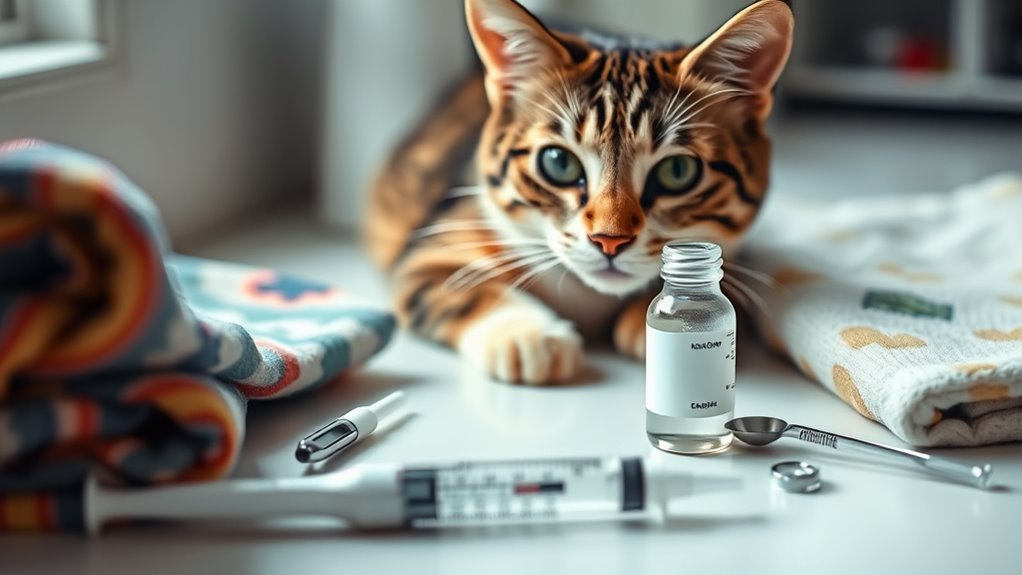
Using a syringe or dropper makes giving liquid meds easier. A pill pocket can also help your cat swallow pills more comfortably. Remember, consistency matters—give the medicine at the same time each day and keep a record of doses and times.
Handling Medication Safely
When giving medication, carefully measure the correct dosage to prevent under- or overdosing. Use a precise syringe or dropper for liquids, and double-check the instructions.
Never force your cat to take medicine, and avoid shortcuts that could cause spills or injuries. Keep the medication container and any tools used in a safe, clean place.
Following these do’s and don’ts helps ensure your cat receives the proper treatment safely and reduces the risk of accidental misuse.
Common Mistakes to Avoid When Treating Your Cat’s Cold
Treating your cat’s cold the wrong way can cause complications or make the illness last longer. One common mistake is mistaking cold symptoms and jumping to unnecessary treatments or myths. For example, giving human medicine without vet approval can be very dangerous.
Don’t ignore subtle signs of worsening symptoms, which may need professional care. Relying only on home remedies without a proper diagnosis can delay the right treatment. Also, be careful with dosages; too much or too little can harm your cat.
Make sure you understand how to give medication correctly, as improper administration can cause stress or injury. Be careful to avoid these mistakes:
- Assuming all cold symptoms are the same and treating them with generic remedies
- Using over-the-counter medicines meant for humans
- Thinking the cold will just go away without monitoring
- Ignoring signs of secondary infections
- Believing in treatment myths instead of seeking veterinary advice
Questions to Ask Your Veterinarian About Cold Treatment Options
When discussing your cat’s cold with your veterinarian, it’s important to ask the right questions to understand all available treatment options. Start by clarifying the specific cold symptoms your cat is experiencing and ask about medication options that can help alleviate those symptoms effectively.
Inquire about the recommended treatment duration and how long it usually takes to see signs of recovery. Make sure to ask for clear dosage instructions so you can avoid giving too little or too much medication. Discuss follow-up care to monitor your cat’s progress and ask about strategies for health monitoring.
Understanding potential side effects of prescribed medications is essential. Ask your vet what adverse reactions to watch for during treatment. Finally, find out how to recognize signs of improvement or worsening so you know when to seek further care.
Being well-informed will help you provide the best support during your cat’s recovery process.
How Can You Prevent Future Colds and Keep Your Cat Healthy
To reduce the risk of future colds and keep your cat healthy, maintaining a clean and stress-free environment is key. A strong immune system depends on proper care, including regular check-ups, a healthy diet, and consistent grooming habits.
Ensuring your cat stays properly hydrated and follows a vaccination schedule helps prevent infections. Reducing stress through a calm environment and social interaction supports overall well-being.
An engaging exercise routine keeps your cat active and healthy, while keeping the environment clean minimizes exposure to germs. Regular grooming not only keeps your cat comfortable but also helps you spot early signs of illness.
Combining these practices builds a resilient immune system and lowers the chances of future colds. By staying proactive and attentive to your cat’s needs, you promote long-term health and happiness for your beloved companion.
Frequently Asked Questions
Can I Give My Cat Over-The-Counter Human Cold Medicine Safely?
No, you shouldn’t give your cat over-the-counter human cold medicine because of human medication risks. These medications can contain ingredients that are toxic to cats or can make their cold symptoms worse.
Instead, talk to your veterinarian for safe options that are specifically designed for cats’ health. Never give your pet human medicine without professional advice, as it can cause serious health issues or complications.
Always follow your vet’s guidance to keep your cat safe and healthy.
How Do I Administer Cold Medicine to a Reluctant or Aggressive Cat?
Think of yourself as a skilled veterinarian, calmly applying cat restraint techniques to help your reluctant or aggressive cat. Gently wrap your cat in a towel to prevent scratching.
Then, use medication delivery methods like a syringe or dropper.
Speak softly and offer treats afterward to create a positive association. Stay patient and gentle throughout the process.
Your calm, confident approach helps reduce stress, making giving cold medicine safer and easier for both of you.
Are There Specific Brands of Cold Medicine Recommended for Cats?
There aren’t many specific cold medicine brands recommended for cats because most human medications aren’t safe for them.
Instead, look for feline health products that are designed specifically for cats, like vet-approved remedies for cold symptoms.
Always talk to your veterinarian before choosing any cold medicine brands or feline health products. They can recommend safe, effective options tailored to your cat’s needs.
Avoid giving human cold medicines to your cat at all costs.
How Long Should I Wait Before Seeing Improvements After Medication?
You should usually start seeing improvements within 24 to 48 hours after giving the medication.
However, how long it takes can vary depending on your cat’s condition and how well the medication works.
If you don’t notice any change after a few days or if your cat’s symptoms get worse, it’s important to talk to your vet.
Keeping a close eye on your cat helps ensure the medication is doing its job.
Getting quick advice from your vet can also help prevent any complications.
What Are the Signs of an Adverse Reaction to Cold Medication in Cats?
You might worry about adverse symptoms when giving your cat cold medication, but recognizing them is straightforward.
Look for signs like excessive drooling, vomiting, diarrhea, lethargy, or difficulty breathing.
If these symptoms appear, stop the medication immediately and consult your vet.
Conclusion
When your cat’s sniffles turn into a cold, it’s important to choose the right treatment carefully.
Always keep an eye on their symptoms and talk to your vet before giving any medication.
Are you ready to prioritize your cat’s health and avoid common mistakes? With the right knowledge and support, you can help your feline recover quickly and stay healthy.
Remember, giving your cat the best care means paying attention to their needs, especially when it comes to choosing the right medicine for a cold.