Why Does My Cat Breathe Fast When I Pet Her?
Are you noticing your cat breathing fast when you pet her and wondering what’s going on? You’re not alone—many cat owners are concerned about sudden changes in their pet’s breathing.
It can be confusing and even worrying to see your kitty gasp or pant during cuddle time.
When your cat breathes fast during petting, it’s usually a sign of overstimulation, excitement, or sometimes health issues. Cats often breathe faster if they’re feeling overwhelmed or if petting goes on too long, which can trigger a stress response.
Keep an eye on her body language for signs of discomfort. If the fast breathing persists or gets worse, it might be a health concern.
Learning what your cat’s breathing reveals can help you keep her happy and healthy.
Key Takeaways
- Cats may breathe faster during petting because they’re feeling excited or overstimulated.
- Sometimes, quick breathing shows they’re enjoying the attention, but if it’s too fast, it might mean they’re stressed or uncomfortable.
- Pay attention to your cat’s body language, like tail flicks or a tense posture, to tell if the breathing is normal or a sign of trouble.
- Gentle, brief petting sessions can help prevent overstimulation and keep your cat’s breathing steady.
- If your cat’s breathing stays rapid or becomes labored, it’s a good idea to see a vet to check for any health issues.
Is Your Cat Breathing Rapidly When You Pet Her? What’s Normal?
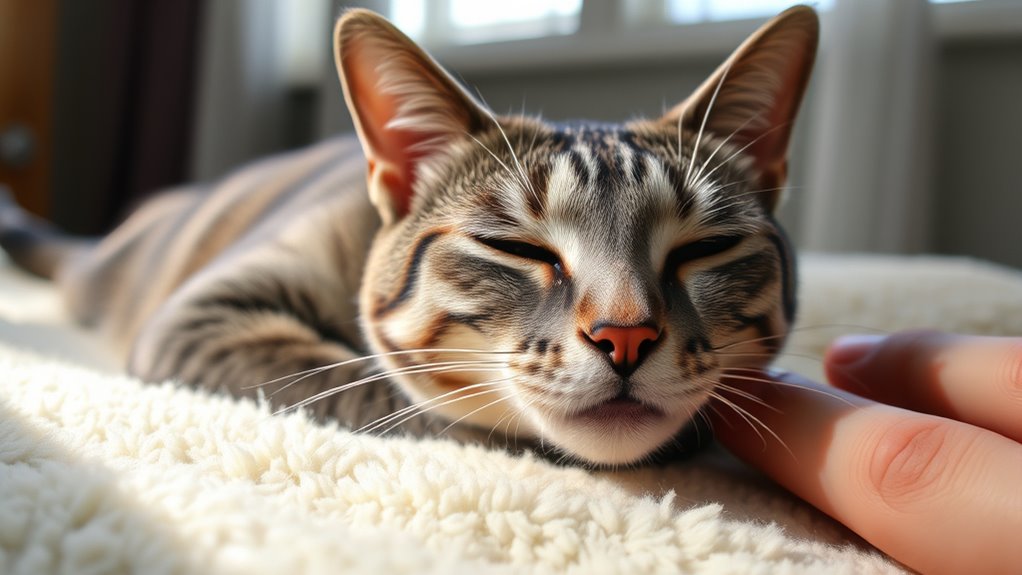
Have you noticed your cat breathing faster than usual when you pet her? This can be part of normal cat behavior, especially if she’s relaxed or enjoying the attention. Typically, a resting cat breathes around 20-30 breaths per minute.
A resting cat usually breathes 20-30 times per minute, especially when relaxed or enjoying petting.
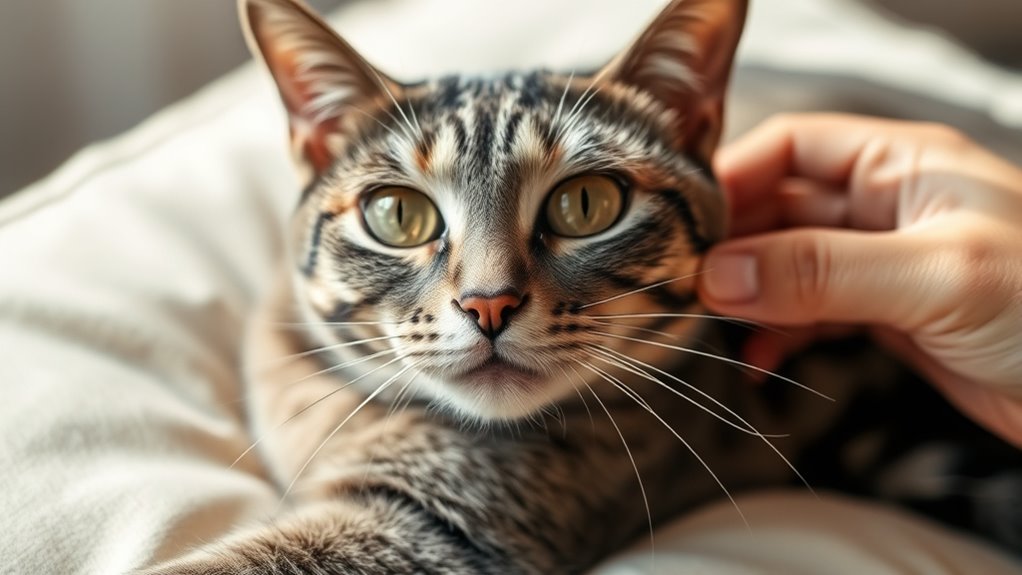
When you’re petting her, her breathing might speed up slightly, but it shouldn’t be labored or irregular. It’s important to observe her overall body language and how you’re petting her.
Gentle, calm strokes often promote relaxation, keeping her breathing steady. If she purrs and seems content, a faster but smooth breath rate is usually normal.
However, if her breathing becomes rapid, shallow, or she shows signs of distress, that could be a sign of discomfort. Understanding what’s normal helps you better interpret her behavior during petting.
Keep an eye on her responses, and adjust your petting techniques to ensure she remains comfortable and relaxed.
What Causes Fast Breathing in Cats During Petting?
When your cat begins breathing faster while you’re petting her, it might just be because she’s excited or a bit overwhelmed. Cats can get overstimulated during petting sessions, and that can cause their breathing to speed up.
But, it’s also worth keeping in mind that sometimes, faster breathing can be a sign of underlying health issues. Conditions like respiratory problems or heart issues might cause increased respiration, so it’s good to pay attention to any other signs she might be showing.
Knowing what’s normal for your cat and what’s not can help you decide whether to give her a little space or to check in with the vet. If her rapid breathing continues or comes along with other concerning symptoms, don’t hesitate to seek professional advice.
Excitement or Overstimulation
Why does your cat sometimes breathe faster during petting sessions? It’s often because she’s excited or overstimulated. As you pet her, she might start purring happily, showing she’s enjoying the moment.
But if the petting goes on too long or gets too intense, she can become overstimulated. This can cause her to breathe faster. Playful behavior can do the same—especially if she suddenly feels energized or eager to play.
Her body reacts to these feelings by increasing her breathing rate to handle the adrenaline. Usually, this fast breathing is temporary and a sign she’s excited, not distressed. Watching her body language helps you know when she’s reaching her stimulation limit.
Underlying Medical Conditions
Fast breathing during petting can sometimes be a sign of underlying medical issues, not just excitement or overstimulation. If your cat’s respiratory health is affected by other conditions, she might breathe rapidly even when she’s not stressed.
These conditions include respiratory infections that cause inflammation and make breathing difficult, heart problems leading to fluid buildup in the lungs, and asthma or bronchitis that narrow airways and cause labored breathing.
If you notice your cat breathing quickly over a long period, especially if she’s coughing or wheezing, it’s important to see a vet. Underlying issues can affect her health, so early diagnosis and treatment are key to helping her breathe normally again.
Don’t ignore signs of distress—your cat’s breathing gives you important clues about her overall health.
How to Tell If Your Cat’s Breathing Is Normal or Concerning
It’s important to recognize the signs that show whether your cat’s breathing is normal or if something’s wrong. Normal breathing in cats is usually quiet, steady, and effortless, with the chest rising and falling evenly.
Watch for rapid, shallow breaths or irregular patterns, which can be a sign of a problem. Pay attention to your cat’s behavior—if she’s resting calmly and breathing normally, that’s a good sign.
But if she’s panting, gasping, or showing signs of distress, her breathing might be abnormal. Also, check her nose and mouth; if they’re warm or dry, or if she’s wheezing or coughing, these could be warning signs.
Knowing what normal cat behavior looks like helps you spot when something’s off. If her breathing seems labored or continues for a while, it’s best to see a vet quickly to rule out any issues.
Signs Your Cat Is Stressed or Overstimulated While You Pet
Even if your cat seems comfortable while you pet her, signs of stress or overstimulation can sometimes appear suddenly. Watch her body language for clues that she’s reaching her limit. Here are three signs to look out for:
- Tense body or stiffening: If her muscles tighten or she pulls away, she’s probably overstimulated.
- Tail flicking or lashing: Rapid tail movements often mean irritation or discomfort.
- Sudden biting or scratching: These are clear signals she wants the petting to stop.
Knowing her petting preferences helps prevent overstimulation. If she prefers gentle strokes on her head but avoids her belly, respect those boundaries. Notice if she starts to lean into your touch or pulls away quickly—that’s a sign to stop.
Pay close attention to her body language to keep her comfortable. Recognizing these signs can reduce her stress and make petting a pleasant experience for both of you.
When Rapid Breathing Might Be a Sign of Health Problems
If your cat is breathing quickly and it seems like they’re having a hard time catching their breath, that could be a sign of respiratory distress. It’s definitely something to pay attention to, because it might mean they’re struggling to get enough oxygen.
Sometimes, fast breathing can be caused by underlying health issues like heart problems or infections. These conditions can really affect how your cat breathes and might need prompt veterinary attention.
Signs of Respiratory Distress
How can you tell if your cat’s rapid breathing is a cause for concern? Look for signs of respiratory distress, which may indicate health problems. These include:
- Labored or noisy breathing, like wheezing or gasping.
- Rapid breathing that continues even when your cat is resting, or if their chest seems to rise and fall more than normal.
- Other respiratory signs such as blue-tinged gums or open-mouth breathing.
Fast breathing caused by anxiety or stress can look similar, but if it lasts a long time or comes with these signs, it’s a red flag. Recognizing these signs helps you figure out if your cat is experiencing respiratory distress or just feeling anxious.
Underlying Medical Conditions
While signs of respiratory distress can sometimes stem from temporary issues like stress, persistent rapid breathing may indicate an underlying medical condition that needs attention. Heart conditions can cause your cat to breathe faster as her heart struggles to pump blood effectively.
Anxiety disorders might lead to hyperventilation, especially if she’s stressed or overwhelmed. Respiratory infections, such as feline asthma, can cause inflammation and airway constriction, resulting in rapid breaths.
Pain management is also essential; if your cat is in discomfort, her breathing may speed up as her body reacts. If you notice ongoing rapid breathing, it’s vital to consult a veterinarian promptly.
Proper diagnosis and treatment, including medication for conditions like feline asthma or heart issues, can improve her breathing and overall health.
Could Pain or Discomfort Be Causing Your Cat’s Breathing Changes?
Pain or discomfort can especially affect your cat’s breathing patterns, making her breathe faster or more labored than usual. Recognizing signs of pain and discomfort is key to understanding her behavior.
When your cat is in pain, she might show some clear signs like reduced activity or reluctance to move. She could also vocalize more, with growling, hissing, or crying.
Changes in posture are common too, such as hiding or crouching low. These signs often come with faster, shallower breathing, especially when she’s touched or handled.
If your cat shows any of these discomfort signals, her altered breathing could be a response to pain. It’s important to watch her closely and think about possible causes like injuries or illness.
Ignoring these signs might make things worse, so seeking veterinary help promptly is a good idea if you think pain is affecting her breathing. Spotting discomfort early can help ensure she gets the care she needs.
How Cat Breathing Works Inside: A Simple Guide
Understanding how your cat breathes inside her body can help you better recognize normal versus abnormal breathing. The mechanics involve a complex interaction between her respiratory system and feline physiology.
When your cat inhales, air enters her nose or mouth, passes through her windpipe, and reaches her lungs. Inside the lungs, oxygen exchanges with carbon dioxide in tiny air sacs called alveoli.
During exhalation, this carbon dioxide is expelled. Cats have a flexible chest cavity and a diaphragm muscle that helps with breathing. Their respiratory rate can change depending on activity, mood, or health.
When petting, your cat’s nervous system may cause her to breathe faster, influenced by her feline physiology. Despite this, her internal processes stay consistent, ensuring oxygen reaches her tissues efficiently.
Understanding these basics helps you spot normal breathing and recognize signs of potential health issues.
Tips to Keep Your Cat Calm During Petting Sessions
Keeping your cat calm during petting sessions is key to making it a relaxing and enjoyable time for both of you. Try using calming techniques that help your cat feel comfortable.
First, watch your cat’s body language. If she seems tense, pause or stop petting to avoid stressing her out.
Second, keep the petting sessions short—about 1-2 minutes—so she doesn’t get overstimulated. You can gradually lengthen the time as she gets more comfortable.
Third, use gentle, slow strokes instead of rapid or rough movements. Fast or rough touches can make her more nervous.
Creating a peaceful environment also helps. Dimming the lights or playing soft music can make her feel more at ease.
Offering treats or a favorite toy after petting can reinforce positive feelings and help her associate petting with good things.
Remember, patience is really important—every cat has different limits.
What to Do If Your Cat’s Breathing Becomes Worrisome
If your cat’s breathing suddenly speeds up or seems labored during or after petting, it’s important to pay close attention. First, try to create a calming environment by using gentle breathing techniques, such as slow, steady breaths yourself, to help your cat feel more secure.
Use calming methods like softly speaking or offering a quiet space where she can retreat if needed. Keep her in a comfortable position, avoiding any sudden movements that could increase her distress. Monitor her closely for signs of distress, such as open-mouth breathing or pale gums.
If her breathing doesn’t improve quickly or worsens, don’t hesitate to seek veterinary advice promptly. Your goal is to reduce her stress and support her breathing without causing additional anxiety. Remember, quick or labored breathing can be a sign of an underlying problem that needs professional attention.
When to Visit the Vet for Breathing Issues
If you notice your cat breathing quickly or having a hard time, it’s a good idea to give your vet a call. Sometimes, rapid or labored breathing can just be a temporary thing, but it can also be a sign that something more serious is going on.
Keep an eye out for other signs like blue gums or if your cat suddenly collapses—that’s definitely a red flag and needs urgent attention. Watching how your cat breathes can really help you catch when things are getting worse, so you know when it’s time to get professional help right away.
Recognizing Serious Breathing Signs
Recognizing when your cat’s breathing issues are serious is essential for their health. Changes in breathing patterns or stress indicators can signal a problem. Watch for these signs:
- Rapid, shallow breaths that stick around even when your cat is calm.
- Labored breathing, with obvious effort or open-mouth panting.
- Unusual stress signals like hiding, vocalizing, or seeming distressed during normal activities.
If you notice any of these, it’s time to act. These signs could mean your cat is experiencing respiratory distress or other underlying issues that need veterinary attention.
Don’t ignore persistent or severe symptoms. Early intervention can prevent complications and help your cat recover faster. Your vigilance is key to ensuring they get the care they need before the problem worsens.
When Is Emergency Care Needed?
Knowing when breathing issues require immediate veterinary attention can be be life-saving. Watch for emergency signs like labored or rapid breathing, open-mouth breathing, or bluish gums.
If your cat’s breathing pattern becomes labored, irregular, or unusually fast, it’s time to seek help right away. Any signs of distress such as wheezing, choking, or collapse demand urgent care.
Don’t wait if your cat appears to struggle for breath or if her breathing seems shallow or inconsistent. These symptoms can indicate serious health problems like asthma, heart failure, or airway obstruction.
Prompt action can make all the difference in her recovery. When in doubt, contact your vet immediately to guarantee your cat gets the care she needs without delay.
Monitoring Breathing Patterns
Monitoring your cat’s breathing patterns regularly can help you catch early signs of trouble before they turn into emergencies. Pay attention to her breathing rhythm, and notice whether it’s steady or irregular. Keep an eye out for any unusual patterns.
Normal breathing can fluctuate a bit, but if you see her breathing rapidly or shallowly for a long time, that could be a sign of a problem. Watch how her breathing changes with activity or rest—any persistent abnormalities are worth noting.
Ask yourself these questions when observing her:
- Is her breathing steady or irregular?
- Are her breaths quick and shallow or slow and deep?
- Do her breathing patterns change with activity or stay abnormal?
If you notice her breathing is fast for a long time, irregular, or doesn’t go back to normal after she gets excited, it’s time for a vet visit. Catching issues early can help prevent more serious health problems.
Frequently Asked Questions
Can Rapid Breathing Indicate Anxiety in Cats During Petting?
Yes, rapid breathing can be a sign of anxiety during petting. If your cat’s breathing speeds up, she might be feeling overwhelmed or stressed.
Pay attention to her behavior. If she’s tense, tries to move away, or shows other signs of discomfort, her quick breathing is likely a sign of anxiety.
To keep her comfortable, watch her cues and give her space when needed. This way, her petting experience stays positive.
Are Certain Breeds More Prone to Breathing Changes When Petted?
Certain breeds, like brachycephalic cats, are more prone to breathing changes when petted because of their unique characteristics. Studies show these breeds are 3 to 4 times more likely to have respiratory issues.
Your petting technique matters—gentle, slow strokes help reduce stress. Recognizing breed traits lets you adapt your approach, so your cat stays comfortable and relaxed during petting sessions.
Does Age Affect How My Cat Reacts to Petting With Breathing?
Age can influence how your cat reacts to petting and her breathing patterns. Older cats might show different behaviors, like increased sensitivity or stress, which can lead to faster breathing.
Younger cats often enjoy petting more comfortably, with less of an impact on their breathing. Pay attention to her body language and petting preferences.
If her breathing becomes rapid or labored, it’s a good idea to check with your vet. This is especially important for senior cats to rule out any health issues.
Can Food Allergies Cause a Cat to Breathe Faster?
Think of your cat’s body as a finely tuned instrument. Food allergies, like discordant notes, can cause her to breathe faster during allergic reactions.
Food sensitivities trigger inflammation and airway constriction, making her breathe more rapidly.
If you notice this, consult your vet. Avoiding certain foods and managing allergic reactions can help restore her harmony.
Recognizing these signs helps you keep her comfortable and healthy.
How Does Respiratory Health Influence a Cat’s Response to Petting?
Respiratory health directly impacts how your cat reacts to petting. Respiratory conditions can make it hard for your cat to breathe, so they might be more sensitive to touch.
Stress and environmental factors, like loud noises or unfamiliar surroundings, can make this worse. Gentle petting can help reduce stress and prevent respiratory distress.
Conclusion
Think of your cat’s breathing as a delicate dance—sometimes she’s in a gentle waltz, other times a lively jig. When her breath quickens during petting, it’s like a rhythm that needs attention.
By understanding her signs and cues, you become her attentive conductor, ensuring her dance stays graceful and safe. Keep an eye on her, and when in doubt, consult your vet to keep her performance smooth and stress-free.
If your cat breathes fast when you pet her, it could be a normal response or a sign of something more serious. Paying close attention helps you know when her breathing is just part of the dance or something to watch out for.