7 Tips to Give Medicine to an Angry Cat Safely
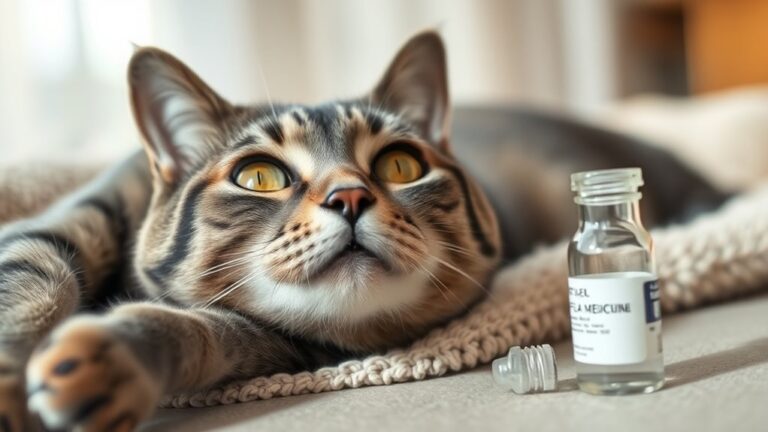
Giving medicine to an angry cat can be a real challenge, and you’re not alone in feeling overwhelmed by it. Many cat owners struggle with getting their pets to take medication without stress or scratches.
To give medicine to an angry cat safely, create a calm environment and stick to a gentle routine to reduce stress. Assess your cat’s behavior, choose the easiest medication form, and use positive reinforcement.
Handle your cat softly, and pick a quiet spot to administer the medication. Gently open the mouth and place the pill at the back of the tongue. Watch for signs of distress and reward your cat afterward.
Keep learning how to manage tricky situations for the best outcome. With patience and the right approach, you can make medication time smoother for both you and your feline friend.
Key Takeaways
- Use calm, gentle handling and speak softly to keep the cat from getting more upset.
- Pick a quiet, familiar spot to make the process less stressful for your feline friend.
- Give treats or praise after giving the medicine to encourage positive feelings.
- Try distraction tools or flavors to make giving medicine easier and less confrontational.
- Watch your cat closely and stop immediately if you notice any signs of aggression or distress.
How to Prepare Your Cat Before Giving Medication
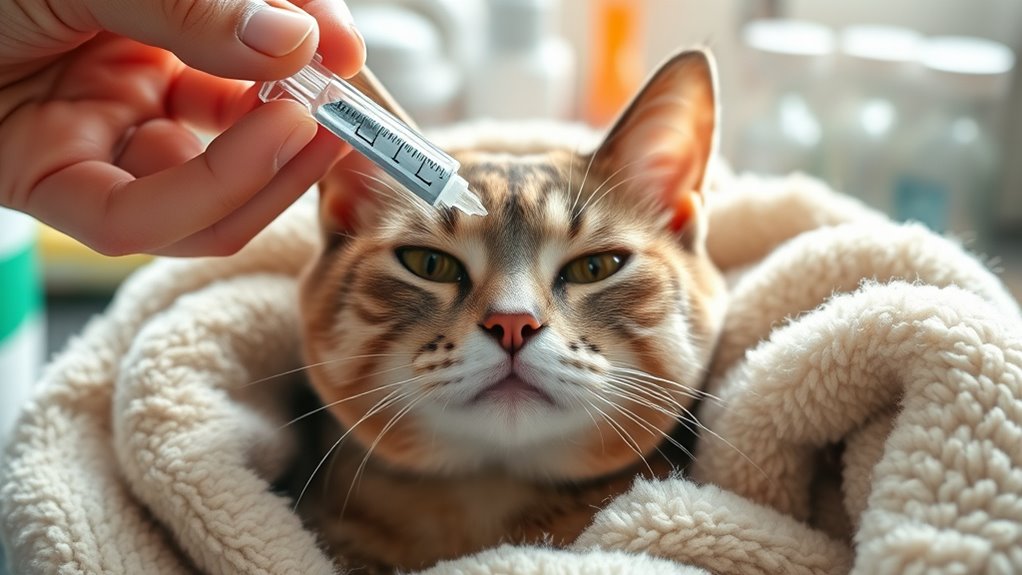
Before giving your cat medication, it’s important to create a calm and comfortable environment to reduce their stress. Start with a pre-medication routine that helps your cat feel secure. Play softly, offer a favorite treat, or pet them gently to build trust.
This routine signals that good things happen before medicine, making the process less intimidating. Use positive reinforcement to encourage cooperation—praise your cat or give a small treat afterward.
Keep the environment quiet and free of sudden noises, and make sure your hands are steady. If your cat has a spot they find comforting, give the medication there. Making the experience positive helps prevent future resistance.
Choosing the Best Method to Give Medicine to Your Cat
When you’re figuring out the best way to give your cat medication, it’s important to think about your cat’s personality and how they usually react to being handled. Some cats are more relaxed, while others might get pretty stressed out.
Choosing the right type of medication—whether it’s a pill, liquid, or treat—can really make things smoother for both of you. And don’t forget, it’s always a good idea to check in with your vet to make sure you’re picking the safest and most effective method.
Assess Your Cat’s Temperament
How can you figure out the best way to give medicine to your cat? Start by watching your cat’s body language and stress signals. Some cats stay calm, while others get tense or aggressive. Recognizing these signs helps you pick the gentlest method.
For example, if your cat looks relaxed, a simple oral syringe or pill pocket might do the trick. If your cat shows stress signals like flattened ears or hissing, try wrapping them loosely in a towel to keep them from moving too much.
If your cat becomes aggressive quickly, it’s a good idea to talk to your vet about other methods or calming options. Knowing your cat’s temperament helps you choose a way to give medicine that reduces stress and keeps everyone safe.
Choose Appropriate Medication Form
Choosing the right medication form is key to making the process easier and less stressful for both you and your cat.
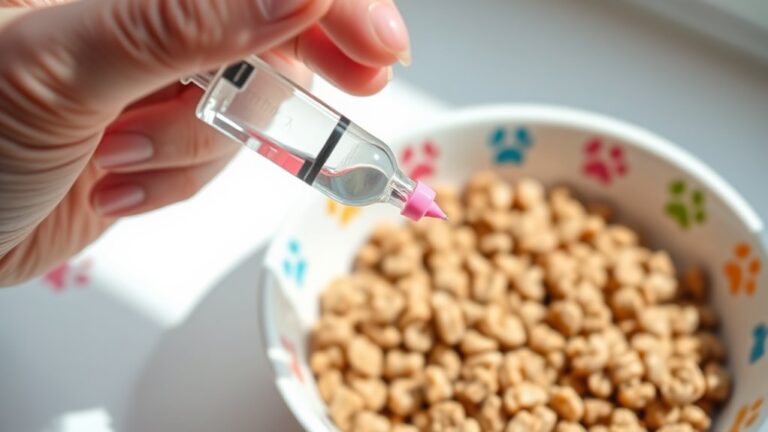
If your cat is particularly resistant, consider liquid options, which are often easier to give discreetly. These let you use a syringe or dropper to place the medicine directly in the mouth or mix it with food.
If your cat strongly dislikes pills, pill disguises can help. You can hide tablets in soft food or treats made for hiding medication.
Always pick a form your cat is most likely to accept, and check with your vet if you’re unsure.
Using the right medication form makes giving medicine simpler and reduces stress and fighting, making the experience better for everyone.
Consult Your Veterinarian
Consulting your veterinarian is really important when figuring out how to give medicine to your cat. They can give you advice that’s tailored to your cat’s temperament and health needs.
Your vet might also suggest medication alternatives if your cat strongly resists traditional methods.
Consider options like compounded medications, which are flavored or altered forms that are easier to give.
They can also teach you pilling techniques to hide pills or capsules properly.
Another idea is using alternative delivery methods, such as medicated treats or liquids, if recommended by your vet.
How to Calmly Restrain an Angry Cat During Medication
When your cat is angry and needs medication, it’s important to handle them in a way that keeps everyone safe and calm. Use gentle techniques to hold your cat securely but without causing extra stress. Speaking softly in a calm, soothing voice can really help ease their anxiety and make the process smoother.
Choose a way to restrain your cat that’s firm enough to keep them from squirming away, but still gentle enough to avoid hurting or frightening them. Making sure your cat is properly secured not only keeps you safe but also helps reduce their stress during the medication process. Remember, patience and kindness go a long way!
Gentle Handling Techniques
When your cat is angry or stressed during medication, approaching with gentle, calm movements can make a big difference. Use slow, deliberate actions to avoid startling your cat further. Incorporating calming techniques like softly speaking or offering treats beforehand can help ease tension.
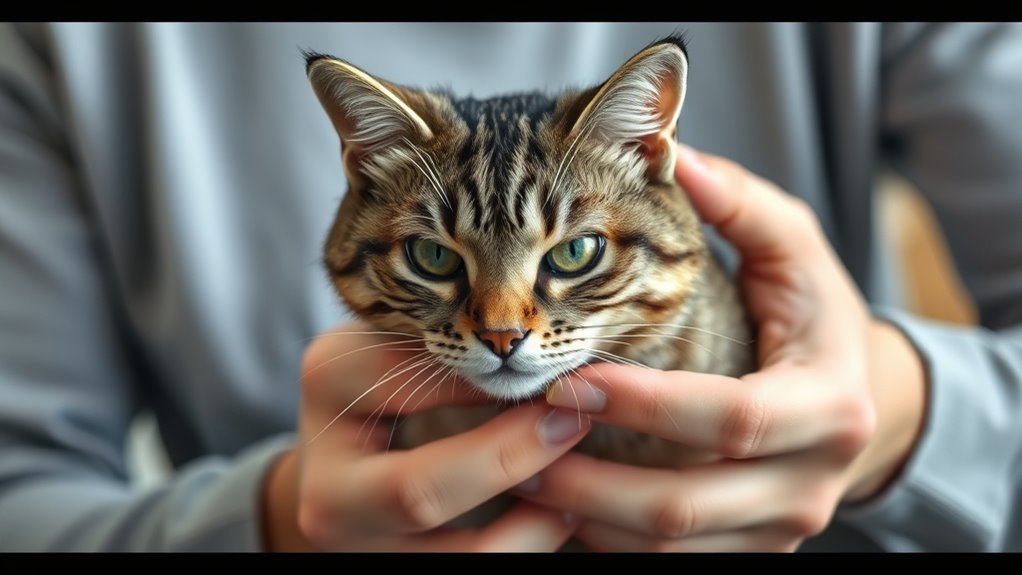
To handle your cat gently, cradle their body against your chest, supporting their weight without squeezing. Use a calm, steady hand to hold their head securely but softly, avoiding sudden jerks.
Reward your cat immediately with positive reinforcement after medication to reinforce calm behavior. These techniques help create a trusting environment and reduce stress.
Consistent gentle handling combined with positive reinforcement encourages your cat to stay calmer during future medication sessions.
Using Calm Voice
Using a calm voice can make a big difference when restraining an angry cat during medication. Your steady, soothing tone helps create a calm environment that can ease your cat’s anxiety.
Speak softly and gently, avoiding loud or harsh words that might make your cat more upset. Your calm demeanor reassures your cat, making the process less stressful for both of you.
Incorporate positive reinforcement by speaking kindly and offering gentle praise when your cat cooperates, even if only briefly. Consistently using a calm voice helps your cat associate medication time with a peaceful experience.
Over time, this approach can reduce their anger and fear, making future medication sessions smoother and safer for everyone involved.
Secure Restraining Methods
Securing an angry cat calmly requires gentle but firm restraint techniques that prioritize safety for both you and your pet. Using effective restraint helps prevent scratches and injury while keeping the cat calm.
Here are some cat safety techniques to take into account:
- Wrap your cat in a thick towel or blanket, with paws tucked inside, to limit movement and protect your hands.
- Use a secure yet gentle grip around the chest and neck, avoiding pressure on the throat, to control the head and body.
- Keep the cat close to your body to provide a sense of security, reducing stress and making it easier to administer medication.
These methods guarantee effective restraint while reducing stress, making the process safer for everyone involved.
Step-by-Step Guide to Giving Oral Medication to Your Cat
Administering oral medication to an angry cat can be challenging, but with the right approach, it’s manageable. First, choose a quiet, comfortable spot to keep your cat calm. Before giving the medicine, verify you’ve scheduled medication timing that aligns with your vet’s instructions and your cat’s routine.
Gently hold your cat’s head, tilting it slightly upward. Use your thumb and forefinger to gently open the mouth by applying pressure at the sides of the jaw. Quickly place the medication at the back of the tongue, then close the mouth and gently hold it shut to encourage swallowing.
Throughout the process, use positive reinforcement like praise or a treat afterward to create a positive association. Stay calm and patient, and don’t rush. With practice and consistency, this step-by-step method will become easier, helping you medicate your cat safely and effectively.
Troubleshooting Common Challenges When Giving Medicine
Even with a gentle approach, some cats may resist medication more fiercely than others. When this happens, troubleshooting becomes essential. First, inconsistent medication timing can cause resistance, so stick to a regular schedule to build routine and reduce stress.
Consistent medication timing helps reduce resistance and builds a calming routine for your cat.
Second, if your cat fights the pill pocket techniques, try different flavors or textures to see what entices them. Sometimes, warming the pill pocket slightly makes it more appealing.
Third, consider alternative methods like crushing pills (if safe) mixed with tasty food, but only do this with your vet’s approval. If your cat keeps spitting out pills, reassess your approach and try a different technique or distraction tools.
Patience, consistency, and adjusting your method are key to overcoming these common challenges when giving medicine.
How to Care for Your Cat After Medication and Reinforce Good Behavior
After giving your cat medication, it’s important to watch how they behave and how comfortable they seem to make sure they recover well. Keep an eye out for signs of comfort, like relaxed body language or normal activity.
If your cat looks stressed or uncomfortable, give them a quiet, cozy spot to rest without disturbance. Gentle petting or treats can help calm them and create positive feelings around the experience.
Use praise or rewards to encourage good behavior. When your cat stays calm or follows commands, reward them. This builds trust and makes future medication routines easier.
Check that they’re eating, drinking, and using the litter box normally. Patience is key—your calm attitude and consistent care will help your cat feel safe and supported during recovery.
Reinforcing good behavior after medication helps set a positive foundation for any future health needs.
When to Seek Help From a Veterinarian or Pet Professional
Knowing when to seek help from a veterinarian or pet professional is key for your cat’s well-being, especially if their condition gets worse or doesn’t improve after medication. If you notice persistent or worsening issues, it’s a good idea to get expert advice.
You should reach out if your cat shows signs of increased cat anxiety like constant hiding, excessive grooming, or aggressive behavior. These can be signs that your cat needs professional help.
If the medication isn’t helping and symptoms such as pain, vomiting, or lethargy continue, don’t wait. These could be signs of a more serious problem that needs a vet’s attention.
Also, look out for unusual behaviors or physical symptoms like swelling, difficulty breathing, or loss of appetite. These are clear signals that your cat needs prompt care.
Getting professional advice ensures your feline friend receives the right diagnosis and treatment plan. Remember, acting quickly can prevent minor issues from becoming serious.
A vet can provide guidance to help ease your cat’s anxiety and discomfort effectively. Don’t hesitate to seek help when you notice these signs.
Frequently Asked Questions
How Can I Tell if My Cat Has Taken the Medicine Properly?
To tell if your cat has taken the medicine properly, watch for signs like swallowing and calmness after giving it.
Use gentle techniques such as softly holding your cat’s head and offering water afterward to help the process.
Stick to the medication schedule closely, making sure doses are given at the right times.
If your cat shows no resistance and you see it swallow the medicine completely, it’s a good sign you did it right.
Always check for any side effects or unusual behavior afterward to be sure everything went smoothly.
Are There Alternative Medication Forms for Cats That Resist Pills?
Yes, there are alternative medication forms for cats that resist pills. You can choose liquid options, which are easier to give with a syringe or dropper.
Topical treatments like ointments or patches also work. They provide medication without the need to swallow anything.
These methods can make giving medicine less stressful for both you and your cat. Always check with your vet to find the safest and most effective option for your feline.
How Often Should I Give Medication to My Angry Cat?
You should give medication to your angry cat exactly as prescribed, following the schedules and dosage guidelines provided by your vet.
Failing to stick to the schedule can reduce the medicine’s effectiveness or cause health issues.
To avoid resistance, keep a consistent routine, and if your cat resists, consider pill pockets or liquid forms.
Regularly scheduled doses ensure your cat gets the right treatment for an ideal recovery.
Can Giving Medicine Harm My Cat’s Health or Cause Side Effects?
Giving medication can sometimes harm your cat’s health or cause side effects if not done properly. To keep your cat safe, follow your vet’s instructions carefully and give the correct dosage.
Watch for any adverse reactions like vomiting, diarrhea, or lethargy. If you notice any side effects, contact your vet right away.
Proper administration minimizes risks, keeps your cat safe, and helps the medication work effectively.
What Signs Indicate My Cat Needs Immediate Veterinary Attention After Medication?
Like a storm brewing on the horizon, certain signs demand immediate vet attention after medication.
Watch for emergency symptoms such as difficulty breathing, vomiting, diarrhea, or seizures, which indicate serious medication reactions.
Also, note excessive lethargy, swelling, or unusual behavior.
If your cat shows any of these signs, act fast and contact your veterinarian right away to prevent complications and guarantee your feline’s safety.
Conclusion
Remember, patience and calmness are your best allies. Think of yourself as a gentle alchemist transforming chaos into cooperation. With preparation, gentle restraint, and positive reinforcement, you can navigate your feline’s wrath as deftly as a troubadour of old.
If stubbornness persists, don’t hesitate to seek help from a veterinarian or pet professional. These tips will help you turn a fiery feline into a faithful companion, even when faced with the fiercest feline fury.