Why Does My Cat Clean Herself After I Pet Her?
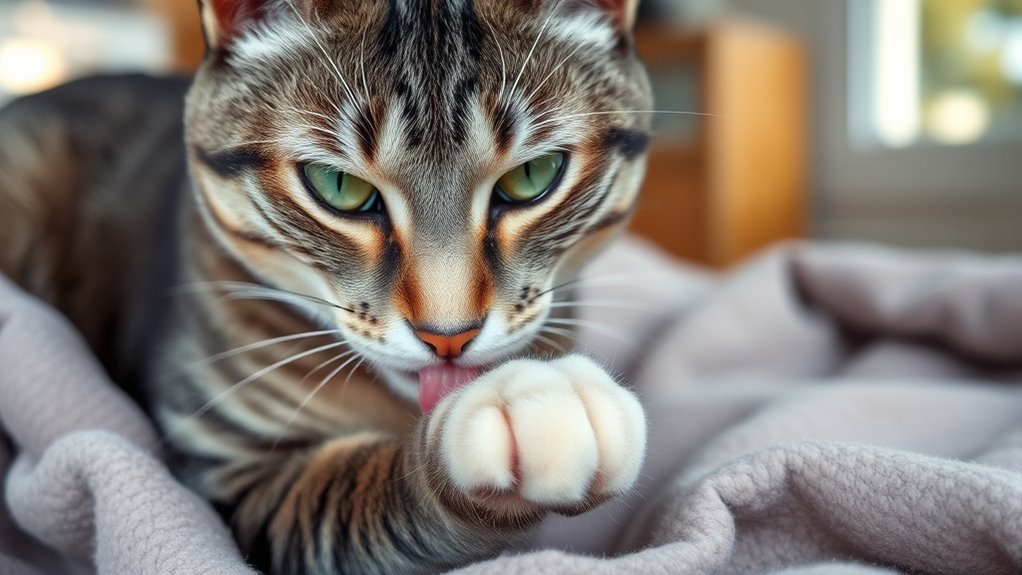
If your cat cleans herself right after you pet her, you’re not alone. Many pet owners find this behavior puzzling and wonder what it means.
When your cat cleans herself after you pet her, it’s a natural instinct to restore comfort and manage stress. Petting triggers her grooming response because it helps her feel safe and secure.
It may also be a way for her to release endorphins, which reduce stress. If she grooms excessively, it could signal anxiety or discomfort.
Keep exploring to uncover more about her grooming habits and how to create a calming environment for her.
Key Takeaways
- Cats groom after petting to remove human scent and restore their natural smell.
- Grooming helps cats feel comfortable and in control after tactile interactions.
- It also acts as a self-soothing behavior to manage overstimulation or stress.
- When they groom, cats release endorphins that help reduce stress and promote relaxation.
- Sometimes, cats groom to reaffirm their emotional state and maintain a sense of security.
Why Do Cats Groom Themselves After Being Pet?
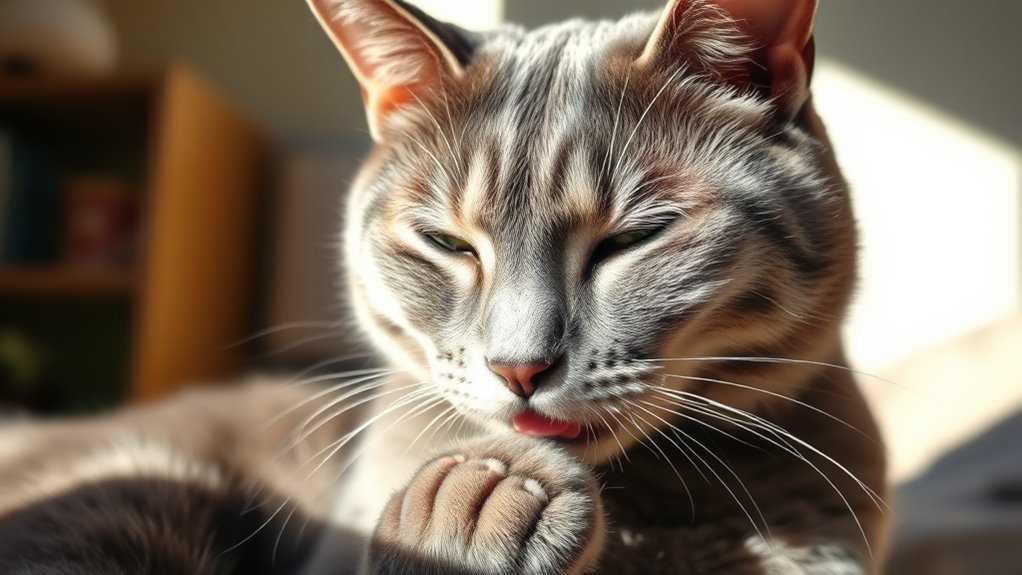
After being petted, cats often groom themselves to restore their sense of comfort and control. This behavior is natural and rooted in feline psychology.
When you pet your cat, it might feel vulnerable or overstimulated, so she grooms herself to regain calm and security. Grooming also helps remove any residual scent or disturbances caused by your touch.
It’s a way for her to feel more in control of her environment. Plus, grooming releases endorphins that help reduce stress and soothe her.
In the wild, this behavior also helps cats stay clean and maintain social bonds within their group. So, when your cat cleans herself after being petted, it’s not just about cleanliness.
It’s her way of reaffirming her comfort and emotional state. This is an essential part of her natural instincts and feline psychology.
Understanding Your Cat’s Natural Grooming Instincts
Cats’ grooming habits are deeply rooted in their natural instincts and evolutionary history. You’ll notice that grooming isn’t just about cleanliness; it’s a crucial part of their feline instincts.
Grooming acts as a self-soothing technique, helping cats manage stress and stay emotionally balanced. These habits serve many purposes, from removing loose fur and dirt to helping regulate body temperature.
When your cat grooms, she’s also responding to sensory cues—tactile stimulation that comforts her and keeps her alert to her environment. Understanding these instincts helps you recognize behavioral cues, like when she’s grooming excessively or avoiding interaction.
Grooming isn’t just about hygiene; it’s vital for her mental and emotional health. By understanding her natural needs, you can better support her well-being and build a trusting, calm relationship.
How Petting Triggers a Cat’s Grooming Response
When you pet your cat, it’s like giving them a gentle signal that everything’s safe and cozy. That touch actually stimulates their natural grooming instincts, so they might start cleaning themselves more.
Feeling relaxed and comfortable from your petting encourages them to groom themselves, which is a good sign they’re at ease. Plus, when they’re less stressed, they tend to keep their coat tidy and looking good.
Basically, your interaction has a direct influence on their grooming behavior, helping them feel calm and happy.
Touch Stimulates Grooming Instincts
Petting a cat often triggers an instinctive grooming response because the sensation of touch activates their natural grooming reflexes. When you pet your cat, it can set off grooming triggers that are part of their instinctual behavior, signaling comfort and security.
These petting effects aren’t just about physical sensation; they also serve as a form of cat communication, showing they feel safe. This touch can evoke an emotional response, helping your cat relax and settle into her comfort zones.
Grooming becomes a natural relaxation technique, calming her nerves. Recognizing behavioral cues during petting—like licking or grooming—indicates her instincts are being stimulated, and she’s responding positively.
This connection highlights how touch influences her grooming instincts and emotional well-being.
Comfort Enhances Self-Cleaning
Gentle touch from you not only comforts your cat but also encourages her natural grooming behaviors. When she feels relaxed, her self-soothing kicks in, and she grooms herself more diligently.
This grooming isn’t just about cleanliness; it’s her way of maintaining hygiene and feeling secure. Petting provides a sense of safety, prompting her to clean her fur and regain her comfort level.
Your touch signals trust, helping her associate human interaction with safety and relaxation. Because of that, she’s more likely to groom herself afterward, reinforcing her sense of well-being.
This natural response helps her stay clean and emotionally balanced. It shows how comfort deeply influences her self-care routines.
Stress Relief Through Grooming
Touching your cat can really help lower her stress levels because it activates her natural grooming response. When you pet her, it triggers cues that remind her of grooming routines in her safe spaces.
These sensory responses make her feel safe and calm, helping her handle outside stimuli better. Playing with her can strengthen this effect, making her associate your touch with positive feelings.
Creating a quiet environment also supports her relaxation. Every cat has her own preferences for petting and grooming, so paying attention to her cues is really important.
When she starts grooming herself after you pet her, that’s a good sign she feels secure and relaxed. This grooming isn’t just about keeping clean — it’s a key part of her stress relief and emotional well-being.
Does Stress Make Cats Groom More? Signs to Watch For
Stress can cause cats to groom themselves more frequently or obsessively, as they often turn to grooming to soothe anxiety. If your cat’s grooming suddenly increases, it might be a sign of underlying stress or behavioral triggers.
Excessive grooming may indicate stress or anxiety in your cat; monitor their behavior closely.
Watch for signs like restlessness, hiding, or over-licking, especially after changes in their environment. Loud noises, new pets, or unfamiliar visitors can all raise your cat’s stress levels.
Excessive grooming can also be a response to discomfort or boredom. Pay attention to how your cat interacts with their surroundings to understand what might be bothering them.
Creating a calm environment, sticking to routines, and offering relaxation techniques can help lower stress. Addressing the root causes early is key to preventing over-grooming and promoting a healthier balance.
Recognizing these signs early helps you maintain your cat’s well-being and keeps them happy and comfortable.
What Does Excessive Grooming After Petting Mean?
If your cat begins grooming a lot more after you’ve pet them, it might be trying to tell you something. Maybe they’re feeling uncomfortable or irritated, so it’s a good idea to check their skin and coat for any issues like redness, sores, or itching that could be causing pain.
Sometimes, excessive grooming can also be a sign of stress or anxiety. Pay attention to other behaviors, like hiding, overreacting to things, or changes in their routine, to get a better idea of what’s going on. It’s always best to keep an eye on these signs and consider consulting your vet if you’re unsure.
Signs of Discomfort
Have you ever noticed your cat licking itself excessively after you pet it? This could be a sign of discomfort signals, indicating your cat isn’t entirely at ease. Excessive grooming might be triggered by subtle discomfort caused by petting, like pressure on sensitive areas or overstimulation.
Watch for other signs like tail flicking, ear flattening, or tense body language, which can also signal your cat’s unease. If your cat begins to groom more than usual after interactions, she might be trying to soothe herself or hide discomfort.
Recognizing these grooming triggers is essential to understanding her feelings. Respond promptly by observing her behavior and adjusting your interactions so she feels safe and relaxed rather than stressed.
Skin or Coat Issues
Excessive grooming after petting can sometimes point to underlying skin or coat problems rather than just discomfort from interaction. Skin sensitivities or allergy reactions may cause your cat to lick and scratch more, especially if environmental factors like pollen or dust irritate her skin.
Changes in fur texture or skin hydration can signal issues needing attention. Your cat’s grooming routines might increase to maintain her coat, especially during seasonal changes when skin becomes drier or more sensitive.
Using inappropriate grooming tools or neglecting regular grooming can also lead to skin problems. Persistent excessive grooming could have health implications, like infections or hair loss, so it’s important to monitor her skin and coat health and see a vet if needed.
Stress or Anxiety Indicators
After petting your cat, noticing her excessive grooming might mean she’s feeling stressed or anxious, rather than just enjoying the interaction. This behavior is often a sign that something’s bothering her.
Look for these signs: over-grooming in specific areas, which can lead to hair loss or skin irritation. You might also notice restlessness or agitation after petting sessions.
Another clue is hiding or avoiding further contact with you. Repetitive licking or scratching that seems out of proportion can also be a warning.
These cues suggest your cat might be overwhelmed or anxious. While excessive grooming can be calming for her, it could also indicate underlying stress. Recognizing these signs helps you respond better and make her environment more comfortable.
How Grooming Helps Cats Feel Safe and Calm
Grooming isn’t just about keeping your cat clean; it also helps them feel safe and calm. The benefits go beyond hygiene—grooming is a natural way for your cat to relax. When she licks herself or you gently groom her, she releases calming endorphins that help reduce stress and make her feel secure.
This self-grooming behavior helps her feel in control of her environment, especially after stressful moments like being petted or facing new situations. Regular grooming sessions can also build trust between you and your cat, making her feel more comfortable around you.
The rhythmic motion of grooming mimics natural behaviors that signal safety. By understanding how grooming helps, you can help your cat manage anxiety and strengthen your bond. Overall, grooming is a powerful tool for calming your feline friend and making her feel safe in her surroundings.
The Link Between Grooming and Your Cat’s Hygiene
Regular grooming is important for keeping your cat clean because it helps remove dirt, loose fur, and debris from her coat. This process directly supports her hygiene by preventing matting, reducing odor, and lowering the risk of skin infections. When you see your cat grooming herself after you pet her, it’s part of her routine to stay clean and comfortable.
Here are four ways grooming boosts her hygiene:
- It removes allergens and parasites that could cause health problems.
- It spreads natural oils that keep her coat and skin healthy.
- It prevents matting, which can trap dirt and bacteria.
- It helps spot early signs of skin issues or injuries.
Knowing this helps you understand why your cat’s grooming isn’t just about cleanliness — it’s vital for her health and well-being. Proper grooming keeps her clean, comfortable, and healthy every day.
When Should You Worry About Over-Grooming?
If you notice your cat starting to show signs of skin irritation or grooming more than usual, it’s a good idea to pay attention. Sometimes, cats just like to groom a little extra, but if it becomes excessive, it could be a sign something’s up.
Keep an eye on their grooming habits—if they’re obsessively licking certain spots or if their grooming pattern suddenly changes, it might point to underlying issues like allergies, parasites, or skin infections. Catching these signs early can make a big difference in keeping your kitty comfortable and healthy.
Signs of Skin Irritation
Have you noticed your cat licking or scratching more than usual? That could be a sign of skin irritation. Look for these key indicators:
- Skin lesions or redness that seem unusual or persistent
- Changes in coat condition, like bald patches or dull fur
- Signs of allergic reactions, such as swelling or inflammation
- Evidence of parasite presence, like fleas or ticks, or increased grooming
These signs often come from skin sensitivity caused by environment, allergies, or parasites. If your cat shows behaviors like excessive grooming or seems uncomfortable when petted, it’s time for a checkup. Watching for these signs early can help prevent bigger problems.
Excessive Grooming Duration
Many cats spend a lot of time grooming themselves, but if it becomes excessive, it could be a sign of something else going on.
If your cat is grooming longer than usual, try to notice what might be triggering it, like skin irritation or stress.
Behavioral signs like constant licking or biting at certain spots might indicate discomfort or anxiety.
Over-grooming can cause hair loss, skin infections, or sores, so keep an eye on how long your cat is grooming.
If the grooming feels compulsive or keeps going, it’s a good idea to check with your vet.
Knowing when grooming crosses into overdoing it helps protect your cat’s health and happiness.
Addressing the underlying causes early can prevent bigger problems later on.
Changes in Grooming Patterns
Changes in your cat’s grooming patterns can be a clear sign that something isn’t right. If you notice sudden or unusual behavioral changes like excessive grooming or neglecting grooming altogether, it’s worth paying attention.
These grooming triggers often point to underlying issues like stress, allergies, or skin problems. Keep an eye out for signs like patches of missing fur, redness, or bald spots, which suggest over-grooming.
To keep your cat healthy, monitor these four key points:
- Sudden increase in grooming frequency
- Complete lack of grooming
- Focused grooming on specific areas
- Changes in overall activity or behavior
Recognizing these signs early can help you catch potential problems before they get worse.
Tips to Help Your Cat Relax After Play and Petting
After playtime or petting sessions, your cat might still be a bit energized or stressed. Creating a calming environment can really help them relax.
Try offering a cozy spot with soft bedding or a quiet corner where they feel safe. Gentle, slow petting along the back or under the chin can also soothe your cat and ease any lingering tension.
Keep the area quiet and avoid sudden noises or loud voices, as these can increase stress. Using calming scents like catnip or pheromone diffusers can promote relaxation.
Giving your cat some time to wind down on their own is also helpful. Consistency is key, and over time, these calming habits will help your cat associate post-play moments with comfort.
Strengthening Your Bond Through Understanding Your Cat’s Grooming Habits
Understanding your cat’s grooming habits is key to strengthening your bond because it shows how they communicate comfort, stress, and trust. When you see your cat grooming herself after you pet her, it’s a sign she feels safe around you.
To deepen your connection, try activities that match feline behavior. For example, observe her grooming patterns to understand how she’s feeling emotionally.
Use gentle petting to help her relax and build trust. Creating a calm environment also encourages her to groom herself comfortably.
Most importantly, respect her boundaries. If she chooses to groom or disengage, give her space and time.
Frequently Asked Questions
Can Grooming Indicate Health Issues in Cats?
Grooming behaviors can be good indicators of your cat’s health. If she suddenly starts grooming a lot, it could mean stress, skin irritation, or allergies.
On the other hand, if she’s neglecting her grooming, it might point to health issues like obesity or arthritis that make it painful for her to reach certain areas.
Keeping an eye on her grooming habits helps you catch potential problems early. If her grooming changes suddenly or seems off, it’s a good idea to check with a vet.
Why Does My Cat Groom Herself More After Specific Types of Petting?
Your cat grooms herself more after specific types of petting because those grooming behaviors help her feel comfortable and secure, especially if she has particular petting preferences. She might be trying to remove any residual scent or irritation caused by certain touches or just calming herself down.
This increased grooming is a natural response to her environment, signaling she’s processing her feelings and making sure her fur stays clean and healthy.
Do Different Breeds Groom Themselves Differently?
Did you know that some breeds, like the Siamese, are more meticulous groomers than others? Breed differences really influence grooming behaviors, with long-haired cats needing more frequent brushing to prevent mats.
Certain breeds are also more social groomers, often grooming each other more. Your cat’s grooming habits can vary based on breed, and understanding these differences helps you provide better care and reduce stress during grooming sessions.
How Does Grooming Vary Between Indoor and Outdoor Cats?
Indoor cats tend to groom themselves more often than outdoor cats because they face fewer environmental factors like dirt, mud, or potential injuries.
Outdoor cats may spend less time grooming since they’re exposed to more dirt and hazards that can interfere with their grooming habits.
Your indoor cat’s grooming frequency is generally higher to stay clean, while outdoor cats adjust their grooming based on the challenges outside.
Can Grooming Be a Sign of Discomfort or Pain?
Grooming can sometimes be a subtle sign of discomfort or pain, signaling stress relief or a behavioral response. When your cat licks herself excessively, it might be her way of soothing soreness or stress.
Watch for other signs like hiding or changes in appetite. If grooming becomes compulsive or seems abnormal, it’s best to consult a vet.
Your cat’s cleaning habits could be her way of coping with discomfort. Paying attention to these behaviors can help you catch issues early.
Conclusion
Understanding why your cat cleans herself after petting helps you better meet her needs. Did you know cats spend around 50% of their day grooming?
Recognizing whether her grooming is a calming response or a sign of stress can strengthen your bond. By paying attention to her habits, you can ensure she feels safe and relaxed.
This makes your companionship even more enjoyable. Keep observing, and both of you will benefit from a happier, more trusting relationship.
Knowing why your cat cleans herself after petting is key to understanding her well-being and building trust.