How Do Air Purifiers Help With Cat Allergies?
If you love having cats but struggle with allergy symptoms like sneezing, congestion, or itchy eyes, you’re not alone. Many cat owners find it challenging to enjoy their pets without suffering from allergies.
Luckily, air purifiers designed to help with cat allergies can make a big difference.
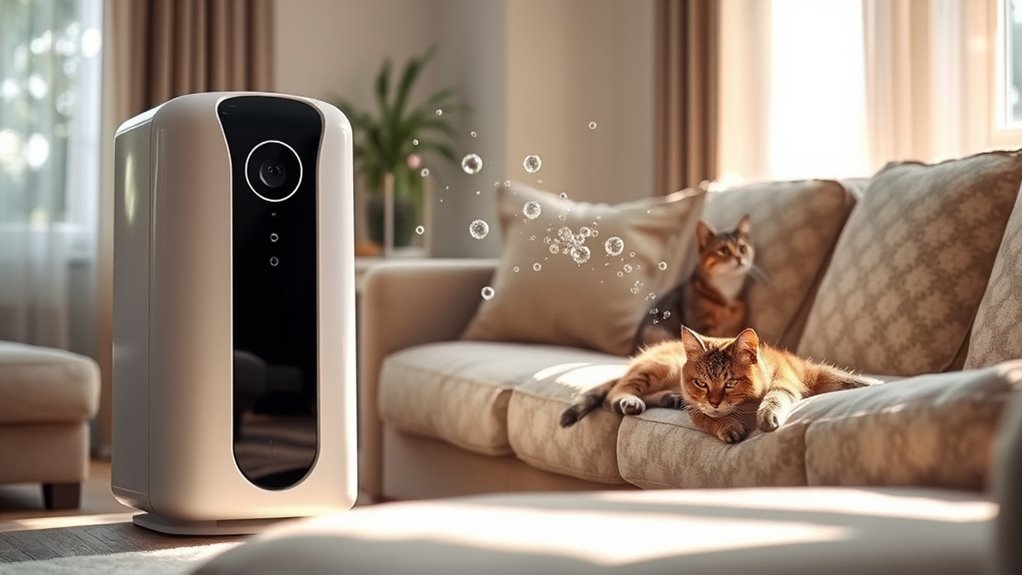
Air purifiers help with cat allergies by removing airborne allergens like pet dander, which can trigger sneezing, congestion, and itchy eyes. They use HEPA filters to trap tiny particles and improve indoor air quality quickly.
Proper placement and maintenance guarantee maximum effectiveness. Keep in mind, air purifiers work best when combined with regular cleaning and grooming.
To uncover more about optimizing allergy relief and choosing the right purifier, keep exploring the details below.
Key Takeaways
- Air purifiers help by removing airborne cat dander, which reduces allergen exposure and can make allergy symptoms better.
- HEPA filters are great because they catch at least 99.97% of tiny particles, trapping pet allergens effectively.
- To get the best results, place your purifier correctly and make sure there’s good airflow around it.
- Regularly changing filters and maintaining your purifier keeps it working at its best, improving air quality.
- Using air purifiers along with cleaning routines and managing allergens gives you a more complete way to control allergy symptoms.
Struggling With Cat Allergies? How Air Purifiers Can Help
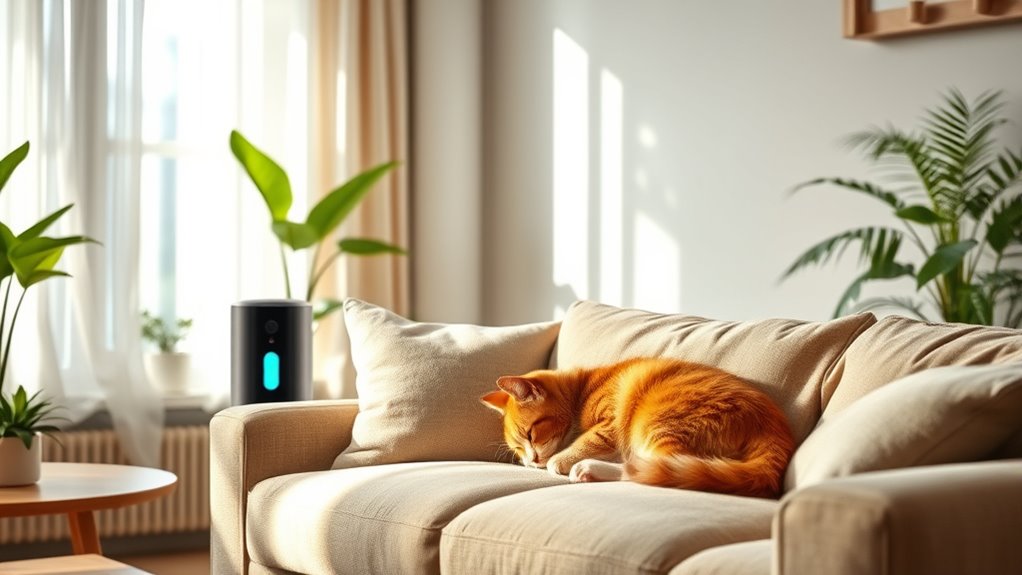
Are you tired of sneezing, itchy eyes, and congestion whenever your cat is nearby? These common cat allergy symptoms can make daily life uncomfortable.
Air purifiers can greatly improve your environment by reducing airborne allergens like pet dander. Modern units often come with air quality monitoring, so you can track pollutant levels in real-time.
When air quality drops, the purifier kicks into high gear, filtering out allergens efficiently. This not only alleviates allergy symptoms but also creates a healthier indoor space.
Keep in mind, the key is choosing a purifier designed to target pet dander specifically. Regularly checking air quality levels helps you understand how well your purifier is working and when to replace filters.
With these tools, you can breathe easier, reduce allergy flare-ups, and enjoy your time with your cat without constant discomfort. Proper air quality monitoring makes managing your allergies more effective and less stressful.
How Do Air Purifiers Remove Cat Dander Effectively
Air purifiers do a pretty good job at removing cat dander by using advanced filters that trap those tiny particles before they get a chance to spread around your home. It’s like catching allergens in a net, so they don’t hang around in the air you breathe.
HEPA filters are especially great at this because they can catch even the tiniest bits of dander and allergens, making the air much cleaner. Plus, improving air circulation in your space helps spread the filtered air more evenly, which means fewer allergens settling in one place and reducing overall buildup.
Filtration of Cat Dander
Since cat dander particles are tiny and easily become airborne, effective air purifiers use advanced filtration methods to trap them. These filters target dander sources, preventing allergens from circulating in your indoor air.
High-quality filters capture these microscopic particles, reducing the amount you breathe in and helping to ease allergy symptoms. By removing dander from the air, the purifier creates a healthier environment, especially for sensitive individuals.
It’s important to choose an air purifier with a powerful filtration system designed to trap small particles like dander. Doing so ensures allergens don’t linger, making it easier to breathe and reducing allergy symptoms.
Proper filtration is key to managing cat allergies and improving your indoor air quality.
HEPA Filter Effectiveness
HEPA filters are one of the best tools for removing cat dander from your indoor air. They meet strict standards, capturing at least 99.97% of tiny particles, including allergens.
This high level of allergen removal greatly improves your air quality. To keep these filters working well, regular maintenance is essential.
Neglecting filter care can reduce their ability to remove allergens and lower air quality. When choosing an air purifier, make sure it uses true HEPA filters, not HEPA-type or HEPA-like ones.
Proper maintenance and quality filters help maximize allergen removal, making it easier to breathe. Remember, changing filters regularly keeps your air purifier effective at trapping pet dander and other irritants.
Air Circulation Improvement
Effective air circulation is key to making your air purifier work better at removing cat dander. Good airflow patterns help contaminated air move smoothly through the unit, stopping stagnant spots where dander can settle.
To improve circulation, try placing your purifier in a central spot away from anything that could block airflow. Moving it around a bit can help create better patterns, so all parts of the room get filtered evenly.
This means your air purifier can catch airborne allergens more quickly and thoroughly. When circulation is optimized, it works more efficiently, reducing allergen levels faster and helping you breathe easier.
Proper circulation is essential for keeping your indoor environment cleaner and healthier.
The Science Behind Air Purification and Pet Allergens
Ever wonder how air filters manage to trap those tiny pet allergens floating around in your home? Well, HEPA filters are pretty amazing at this. They can catch particles as small as 0.3 microns, including those pesky cat dander that can cause allergies.
Knowing how these filters work can actually help you pick the right purifier for your space. So, next time you’re shopping for an air purifier, you’ll understand why HEPA filters are often the top choice for allergy sufferers.
How Air Filters Capture Allergens
Air filters work by trapping tiny particles that circulate in the air, preventing them from being breathed in. Different allergen types like pet dander, pollen, and dust mites are captured through various filtration methods.
These methods include mechanical filters that physically trap particles and electrostatic filters that attract charged allergens. HEPA filters are especially good at capturing small particles like pet dander and pollen.
Activated carbon filters absorb odors and chemical pollutants. Pre-filters catch larger debris, which helps extend the lifespan of the main filters.
Effectiveness of HEPA Technology
HEPA technology is really good at removing pet allergens from the air because it captures particles as small as 0.3 microns with impressive efficiency. This means it can trap pet dander, pollen, and dust mites that often trigger allergies.
To keep it working well, regular HEPA filter maintenance is important. If filters are neglected, they can lose their effectiveness and let allergens pass through. Usually, filters last about 6 to 12 months, depending on how much you use the purifier and your indoor air quality.
Replacing filters when needed ensures your air purifier keeps performing at its best. When maintained properly, HEPA filters consistently reduce airborne allergens, helping allergy sufferers breathe easier. Investing in a quality air purifier with HEPA tech and staying on top of filter changes really boosts your indoor air quality.
What Features Make an Air Purifier Good for Cat Allergies
To effectively combat cat allergens, an air purifier should have features that target tiny particles and allergens. Look for units with high-efficiency filters that trap cat dander and other airborne irritants.
HEPA filters are a must because they capture at least 99.97% of particles as small as 0.3 microns, including cat dander. Consider also purifiers with activated carbon filters that absorb odors and pollutants, making the air fresher.
Features like adjustable fan speeds and smart sensors let you optimize performance based on your air quality needs. A quiet operation is important so you can run it continuously without disruption.
Choose an air purifier with easy-to-maintain filters and indicator lights that remind you when to replace or clean them. These features all work together to improve allergy management and keep your environment more comfortable for pet owners sensitive to cat dander.
Choosing the Best Air Purifier for Your Feline-Friendly Home
Choosing the right air purifier for your home with cats means considering your specific needs and living space. Look for models with cat-friendly designs that are safe around pets, like rounded edges and secure filters, to prevent accidental damage or ingestion.
Pick purifiers made from pet-safe materials that won’t emit harmful chemicals or fumes, especially if your cats like to chew or scratch. Think about the size of your space and choose a model with the right Clean Air Delivery Rate (CADR) to ensure good coverage.
Noise level matters too. Go for quieter units that won’t bother your pets or disrupt your daily routine. Features like easy-to-clean filters and durable construction can save you time and help avoid messes.
Setting Up Your Air Purifier for Maximum Allergy Relief
Once you’ve picked a pet-safe air purifier, the next step is setting it up properly for the best allergy relief. Placement is crucial to ensure it works efficiently.
Put the purifier in a central spot, ideally on a level surface, to promote even airflow. Keep it away from walls and furniture so nothing blocks the air intake or outlet.
Place the purifier centrally on a level surface, away from walls and furniture for optimal airflow.
Choose a good spot near your cat’s favorite hangouts or busy areas to catch airborne allergens early. Aim the intake towards where your cat spends most of its time, and make sure the clean air outlet points across the room.
Leave a few feet of space around the device so airflow isn’t obstructed. This helps maximize coverage and filtration efficiency.
Getting the placement right improves how well the purifier works, helping you breathe easier and reducing allergy symptoms.
Understanding the Limitations of Air Purifiers for Cat Allergies
Air purifiers can definitely help cut down on cat allergen levels, but they’re not a magic fix that gets rid of everything. Their filters might struggle with tiny particles or dander that’s tucked away in fabrics or hard-to-reach spots. So, if you’re really trying to manage allergies, you’ll want to combine using an air purifier with other strategies too.
Effectiveness Against Allergens
While air purifiers can significantly reduce airborne allergens, they can’t fully eliminate cat allergens from your environment. They mainly target airborne sources like dander suspended in the air but can’t remove allergens hidden in fabrics, carpets, or furniture.
Environmental factors such as humidity levels and seasonal changes affect how allergens settle or circulate. While air purifiers improve air quality and can ease allergy symptoms, pollutants from pet grooming or infrequent cleaning may still linger.
To get the best results, combine air purifiers with regular cleaning routines and pet grooming. Keep in mind that allergens trapped in carpets or upholstery can still trigger symptoms even if the air feels cleaner.
Managing allergen sources is key for better relief. Remember, reducing exposure involves more than just using an air purifier—it’s about keeping your environment as clean as possible.
Limitations of Filtration
Although air purifiers can help reduce airborne cat allergens, they have limitations that can affect their overall effectiveness. One key constraint is the filter media; not all filters are capable of capturing tiny allergen particles consistently.
HEPA filters are highly effective, but cheaper or older units may have less efficient media, which reduces their impact on air quality. Furthermore, air purifiers only clean the air within a specific space, so allergens outside that area remain unaffected.
They also don’t eliminate allergens trapped in furniture, carpets, or on surfaces, which can become airborne again. Relying solely on an air purifier may not fully resolve allergy symptoms.
For the best results, you should combine filtration with other cleaning methods to improve overall air quality.
Additional Allergy Controls
Since air purifiers alone can’t eliminate all sources of cat allergens, it’s important to add other allergy control methods for better relief. Adopting allergy-friendly habits and dander-reducing tips can make a big difference.
Regularly bathing your cat, grooming them outdoors, and using allergen-proof bedding can significantly cut down allergens. Cleaning your home often with a vacuum that has a HEPA filter helps remove dander from surfaces.
Keeping humidity levels low prevents mold growth, which can worsen allergies. These steps work alongside your air purifier to target allergen sources directly.
Putting these practices into regular use can improve your comfort and reduce allergy symptoms more effectively than just relying on an air purifier.
Maintaining Filters and Ensuring Peak Performance
Regularly maintaining your air purifier’s filters is key to keeping it working at its best. Understanding filter types like HEPA, carbon, or pre-filters helps you follow proper maintenance tips.
Stick to your device’s cleaning schedules and performance checks to prevent clogging and keep it running smoothly. The frequency for replacing filters depends on their lifespan and your usage; most need swapping every 6 to 12 months.
Following these schedules helps maintain efficiency and reduces troubleshooting issues. When filters get dirty or worn out, replace them promptly to keep your purifier effective against cat dander.
Keep cost in mind—investing in high-quality filters can last longer and perform better. Regular upkeep ensures your air purifier removes allergens efficiently, which can help reduce allergy symptoms.
Consistent maintenance not only extends your device’s lifespan but also makes sure you get the most benefit from your investment.
Additional Tips to Reduce Cat Dander and Allergic Reactions
To further minimize cat dander and reduce allergic reactions, it’s important to implement several practical strategies alongside using an air purifier. Establish consistent grooming routines to control dander release, and maintain good cleaning habits like regular vacuuming and washing bedding and toys.
Creating pet-free zones in your home limits allergen exposure in key areas like bedrooms and living rooms. Managing humidity levels helps reduce dander circulation, as dander tends to stick to surfaces more in dry environments.
Moreover, consider allergy medications as prescribed by your doctor to manage symptoms effectively. Practice regular grooming routines and bathing to reduce dander. Maintain pet-free zones and clean these areas frequently. Use humidity control devices to keep air quality ideal and limit allergen spread.
Is Your Air Purifier Making a Difference? How to Tell
Wondering if your air purifier is actually making a difference in reducing your cat allergy symptoms? The best way to tell is by paying attention to your air quality and allergy symptoms over time.
If you notice fewer sneezing fits, itchy eyes, or congestion, your purifier is likely helping. Keep a small journal to track your symptoms daily, especially after running the device for a few hours.
Check the air quality indicator if your purifier has one. Improved readings suggest it’s working effectively. You can also do a simple test by turning the purifier off for a day and noting any worsening symptoms.
Then, turn it back on and see if there’s improvement. Remember, consistent use is key. If your allergy symptoms persist despite your efforts, consider upgrading to a purifier with a HEPA filter or talking to an allergist for more advice.
Frequently Asked Questions
Can Air Purifiers Completely Eliminate Cat Allergens From a Home?
Air purifiers can greatly reduce cat allergen types like dander, but they can’t completely eliminate them. To get better results, it’s a good idea to use an air purifier along with regular cleaning routines.
This includes vacuuming with a HEPA filter and washing bedding often. While purifiers help improve air quality, allergens can still linger on surfaces. So, a thorough approach is essential for managing your allergies effectively.
How Often Should I Replace the Filters in My Air Purifier?
A stitch in time saves nine, so you should check your air purifier’s filter regularly. Replace the filters every 3 to 6 months, depending on how often you use it and what the manufacturer recommends.
Proper filter maintenance ensures your purifier works well to reduce allergens. Keep an eye out for signs like decreased airflow or more allergy symptoms.
Don’t delay replacing the filter. Doing so will help keep your home fresh and free of allergens.
Do Air Purifiers Help With All Types of Pet Allergies?
Yes, air purifiers can help with many pet allergies by reducing pet dander and other allergens in the air. They work as effective pet dander solutions, which helps with allergy symptom management.
However, their effectiveness depends on the filter quality and proper use. For the best results, choose a purifier with HEPA filters and run it consistently in areas where your pets spend time.
Are There Specific Brands Best Suited for Cat Allergy Sufferers?
Think of top-rated models as your allergy-fighting shields. Brands like Dyson, Coway, and Honeywell are often praised in user reviews for their powerful filters and quiet operation.
These purifiers trap pet dander efficiently, turning your air into a clear, breathable space. While individual needs vary, choosing a well-reviewed model guarantees you get a reliable tool to combat cat allergies and breathe easier at home.
Can Air Purifiers Reduce Allergic Reactions During Outdoor Visits?
Air purifiers don’t directly reduce allergic reactions during outdoor visits, but they can improve indoor air quality and help you recover from exposure.
To limit outdoor allergens, keep windows closed and use an air purifier with a HEPA filter indoors.
When you get home, it can help clear out pollen and other outdoor allergens, reducing your allergy symptoms.
This makes your indoor environment more comfortable after outdoor outings.
Conclusion
While air purifiers can significantly reduce cat dander and help ease allergy symptoms, they’re not a complete fix. Some studies show that high-efficiency models with HEPA filters can remove up to 99% of airborne allergens.
But keep in mind, regular maintenance of your purifier and consistent cleaning and grooming are just as important. Staying proactive makes a real difference.
If you choose the right air purifier and stay on top of cleaning, you’ll likely notice a big improvement in your home’s air quality and your comfort around your cat.