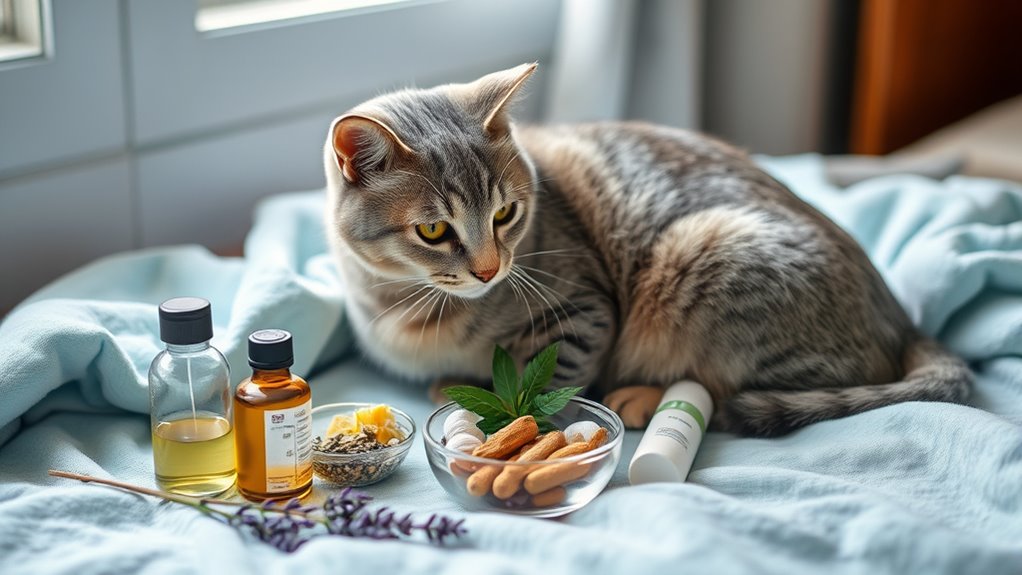
10 Remedies I Can Give My Cat for Allergies
If your furry friend is scratching, licking, or showing signs of allergies, you’re not alone. Many pet owners struggle with keeping their cats comfortable and itch-free.
Luckily, there are natural remedies you can try to help soothe your cat’s allergies and improve their quality of life.
You can help soothe your cat’s allergies with natural remedies like herbal supplements such as ginger, turmeric, and licorice root, which have anti-inflammatory properties. Gentle baths with oatmeal or aloe vera shampoos can reduce skin irritation.
Consider switching to hypoallergenic or novel protein diets to minimize food reactions. Using HEPA filters, vacuuming regularly, and washing bedding can lower indoor allergens.
Applying pet-safe moisturizers and keeping a clean, allergy-friendly environment also help.
Stay tuned to learn more about effective allergy treatments.
Key Takeaways
- Provide hypoallergenic diets like novel protein or hydrolyzed food to help reduce food allergy triggers.
- Use herbal supplements such as ginger, turmeric, or licorice root for natural anti-inflammatory effects.
- Bathe your cat with gentle, natural shampoos containing oatmeal or aloe vera to soothe irritated skin.
- Keep your environment clean and allergen-reduced with HEPA filters and wash bedding frequently.
- Talk to your veterinarian about allergy testing and personalized treatments, including allergy-specific medications.
How Do You Know if Your Cat Has Allergies? Signs and Symptoms
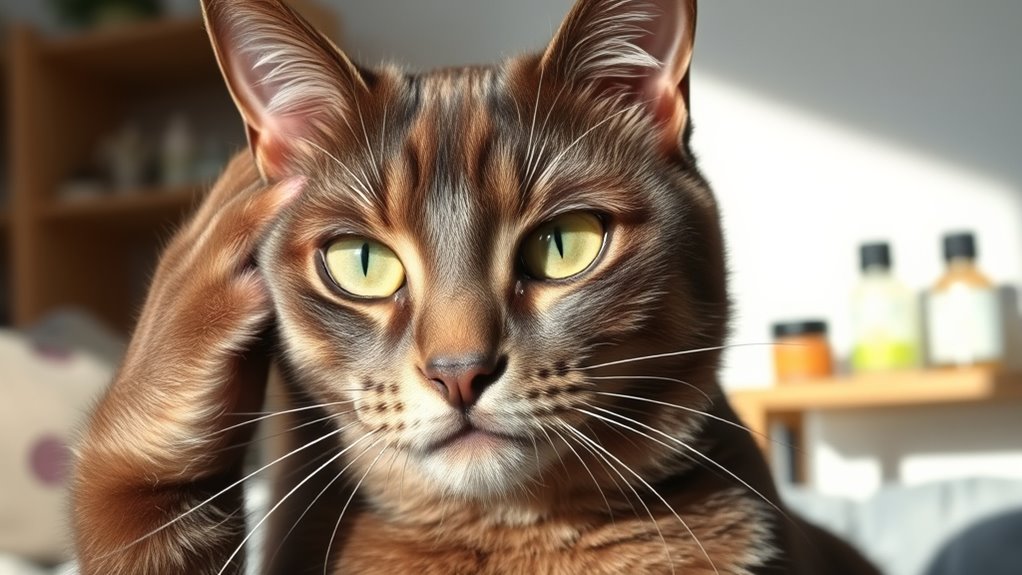
How can you tell if your cat has allergies? The signs often include frequent scratching, licking, or biting at their skin, especially around the face, paws, or ears. You might notice hair loss or irritated skin, along with excessive grooming.
Cats with allergies often scratch, lick, or bite, especially around their face, paws, or ears.
Sneezing, coughing, or watery eyes also suggest allergy issues. Pay attention to changes in their behavior, like irritability or lethargy. To confirm allergies, veterinary allergy testing can identify specific triggers.
Environmental factors such as pollen, dust mites, mold, or cigarette smoke commonly cause allergic reactions in cats. If you observe these symptoms, it’s a good idea to consult your vet for proper diagnosis.
They may recommend allergy testing to pinpoint the cause. Recognizing these early signs helps you take steps to reduce exposure to potential allergens, improving your cat’s comfort and health.
Addressing environmental factors can greatly lessen allergy symptoms and prevent further irritation.
What Common Allergens Trigger Cat Allergies?
Many common substances in your home and environment can trigger allergies in cats. Pollen from grass, trees, and weeds can cause seasonal allergy flare-ups, especially during certain times of the year.
Dust mites, tiny creatures found in bedding and upholstery, often contribute to indoor allergies. Food allergens, like specific proteins in your cat’s diet, can also provoke reactions.
Mold spores thrive in damp areas and are another environmental trigger to watch for. Flea saliva is a frequent culprit, causing allergic dermatitis when your cat bites or scratches fleas.
Chemical irritants from cleaning products, scented candles, or air fresheners can irritate your cat’s skin and respiratory system. Seasonal changes may increase levels of some allergens, making symptoms worse.
Recognizing these common triggers helps you understand what might be causing your cat’s allergic reactions. It also guides you in managing their environment more effectively.
Creating a Safe and Comfortable Home for Cats With Allergies
Creating a safe and comfortable home for a cat with allergies means identifying and reducing exposure to common triggers so your pet can breathe easier and feel more relaxed. Start by allergy-proofing your home by reducing dust, mold, and pollen.
Use HEPA filters to clean indoor air, wash bedding frequently with hypoallergenic detergent, and vacuum with a HEPA vacuum to remove allergens. Establish designated allergy-free zones where your cat can relax without exposure to triggers.
Keep clutter to a minimum to reduce dust buildup. Providing cozy, hypoallergenic bedding and maintaining a consistent cleaning routine can make a big difference. You might also want to use air purifiers to improve indoor air quality.
Natural Remedies to Soothe Your Cat’s Allergies at Home
If your cat is dealing with allergies, there are some natural remedies you can try at home that might help them feel better. Things like herbal supplements, gentle baths, and adjusting their diet could make a real difference in easing their discomfort and supporting healthier skin.
It’s worth exploring these options to see if they help improve your cat’s overall well-being. Sometimes, a few simple changes can go a long way in making your furry friend more comfortable and happy.
Herbal Supplements for Cats
Herbal supplements can offer a gentle, natural way to soothe your cat’s allergy symptoms. When choosing herbs, prioritize herbal safety by consulting your veterinarian to guarantee the herbs are safe for your feline.
Effective herbs like licorice root, ginger, and turmeric have anti-inflammatory properties that may help reduce allergy-related discomfort. Always use high-quality, cat-specific formulations and follow dosing guidelines carefully.
Keep in mind that not all herbs are suitable for every cat, so gradual introduction and close monitoring are essential. Incorporating these herbal supplements into your cat’s routine can support overall wellness and may lessen allergy symptoms without harsh chemicals.
Bathing and Skin Care
When choosing a bath, consider gentle cat shampoos that soothe sensitive skin without causing irritation. Look for products with natural ingredients such as oatmeal or aloe vera, which can calm inflammation.
After bathing, skin moisturizer tips are vital. Apply a pet-safe moisturizer to keep your cat’s skin hydrated and prevent dryness or flakiness.
Consistent skin care not only reduces allergy symptoms but also promotes a healthier coat and skin. Always use products formulated specifically for cats to avoid adverse reactions, and consult your veterinarian if you’re unsure about the best options for your pet.
Dietary Adjustments for Allergies
Adjusting your cat’s diet can really help reduce allergy symptoms by supporting their immune system and lowering inflammation. Finding out what foods they’re sensitive to is important, and switching to hypoallergenic diets can help eliminate common allergens.
These diets use new protein sources or ingredients that are broken down to prevent reactions. To see some options, check out this chart:
| Food Type | Benefits | Examples |
|---|---|---|
| Novel Protein Diet | Less likely to trigger sensitivities | Duck, Venison |
| Hydrolyzed Diet | Proteins broken down to prevent reactions | Prescription hypoallergenic food |
| Grain-Free Diet | Reduces sensitivities related to grains | Sweet potato, Pea |
| Limited Ingredient | Makes it easier to identify allergens | Single protein source |
Safe Ways to Administer Home Remedies to Your Cat
Administering home remedies to your cat requires careful attention to safety and method. Understanding feline behavior is key to making the process smooth. Cats are often sensitive to sudden movements or unfamiliar handling, which can lead to stress or resistance.
Choose a calm, quiet environment where your cat feels secure. Use gentle, slow movements and speak softly to reassure them. If your cat resists, consider using a pill dispenser or syringe for liquids, but always follow proper technique to avoid injury.
Be patient and keep sessions short, respecting their boundaries. Reward your cat afterward with praise or treats to create positive associations. Never force remedies if your cat is overly distressed. Instead, consult your vet for alternative methods.
Diet Changes That Can Reduce Your Cat’s Allergies
Making targeted diet changes can significantly reduce your cat’s allergy symptoms. Switching to hypoallergenic diets can help identify and eliminate common allergens like certain proteins or fillers that cause reactions. These diets are designed to minimize potential allergens while still providing all the necessary nutrients, keeping your cat healthy.
When choosing a hypoallergenic food, look for options with limited ingredients and novel protein sources such as duck or venison. Always check with your veterinarian before making big changes to ensure the new diet suits your cat’s specific needs.
Gradually introduce the new food over a week to prevent digestive upset. Proper nutrition supports your cat’s immune system and can help reduce hypersensitivity reactions. Remember, consistency is key.
How to Manage Fleas and Parasites That Cause Allergies
While changing your cat’s diet can help reduce allergic reactions, addressing external triggers like fleas and parasites is just as important. Flea prevention and parasite control are key to managing allergies.
Regular inspections help catch infestations early, making treatment much easier. Use effective treatment options recommended by your vet, such as topical treatments, oral medications, or natural repellents.
Incorporate home treatments like thorough environmental cleaning—vacuum carpets, wash bedding, and remove clutter—to get rid of flea eggs and larvae. Grooming tips like regular brushing and bathing help remove parasites and soothe irritated skin.
Be consistent with flea prevention products to avoid re-infestation. Natural repellents like citronella or herbal sprays may support your efforts but should be used alongside proven treatments.
Maintaining a clean home environment, along with vigilant grooming and routine inspections, greatly reduces the risk of fleas and parasites. This helps lessen your cat’s allergy symptoms and improves their overall health.
When Should You See the Vet About Your Cat’s Allergies?
If your cat is really scratching a lot, has swelling, or is having trouble breathing, you should call the vet immediately. These can be signs of a serious allergy that needs quick attention.
You should also make an appointment if the symptoms stick around even after you’ve tried some home remedies, or if they seem to be getting worse. Catching allergies early can make all the difference in helping your kitty feel better and preventing any serious problems.
Recognizing Serious Symptoms
How can you tell if your cat’s allergy symptoms need a vet? If symptoms get worse or stick around despite home remedies, it’s time to see a vet. Watch for serious signs like:
- Difficulty breathing or persistent wheezing
- Severe swelling, especially around the face or paws
- Excessive scratching that causes open wounds or infections
- Sudden loss of appetite or lethargy
These could be signs of severe allergic reactions or other health problems. Your vet might suggest allergy testing to find out what’s triggering it, like pollen or dust. If symptoms get worse quickly or involve swelling or breathing issues, seek emergency care right away. Spotting these serious signs early helps ensure your cat gets prompt treatment and relief.
Timing for Vet Visit
Knowing when to take your cat to the vet is key to managing allergies effectively. If your cat keeps sneezing, itching, or having trouble breathing, it’s time to schedule an appointment.
Your vet can do allergy testing to find out what’s causing the problem and rule out other health issues. Don’t wait if symptoms get worse or lead to skin infections or difficulty breathing, as those can become serious.
At the visit, your vet will go over treatment options. These might include antihistamines, special diets, or changes to your home environment. Acting early helps prevent discomfort and keeps your cat feeling better.
Trust your instincts and reach out to a professional quickly. Getting your cat the right care right away can make all the difference in their quality of life.
Preventing Future Allergies: Tips for Cat Owners
Taking proactive steps can really help reduce your chances of developing allergies to your cat in the future. Start by considering allergy testing to identify specific triggers.
Managing environmental factors is key; try to minimize indoor plants and use air purifiers to improve air quality. Regular grooming, like brushing your cat often, helps cut down on dander buildup.
Be mindful of food sensitivities and check with your vet to customize your cat’s diet if needed. Adjust for seasonal changes by keeping windows closed and sticking to a regular cleaning routine.
Stress management for both you and your cat can also lessen allergy flare-ups.
Here are some key tips:
- Conduct allergy testing to identify triggers.
- Use HEPA filters to improve air quality.
- Groom your cat regularly to reduce dander.
- Keep environmental factors like indoor plants and seasonal changes in check.
Following these strategies can help prevent future allergies and make your home healthier for everyone.
Monitoring Your Cat’s Response and Adjusting Remedies Over Time
Monitoring your cat’s response to allergy management strategies is key to making sure they’re working and catching any changes early. Regularly tracking symptoms helps you see if your remedies are effective or if you need to make adjustments.
Keep a journal of your cat’s behaviors, skin condition, sneezing, and scratching. This makes it easier to evaluate what’s working and spot patterns or ongoing issues.
If you notice new or worsening symptoms, it’s time to reassess your approach. You might need to change medications, switch to hypoallergenic products, or talk to your vet about other options.
Consistent monitoring lets you fine-tune your treatment plan, helping your cat stay comfortable and healthy. Remember, allergy management isn’t a one-time fix; it’s an ongoing process that needs vigilance and flexibility.
Frequently Asked Questions
Can Herbal Supplements Help Alleviate My Cat’s Allergy Symptoms?
Herbal supplements might help ease your cat’s allergy symptoms since they have natural benefits.
But always check if the herbs are safe for cats first, because not all are suitable. Some herbs can reduce inflammation and soothe irritated skin.
Before giving your cat any herbal supplements, talk to your veterinarian. They can confirm whether it’s safe and appropriate for your feline friend to avoid any potential side effects.
Are There Any Over-The-Counter Remedies Safe for Cats With Allergies?
Think of over-the-counter remedies as gentle rain showers—sometimes soothing, but not always safe. You can consider antihistamine options like diphenhydramine, but safety concerns are important; not all are suitable for cats.
Always check with your vet before giving your cat any OTC remedy, as improper use can cause harm. Your best bet is to seek professional guidance to keep your feline friend comfortable and healthy.
How Long Should Natural Remedies Take to Show Improvement?
Natural remedies usually take about 1 to 2 weeks to show noticeable improvement.
But keep in mind, it can vary depending on your cat’s allergy severity and how they respond.
Watch the symptom timeline carefully, since some cats might get better faster or slower.
If you don’t see any improvement after that time, or if symptoms get worse, it’s best to check with your veterinarian.
They can help you see if the remedy is working or suggest other options.
Are There Specific Environmental Controls to Reduce Allergy Triggers?
To reduce allergy triggers, you should make specific environmental adjustments. Keep your home clean and vacuum regularly to minimize dust and dander.
Use air purifiers to filter out airborne allergens, and wash your cat’s bedding frequently. Consider limiting your cat’s access to certain areas, like bedrooms, to reduce exposure.
Also, avoid smoking indoors and keep humidity levels low. These environmental adjustments help create a safer space for your allergy-prone cat.
Can Stress Worsen My Cat’s Allergy Symptoms?
Yes, stress factors can definitely make your cat’s allergy symptoms worse. When your cat is stressed, it can weaken its immune response, making allergies more intense.
To help, create a calm environment, stick to consistent routines, and provide safe spaces where your cat feels secure. Reducing stress not only supports your cat’s overall well-being but also helps boost its immune system.
This can potentially make allergy symptoms better and easier to manage.
Conclusion
By blending basic bravery with vigilant vigilance, you can banish bothersome allergies and build a blissful, balanced bond with your cat. Regularly review remedies, respond quickly to symptoms, and ensure a safe sanctuary.
With patience and proactive approaches, you’ll protect your feline friend from flare-ups and foster a future filled with furry, fuss-free happiness. Remember, your proactive care is key to managing allergies and keeping your cat comfortable.
Focusing on allergy remedies helps create a peaceful, parasite-free, and pet-proofed paradise for your kitty.