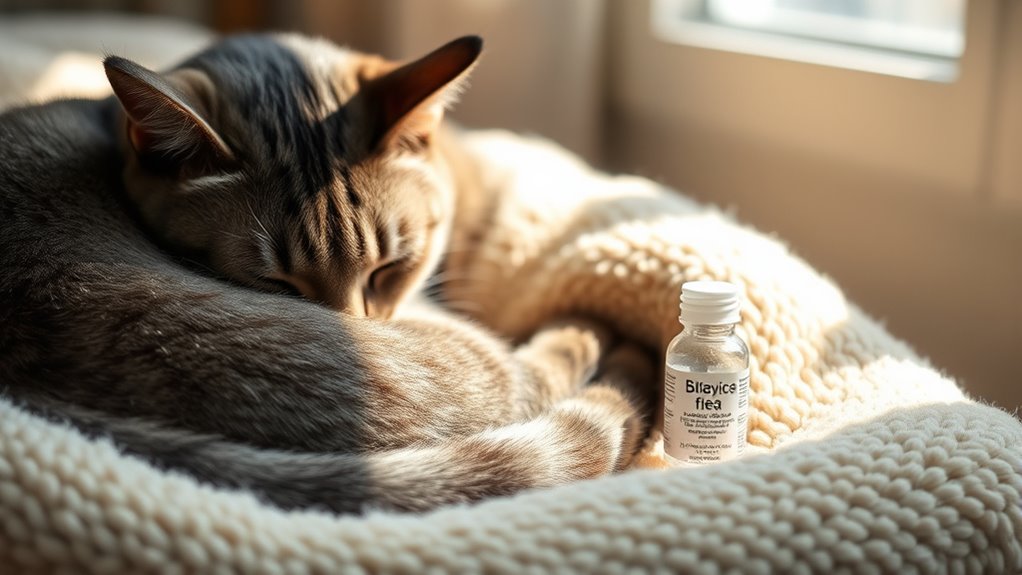
Does Flea Medicine Make Cats Sleepy?
Dealing with flea treatments for your cat can be stressful, especially when you’re worried about side effects. Many pet owners wonder if flea medicine makes cats sleepy, and you’re not alone in that concern.
It’s common to worry about how these medications might affect your furry friend’s energy levels and behavior. Most flea treatments don’t cause sleepiness in cats, but some medications or sensitivities can lead to mild drowsiness or behavioral changes.
It’s common to see slight tiredness after application, but prolonged sleepiness or difficulty waking may indicate a reaction or overdose.
Monitoring your cat closely is important, and if you notice persistent sleepiness or other symptoms, you should contact your vet promptly.
To find out safe options and tips, keep exploring what you need to know.
Key Takeaways
- Most flea treatments don’t cause drowsiness or sleepiness in cats.
- Some cats might feel a little sleepy right after applying the medication, but it’s usually mild.
- If your cat seems unusually sleepy or stays drowsy for a long time, it could be a sign of an adverse reaction or overdose.
- Sensitive cats may show behavioral changes, like increased sleep or lethargy, which means they might need to see a vet.
- Watching your cat closely after treatment helps catch any side effects early and keeps them safe.
Does Flea Medicine Make Cats Sleepy? What You Need to Know
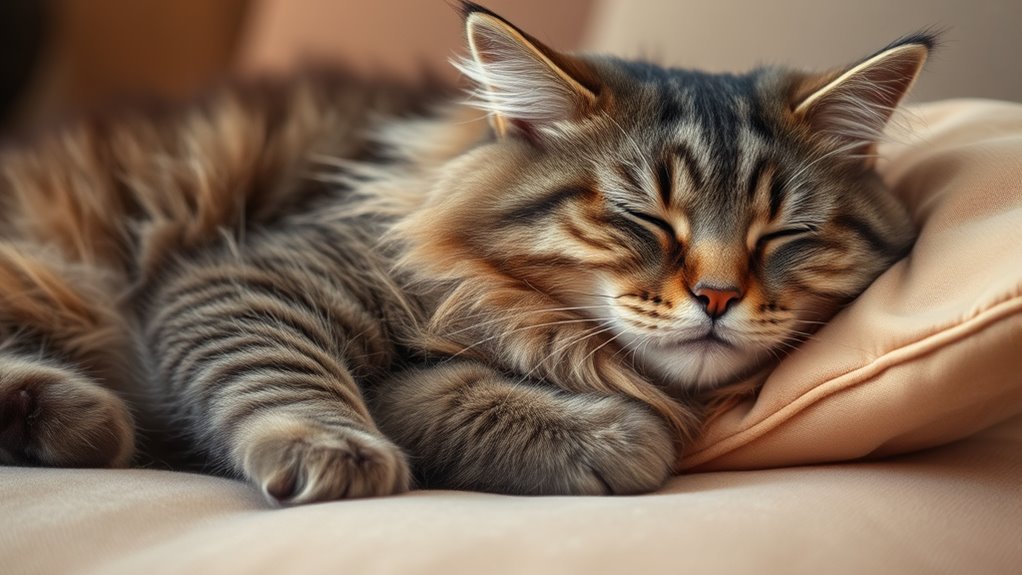
Many cat owners wonder if flea medicine can make their pets sleepy. The truth is, most flea treatments are designed to be highly effective without causing drowsiness. When used correctly, flea treatment efficacy is usually high, eliminating fleas without impacting your cat’s energy levels.
However, some medications contain ingredients that may influence your cat’s alertness, especially if they have sensitive health conditions. It’s crucial to consider your cat’s health before giving any flea medicine. Always follow the dosing instructions provided by your veterinarian or on the product label.
If you notice your cat unusually sleepy after treatment, it could be a sign of a reaction or overdose. In general, reputable flea medications don’t usually cause sleepiness, but being vigilant is important. Proper use and understanding your cat’s health help ensure the treatment is safe and effective without unwanted side effects.
What Are the Common Side Effects of Flea Medicine in Cats
While most cats tolerate flea medications well, it’s important to be aware of potential side effects. These can vary depending on the type of flea treatment you use, like topical treatments, oral tablets, or collars.
Some cats might develop skin irritation, redness, or itching at the application site. You might also see vomiting, diarrhea, or excessive grooming.
In rare cases, more serious issues such as tremors, drooling, or difficulty breathing can occur. Keep in mind that some cats are more sensitive due to age, health, or previous reactions.
Always read the label carefully and follow the dosing instructions. If you notice unusual behavior, swelling, or symptoms that persist, contact your veterinarian promptly.
Being vigilant ensures your cat stays safe and comfortable while effectively controlling fleas.
How Can You Tell If Your Cat Is Having a Reaction to Flea Medicine
You want to keep an eye on your cat after giving them flea medicine, just to be safe. Sometimes, they might act a little differently — maybe they start hiding more than usual, seem agitated, or lose their appetite. These can be signs that something’s not quite right.
Physical reactions are also important to watch for. If your cat develops swelling, redness, or has trouble breathing, those are definitely warning signs. If you notice any of these symptoms, don’t wait around — it’s best to get in touch with your veterinarian right away to ensure your kitty gets the help they need.
Unusual Behavior Signs
If your cat starts acting differently after applying flea medicine, it could be a sign of an adverse reaction. Keep an eye out for behavioral changes like hiding excessively, becoming irritable, or seeming disoriented.
Feline lethargy is another key sign—your cat might be unusually tired, sluggish, or less responsive than usual. Sudden restlessness, agitation, or uncharacteristic aggression can also be warning signs.
Pay attention if your cat stops grooming or eating, as these subtle changes often happen with reactions. While some behaviors might seem minor, together they could mean your cat isn’t feeling well.
Spotting these unusual signs early helps you respond quickly and seek veterinary care if needed. Trust your instincts and monitor your cat closely after flea treatment.
Physical Reaction Indicators
Recognizing physical reactions to flea medicine is important because they can show an adverse response. Changes in your cat’s sleep patterns are often a sign of sensitivity to the medication. If your cat suddenly seems lethargic, very sleepy, or restless after applying flea treatment, it could be reacting badly.
Look for other signs like itching, swelling, drooling, or trouble breathing. Sometimes reactions are subtle but noticeable through unusual behavior or physical discomfort. Pay close attention during the first hours and days after giving the medicine.
If you see any of these signs, contact your vet right away. Acting quickly can prevent serious problems and help figure out if the flea medicine is safe for your cat’s health.
Is Sleepiness Normal After Flea Treatment? When to Be Concerned
Wondering if your cat’s increased sleepiness after flea treatment is normal? It’s common for some cats to feel a bit drowsy as their body adjusts to the medication. Usually, this sleepiness is temporary and part of normal reactions to the treatment.
But keep an eye on your cat’s sleep patterns. Watch for signs like excessive lethargy, difficulty waking, or sudden changes in activity levels.
Be alert if your cat is sleepy for more than a day or shows other symptoms like vomiting, drooling, or trouble breathing. These could be signs of a more serious reaction that needs a vet’s attention.
Remember:
- Mild drowsiness can be normal shortly after treatment.
- Prolonged or severe sleepiness should be checked by a vet.
- Always follow the instructions on the flea medication label.
Trust your instincts. When in doubt, consult your veterinarian to keep your cat healthy and safe.
What Factors Affect How Your Cat Responds to Flea Medicine
Several factors can influence how your cat responds to flea medicine, including its age, weight, health status, and temperament. These factors determine how your cat metabolizes the flea medicine ingredients and reacts to potential side effects.
For example, a young kitten or an older cat may process medications differently, which can affect their reaction. Pre-existing health issues like liver or kidney problems can also make them more sensitive to treatments.
Temperament matters too—some cats are more anxious or sensitive, making them more prone to side effects. Understanding these factors can help you choose the right flea medicine and monitor your cat’s response.
How to Recognize Excessive Sleepiness or Other Reactions in Cats
After giving your cat flea medicine, keep an eye out for any signs that something might be off. Sometimes, your cat might seem really sleepy or act a bit strange. If your kitty is unusually lethargic, restless, or displaying any unusual behaviors, it’s worth paying attention.
If you notice any of these signs or other changes that seem odd, don’t hesitate to reach out to your veterinarian. It’s always better to be safe and get professional advice if something doesn’t seem right.
Signs of Overwhelming Sleepiness
Cats can sometimes become overly sleepy or show signs of excessive drowsiness after certain treatments or medication, making it important to recognize these reactions early. Overwhelming sleepiness may disrupt your cat’s usual sleep patterns and change their typical behavior.
Look for signs like lethargy or difficulty waking. You might also notice a lack of response to stimuli or prolonged periods of deep sleep.
These signs suggest your cat isn’t just resting but might be experiencing adverse effects. Keep a close eye on their activity levels and responsiveness.
If your cat is sleeping more than usual or seems unresponsive, contact your veterinarian right away. Recognizing these signs early can help prevent more serious reactions and ensure your cat’s well-being.
Unusual Behavior Indicators
Unusual behavior in cats can be a key sign that something isn’t right, especially after giving flea medication. Keep an eye out for noticeable changes like increased irritability, hiding, or uncharacteristic aggression.
You might also notice altered sleep patterns, such as sleeping too much, being restless, or having trouble waking your cat. If your cat seems disoriented, unresponsive, or shows signs of distress, these are important cues that a reaction could be happening.
Pay close attention to sudden changes in activity levels or unusual vocalizations. These signs could mean the flea medicine is affecting your cat’s nervous system or causing discomfort.
Recognizing these behavior indicators early helps you decide if further action is needed to keep your cat safe and healthy.
When to Seek Veterinary Help
Noticing big changes in your cat’s behavior after giving flea medication can be pretty scary. If your cat seems extremely sleepy, disoriented, or has trouble walking, it could be a reaction to the flea treatment or other side effects.
It’s important to recognize these signs early. Seek veterinary help if you see:
- Unusual lethargy or persistent sleepiness
- Loss of coordination or balance
- Breathing difficulties or vomiting
These symptoms might mean an adverse reaction that needs immediate attention. Always follow the recommended flea treatment timing and dosage.
Trust your instincts—if your cat’s behavior seems off or gets worse, don’t hesitate to contact your vet. Acting quickly can help prevent serious health problems.
When Should You Contact Your Vet About Your Cat’s Sleepiness?
Ever wondered when your cat’s sleepiness might be a sign of something more serious? If you notice a sudden change in your cat’s sleep patterns or behavioral changes, it’s time to consult your vet.
Cats naturally sleep a lot, but if they suddenly sleep more than usual or seem lethargic even during awake periods, it warrants concern. Pay attention to other signs like loss of appetite, hiding, or unresponsiveness.
These could indicate underlying health issues or side effects from flea medication. If sleepiness persists for more than a day or is accompanied by other unusual behaviors, don’t wait—reach out to your veterinarian promptly.
Early intervention can prevent more serious complications and keep your cat healthy. Trust your instincts; when in doubt, it’s always best to seek professional advice.
Tips to Minimize Side Effects When Giving Flea Medicine
To help minimize side effects, it’s really important to give your cat the right dose based on their weight and age. Just double-check the instructions on the medication to make sure you’re giving the correct amount—that way, you’re less likely to run into problems.
After giving the medicine, keep a close eye on your kitty for a little while. Watch for any unusual reactions or signs of discomfort. Catching any issues early can make a big difference in keeping your cat safe and happy during the treatment.
Proper Dosage Administration
Administering flea medicine correctly is key to reducing the risk of side effects and keeping your cat safe. Follow the dosage instructions on the product label or from your vet to ensure proper treatment.
Make sure to give the right dose based on your cat’s weight. Use the medicine at the recommended times and frequencies, and always read the instructions carefully.
Getting the dosage right helps prevent overdose or underdose, which can cause side effects like sleepiness or irritation. Keep the medication away from children and other pets, and never give your cat human flea treatments.
If you’re unsure about the correct dosage or how to apply the medication, check with your vet. This way, you can be confident your cat’s health and safety are protected.
Monitoring for Adverse Reactions
Monitoring your cat closely after giving flea medicine is important to catch any adverse reactions early and reduce side effects. Keep an eye out for signs like excessive drooling, vomiting, lethargy, or itching.
Try observing your cat for the first few hours and check their behavior carefully over the next day. Keep a detailed record of any unusual symptoms, no matter how minor they seem.
If you notice any adverse reactions, contact your veterinarian right away. Regular monitoring helps ensure side effects are caught quickly and appropriate action can be taken.
Always follow the instructions on the medication label and stay alert for any changes in your cat’s normal behavior. This proactive approach helps keep your feline safe and reduces risks.
Are There Safer Alternatives for Sensitive Cats?
For cats with sensitive skin or allergies, traditional flea medications can sometimes cause adverse reactions. If your cat falls into this category, you might want to consider safer alternatives. Natural remedies and gentle options can help reduce side effects while keeping fleas away.
These include using flea combs regularly to physically remove fleas, applying natural repellents like cedar, lavender, or citronella, and introducing supplements such as omega-3 fatty acids to boost skin health.
While these options may require more frequent application or maintenance, they’re often gentler on sensitive cats. Always check with your veterinarian before switching to natural remedies or gentle options, especially if your cat has known allergies.
Keep in mind that these alternatives might not work as quickly as chemical treatments, but they are safer choices for cats with delicate skin. Finding a balance between safety and effectiveness is key to protecting your feline friend.
What Should You Do If Your Cat Is Sleepy After Flea Treatment?
If your cat seems unusually sleepy or lethargic after flea treatment, it’s important to watch their behavior and condition closely. Keep an eye on any changes in sleep patterns, like excessive drowsiness or trouble waking up.
Also, look out for additional symptoms such as vomiting, drooling, or difficulty breathing—these could be signs of a reaction. Check how your cat responds over the next few hours during this monitoring period.
If their sleepiness doesn’t improve or gets worse, contact your vet right away. It’s always better to be cautious and seek professional advice rather than risk missing a serious side effect.
Make sure your cat has a quiet, comfortable space to rest. Avoid giving any extra medications unless your vet specifically says it’s okay.
Quick action and careful watching can help you decide if your cat’s reaction is normal or if they need medical attention. Always prioritize their safety and health during this time.
Frequently Asked Questions
Can Flea Medicine Cause Long-Term Health Issues in Cats?
Flea medicine can potentially cause long-term health issues in cats, especially if it leads to flea toxicity symptoms like skin irritation, vomiting, or lethargy.
Most products are safe when used correctly, but some cats may experience adverse effects over time.
It’s important to monitor your cat closely and talk to your vet if you notice any unusual behavior or persistent symptoms.
This helps ensure any long-term effects are properly addressed.
Are Certain Cat Breeds More Prone to Side Effects?
Certain cat breeds are more prone to side effects because of their breed sensitivities. You might notice that breeds like Siamese or Burmese experience side effects more often or more intensely.
When applying flea medicine, it’s really important to consider your cat’s breed and talk to your vet. Knowing about breed sensitivities can help you prevent bad reactions and keep your cat healthy and comfortable after treatment.
How Does Age Influence a Cat’s Reaction to Flea Medication?
Did you know that kittens and senior cats are 30% more likely to experience age-related sensitivities to flea medication?
Age influences a cat’s reaction because medication metabolism slows down in older cats and speeds up in younger ones.
You should always consider your cat’s age, as it impacts how they process the medication.
Adjusting dosages or choosing age-appropriate products helps minimize side effects and guarantees safe treatment.
Is There a Difference Between Topical and Oral Flea Treatments?
Yes, there’s a difference between topical and oral flea treatments. Topical treatments work directly on your cat’s skin to target fleas, while oral options are swallowed and absorbed into the bloodstream for a systemic effect.
Topical treatments often act faster on fleas on the surface of your cat’s skin. Oral medications, on the other hand, provide a convenient and discreet alternative that can be more effective for some cats.
When choosing a treatment, consider your cat’s health and preferences to find the best option.
Can Flea Medicine Affect a Cat’s Behavior Beyond Sleepiness?
Flea medicine can sometimes stir a storm in your cat’s behavior, like a gentle breeze turning into a gale. You might notice behavioral changes, such as agitation or lethargy, beyond just sleepiness.
These effects often come from medication interactions or sensitivities. It’s important to keep a close eye on your feline friend and watch for any unusual behaviors.
If you notice anything out of the ordinary, be sure to consult your vet. Doing so helps ensure the treatment is safe and keeps your cat happy and healthy.
Conclusion
If your cat’s drowsiness feels like a shadow lingering after flea treatment, remember it’s often just a passing cloud on their sunny day. Keep a gentle eye on their behavior, and don’t hesitate to reach out to your vet if worries deepen.
Some flea medicines can cause temporary tiredness in cats, but it’s usually normal. With patience and care, you can help your feline friend sail smoothly through this temporary storm.
Guiding them back to their vibrant, playful self is your love’s true compass. Just stay attentive and trust that this sleepy phase will pass.