Why Is Grass a Natural Medicine for Cats?
Are you worried about your cat’s health and wondering how to keep them happy and comfortable? Many cat owners face the challenge of managing their pet’s digestion and overall wellness. You’re not alone in looking for natural, simple ways to support your feline friend.
Grass acts as a natural remedy for cats because it helps support their digestion, provides essential nutrients like vitamins and minerals, and satisfies their instinct to forage.
It also encourages natural vomiting reflexes to help eliminate hairballs and indigestible materials. Plus, grass offers comfort and familiarity, promoting overall health.
If you want to understand how to make sure your cat benefits safely from grass, keep exploring the details ahead.
Key Takeaways
- Grass stimulates vomiting, helping cats naturally get rid of hairballs and indigestible matter.
- It also supplies essential vitamins and minerals that support overall health.
- The chlorophyll in grass acts as a natural detox for a cat’s liver.
- Eating grass boosts digestion by providing fiber and encouraging gut balance.
- Plus, nibbling on grass mimics natural foraging, giving cats comfort and instinctual health benefits.
Why Do Cats Eat Grass? Understanding Their Natural Instincts
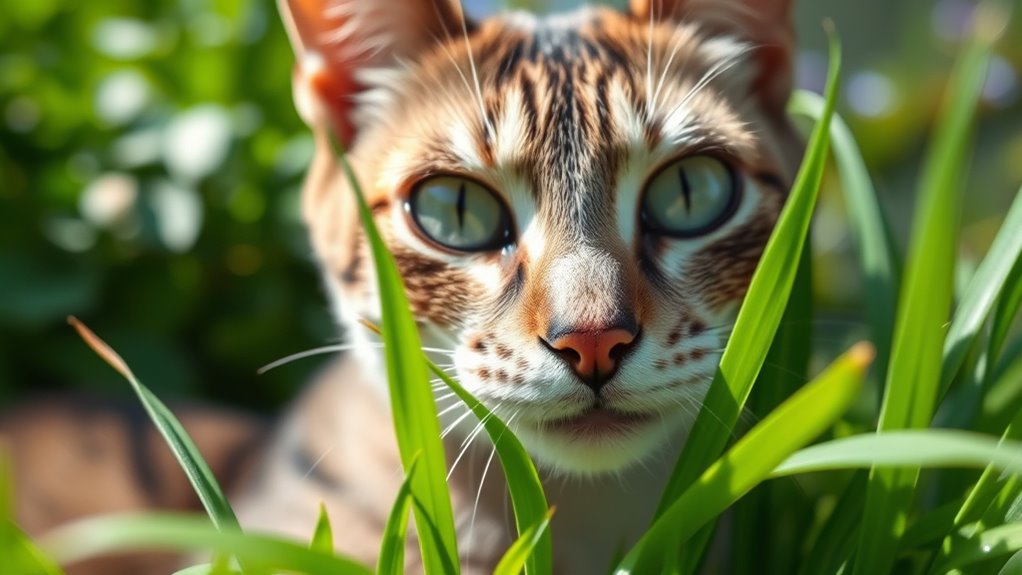
Cats eat grass for various reasons rooted in their natural instincts. As a carnivore with wild instincts, your cat’s behavior reflects its evolutionary past, where foraging was essential for survival.
Eating grass helps satisfy their dietary needs, providing fiber and aiding in the elimination of hairballs or indigestible matter. This behavior is part of their instinctual habits, shaped by their natural foraging tendencies.
Even in a domestic setting, these behavioral traits remain strong. They remind you that their dietary choices aren’t random but rooted in survival mechanisms.
Their dietary choices are instinctual, rooted in survival, even within a domestic environment.
Grass offers a source of roughage that complements their feline nutrition, helping keep their digestive system functioning smoothly. These instinctive habits are deeply ingrained, making grass a familiar and comforting part of their environment.
Understanding that your cat’s grass-eating is tied to their wild instincts and natural foraging behavior helps you appreciate their complex dietary and behavioral needs.
How Grass Supports Your Cat’s Digestive Health
Eating grass isn’t just a quirky habit; it plays a key role in supporting your cat’s digestive health. Grass helps regulate their digestive system by stimulating their natural vomiting reflex, which can help get rid of hairballs and other indigestible matter.
This action reduces discomfort and helps prevent blockages. Grass also acts as a gentle fiber source, making it easier for food to move smoothly through their intestines.
It can even help balance gut bacteria, promoting overall digestive health. Many cats instinctively seek out grass to soothe upset stomachs or pass hair and debris.
What Nutrients Are in Grass That Benefit Cats?
Grass contains a variety of nutrients that can boost your cat’s health, including essential vitamins, minerals, and antioxidants. These benefits come from the grass’s unique makeup, which provides more than just fiber.
For example, grass offers crucial vitamins like A, which supports vision and immune function, and E, known for its antioxidant properties that help fight cell damage. It also contains minerals such as magnesium and potassium, which are important for muscle function and hydration.
The chlorophyll in grass acts as a natural detoxifier, helping your cat’s liver stay healthy. Plus, grass provides enzymes that promote digestion and help your cat absorb nutrients better.
Understanding what’s in grass shows how these nutrients work together to keep your cat healthy. These natural components make grass a valuable supplement for maintaining health and preventing deficiencies naturally.
Types of Grass Safe for Cats: Indoor and Outdoor Options
If you’re looking to give your cat some safe indoor greenery, consider plants like wheatgrass or catnip. They’re pretty easy to grow inside and usually loved by cats. Plus, they make a fun, healthy treat for your furry friend!
For outdoor spaces, you can go for grasses like oat, barley, or rye. These are safe for cats and are usually easy to find at garden centers. Just keep in mind, the best choice depends on your available space and what your cat seems to enjoy most.
Indoor Plant Choices
When choosing safe grasses for your indoor cats, it’s important to consider both the types of plants and their suitability for your space. Opt for indoor grasses like wheatgrass or oat grass, which are safe for cats and work well as potted plants.
Check their light requirements to make sure they thrive indoors, whether that’s bright indirect light or moderate shade. Use well-draining soil and adjust watering based on the plant’s growth stage.
To keep your plants healthy, use pet-friendly fertilizers sparingly. Follow growth tips like trimming regularly and rotating potted grasses to promote even growth.
These simple steps help you provide safe, attractive greens that your cats can enjoy indoors safely.
Outdoor Grass Varieties
Building on the idea of safe indoor greens, choosing outdoor grasses that are safe for cats allows your feline friends to enjoy natural foraging and play outside.
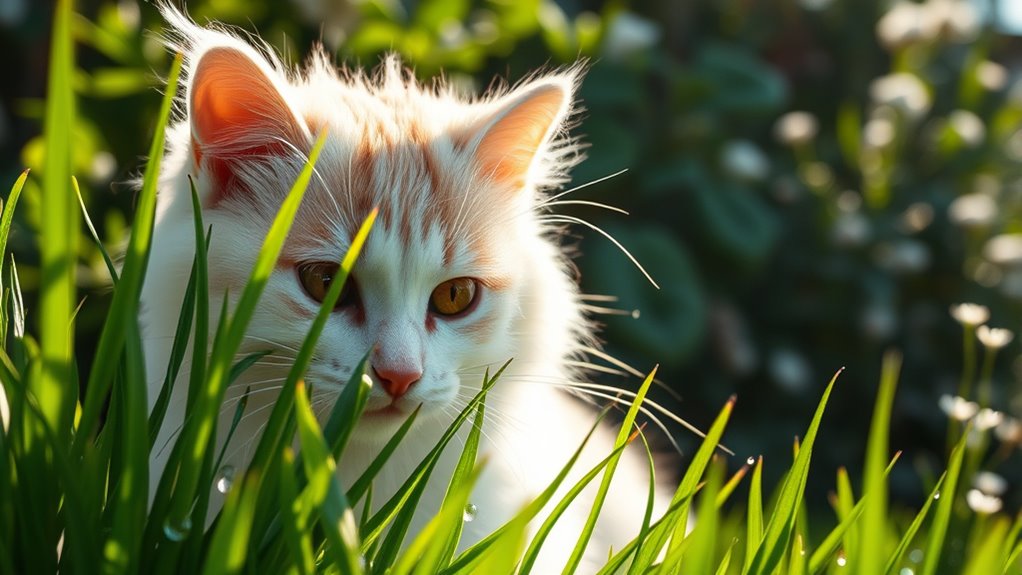
There are various outdoor grass types, like oat grass, wheatgrass, and barley grass, that are safe and beneficial for cats. These grasses provide essential fiber, help with digestion, and can prevent hairballs.
The benefits go beyond nutrition. Outdoor grasses also give cats mental stimulation and encourage natural behaviors like grazing.
When selecting grasses for your yard, make sure they’re free from pesticides or chemicals that could harm your cat.
Providing accessible, safe outdoor grass options helps your feline stay healthy, active, and engaged while enjoying the outdoors responsibly.
How Cats Use Grass to Help With Hairballs and Indigestible Materials
Cats often chew on grass to help get rid of hairballs and other stuff they can’t digest easily. It’s a natural behavior that actually helps keep their digestion running smoothly and can prevent them from feeling uncomfortable.
Promotes Hairball Expulsion
Many cats instinctively turn to grass as a natural way to help get rid of hairballs and indigestible materials. Offering your cat access to grass acts as a natural hairball prevention method.
Chewing on grass stimulates the gag reflex, making it easier for your cat to vomit or cough up hairballs. As a digestive aid, grass helps loosen hair strands trapped in their stomach or intestines.
This makes it easier for them to pass hair and indigestible matter, reducing discomfort and preventing blockages. Providing fresh, safe grass supports your cat’s natural instinct to clear out hair and other stuff they can’t digest.
This simple, natural approach helps keep your feline healthy and comfortable.
Aids Digestion Naturally
When your cat chews on grass, it naturally stimulates their digestive system, helping to break down hairballs and indigestible materials. This behavior taps into their feline instincts, which evolved to include plant consumption as a way to aid digestion.
Grass acts as a natural remedy by promoting the movement of food through their stomach and intestines, preventing blockages. It also encourages vomiting when necessary, removing unwanted substances before they cause discomfort.
By engaging in this instinctive behavior, your cat can better process their meals and avoid gastrointestinal issues. Using grass as part of your cat’s environment offers a simple, natural way to support their digestion without relying on commercial remedies.
It’s a safe, effective tool rooted in their natural instincts.
Eases Indigestible Material
Chewing on grass helps cats manage indigestible materials like hairballs and other unwanted substances that can build up in their stomachs. The fiber in grass acts as a natural laxative, helping hairballs and debris pass more easily through their digestive system.
When cats chew, they also ingest digestive enzymes that assist in breaking down tough materials. This instinctive behavior lets cats regulate their digestion on their own, reducing discomfort from hairballs.
| Benefit | Explanation |
|---|---|
| Fiber content | Helps move indigestible materials |
| Natural laxative | Promotes elimination of hairballs |
| Digestive enzymes | Break down stubborn substances |
Is It Safe for My Cat to Eat Grass? Common Concerns Addressed
Is it safe for your cat to eat grass? For most cats, yes—grass benefits their health and matches their natural instincts. Still, you might have some worries about potential risks.
You may worry about pesticides or harmful plants in your yard, or wonder if grass could upset your cat’s stomach. Providing safe, pesticide-free grass can lower these risks and give your cat a healthy outlet for natural behavior.
Keep these concerns in mind:
- Toxic plants in your yard could harm your cat.
- Eating too much might cause mild stomach upset.
- Contaminants in non-organic grass can be risky.
- Some cats may develop digestion issues if they overindulge.
Always watch how your cat reacts to new grasses and ensure it’s safe.
Tips for Safely Introducing Grass Into Your Cat’s Environment
When introducing grass to your cat, it’s best to start with safe, non-toxic varieties that are specifically meant for cats. You don’t want to risk any harmful reactions, so picking the right kind is really important.
Next, go slow. Introduce the grass gradually and in small amounts, so your cat can get used to it without feeling overwhelmed. Keep an eye on how they respond—watch for any signs of discomfort or overenthusiasm. It’s all about making sure they enjoy their new green treat safely!
Choose Safe Grass Varieties
Choosing the right grass varieties is essential to confirm your cat’s safety and health. You want to select safe species that minimize the risk of grass toxicity and guarantee your feline friend benefits from natural munching.
Look for grasses specifically cultivated for pets or human consumption, and avoid plants with known toxic effects. Consider these tips:
- Opt for organic, pesticide-free options
- Research safe species like wheatgrass or oat grass
- Avoid plants with known grass toxicity
- Purchase from reputable sources
- Regularly inspect for mold or bacteria
Gradually Incorporate Grass
To make sure your cat adapts safely to new grass, introduce it gradually and watch their reactions closely. Start with small patches of different grass types so they can explore at their own pace.
This slow approach helps prevent stress and builds a positive connection with the grass. Keep an eye out for signs of interest or discomfort and adjust as needed.
Try a variety of grass types to see what your cat prefers, which can make them more comfortable. Remember, patience is key.
Here’s a quick overview of what to keep in mind:
| Grass Types | Reaction | Tips for Gradual Exposure |
|---|---|---|
| Wheatgrass | Curiosity or indifference | Introduce in short sessions |
| Oat Grass | Excitement or hesitation | Mix with familiar toys |
| Rye Grass | Calm interest | Place in quiet areas |
| Barley Grass | Playfulness | Offer fresh and clean |
Monitor Cat’s Interaction
Monitoring your cat’s interaction with new grass is essential to ensure they stay safe and comfortable. Watching how they behave around the grass helps you understand their preferences and makes sure they don’t accidentally eat harmful parts.
Pay attention to signs of curiosity, like sniffing or pawing, but also watch for any negative reactions such as vomiting or excessive grooming. Keep an eye on their overall behavior to see if they’re enjoying or avoiding the grass.
Feeling relief knowing you’re caring for their well-being can be so reassuring. It’s rewarding to see them investigate natural remedies comfortably and knowing you’re supporting their health naturally.
Signs Your Cat Needs Grass or Medical Attention
Sometimes, your cat may show signs that it needs grass or medical attention, and recognizing these cues can help prevent health issues from worsening. Pay attention to changes in your cat’s behavior, such as excessive grooming, lethargy, or loss of appetite, which are clear health signals.
If your cat is repeatedly vomiting or gagging, it could be trying to expel hairballs or other irritants, indicating a need for grass or vet care. Watch for signs of overgrooming or scratching, which may suggest skin issues or allergies.
Moreover, if your cat seems anxious, restless, or exhibits unusual litter box habits, these could point to underlying health problems. Noticing these behaviors early allows you to decide whether offering grass might help or if a visit to the veterinarian is necessary.
Recognizing these signs guarantees your cat gets the right support, whether through natural remedies or medical treatment.
Debunking Myths About Cats and Grass
Many people believe that giving cats grass is simply a harmless, natural behavior, but several common myths about this practice persist.
One myth suggests that grass is solely a sign of poor health, but it’s actually rooted in feline instincts—an instinctual way for cats to aid digestion or induce vomiting.
Another myth claims that all plants are safe for cats, yet some can be toxic, so careful plant selection is essential.
Not all plants are safe for cats; choosing non-toxic options is vital for their safety.
Some believe cats eat grass to get nutrients missing from their diet, but they often do so to relieve gastrointestinal discomfort or hairballs.
A common misconception is that grass causes no harm, but overconsumption can lead to digestive issues.
Many assume grass is unnecessary if cats are fed high-quality food, but it remains a natural supplement aligned with feline instincts.
Understanding these myths helps you better support your cat’s health and enrich their natural behaviors.
Natural Alternatives to Grass for Supporting Your Cat’s Digestion
When looking for natural ways to support your cat’s digestion beyond grass, several safe and effective alternatives can help. Herbal supplements like slippery elm or ginger can soothe your cat’s stomach and promote healthy digestion. These herbs are often available as powders or capsules, making them easy to add to your cat’s diet.
Digestive enzymes can also assist in breaking down food and improving nutrient absorption, especially if your cat has a sensitive stomach or dietary issues. You can find enzyme supplements formulated specifically for cats, which can be mixed into their meals.
Both herbal remedies and digestive enzymes provide gentle, natural support without the risks associated with some medications. Always talk to your veterinarian before introducing new supplements or remedies to make sure they’re right for your cat’s specific needs.
These alternatives can nicely complement a balanced diet and help support your cat’s overall digestive health.
Frequently Asked Questions
Can All Cat Breeds Safely Eat Grass?
Most cat breeds can safely eat grass, as it offers benefits like aiding digestion and providing fiber. You should monitor your feline’s response, but generally, grass benefits all breeds by supporting feline nutrition and helping with hairball control.
Make sure the grass is pesticide-free and suitable for cats, and introduce it gradually to see how your cat reacts. Always check with your vet if you’re unsure, especially with unique or sensitive breeds.
How Often Should I Offer Grass to My Cat?
You should offer grass to your cat occasionally, about once or twice a week, to enjoy its health benefits. Different grass types, like wheatgrass or cat grass, support digestion and help eliminate hairballs.
Observe your cat’s response; if they nibble happily, it’s a good sign. Regular, moderate offers ensure your cat gains the natural health benefits without overindulgence, promoting overall well-being and digestive health.
Are There Specific Times When Cats Prefer Grass?
Cats often prefer grass during or after meals, especially when they’re feeling playful or curious.
Notably, studies show 70% of cats seek out grass at these times.
Your cat might favor specific grass types, like wheat or oat, based on their texture or scent.
Understanding cat behavior helps you offer the right grass at the right moment, encouraging natural grazing and promoting their overall health.
Can Grass Replace Veterinary Treatments for Hairballs?
No, grass can’t replace veterinary treatments for hairball prevention. While grass can support your cat’s digestive health and help natural hairball passage, it shouldn’t be relied on solely.
Regular veterinary care guarantees your cat’s overall health and addresses any underlying issues. Use grass as a supplement for digestive comfort, but always consult your vet for persistent hairball problems or health concerns to keep your cat safe and healthy.
What Are the Signs of Grass Poisoning in Cats?
If your cat shows signs of grass poisoning, you might notice vomiting, diarrhea, or lethargy. These symptoms can indicate that your cat has ingested something toxic or contaminated grass.
Keep a close eye on your pet’s behavior. If these signs get worse or stick around, it’s best to see your veterinarian as soon as possible.
Early detection is key to preventing serious health issues and making sure your cat gets the right treatment.
Conclusion
Did you know that over 70% of cats eat grass at some point? It’s a natural way for them to support digestion, reduce hairballs, and access essential nutrients.
By understanding why grass benefits your feline friend, you can safely introduce it into their environment. Remember, providing the right type of grass and watching for signs of health issues helps keep your cat happy and healthy.
Accept this natural remedy and see your cat thrive! Grass is a natural medicine for cats that can make a real difference in their well-being.