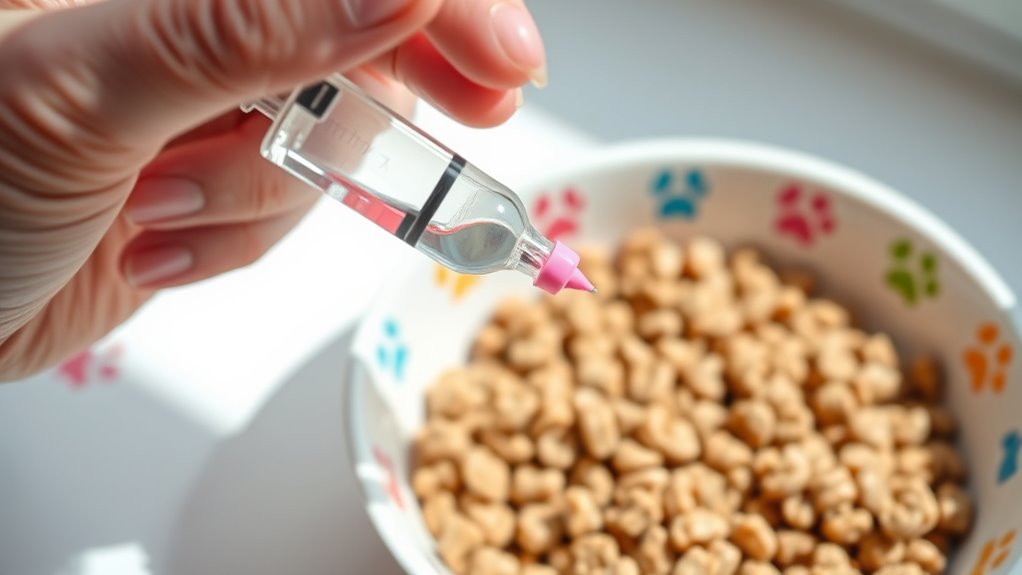
How to Mix Liquid Medicine in My Cat’s Food Safely
Many cat owners know the challenge of giving liquid medicine without turning it into a stressful ordeal. You’re not alone—many people struggle with getting their feline friends to take medication easily and safely.
Luckily, there are simple ways to mix liquid medicine in your cat’s food that can make the process smoother for both of you.
To safely mix liquid medicine into your cat’s food, choose a flavor your cat enjoys, like chicken or fish, and use a familiar, high-quality food to encourage acceptance.
Measure the medication carefully with a syringe or dropper and mix thoroughly to guarantee even distribution. Slightly warming the food can help mask the taste and aroma.
If your cat refuses the mixture, there are tips to improve acceptance and alternatives to consider—discover more tips for successful medication administration below.
Key Takeaways
- Pick a familiar, high-quality soft food or pâté that helps hide the medicine’s taste well.
- Use a syringe or dropper to measure the correct dose accurately.
- Mix the liquid thoroughly into a small amount of food to get an even spread.
- Slightly warm the food to boost the aroma and make mixing easier.
- Offer the mixture right away and watch your cat for any bad reactions.
Why Mixing Liquid Medicine Into Cat Food Is Often the Best Solution
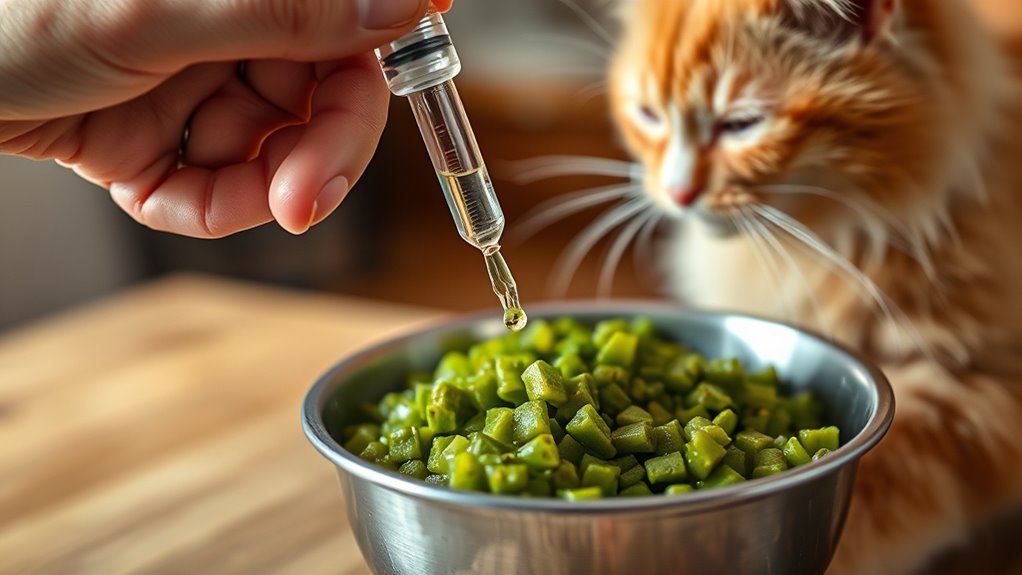
Mixing liquid medicine into your cat’s food is often the best solution because it makes giving medication less stressful for both of you. The liquid medicine benefits include easy mixing and quick absorption, which can help your cat recover faster.
It also gets rid of the struggle of forcing pills or using syringes directly in your cat’s mouth. When choosing food to mix with the medicine, pick options that don’t overpower the taste or cause reactions.
Wet foods or soft treats work well because they blend smoothly and can mask the medicine’s flavor. This method helps ensure your cat gets the full dose without resistance or stress.
Using food as a medium makes treatment easier, especially if your cat is wary of direct medication. Overall, mixing liquid medicine into compatible food makes giving medicine simpler and more natural for your cat, while ensuring they get what they need efficiently.
How to Pick the Best Food to Hide Medicine
Choosing the right food to hide medicine in can make things much easier and more effective. Pick a food that your cat eats and enjoys so it won’t resist or notice the medication.
Think about the food’s texture—some cats like soft, pâté-style foods, while others prefer crunchy kibble. Consider what your cat normally eats to avoid suspicion or rejection.
Some cats prefer soft pâté, while others enjoy crunchy kibble—choose what your cat loves to ensure acceptance.
Flavor is also important. If your cat loves chicken or fish, choose a food with those flavors to help mask the medicine’s taste. Avoid strong-smelling or heavily seasoned foods that might upset your cat’s stomach or interfere with medication absorption.
Stick to familiar, high-quality foods. This increases the chances your cat will eat it without hesitation. Remember, the goal is to pick a food that blends well with the medication and appeals to your cat’s tastes and preferences.
Preparing Your Cat’s Food for Medication Mixing
First things first, pick a food your cat really likes—something that can help hide the taste of the medicine. It’s important to measure the medication exactly so your cat gets the right dose every time. Once you have that, just mix it into the food and stir well. Make sure it’s blended evenly so your kitty gets the full amount without noticing a thing!
Choose Appropriate Food Type
Selecting the right type of food is key to making sure your cat takes medication without any fuss.
Think about your cat’s preferred textures—some cats like soft, moist foods more than dry kibble, which makes mixing in medication easier.
Pick a flavor your cat loves, like tuna or chicken, to help hide the medicine’s taste and encourage eating.
Avoid changing food types suddenly, as this can cause your cat to refuse food or upset their tummy.
If your cat has dietary restrictions or sensitivities, choose a suitable alternative that still works for mixing medication.
The goal is to pick a food your cat enjoys that can hold the medicine well without changing its taste or texture too much.
This way, giving medication becomes smoother, and your cat stays happy.
Measure Medication Correctly
To make sure your cat gets the right dose, it’s important to measure the medication accurately before mixing it into their food. Using proper measuring tools helps ensure the dosage is correct, preventing under- or over-medication.
Choose tools like syringes, droppers, or graduated spoons made for precise measurements. Always double-check the markings to confirm you’re giving the right amount.
Avoid using household utensils because they may not be accurate enough. Keep the medication container steady and read measurements at eye level for the best accuracy. Remember, precise measurement is key to your cat’s safety and effective treatment.
Mix Thoroughly for Uniformity
Once you’ve measured the correct dose of medication, the next step is to make sure it’s evenly mixed into your cat’s food. To do this, mix thoroughly to ensure uniformity.
Use a spoon or spatula to blend the liquid medicine into the food, focusing on consistent mixing. Pay attention to the food temperature—slightly warmed food can help improve mixing.
Here’s a visual guide to help you:
| Step | Action | Tip |
|---|---|---|
| 1 | Add medicine to food | Use a small amount first |
| 2 | Stir vigorously | Break up clumps |
| 3 | Check for even spread | No visible liquid pockets |
| 4 | Confirm uniform color | Consistent appearance throughout |
Step-by-Step: How to Mix Liquid Medicine Into Cat Food
Sure! Here’s a more conversational version of your text:
First off, make sure you measure the liquid medicine carefully so your cat gets the right dose. It’s important to be precise here. Next, pick a food that your cat really likes and that won’t mess with how the medication works. Once you’ve got that, gently mix the medicine into the food, making sure it’s blended well. Just take your time and be gentle so your cat stays calm and stress-free during the process.
Proper Dosage Measurement
Measuring the correct amount of liquid medicine is essential to guarantee your cat receives the proper dose. Achieving dosage accuracy depends on using reliable measuring tools.
Use a syringe or dropper for precise measurement, avoiding kitchen utensils that lack accuracy. Always double-check the measurement before administering to ensure the correct dose.
Keep the measuring tools clean to prevent contamination and inaccuracies.
Choosing Suitable Food Type
How do you choose the best food to mix with liquid medicine for your cat? Focus on palatability factors, flavor preferences, and food textures to encourage eating. Wet food often masks medicine better and is easier to mix evenly, while dry food provides crunch and can suit some cats’ preferences.
Consider nutritional balance and any food allergies your cat may have. Also, think about meal timing—if your cat eats multiple times a day, mix medication into meals when they’re most hungry.
Use this table to compare options:
| Wet Food | Dry Food |
|---|---|
| Better flavor masking | Longer shelf life |
| Easier to mix evenly | Crunchy texture |
| Suitable for picky eaters | Suitable for free feeding |
| Often more nutritious | May require supplements |
Choose based on your cat’s needs and preferences for safe, effective medication intake.
Mixing Technique Tips
Mixing liquid medicine into your cat’s food needs a careful approach to make sure it’s evenly spread and still tempting for your pet. Focus on good mixing techniques that keep the food’s texture and flavor intact and prevent separation.
Start by thoroughly blending the medication into a small amount of food before mixing it into the full serving. This helps ensure the medicine is evenly distributed throughout the meal.
Choose a food texture that mixes easily without changing the flavor or consistency too much. Wet or moist foods tend to blend more smoothly with liquid medications.
Warm the food slightly to improve mixing and enhance the aroma, making it more appealing to your cat. Always use a clean utensil to mix, avoiding any contamination.
Test small portions first to see if your cat accepts the mixture, which helps prevent waste or refusal. Following these tips can make giving medication easier for both you and your feline friend.
How to Make Sure Your Cat Eats All Their Medicine
Ensuring your cat swallows the entire dose of medication can be tricky, but there are effective strategies to make sure none of it goes to waste. Cats’ behavior and food preferences vary, so understanding what motivates your cat can help.
For example, some cats are more likely to eat all their food if it’s warm or if you mix the medication into a tasty treat they love. You might try offering a small amount of their favorite food first to encourage eating, then gently add the medicated portion.
Another approach is to use a food puzzle or a small, shallow dish to make eating more engaging. Ensuring the medication is thoroughly mixed and served immediately prevents your cat from leaving any behind.
Watching your cat’s cues and adjusting the method accordingly can improve the chances they consume the full dose. Patience and consistency are key to successfully getting your cat to eat all their medicine.
Common Mistakes When Mixing Medication and Food (and How to Avoid Them)
One common mistake pet owners make when combining medication with food is not thoroughly blending the medicine. This can cause your cat to detect the dose and refuse to eat it.
If the liquid isn’t smooth or evenly mixed, your cat may notice the medication and avoid eating altogether. Proper mixing helps distribute the medicine evenly, improving flavor masking and reducing detection.
To avoid this, try a few tips: use a small amount of wet food or a tasty treat to better hide the medication’s flavor, and mix the liquid thoroughly until it’s smooth and consistent.
You can also test different foods or flavor masking techniques if your cat is especially sensitive to taste or smell. Ensuring a uniform mixture helps with flavor masking and guarantees your cat gets the full dose safely.
What to Watch for After Giving Your Cat Medication
After giving your cat medication, it’s important to watch her closely for any signs of adverse reactions or discomfort. Keep an eye on her behavior, such as lethargy, restlessness, or hiding more than usual.
She might also show signs of nausea, like vomiting or excessive drooling. Watch for any unusual vocalizations or agitation, which could mean she’s uncomfortable or in pain.
Pay attention to changes in her appetite or bathroom habits, as these can signal a reaction to the medication. If she seems overly sleepy, uncoordinated, or has swelling or redness where the medication was given, those are warning signs.
If you notice severe or persistent symptoms, contact your vet right away. Staying alert helps ensure her safety and allows you to act quickly if she experiences any adverse effects.
When to Check With Your Vet About Mixing Medicine Into Food
If you’re not sure whether it’s okay to mix your cat’s medication into their food, it’s always a good idea to check with your vet. Sometimes, certain meds might not mix well or could lose effectiveness when combined with food. Plus, if your cat has specific health issues or is already on other medications, getting professional advice is really important to keep them safe.
When in doubt, just give your vet a call. It’s better to be safe than sorry, and they can guide you on the best way to give your cat their medication without any problems. That way, you can help keep your kitty healthy and happy!
When Is Medical Advice Needed
Even though mixing liquid medicine into your cat’s food is usually straightforward, there are times when you should check with your veterinarian first. If your cat shows any emergency signs like difficulty breathing, vomiting, or lethargy, contact your vet immediately before changing any medication.
Also, talk to your vet if you’re unsure whether the medication is safe for your cat’s diet or health condition. It’s always better to be safe and get professional advice.
Consider reaching out to your vet if you notice adverse reactions after mixing the medicine, or if your cat has special dietary needs or sensitivities.
If you’re uncertain about the right dosage or how to give the medication, your vet can guide you. Getting professional advice helps ensure your cat stays safe and receives effective treatment.
Never hesitate to contact your vet if you have questions or concerns. Their guidance is key to keeping your furry friend healthy.
Recognizing Potential Risks
While mixing medicine into your cat’s food is often safe, there are some signs that you should check with your vet first. If your cat is on multiple medications or has known drug interactions, it’s best to get professional advice to avoid any negative effects.
Also, if your cat has specific food preferences or sensitivities, mixing medicine could lead to refusal to eat or upset stomachs. Keep an eye out for unusual behaviors like vomiting, diarrhea, or lethargy, as these might signal a bad reaction.
If your cat’s condition gets worse or you notice discomfort after adding medication to their food, contact your vet right away. Make sure to verify if the medicine changes the taste or texture, which could affect how willing your cat is to eat.
When in doubt, always consult your vet to ensure it’s safe to proceed.
Alternatives If Your Cat Won’t Eat the Food With Medication
If your cat refuses to eat the food with medication, there are several effective alternatives to make sure they still get their treatment. One option is to offer tasty alternatives that appeal to their palate, making the medicine more acceptable.
Try tasty treats or flavor boosters to encourage your cat to eat medicated food.
You can also add natural flavor boosters like a small amount of tuna juice or broth to mask the medication’s taste and encourage eating.
Warming the food slightly can help too — the aroma will entice your cat to eat it, even with the medicine mixed in.
Try offering savory flavor boosters like fish or chicken broth to increase appeal.
Offering small, frequent meals can also stimulate their appetite.
Experiment with different textures or types of food to find what your cat prefers. These strategies help ensure your cat gets their medication without unnecessary stress or refusal.
Troubleshooting Difficult Medications and Picky Eaters
When your cat is especially stubborn about taking medication or refuses to eat even with flavor boosters, it can be really tricky. Picky behavior often makes giving medicine stressful for both of you.
Try hiding the liquid in very small amounts of strong-smelling food or use syringes to target the back of their mouth directly. Warming the food slightly can also help boost the aroma and make it more appealing.
Offering smaller, more frequent portions might encourage your cat to eat. Sometimes, wrapping your cat in a towel can help keep them still for easier administration.
Patience is essential; avoid forcing medication, as it may make your cat more resistant. Gentle, consistent approaches will build trust over time.
If nothing works, don’t hesitate to talk to your vet about alternative medication forms or professional help. Staying calm and flexible can make managing picky behavior much easier and ensure your cat gets the treatment they need.
Frequently Asked Questions
Can Mixing Medicine in Food Affect Its Potency?
Mixing medicine into your cat’s food can change how effective it is, especially if the food isn’t compatible with the medication. Some foods might bind to the medicine or change how well it works.
This can affect how well your cat absorbs the medication, making it less effective. To make sure your cat gets the full benefit, pick food that won’t interfere with the drug.
Always follow your vet’s advice and the instructions for giving medication. Using the right method helps prevent losing any of the medicine’s potency or effectiveness.
How Long Can I Leave the Medicated Food Out?
You should not leave medicated food out for more than 30 minutes, as medication timing and food temperature affect how well it works.
After this time, bacteria can grow, and the medicine might lose some of its potency.
To make sure your cat gets the full dose, serve fresh, slightly warmed food if needed, and toss out any leftovers.
Always follow your vet’s advice on storage and timing to keep the medication effective.
Is It Safe to Mix Multiple Medications Together?
Mixing multiple medications can be risky because of potential interactions and dosage concerns. It’s always best to check with your veterinarian before combining drugs.
They can advise you on safe combinations and proper doses. Think of it like layering ingredients carefully in a recipe—some ingredients might clash or change each other’s effects.
Never guess or assume it’s safe to mix medications. Getting professional guidance helps keep your cat healthy and safe.
Will My Cat Develop a Negative Taste Aversion?
Your cat might develop a negative taste aversion if the medication significantly changes its food’s flavor or texture. This can affect how they feel about their food and possibly make them hesitant to eat later.
To help prevent this, try mixing the medicine with a small amount of tasty food or treats. Just make sure the taste change is only temporary.
Monitoring how your cat responds is key to avoiding long-term food aversions. Keep an eye on their eating habits and adjust if needed.
How Do I Store Leftover Medicated Food Safely?
You should store leftover medicated food in an airtight container in the refrigerator to ensure proper storage and keep it safe.
Label it clearly with the date you prepared it, so you know how long it’s been there. Use it within 24 hours to prevent spoilage or bacterial growth.
Always check the food’s smell and appearance before offering it again. Proper storage helps keep your cat safe and makes sure the medication stays effective.
Conclusion
Mixing liquid medicine into your cat’s food can feel tricky, like trying to blend oil and water. But with patience and the right approach, you can make mealtime a smooth part of your pet’s care. Think of it as a gentle dance—balancing their taste buds and health needs.
When done carefully, you’ll feel relieved knowing your cat gets their medicine. And you can enjoy the comfort of watching them healthy and happy. Mixing liquid medicine into your cat’s food safely is all about being gentle and attentive.