Why Does My Cat Flop Over When Petting Her?
If you’re a cat owner, you’ve probably wondered why your feline friend sometimes suddenly flops over while you’re petting her. Many people struggle with understanding what your cat’s body language really means. You’re not alone in wanting to build a stronger bond and make her feel safe.
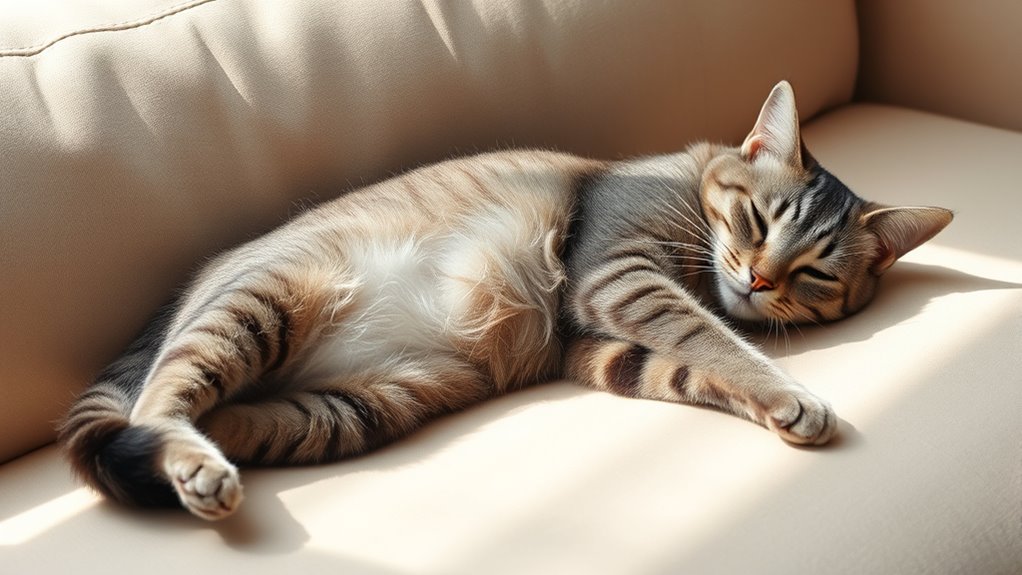
When your cat flops over during petting, it’s a sign she feels safe, relaxed, and trusts you deeply. She’s showing her comfort by exposing her belly, a vulnerable area, which indicates emotional ease.
Gentle petting and a calm environment can encourage more of this behavior. Pay attention to her body language, and you’ll notice how her trust grows.
Keep exploring her preferences, and you’ll strengthen your bond even more.
Key Takeaways
- Flopping over shows your cat feels safe, relaxed, and trusts you when you’re petting her.
- It’s a sign she’s comfortable and content, at ease in your presence.
- Sometimes, it’s a playful instinct or just her natural way of reacting to gentle touch.
- Cats often show their belly as a sign of vulnerability and trust.
- Regular, gentle petting helps her relax and encourages her to show this behavior.
Why Does My Cat Flop Over When I Pet Her?
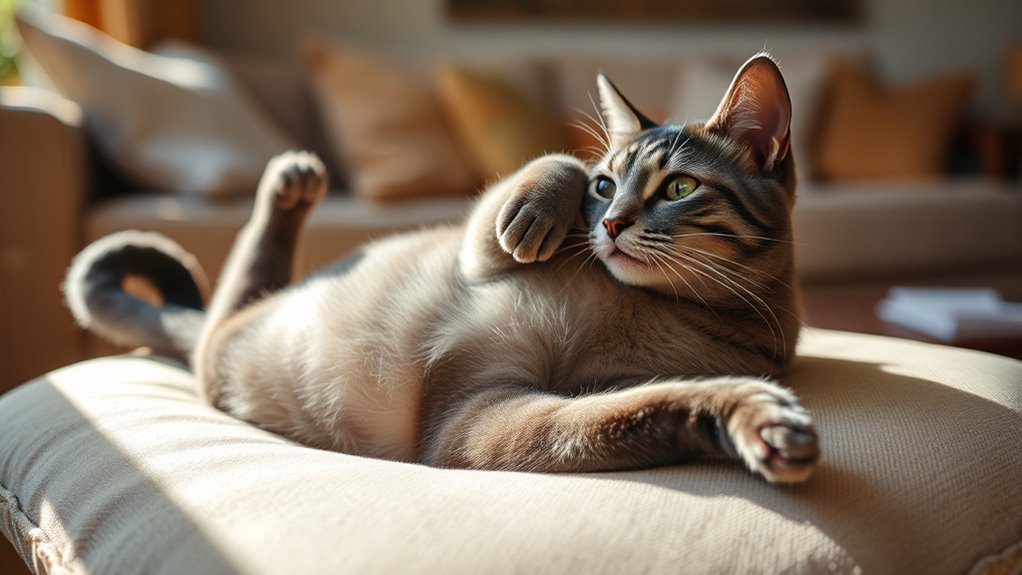
Have you ever wondered why your cat suddenly flops over when you start petting her? This behavior is often rooted in her playful instincts and comfort with you.
When a cat flops, she’s signaling that she feels safe and relaxed, trusting you enough to let her guard down.
When your cat flops, she’s showing she’s comfortable, relaxed, and trusts you completely.
Flopping also taps into her natural playful behavior, mimicking how she might stretch out during play or rest in the wild.
Cats use this position to invite interaction, encouraging gentle play or petting without feeling threatened.
It’s a sign she’s comfortable in your presence and enjoys your company.
Your cat’s playful instincts guide her to respond this way, blending relaxation with an invitation for more bonding.
What Does Flopping Say About My Cat’s Mood?
When your cat flops over during petting, it’s a strong sign that she’s feeling calm and trusting in the moment. This behavior is her way of communicating that she feels safe and comfortable with you.
When cats show this relaxed posture, it indicates a positive mood and a bond of trust. Flopping isn’t just about physical relaxation; it’s how she shows her contentment and ease.
If she willingly exposes her belly or rolls over, she’s showing vulnerability. That only happens when she feels secure around you. Keep in mind, though, that every cat is different in how they express their mood.
Some cats might flop often, while others do it only occasionally. Overall, her flopping is a good sign that she’s happy and at peace in your presence.
Is Flopping a Sign That Your Cat Feels Safe and Relaxed?
When your cat flops down, it’s usually a good sign that they’re feeling comfortable and safe around you. It’s like they’re saying, “Hey, I trust you and I’m relaxed here.” You can tell they really enjoy your presence when they settle into this laid-back position.
Sign of Comfort
A cat that flops onto its side or back often signals that it feels safe and relaxed in your presence. This behavior clearly shows that your cat is comfortable and trusts you.
When your cat flops down, it’s a positive sign, meaning she’s at ease enough to let her guard down. It’s also a way she communicates that she’s comfortable with your touch and trusts you.
Seeing your cat in this relaxed posture means she feels secure and unthreatened. Recognizing this helps you understand her emotional state and strengthen your bond.
Indicates Trust and Bond
Flopping onto its side or back shows your cat trusts you and feels safe with you. It’s a strong sign of bonding, meaning she’s comfortable enough to be vulnerable. When she relaxes like this, she sees you as a safe, caring presence.
This behavior isn’t just about relaxing—it’s a subtle message of connection and confidence. You can use this moment to strengthen your bond by gently petting her and speaking softly.
Recognizing these trust signals helps you understand her emotional state and deepens your relationship. For example, if she flops over, continue gentle petting; if she purrs, maintain a soothing tone.
Why Do Some Cats Flop More Than Others?
Some cats flop more than others because they feel really comfortable and safe in their environment. When a cat feels secure, they’re more likely to relax completely and show their belly or just flop down. It’s their way of saying, “I trust you and I’m at ease.”
Every cat has its own personality, too. Some are naturally more laid-back and relaxed, while others might be more cautious or reserved. That means some cats will flop a lot, and others might do it only when they’re extra comfortable.
Getting to know these little differences can help you understand what your cat’s behavior is telling you. It also helps you build a stronger bond because you learn to recognize when they’re feeling safe and when they might need a bit more reassurance.
Comfort Levels Vary Among Cats
Not all cats feel equally comfortable when you pet them, which is why their reactions can vary so much. Your cat’s comfort level depends on several factors that influence her behavior.
- Past experiences: A cat that’s had negative or stressful encounters might be more hesitant to relax during petting.
- Personality: Some cats naturally enjoy handling, while others prefer minimal contact.
- Environmental factors: A calm, safe environment helps your cat feel more comfortable and relaxed.
Understanding these elements helps you interpret her reactions better. Some cats may flop more because they’re genuinely relaxed, while others might do so to signal they’re overwhelmed. Recognizing these subtle cues is key to respecting your cat’s comfort and building trust.
Individual Temperament Differences
Every cat has a unique temperament that influences how she reacts when you pet her. This helps explain why some cats flop more often than others. Your cat’s personality plays a big role in her behavior, including her tendency to relax and go limp.
Some cats are naturally more laid-back and trusting, so they’re quick to flop over as a sign of comfort. Others may be more cautious or independent, showing less physical surrender. These differences mean her response to petting reflects her innate temperament, not just her mood.
Understanding her personality helps you interpret her signals better. Recognizing her individual traits allows you to respect her boundaries and build a more positive, trusting relationship based on her unique behavior.
How Does Your Petting Style Influence When Cats Flop?
Have you ever noticed how your petting style can make a cat more likely to flop? Your petting techniques directly influence their comfort and how they respond.
Cats have unique feline preferences, so adjusting your approach can encourage them to relax and flop.
Here are three ways your petting style impacts this behavior:
- Gentle Touches: Soft, slow strokes soothe your cat’s nervous system, increasing the chance they’ll flop over as a sign of trust.
- Targeted Areas: Knowing which spots your cat enjoys, like behind the ears or along the back, can make petting more pleasurable and encourage relaxation.
- Rhythm and Pressure: Consistent, moderate pressure with a steady rhythm mirrors natural grooming, prompting your cat to feel safe enough to flop.
How Can I Spot Stress or Anxiety When My Cat Flops?
While a cat flopping onto its side can mean she’s relaxed, it can also signal stress or anxiety if you know what signs to look for. Watch for tense muscles, dilated pupils, or a stiff body posture.
If her ears are flattened or she’s avoiding eye contact, these are clear signs of anxiety. Rapid or shallow breathing, trembling, or hiding right after flopping could also mean she’s uncomfortable rather than content.
Sometimes, a cat might flop with her tail flicking or her body twitching, which are signs of nervousness. Pay attention to her overall behavior—if she seems tense or restless instead of relaxed, she might be stressed or anxious.
Recognizing these signals helps you understand how she’s feeling and respond in a way that makes her feel safe. It’s important to notice her emotional state so she feels secure during petting or cuddling.
How to Encourage Your Cat to Flop More During Play and Petting
Want to encourage your cat to flop more often during play and petting? The trick is to use gentle, slow movements that help them feel safe and relaxed. Think of it like speaking their language—calm and soothing. When your cat feels secure, they’re more likely to relax and show that adorable belly-up pose.
It’s also a good idea to include their favorite toys in playtime. This keeps them engaged and happy, making the whole experience more enjoyable for both of you. And don’t forget about cozy rest areas—having comfy spots where they can unwind encourages them to flop and relax more freely. These little tweaks can really help build trust and make flopping a natural, fun part of your interactions.
Use Gentle, Slow Movements
Using gentle, slow movements when petting or playing with your cat helps them relax and feel safe enough to flop.
Focus on providing gentle touches and slow strokes, which build trust and comfort. To make this work well:
- Use soft, deliberate motions to avoid startling your cat.
- Gently touch sensitive areas like the cheeks and chin.
- Keep a slow pace, giving your cat time to process and enjoy each movement.
These techniques show you’re calm and non-threatening, which boosts your cat’s confidence to relax fully. Over time, your consistent gentle touches and slow strokes will encourage her to flop more during petting, reinforcing her sense of safety and contentment.
Incorporate Favorite Toys
Incorporating your cat’s favorite toys into petting sessions can encourage her to relax and flop more often. Use her favorite toys during gentle, interactive play to build trust and create positive associations with your touch.
For example, dangle a toy she loves near your hand to keep her engaged while you pet her gently. This combination of play and petting can reduce her tension and make her feel more comfortable.
As she becomes more relaxed, she’ll be more likely to flop over, showing her trust and enjoyment. Keep the play light and fun, and pay attention to her cues.
Over time, integrating favorite toys into your petting routine can help her feel safe and secure, encouraging more relaxed, floppy moments.
Provide Comfortable Rest Areas
Creating cozy, inviting rest areas can really encourage your cat to relax and flop during play and petting sessions. Cats love having designated spaces where they feel safe and comfortable. To promote this, offer:
- Cozy napping spots with soft blankets or cushions that invite your cat to rest for a while.
- Raised resting areas, like window perches or shelves, giving your cat a sense of security and a good vantage point.
- Quiet corners away from household activity, helping your cat unwind without feeling overstimulated.
Make sure these areas are accessible and appealing so your cat chooses them over less comfortable spots. When she associates these cozy spaces with relaxation, she’s more likely to flop over during petting and play, which reinforces her sense of security.
Common Mistakes That Make Cats Less Likely to Flop
One common mistake that can make cats less likely to flop is approaching them too quickly or startling them with sudden movements. Cats are sensitive to their environment and prefer calm, gentle interactions.
If your petting techniques are abrupt or unpredictable, your cat may become nervous or defensive, making her less inclined to relax and flop. To respect her feline preferences, approach slowly and use soft, deliberate movements.
Gentle, predictable movements help your cat feel safe and more likely to relax and flop.
Avoid hovering over her or reaching suddenly, as this can trigger a flight response. Instead, let her come to you and gauge her comfort level.
When petting, stick to areas she enjoys, like her chin or cheeks, and watch her body language. By understanding her preferences and applying gentle petting techniques, you create a safe space where she feels comfortable enough to relax and sometimes even flop over.
Can Flopping Help Strengthen My Bond With My Cat?
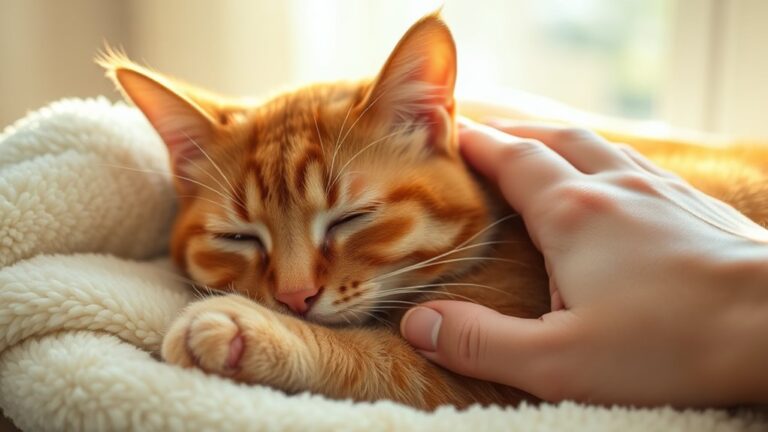
When your cat flops onto her side or back, it’s a sign she feels safe and relaxed with you. This vulnerable posture shows she trusts you, making it a great time to bond.
Engaging in gentle activities during these moments can really strengthen your relationship. It’s a chance to create positive experiences that your cat will associate with you.
Try giving her a gentle massage with soft strokes to comfort her and build trust. You can also play with toys to keep her stimulated and have fun together.
Spending quiet time nearby and speaking softly can help her feel more familiar and reassured. These simple activities turn spontaneous flops into meaningful bonding moments.
When you recognize and respond to her signals, you show her she can relax around you. Over time, this deepens your connection through mutual trust and understanding.
Flopping isn’t just adorable — it’s a key way to foster a closer, more trusting relationship with your cat.
How to Read Your Cat’s Body Language When She Flops Over
Noticing how your cat flops over can tell you a lot about her current mood. When she shows this behavior, she’s usually feeling relaxed or comfortable. Keep a close eye on her body language: is her belly exposed, her paws relaxed, or her tail flicking gently?
These signs help you understand whether she feels safe or is seeking some attention. For example, a belly exposed often means she trusts you completely and is feeling peaceful and content.
Exposed belly signals trust, peace, and contentment, showing your cat feels safe and relaxed in her environment.
If her paws are stretched out, it’s a sign she’s comfortable and at ease, feeling calm and happy. A tail flicking gently might mean she’s slightly irritated or alert, feeling uncertain or cautious.
When her legs are sprawled, she’s likely deeply relaxed and trusting her environment. Recognizing these cues can deepen your bond by showing her you understand her feelings.
Frequently Asked Questions
Can Cats Flop Over Intentionally to Get Attention?
Yes, cats can intentionally flop over to get your attention. It’s a way they show their confidence and trust through their body language.
When your cat flops over, she’s often inviting petting or play. It’s her way of signaling she feels safe and wants to interact with you.
This behavior helps strengthen your bond. Keep an eye on her body language—relaxed, soft eyes and gentle purring mean she’s comfortable and genuinely craving your affection.
Does Age Affect How Often or When Cats Flop?
Yes, age influences how often or when your cat flops over. As cats go through different stages of development, their behavior changes a lot—kind of like a rollercoaster of cuteness!
Kittens might flop over more to show trust, while older cats may do it less often or only in certain moments. You’ll notice these changes as your cat matures, reflecting their evolving comfort and confidence levels over time.
Are Certain Breeds More Prone to Flopping?
Certain breeds are more prone to flopping because of their breed traits and relaxed nature. Breeds like Ragdolls, Scottish Folds, and Maine Coons tend to do this more often since they’re naturally gentle and loving.
You’ll notice they often lie on their sides or back when they’re comfortable, showing trust and happiness. If your cat is one of these breeds, you can expect more chill, flopping moments during petting.
Can Health Issues Cause a Cat to Flop Unexpectedly?
Health issues can definitely cause your cat to flop unexpectedly. Flopping is a way cats communicate, often showing they’re relaxed, trusting, or sometimes uncomfortable.
If your cat suddenly flops more than usual or shows other worrying signs, keep an eye out for things like lethargy or pain. It’s important to talk to a vet to rule out any health problems.
This way, you can be sure that her flopping is a sign of comfort, not distress.
How Do I Differentiate Between Playful and Stressed Flopping?
Playful flopping usually looks like your cat rolling onto her side with relaxed body language, purring, and making eye contact.
Stressed flopping, on the other hand, often involves tense muscles, wide eyes, flattened ears, or rapid breathing.
You can tell the difference by watching her body language and behavior—playful cats seem inviting, while stressed cats may try to escape or show signs of discomfort.
Always pay attention to her overall cues so you can respond appropriately.
Conclusion
When your cat flops over, it’s like a secret handshake, signaling trust and relaxation. It’s her way of showing she feels safe with you.
By understanding what her body language means, you can build a stronger bond that’s as steady as a heartbeat. Keep petting her gently and respect her cues.
Watch how she responds and adjust your touch accordingly. Her confidence will grow as she feels more comfortable.
Flopping isn’t just a quirky pose; it’s her way of saying she loves your company and feels secure.
It’s like a soft song echoing through your home, warming your heart with every gentle touch.
So, when your cat flops over, know it’s a sign that your gentle petting is making her feel loved and safe.