What Do Cat Allergies Feel Like?
Many people struggle with cat allergies, feeling frustrated by the sneezing fits, itchy eyes, and runny noses that pop up whenever they’re near cats. You’re not alone—these symptoms can really disrupt your daily life.
If you have a cat allergy, you might notice sneezing, itchy eyes, a runny nose, or nasal congestion whenever you’re around cats. Breathing could become wheezy or shallow, and your throat may feel irritated, prompting you to clear it frequently.
Your skin might itch or swell, and your eyes could water or feel itchy. These symptoms can disrupt your daily life and sleep.
If you want to understand more about what to expect, keep exploring.
Key Takeaways
- Respiratory symptoms like sneezing, itchy eyes, runny nose, and nasal congestion are common signs of cat allergies.
- Skin reactions such as redness, hives, or irritation may happen if you come into contact with cat dander.
- Some people experience wheezing, shallow breathing, or throat irritation, which can be more serious.
- Allergy symptoms can disturb sleep, causing sneezing, congestion, or itchy eyes, affecting your rest and overall well-being.
- Reactions can range from mild and manageable at home to severe, needing immediate medical attention.
What Are the Common Symptoms of Cat Allergies?
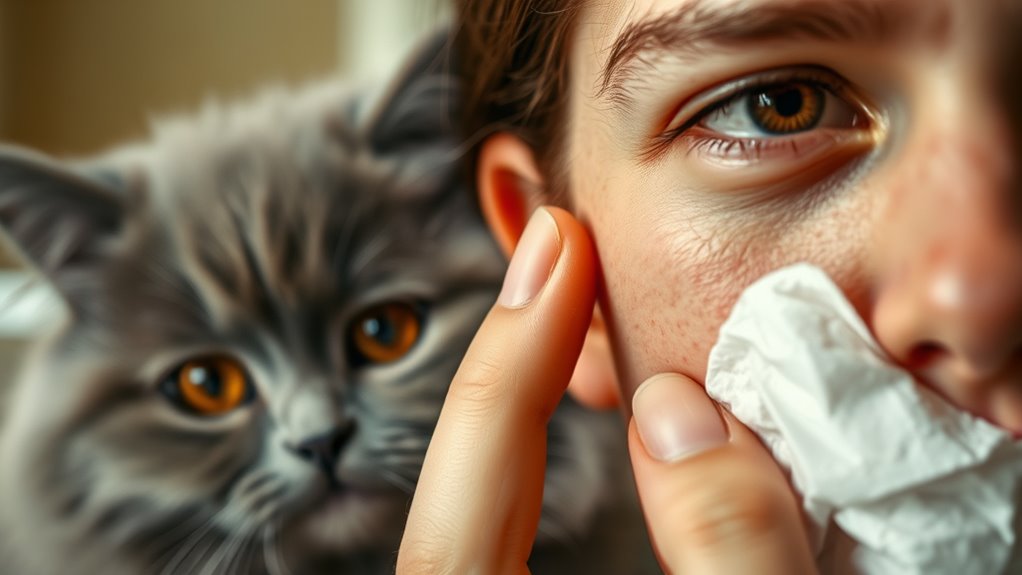
Have you ever noticed sneezing, itchy eyes, or a runny nose after spending time around cats? These are common symptoms of cat allergies. You might experience sneezing fits that seem relentless, along with nasal congestion making it hard to breathe clearly.
Sneezing, itchy eyes, and a runny nose often signal cat allergies and immune response.
Watery eyes often come with these reactions, and they’re your body’s way of responding to allergy triggers like pet dander. When exposed to cat allergens, your immune system reacts by releasing histamine, which causes inflammation and these uncomfortable symptoms.
You may also notice a runny or stuffy nose, which is common during seasonal allergies but linked specifically to cats in this case. These symptoms can vary in intensity depending on your sensitivity and exposure levels.
Recognizing these signs helps you understand that your body is responding to pet dander as a threat. This triggers the histamine response that results in these typical allergy symptoms.
How Do Cat Allergies Feel in Your Body?
When you’re allergic to cats, your body tends to react pretty quickly, and you can actually feel it happening. For example, you might start to notice your breathing becoming wheezy or your nose getting all stuffy—that’s your respiratory system telling you something’s up.
You might also experience skin reactions, like itching or even hives popping up all over. It can be pretty uncomfortable, and these symptoms can really make you aware that your body is reacting to the cat allergens.
Respiratory Symptoms Manifestation
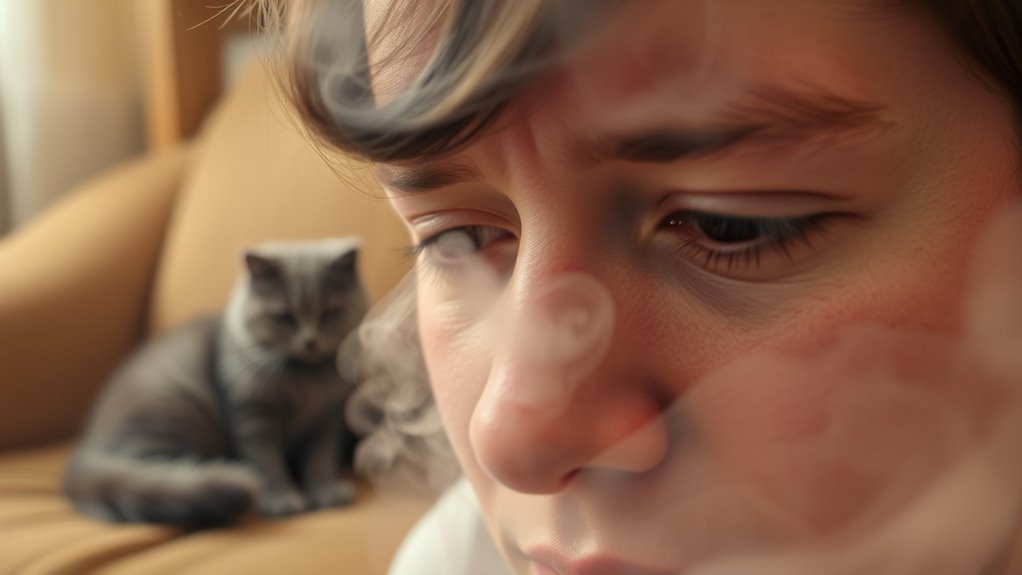
Respiratory symptoms from cat allergies often make you feel like your chest is tight and your breath is shallow. You might notice frequent sneezing and persistent nasal congestion that leave your face feeling stuffed-up and uncomfortable.
Throat irritation can cause a constant urge to clear your throat, while sinus pressure adds to your discomfort. As your airways react, you may experience breathlessness and coughing fits that disrupt your daily activities.
Wheezing episodes can make your breathing sound noisy and labored, often signaling lung inflammation. These symptoms can get worse at night, making it hard to sleep.
Skin Reactions Experience
Skin reactions from cat allergies can make your body feel itchy, irritated, and inflamed. You might notice redness, hives, or swelling on areas that come into contact with cat dander.
These symptoms can be uncomfortable and persistent, making it hard to focus or enjoy your day. To manage skin reactions, proper skin care is essential—use gentle, fragrance-free cleansers and moisturizers to soothe your skin.
Over-the-counter allergy treatments like antihistamines or corticosteroid creams can help reduce inflammation and relieve itching. If symptoms worsen or stick around, see a healthcare professional for targeted allergy treatments.
Taking these steps can help you control skin reactions and minimize discomfort caused by cat allergies.
What Respiratory Reactions Do Cat Allergies Cause?
Cat allergies often trigger a range of respiratory reactions that can vary from mild to severe. When you’re exposed to triggers like cat dander, you might notice symptoms such as sneezing, a runny or stuffy nose, and coughing.
Some people also experience wheezing or shortness of breath, especially if they have asthma or respiratory issues. These reactions happen because your immune system overreacts to allergens in cat saliva, skin flakes, or urine that become airborne.
Managing these symptoms involves allergy strategies like avoiding direct contact, using air purifiers, and taking antihistamines or inhalers as your doctor recommends. Recognizing the signs early helps you take control and reduce discomfort.
Being aware of respiratory triggers allows you to better prepare and minimize exposure, making living with cat allergies easier to handle.
How Do Cat Allergies Affect Your Skin and Cause Itching?
When you’re allergic to cats, your skin can really act up. You might see some irritation or even develop rashes where your skin comes into contact with cat dander. It’s not just a little itch—sometimes it can feel pretty uncomfortable.
You might also notice that your skin gets super itchy, which can be really frustrating. This itching can sometimes lead to scratching, making the problem worse and possibly causing skin to become inflamed or inflamed. Knowing how these allergic reactions affect your skin can help you figure out better ways to deal with the symptoms and keep your skin feeling comfortable.
Skin Irritation and Rashes
If you’re allergic to cats, your immune system can overreact to tiny proteins in their saliva, dander, or urine. This can cause skin irritation and rashes, making your skin more sensitive.
You might notice redness, swelling, or small bumps that itch or feel uncomfortable. These rashes can appear suddenly and get worse with repeated contact.
To handle this, try to identify and avoid triggers like touching cat fur or surfaces contaminated with allergens. Knowing what sets off your skin helps you prevent flare-ups.
Staying alert about exposure and keeping your environment clean can really help reduce skin discomfort from cat allergies. Recognizing your triggers is key to managing irritation and protecting your skin.
- Recognizing rash triggers helps prevent flare-ups
- Skin sensitivity varies from person to person
- Avoiding triggers reduces irritation
Itching and Discomfort
Skin irritation from cat allergies often leads to intense itching that can feel almost unbearable. You might notice your skin becoming red, inflamed, and extremely itchy, especially in areas exposed to allergy triggers like dander or saliva.
This itching can extend to your eyes, causing itchy eyes along with watery or red eyes, adding to your discomfort. The discomfort levels vary depending on your sensitivity and exposure, but the sensation can be persistent and distracting.
You may also experience other symptoms like swelling or a rash. These reactions happen because your immune system overreacts to cat allergens, making even minor contact feel irritating.
Managing these symptoms involves reducing exposure and using antihistamines, but the itching can still cause significant discomfort.
How Do Allergies Make Your Eyes Feel When Near Cats?
Ever notice your eyes feeling itchy or watery after being around cats? That’s a common reaction to allergy triggers like cat dander. When you’re near cats, your immune system reacts to tiny particles in the air, causing eye discomfort.
Eye itching and watering after being around cats is a common allergy response to dander.
You might experience redness, irritation, or a gritty feeling. Your eyes may also become sensitive to light or produce excess tears as a response. These symptoms are your body’s way of fighting off what it perceives as harmful.
Understanding these effects helps you identify allergy triggers and manage your reactions better. To lessen eye discomfort, consider:
- Avoiding direct contact with cats when possible
- Keeping your living space clean and well-ventilated
- Using allergy medications or eye drops as recommended
Being aware of how allergies affect your eyes can help you take proactive steps to reduce symptoms and improve your comfort around cats.
What Are the Signs of Severe Cat Allergy Reactions?
While mild allergy symptoms like itchy eyes can be managed with simple measures, some reactions signal a more serious response to cat allergens. If you experience severe symptoms, it’s a sign of a dangerous allergic reaction. These can include difficulty breathing, swelling of the face or throat, rapid heartbeat, or dizziness. Recognizing these signs early is essential to get immediate medical help.
| Severe Symptoms | What You Should Do |
|---|---|
| Difficulty breathing | Seek emergency medical care immediately. |
| Swelling of face or throat | Call 911 or go to the ER. |
| Rapid heartbeat | Use an epinephrine auto-injector if prescribed. |
Severe allergic reactions require urgent attention. If you notice these signs, don’t ignore them. Act fast to prevent life-threatening complications.
How Do Cat Allergies Impact Your Daily Life?
Cat allergies can really throw a wrench in your daily life, you know? Things that used to be easy, like sleeping or concentrating, can suddenly feel like a challenge. It’s frustrating when your allergies make it hard to get a restful night’s sleep or stay focused during the day.
And it doesn’t stop there—your social plans might take a hit, too. You might find yourself avoiding visits or gatherings with friends or family because of the allergy symptoms. It can be tough to manage, but understanding how allergies affect you is the first step to finding ways to make life a little easier.
Disrupts Daily Activities
Living with cat allergies can really disrupt your daily routine, often forcing you to adjust activities or limit your interactions with pets. You might avoid cuddling your cat or find yourself cleaning more often to reduce pet dander.
Managing allergy symptoms takes constant effort, which can feel like a full-time job. These restrictions impact your lifestyle, making simple tasks more complicated.
For example, you may need to limit your time in certain rooms or invest in air purifiers. Owning a cat becomes a balancing act—you weigh the companionship against allergy flare-ups.
This constant vigilance can be frustrating and make spontaneous activities more difficult. Overall, daily life can become more challenging than it used to be.
Affects Sleep Quality
Constantly managing allergy symptoms can wear you down, especially when it starts to affect your sleep. Sleep disturbances caused by cat allergies leave you feeling tired and groggy during the day. You might wake up often, have trouble falling asleep, or feel unrefreshed in the morning.
To help with this, try allergy remedies like air purifiers, hypoallergenic bedding, or antihistamines. Here’s how allergy symptoms can impact your sleep:
| Symptom | Impact | Remedy |
|---|---|---|
| Sneezing | Interrupts your sleep cycle | Use air purifiers |
| Congestion | Makes breathing difficult | Keep your pet out of the bedroom |
| Itching and watery eyes | Keeps you awake at night | Use hypoallergenic bedding |
Addressing these issues can help you enjoy restful sleep and boost your overall well-being.
Limits Social Interactions
When allergy symptoms flare up, social interactions can become challenging, often leading you to withdraw or avoid gatherings. You might feel increased social anxiety, worried about allergic reactions or sneezing uncontrollably in public. This emotional impact can make you hesitant to attend parties or meet friends, further isolating you.
The fear of an allergic episode in social settings adds stress, making interactions less enjoyable. You may feel embarrassed or self-conscious, which can prevent you from fully engaging with others.
You might miss out on special moments with loved ones because of your allergies. Over time, this can lead to feelings of loneliness and decreased confidence.
These effects can greatly limit your social life, causing you to prioritize comfort over connection. Recognizing this impact can help you find ways to manage allergies and stay connected despite the challenges.
How Can You Tell If You’re Allergic to Cats?
Wondering if you might be allergic to cats? The best way to find out is through cat allergy testing, which your doctor can do with skin or blood tests.
Discover if you’re allergic to cats with simple skin or blood tests from your doctor.
These tests help identify if your immune system reacts to cat allergens like pet dander. You might notice symptoms such as sneezing, a runny nose, itchy eyes, or asthma-like breathing issues after being around cats.
Keep track of when your symptoms occur and how severe they are. This information can help your healthcare provider assess your allergies more accurately.
Even if you think your reaction is mild, allergy testing can confirm whether cats are the cause. Once diagnosed, managing pet dander becomes really important.
You can reduce allergens in your environment by cleaning regularly, using HEPA filters, and avoiding direct contact with cats. Recognizing the signs early and getting proper testing can help you take control of your allergy symptoms and enjoy a better quality of life around cats.
How Do Cat Allergies Differ From Other Pet Allergies?
Although many people assume all pet allergies are the same, cat allergies often differ from those caused by dogs, birds, or other animals in how they trigger immune responses. Cat allergies are mainly caused by proteins in cat dander, saliva, and urine, which become airborne and stick to surfaces.
You might find your symptoms are worse around cats than other pets or that they last longer. The triggers from cats tend to be more airborne and persistent, making it harder to avoid exposure.
- Cat allergens stay airborne longer, increasing the chance of inhalation
- Dander from cats can cling to clothing and furniture, prolonging reactions
- Different pets produce unique allergy triggers, affecting how severe your symptoms are
Knowing these differences can help you identify your specific allergy triggers and manage your reactions better.
When Should You See a Doctor About Your Cat Allergies?
If your allergy symptoms stick around despite avoiding cats or using over-the-counter remedies, it’s time to see a doctor. Persistent issues like wheezing, trouble breathing, or swelling suggest the allergy might be more serious than just irritation.
A healthcare professional can do tests like skin prick or blood tests to find out what’s really triggering your allergies. These tests confirm if cats are the cause and show how severe your allergy is.
You should see a doctor if your symptoms interfere with daily life or get worse over time. Ignoring these signs could lead to more serious problems like asthma attacks or ongoing breathing issues. Getting professional help ensures you get the right diagnosis and treatment.
| Symptom Severity | When to Seek Help | Diagnostic Tests |
|---|---|---|
| Mild | Persistent, affecting daily activities | Skin prick, Blood tests |
| Moderate | Worsening symptoms, trouble breathing | Specific IgE testing |
| Severe | Anaphylaxis, difficulty speaking | Pulmonary function tests |
| Chronic | Long-term symptoms | thorough allergy panel |
| Emergency | Sudden swelling, loss of breath | Immediate medical attention |
Frequently Asked Questions
Can Cat Allergies Develop Suddenly Without Prior Exposure?
Yes, cat allergies can develop suddenly without prior exposure. Your immune response might change over time, leading to new allergy symptoms.
Things like environmental changes, more exposure, or a weakened immune system can trigger this reaction. You might not notice symptoms right away, but once your immune system recognizes cat allergens as threats, it reacts.
Even if you had no issues before, you can still develop allergies later on.
Do Cat Allergies Improve Over Time or Worsen?
Cat allergies can get worse over time if your immune system becomes more sensitive, making the allergy more severe. Sometimes, exposure might lead to milder reactions, but usually, symptoms get worse with continued contact.
Your immune response varies from person to person, so it’s important to keep track of your symptoms and see a doctor if you notice any changes. Taking steps like allergy treatments or reducing exposure can help manage and potentially improve your allergy over time.
Are Certain Cat Breeds Less Likely to Cause Allergies?
Think of hypoallergenic breeds as the quiet, gentle stream that barely disturbs the surface, making them less likely to stir allergy triggers. Certain breeds like Siamese or Sphynx tend to produce fewer allergenic proteins, which can be helpful for allergy sufferers.
While no cat is completely hypoallergenic, choosing these breeds can really reduce symptoms. This way, you can enjoy the company of a feline without the harsh allergy reactions that often come with other cats.
Can Cat Allergies Cause Nasal Congestion Even Without Other Symptoms?
Yes, cat allergies can cause nasal congestion even without other symptoms. When you’re exposed to allergy triggers like cat dander, it leads to nasal inflammation, which blocks your airways and causes congestion.
You might not experience sneezing or itchy eyes, but the nasal swelling can still make breathing difficult. If you’re sensitive, even minimal exposure to cat allergens can trigger nasal congestion, so managing exposure is essential for relief.
Are Allergy Medications Effective for Long-Term Management of Cat Allergies?
Allergy medications can be surprisingly effective for long-term management of cat allergies, but they aren’t magic spells. You might need to explore immunotherapy options, like allergy shots, to create lasting relief.
Pair these treatments with lifestyle changes—keeping cats out of bedrooms, cleaning often, and using air purifiers. These steps can help turn allergy chaos into a manageable, almost normal life.
Persistence is key, and with the right plan, relief is within your reach!
Conclusion
If you suspect you’re allergic to cats, pay attention to your symptoms, recognize how they feel, and note their impact on your daily life.
Identify the signs, differentiate them from other allergies, and seek medical advice when needed.
By understanding what cat allergies feel like, you can take control, manage your reactions, and enjoy a healthier, more comfortable life.
Whether that means avoiding triggers, trying remedies, or consulting a healthcare professional, being informed makes a difference.
Your well-being starts with awareness of what cat allergies feel like and how to handle them effectively.